
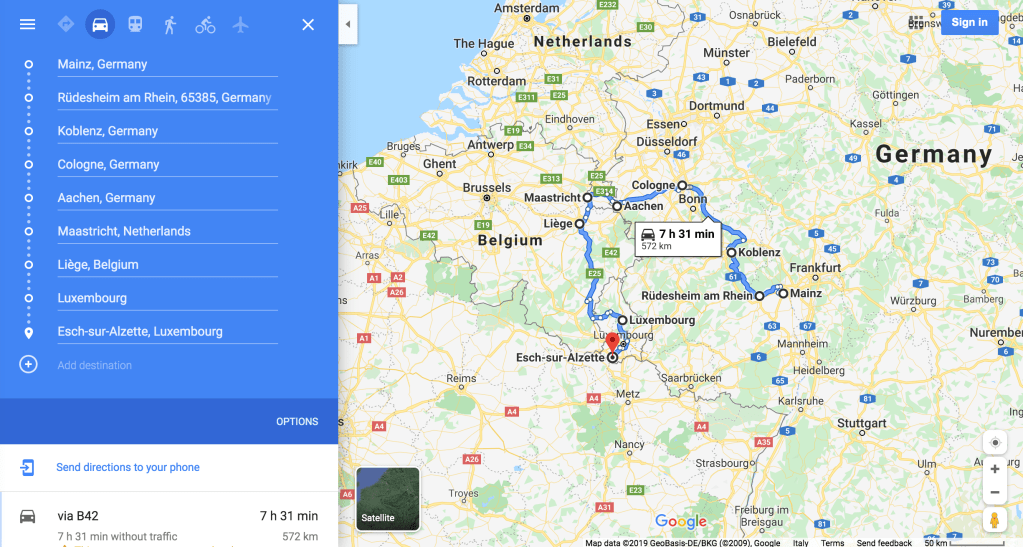
Or least as western as I’ll get. Since leaving Mainz I’ve been to nine+ places in four days. I tried to strike a balance between recording the interesting stuff (as opposed to every moment) and sparing superfluous details, but then again if it’s too wordy, nobody actually has to read any of this. This post will take us through:
I left Mainz early Thursday and headed to the touristy river town of Rudescheim Am Rhein en route to Cologne. It was a great spot to visit. There were lots of shops, and alongside those, more shops, with the occasional restaurant thrown in. The town is on a quaint hillside in the Rhine river valley. I know at least one pair of my great grandparents were married here, but I was curious it might be both. So I went to the Rathaus (town hall) to see if they kept the records. They did! unfortunately they were understaffed, closing at noon (it was about 10:30 when they told me this), had a long line, and kept paper records organized by year. I wasn’t sure of the years, so we check 1920, couldn’t find them, and I joked that they get an intern to digitize the records. Lo and behold, this is already underway! I left them my email address and they estimated I might hear from them within 4 weeks if they find anything.
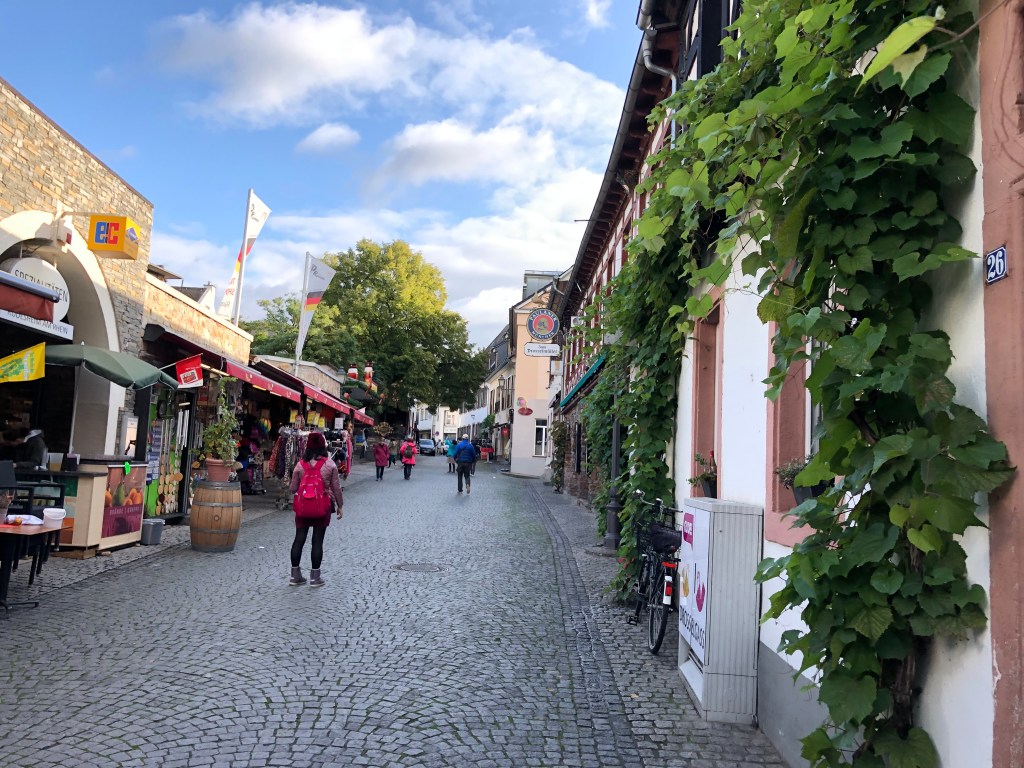
Cute shops along the pedestrian streets of Rude. A. R. 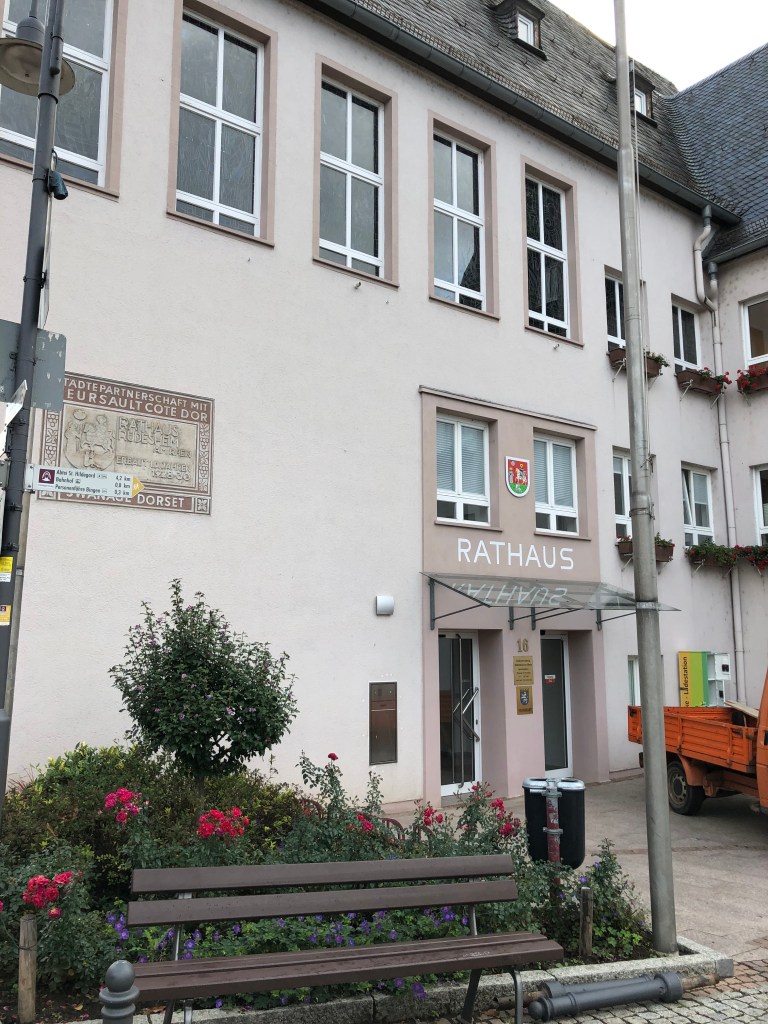
Town Hall, where I spent a good chunk of my morning 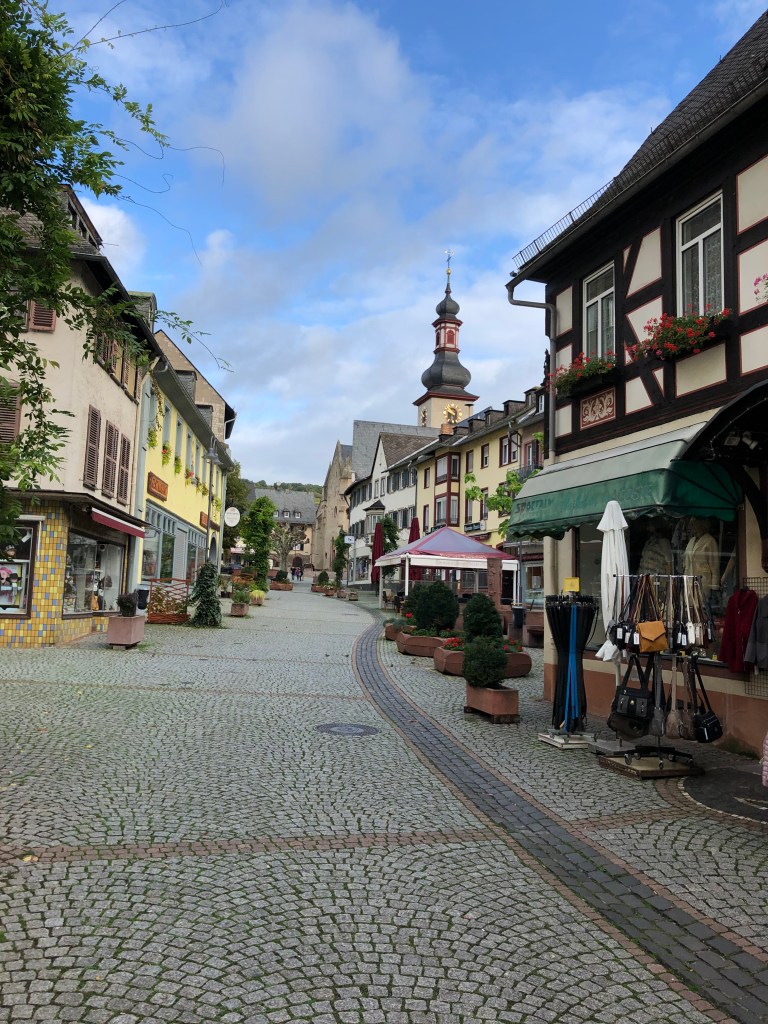
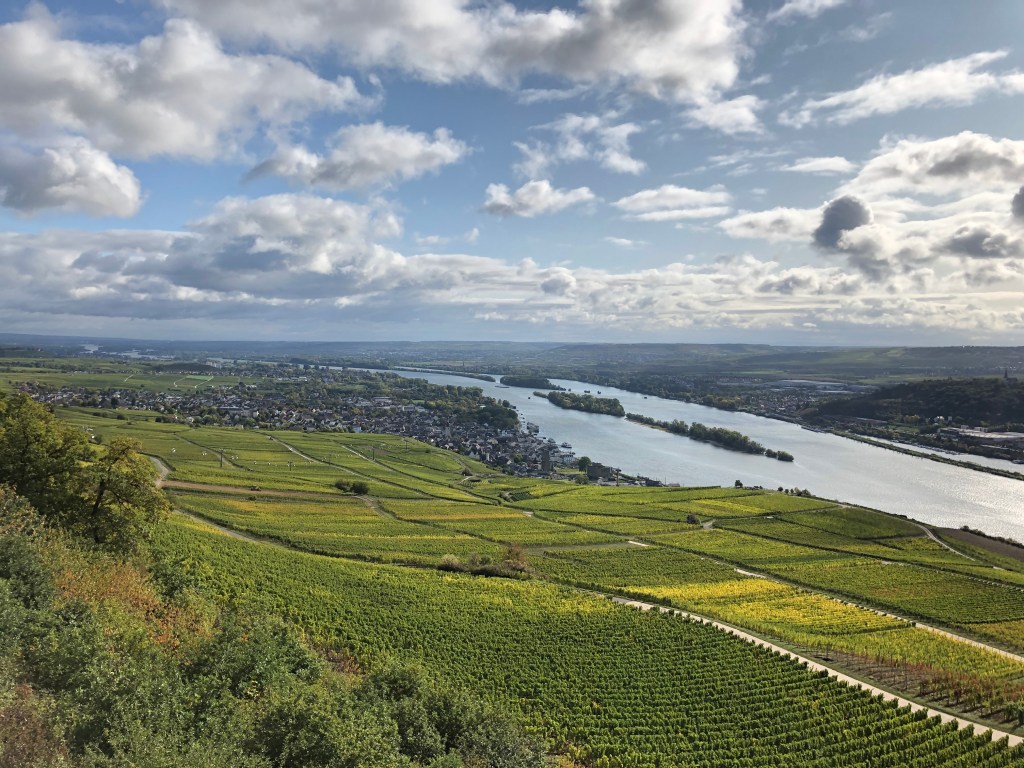
I drove it rather than taking the lift, but the view from the top was quite nice 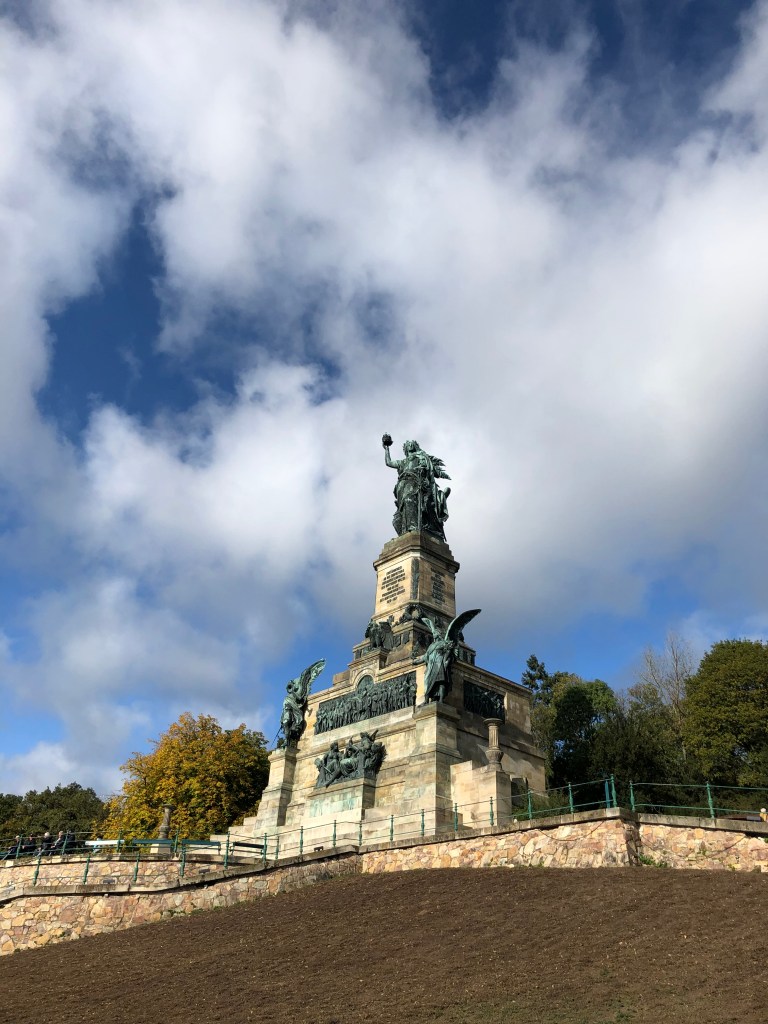
Pretty big statue at the Bergstation
One of the big attractions in Rudescheim am Rhein is the statue at and view from the Bergstation. After leaving the Rathaus I headed up there, and was treated to probably my best vistas of the trip thus far (though I trust it’ll be outdone).
I continued on along the Rhine for some time. It was lovely, and definitely my best drive thus far. I took some photos, below, most in the town of Assmanshausen, which literally translates to Proctologists’ Houses.
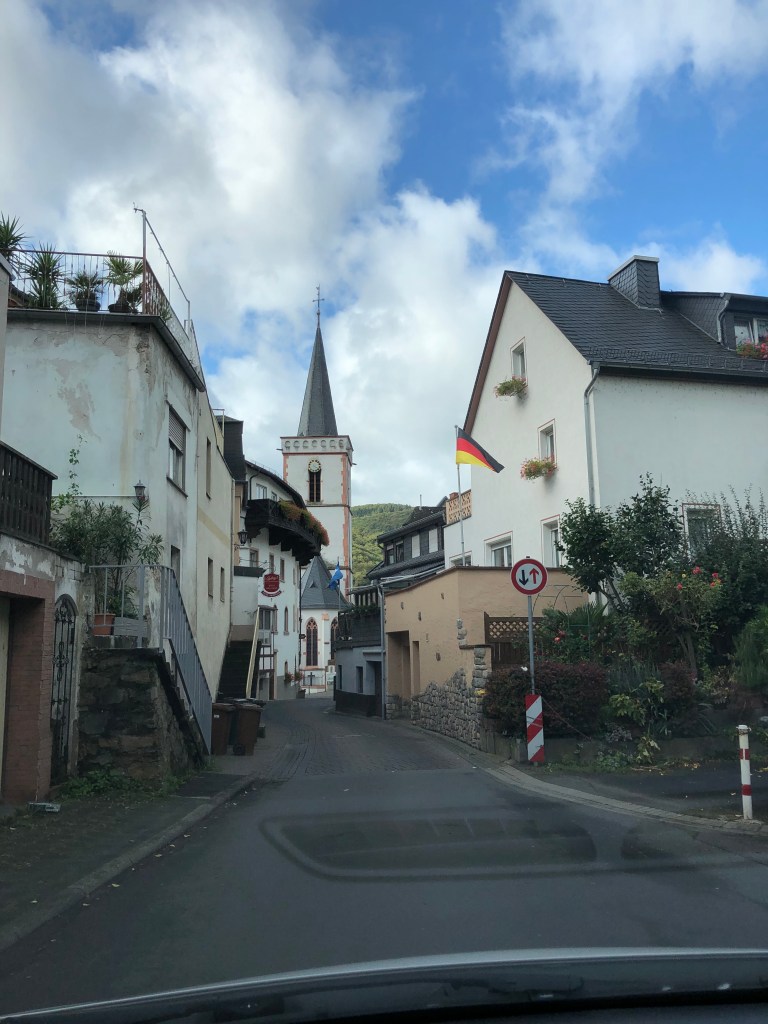
Assmanshausen 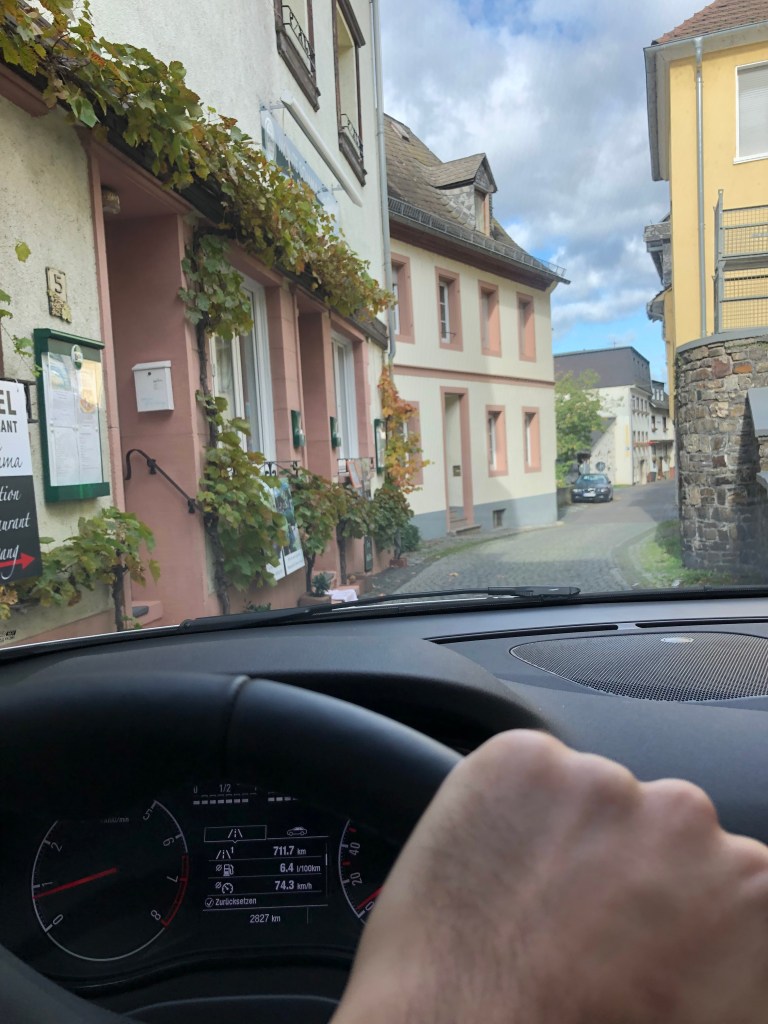
There were lots of tight turns in the narrows of Assmanshausen 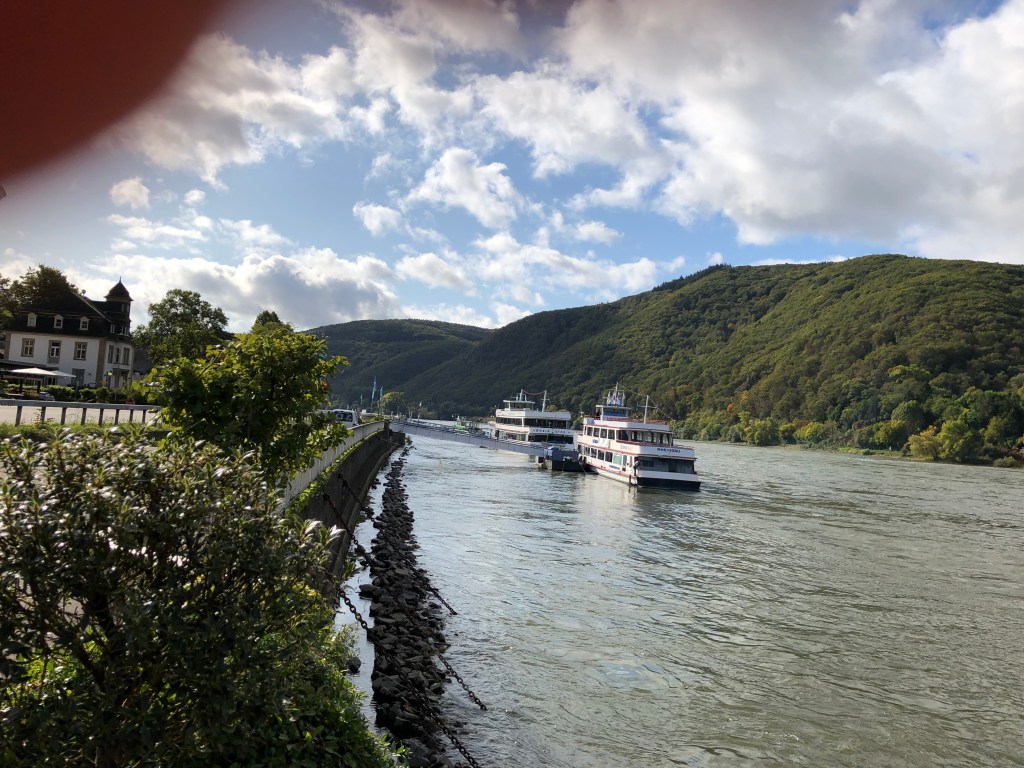
Pulled over to gaze along the Rhine for a few 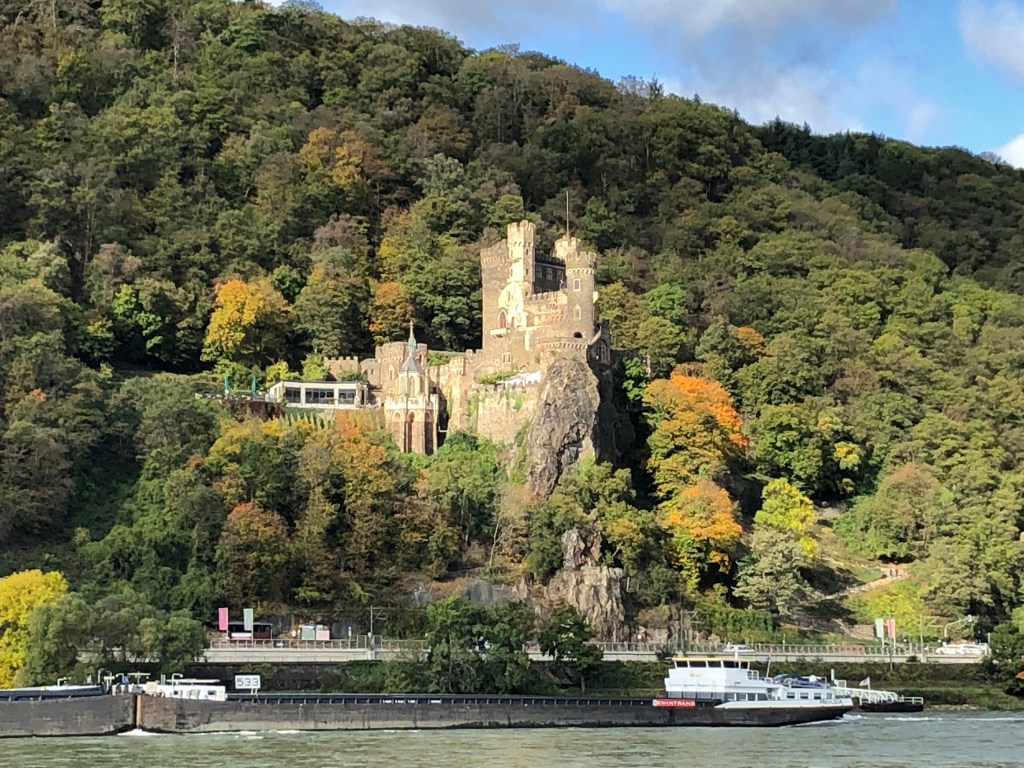
I saw Burg Klopp from across the way
I had a purchased a GoPro for the trip and hadn’t used it yet. It was burning a hole in my backpack so I figured I’d give you a chance to join me on the road trip. It was also practice for the method I hope to use to record for my drives through the Alps, and perhaps Tuscany and some other stuff too.
In the interest of seeing all there is to see, I also stopped in Koblenz for a meal en route to Cologne. Built into a steep hill along the Rhine, Koblenz is the local city to my grandfather’s native Polch, and culturally seems pretty similar to Cologne. It was a pleasant quiet city, with nothing too unique about it. I had a great meal at a very old bar. I also briefly checked out the Koblenz University of Applied Sciences. Nice modern facilities.
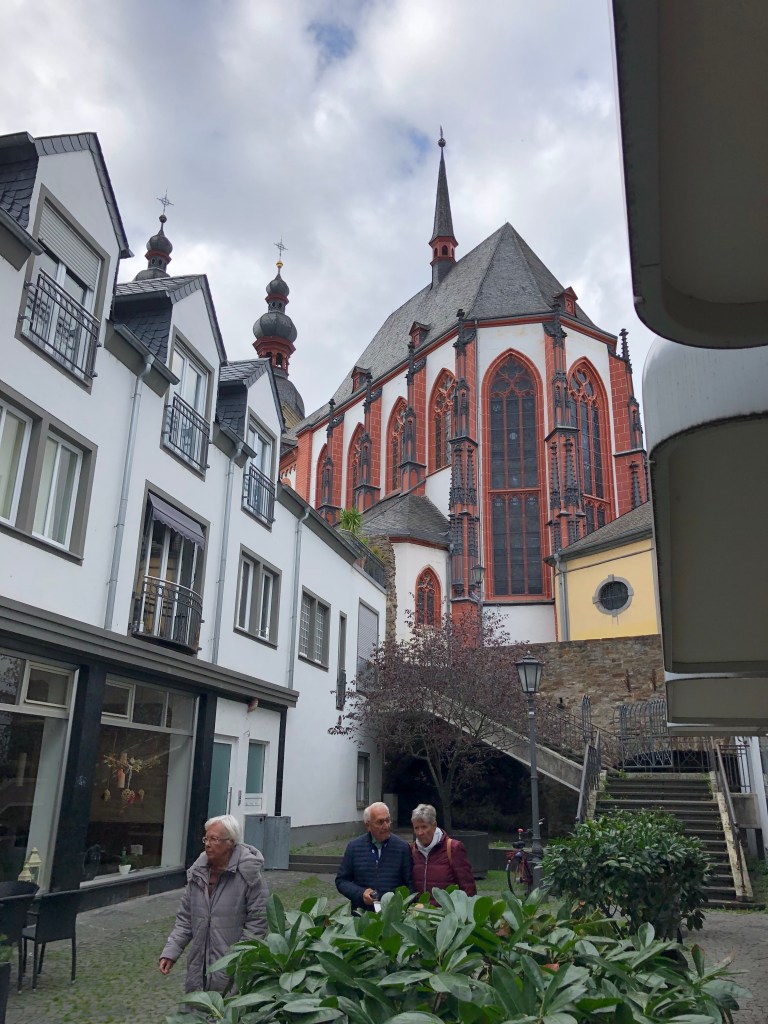
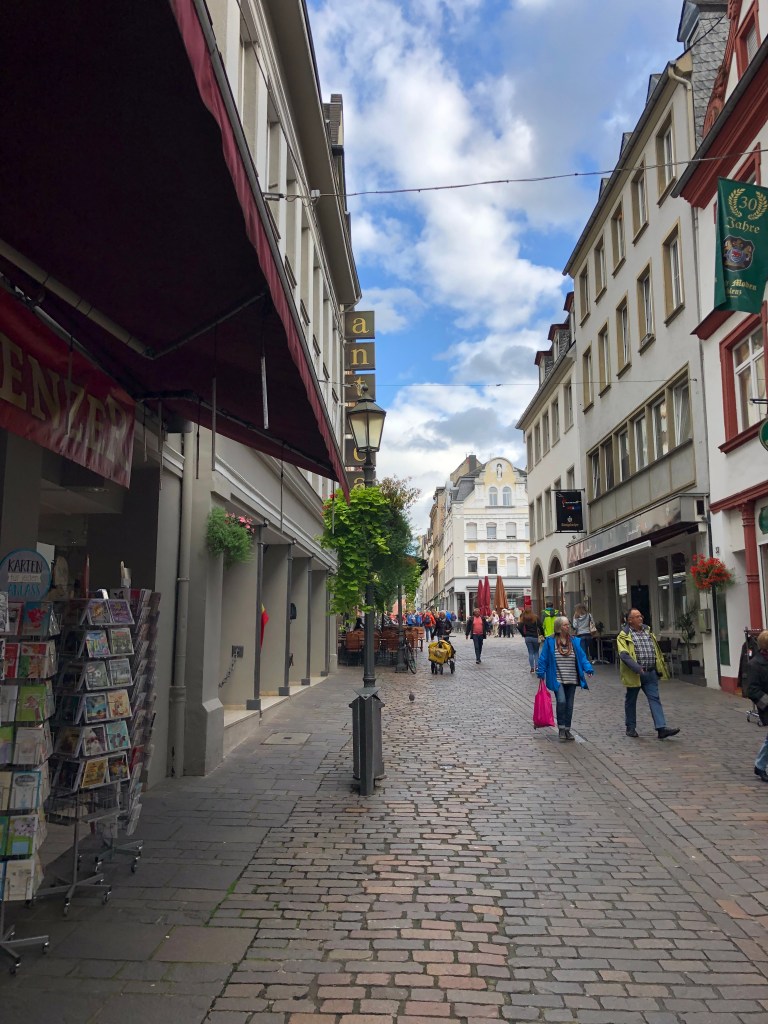
Lots of streets downtown looked like this 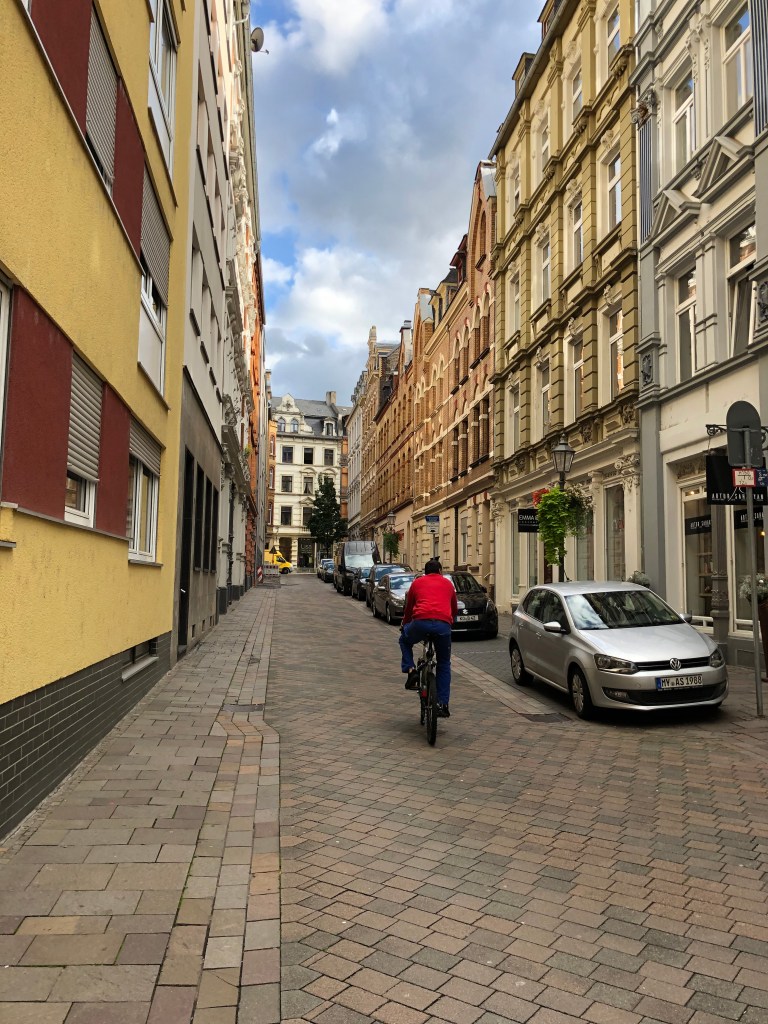
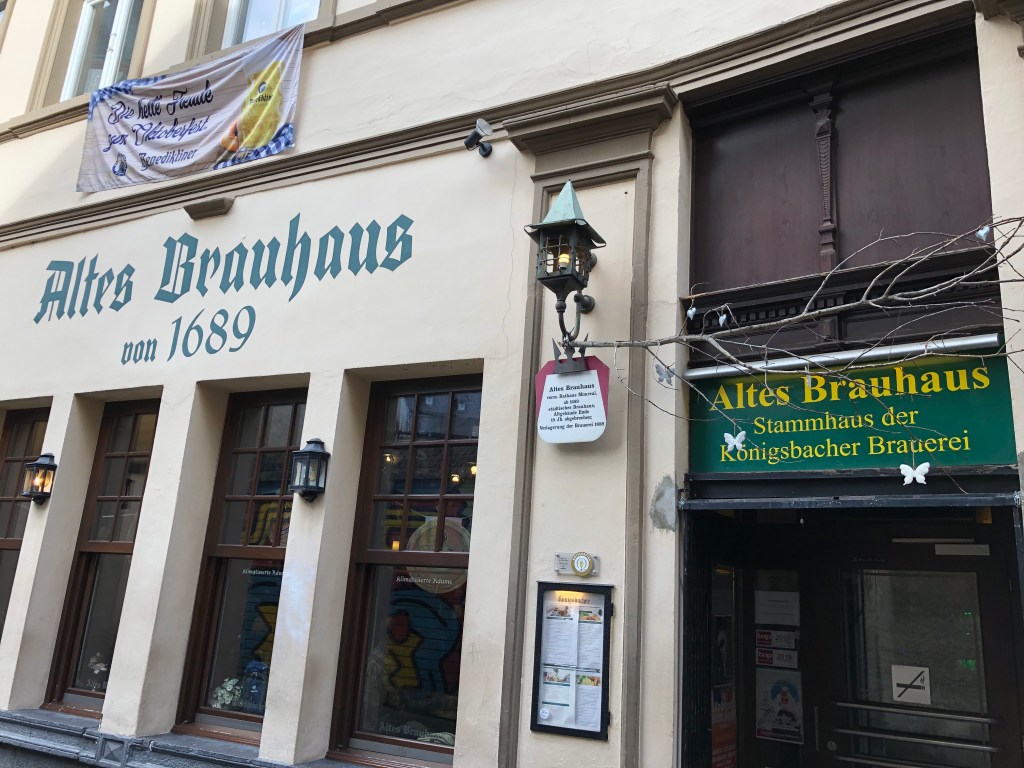
I had lunch at this apparently really old place
Finally I made it to Cologne in the early evening. My first impression of the skyline was that I liked it. It felt more metropolitan than the other places I had seen thus far in Germany. Once I spent some time walking around the streets I learned that it had some legit grit to it, and metropolitan was no longer the right word (maybe ‘urban’ instead?). It’s layout and architecture seemed more like an American or British city than what I had seen throughout Germany thus far. I walked to the old town and grabbed a traditional dinner.
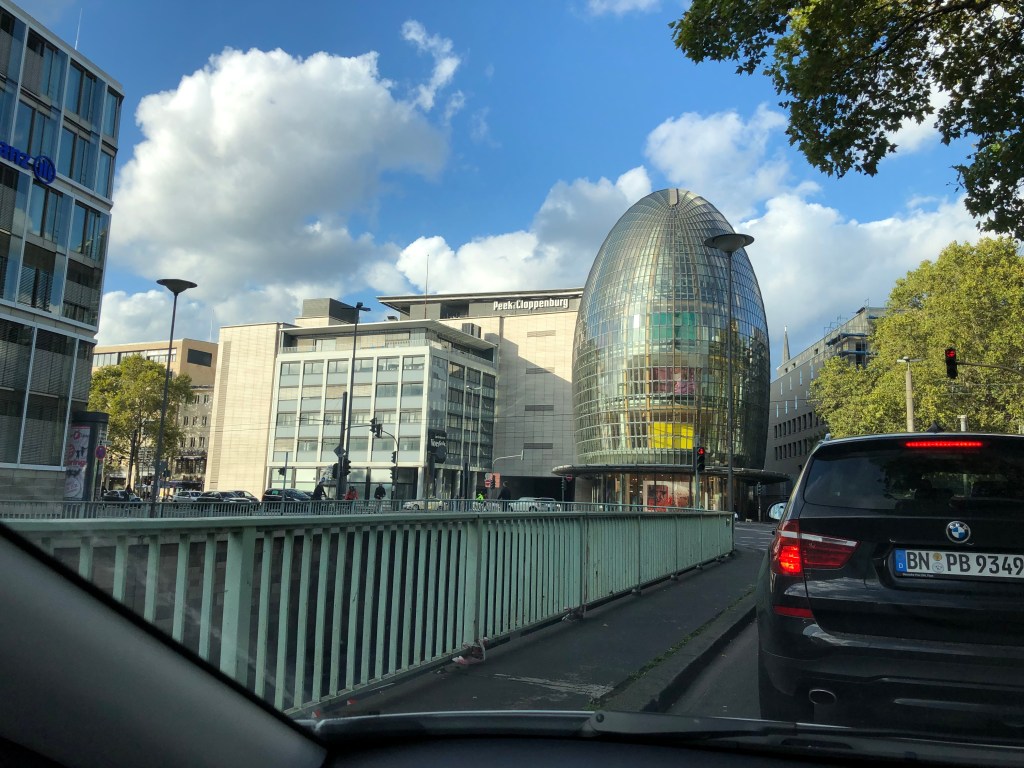
My first impression of the city 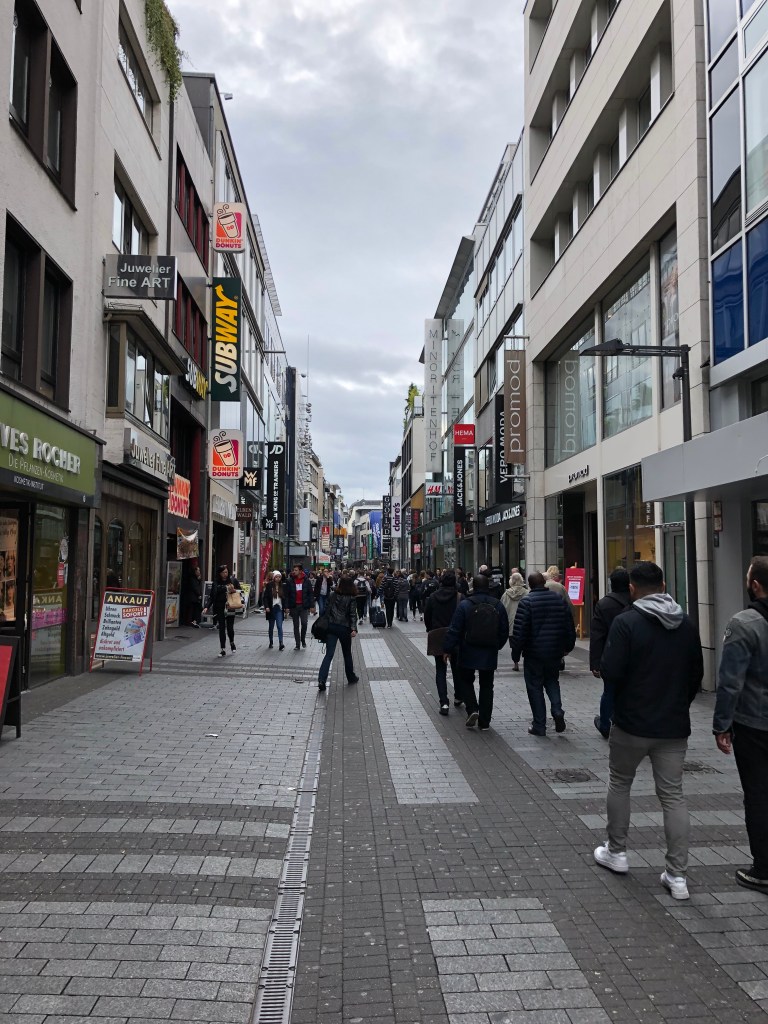
The new downtown is totally modern and all shopping 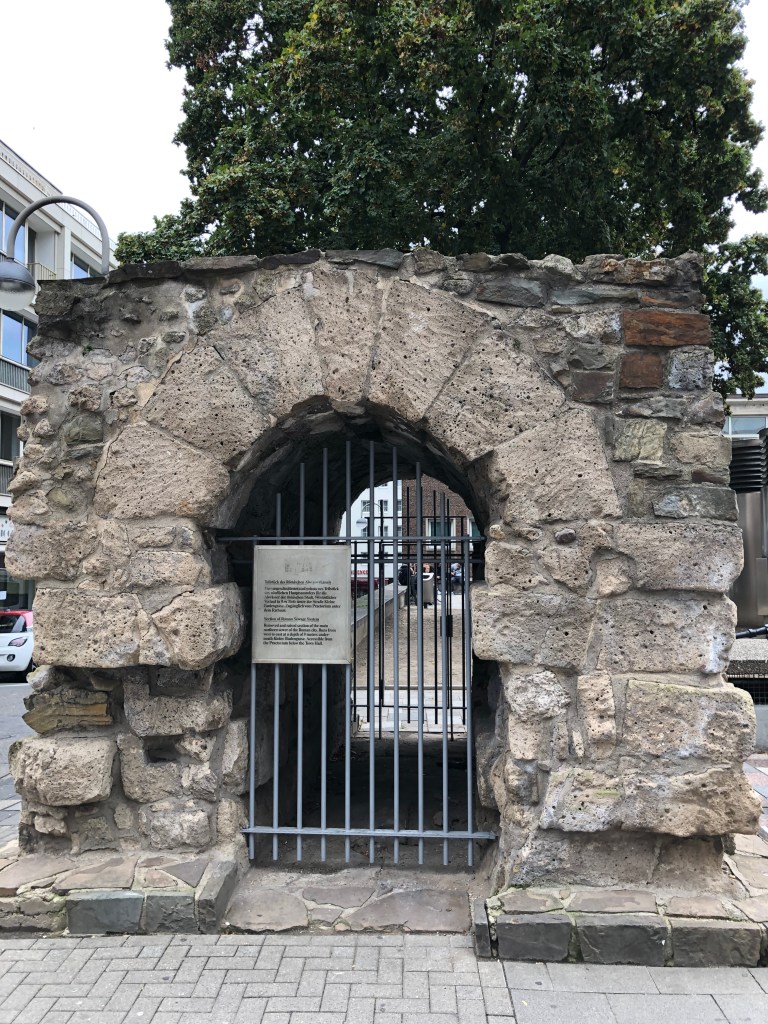
Lots of Roman archaeology throughout the city 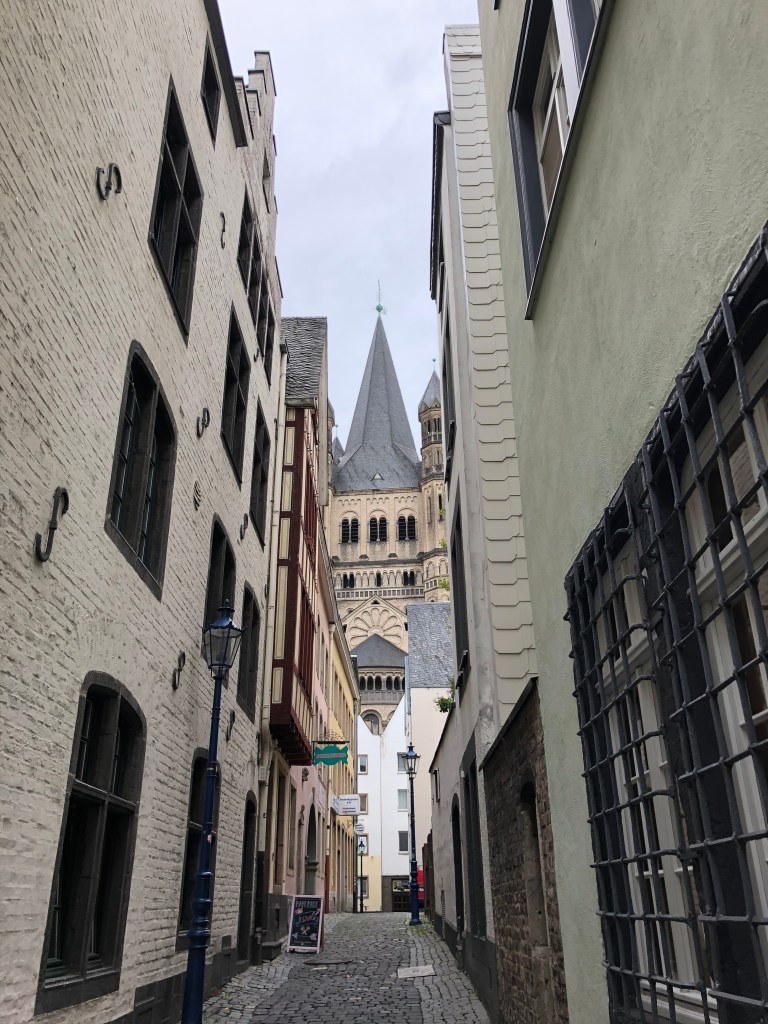
Lots and lots of churches 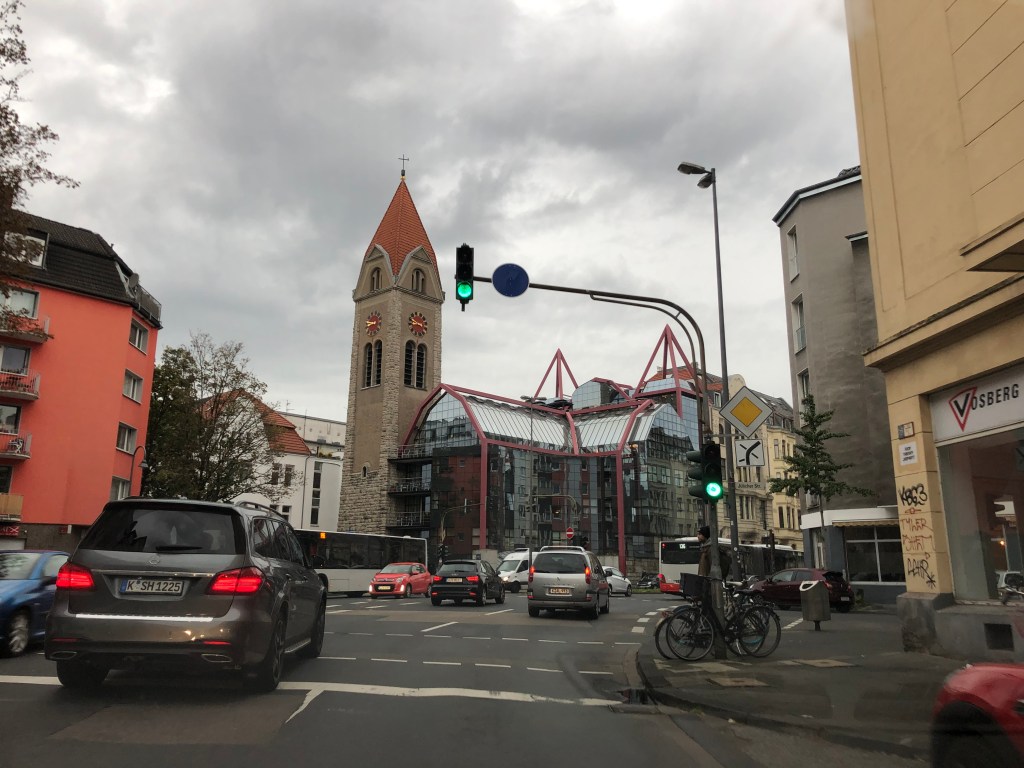
the new architecture respected the old
This next bit is my favorite thing about Cologne. Surprise surprise, it’s a beer thing. Kolsch is the local beer. I hadn’t loved kolsch’s I’ve had previously in the states, but I certainly developed a taste for it over my ~40 hours in Cologne. Unlike the full liter beers at Oktoberfest, they serve kolsch in and around Cologne is served in .2 liter glasses (about 7 ounces), and will continually replace your glass as you finish it. Fortunately I was told about this by Ben, a Philadelphian I had met at Yom Kippur, otherwise it probably would’ve thrown me. I really really appreciated this system, which essentially a seemingly never ending beer by the half-pint. I don’t know that the servers and dishwashers are as fond of it as I was.
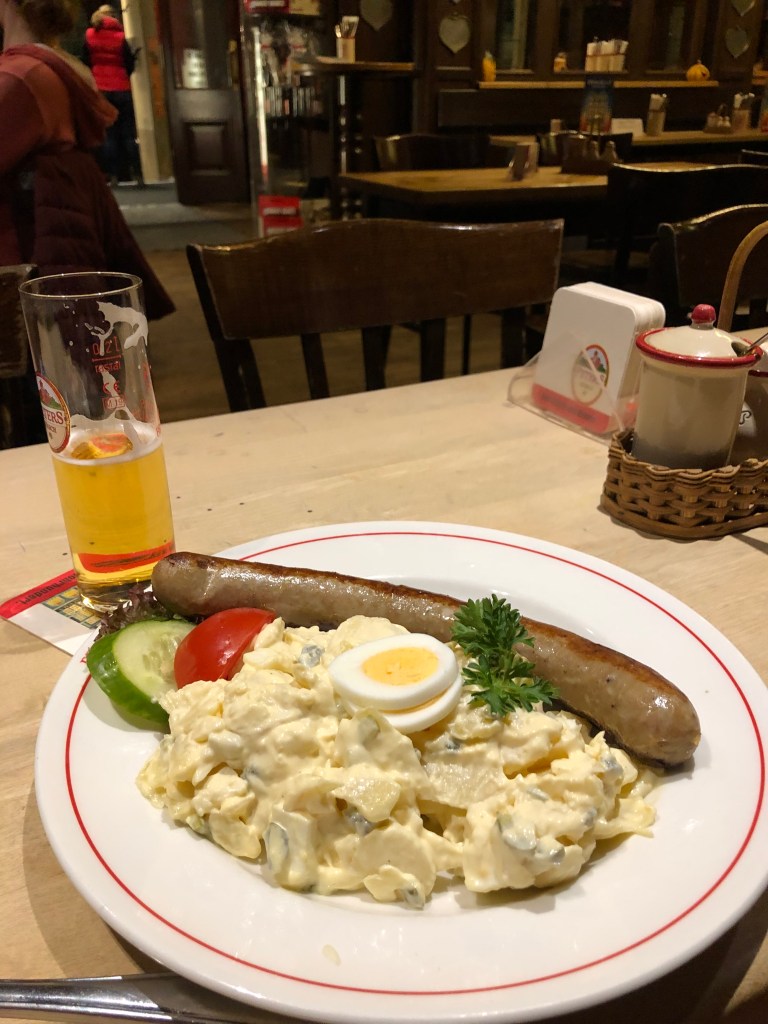
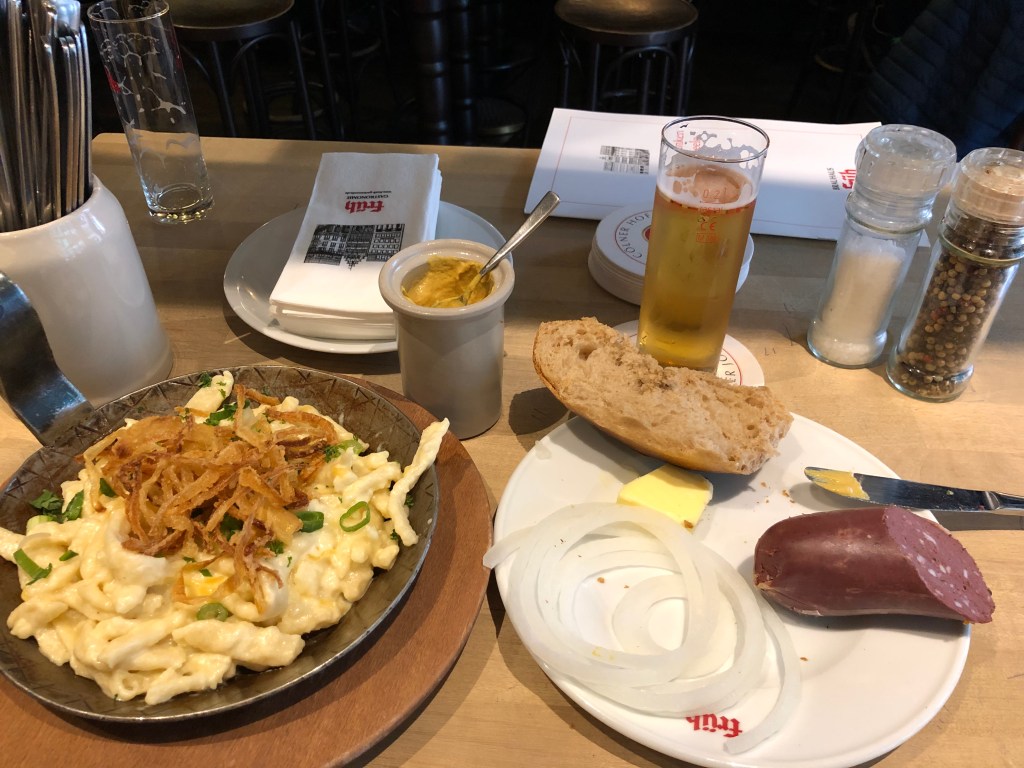
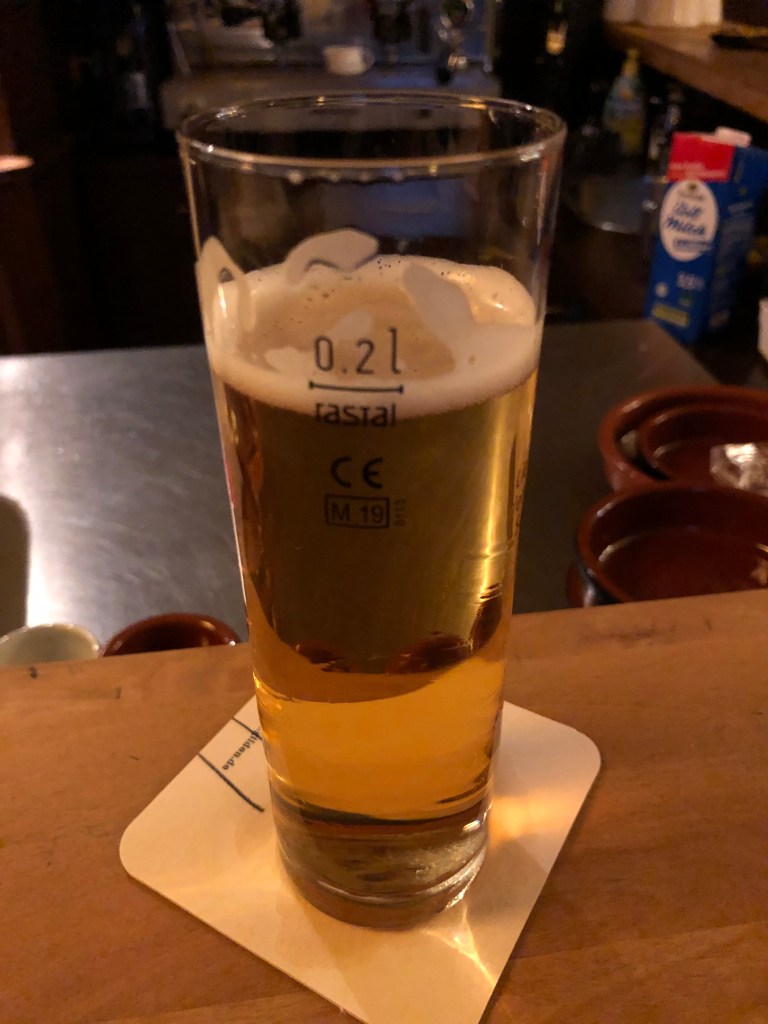
They keep a tally on coasters and ring you up at checkout 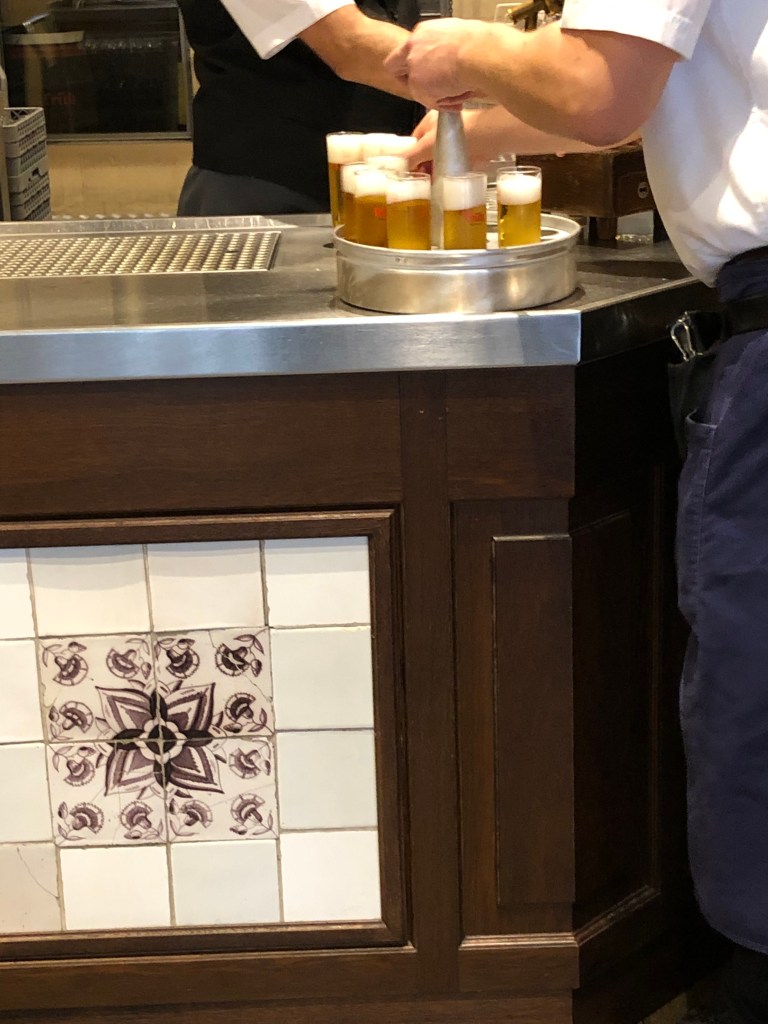
They had these nifty carriers to service many patrons in one trip 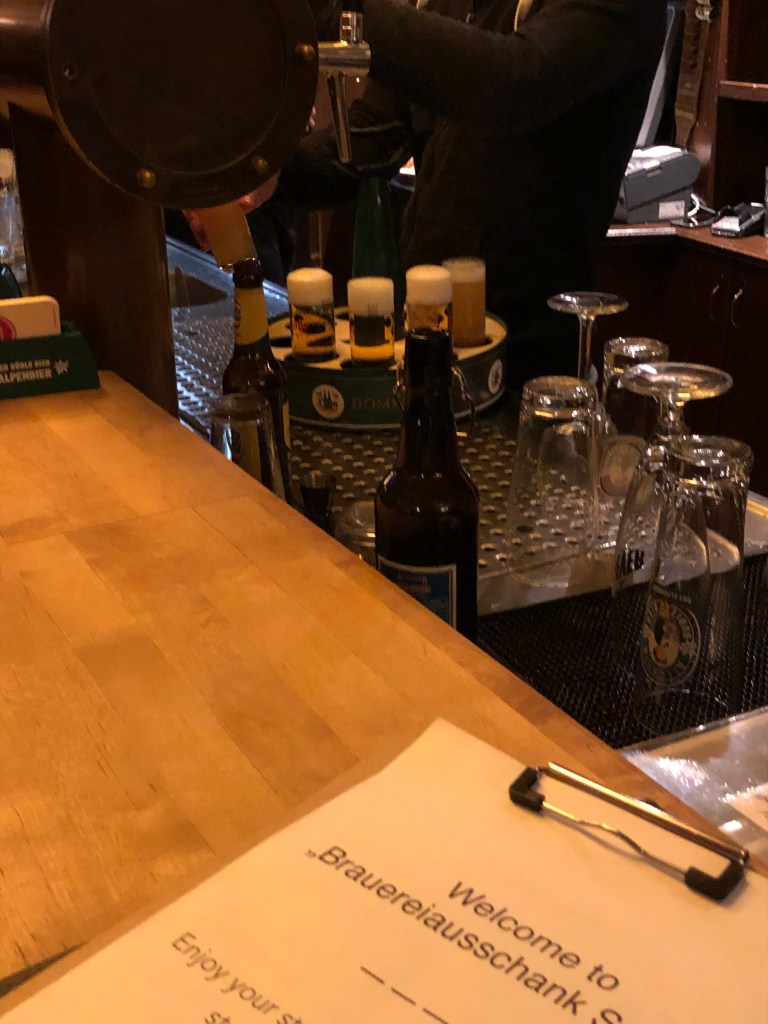
Kolsch carriers were ubiquitous
My first morning in Cologne, Friday, I went to see my family that are still there. Similar to Mertloch, somehow the Judischer Friedhof, Jewish Cemetery of Cologne, survived the Holocaust and WWII unscathed (as far as I could tell). This cemetery is much less modest than the rural cemetery of my grandfather’s family. First I found Albert. Then I found the correct Albert, which I knew by the phrase “Don’t look for me here, look for me in your heart” on his stone (knowing to look for that, I recognized this despite it being in German). I walked row after row to find these. After a lot of time I considered giving up until finally I found the second site I sought, my great great grandparents (completely maternally) Max and Ida Gutman. I knew their daughter, Oma Paula, who lived from 1900-1999.
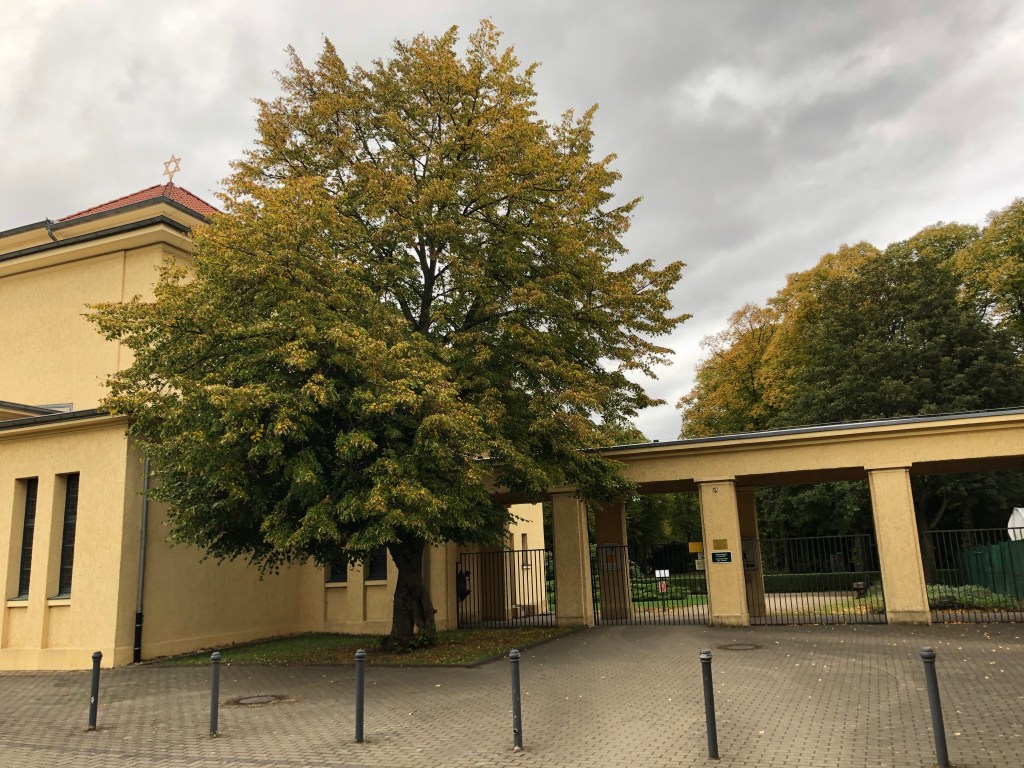
Not a great shot of the entrance (click to expand), but included here for juxtaposition from Mertloch 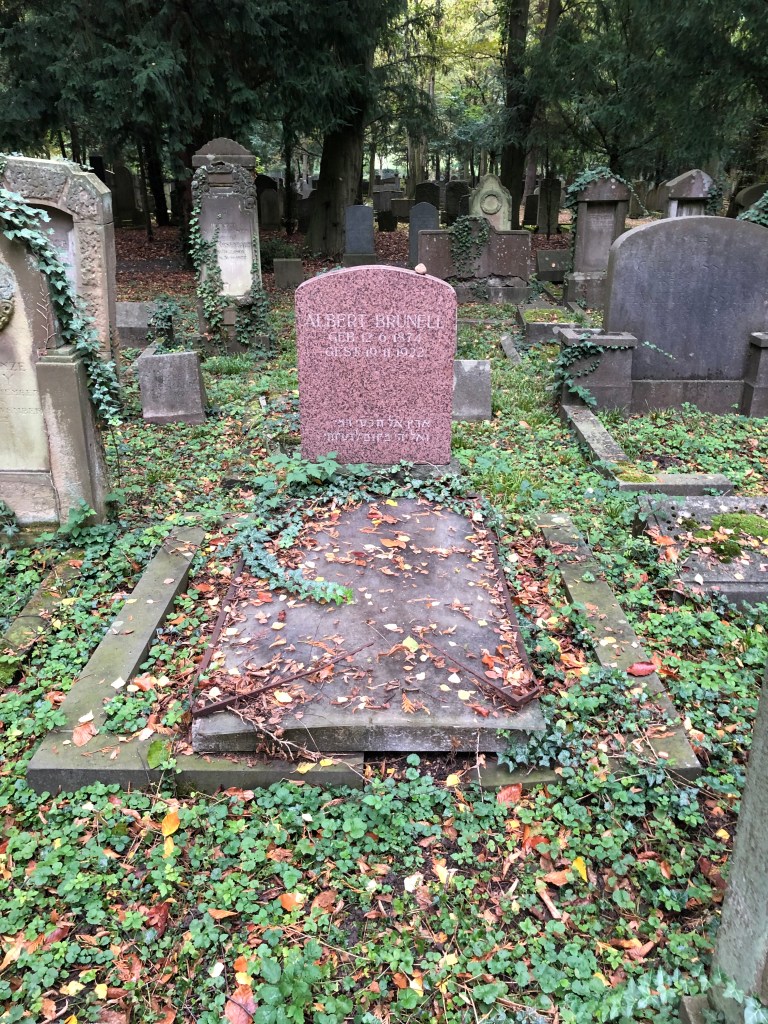
I found an Albert Brunell 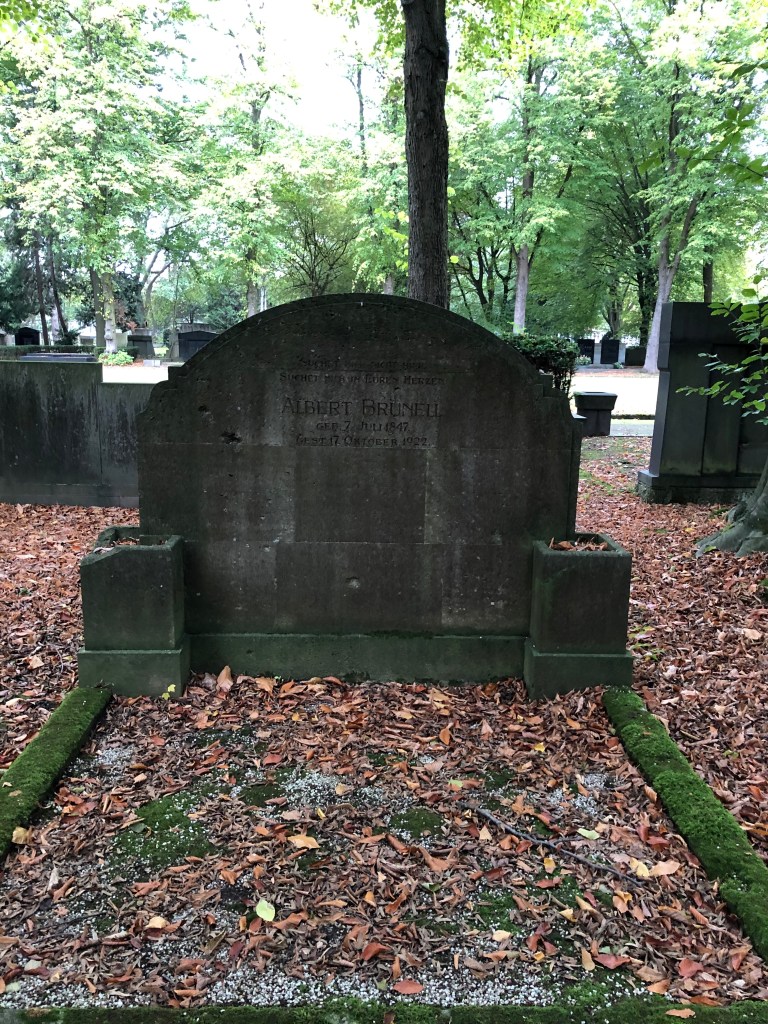
then I found THE Albert Brunell 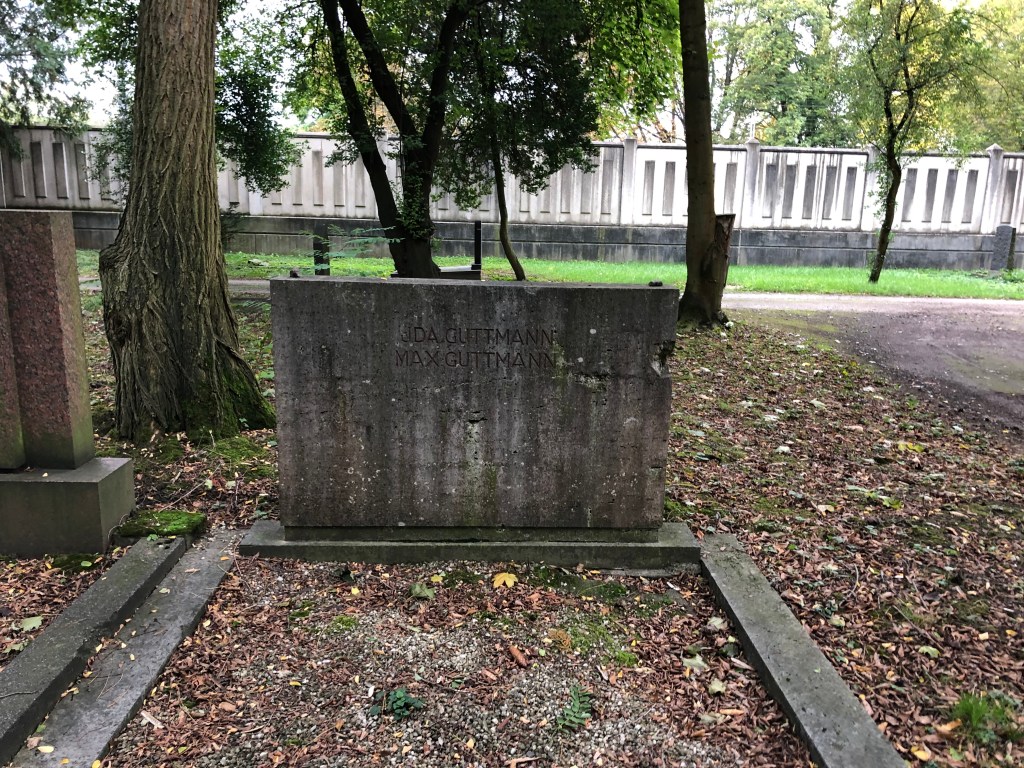
And my grandmother’s grandparents 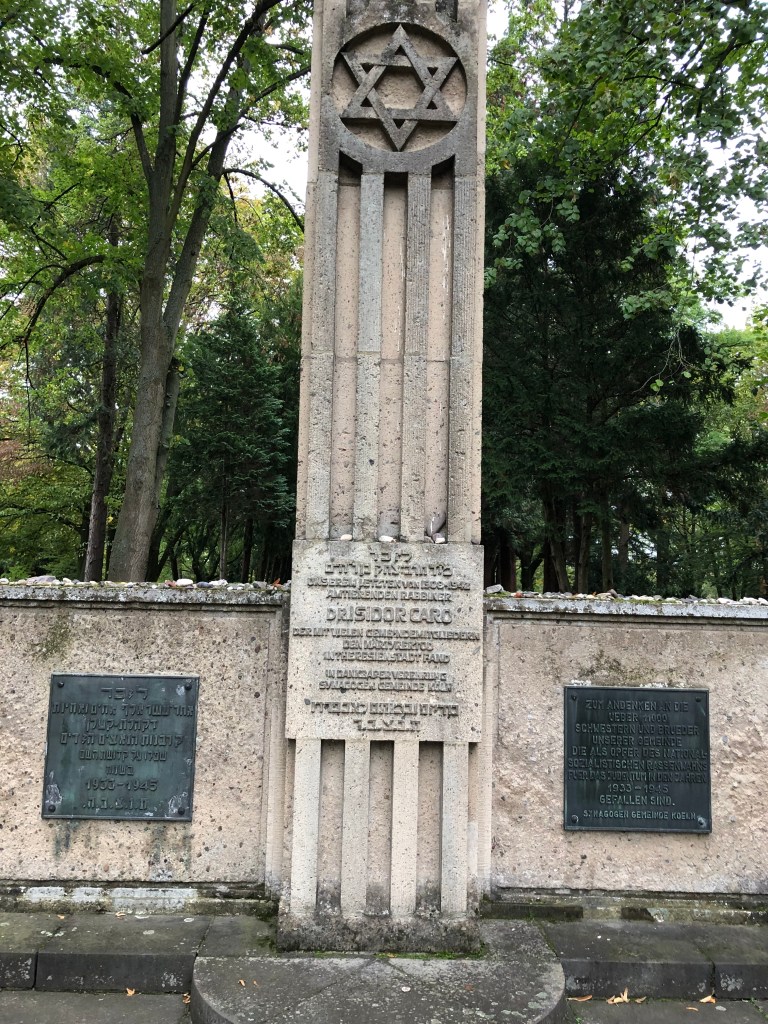
And a big memorial to the victims of the Holocaust
I spent the rest of Friday bopping around various sites in the heart of Cologne. I saw the Rathaus, which had multiple generations of architectural style, and the St. Marten Catholic Church, where I walked in on a service with glorious men and women’s Latin filling the chapel.
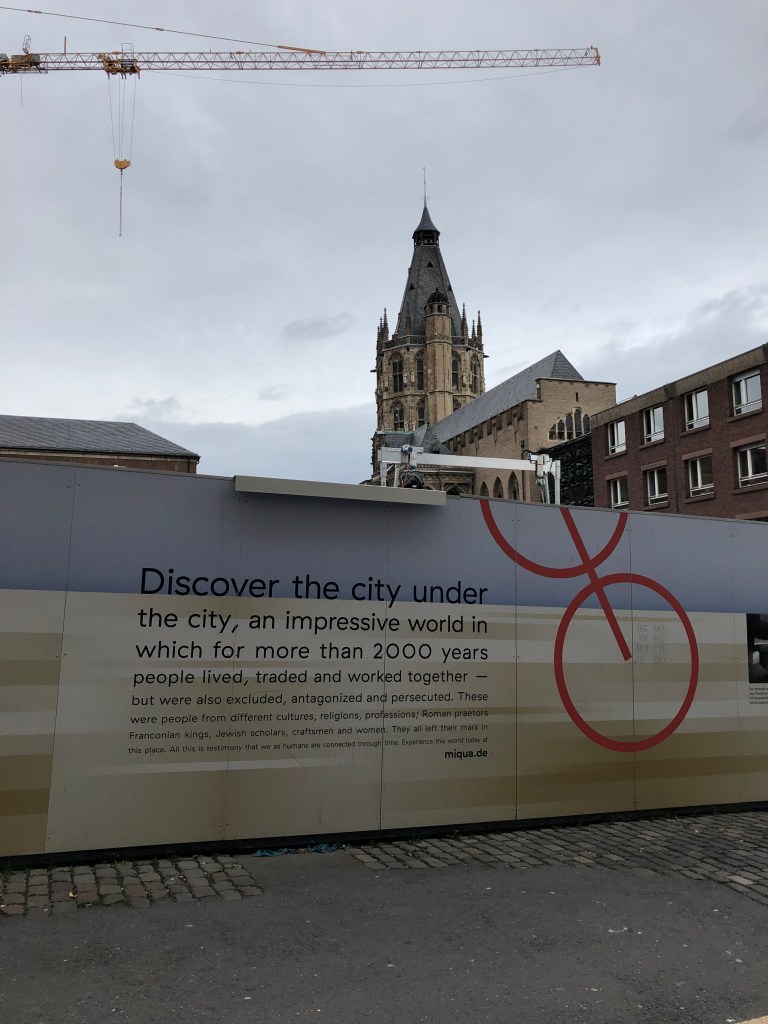
Lots of construction next to the Rathaus (background), where they’re building a Jewish museum 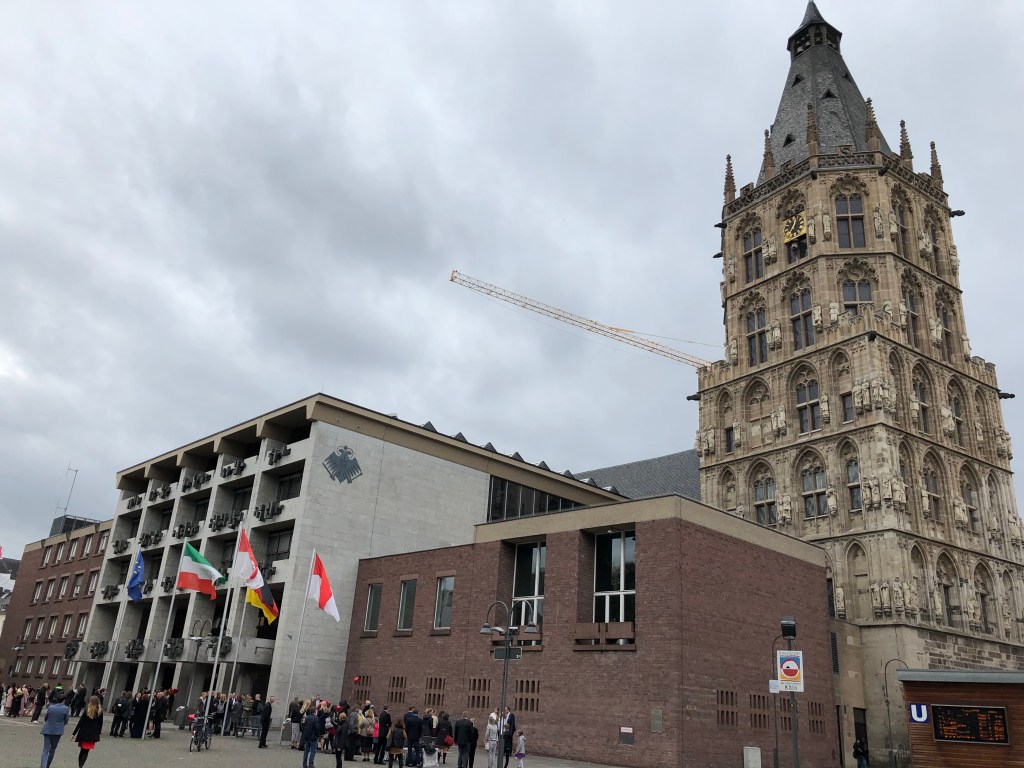
I liked the original bit of the Rathaus the best. 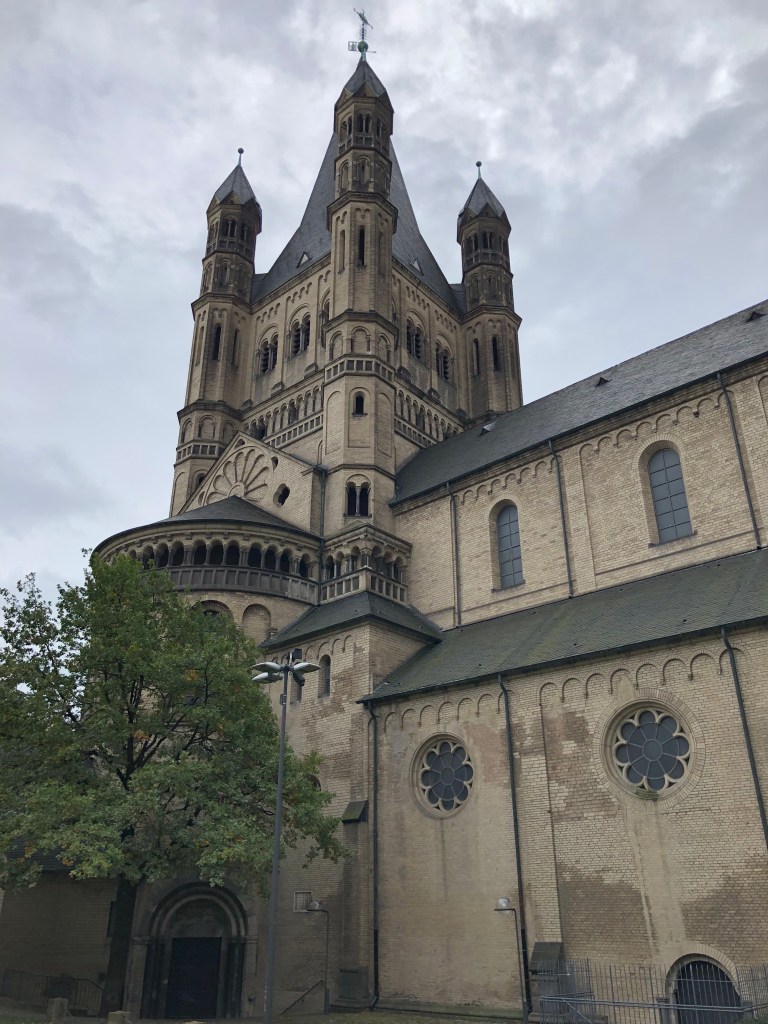
St. Marten is impressive 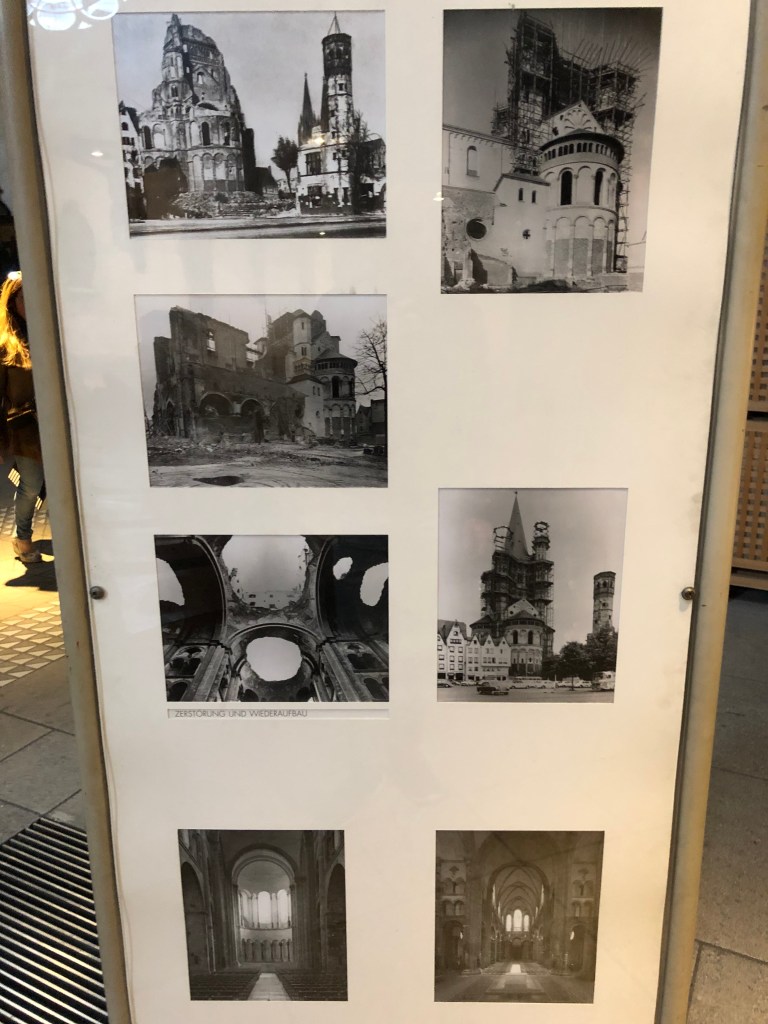
Display on the rebuilding and restoration of the church 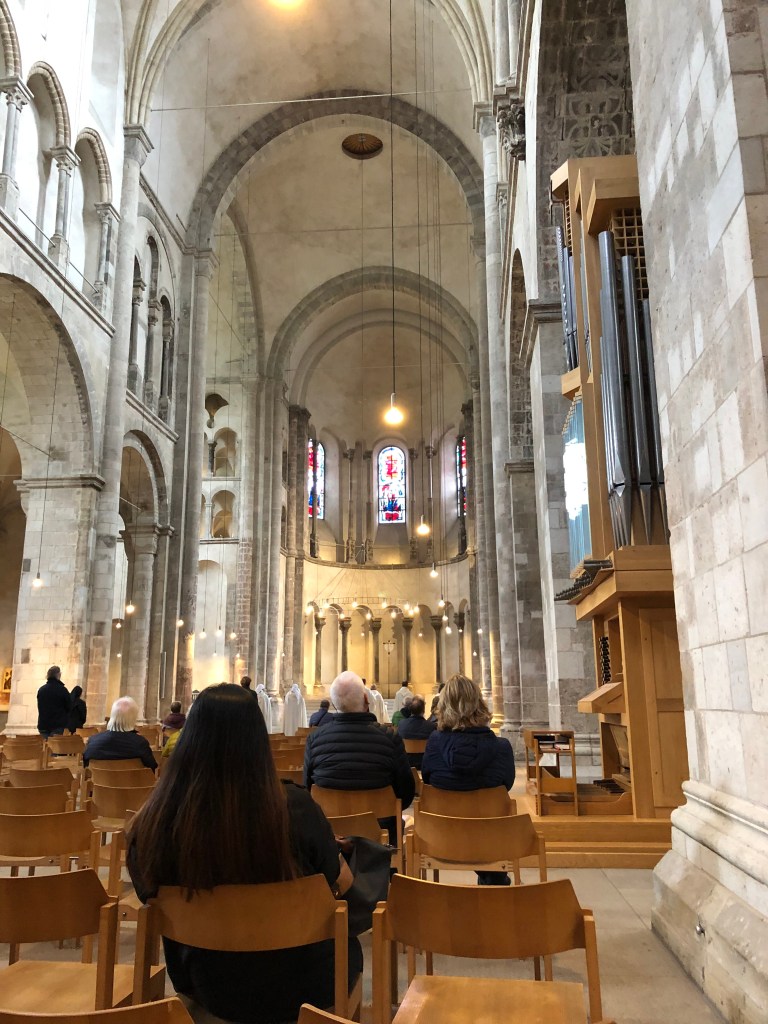
Nice interior with white clad singers in the nave
You can now forget about St. Marten, and actually forget what I said about the Kolsch being my favorite thing in Cologne – anyone can pour a small beer. Now this? This is my favorite thing about Cologne!!
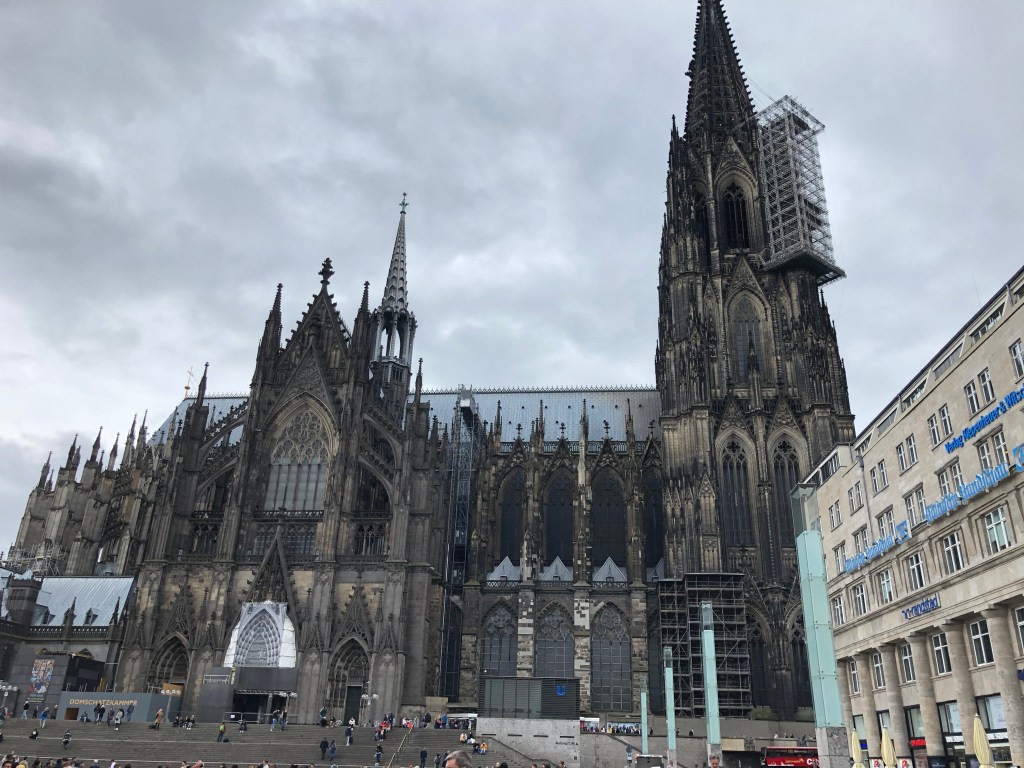
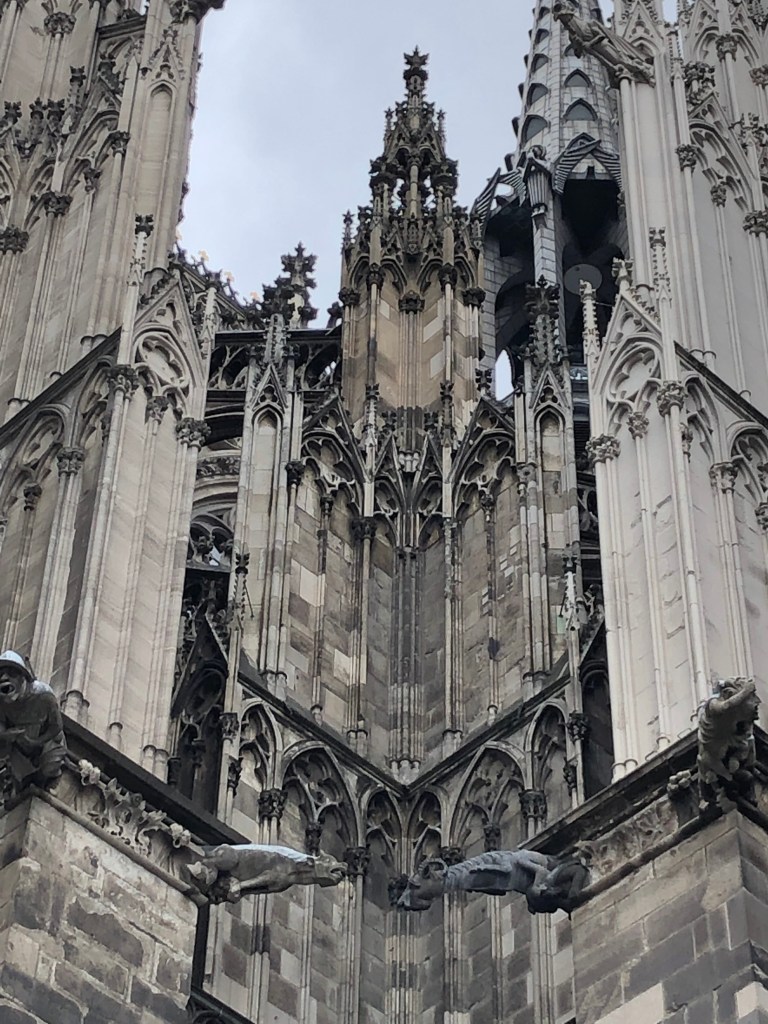
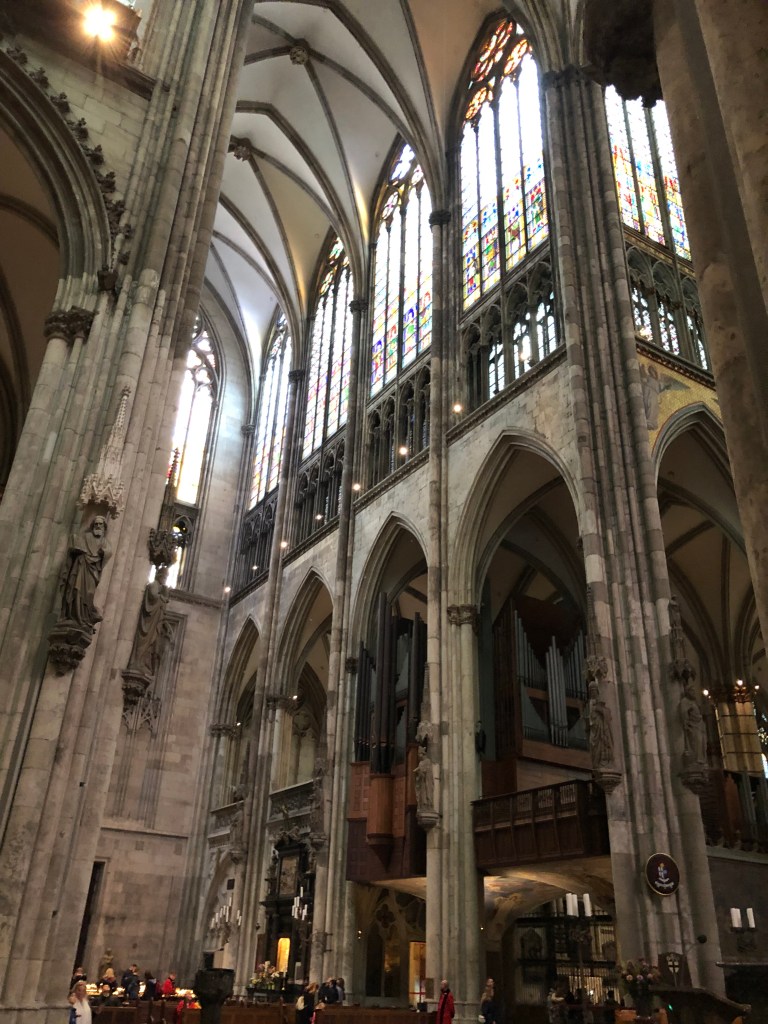
The Cologne Cathedral, nicknamed the Dom (official title is Hohe Domkirche Sankt Petrus, or Catholic Church of St. Peter), totally blew me away. In my opinion it puts Paris’ Notre Dame to shame (although Notre Dame’s got a nicer buttress). The detail on the facade was mind blowing, and spanned over vertical 500 feet, on towers and corners and edges and facades and church keywords and towers galore. Gargoyles and heavenly scenes and apostles and spires and curly queues and who knows what adorned every inch of it. From near or far it was stunning and utterly inconceivable. I later learned that it has the largest facade of any church in the world, thanks to the double spires.
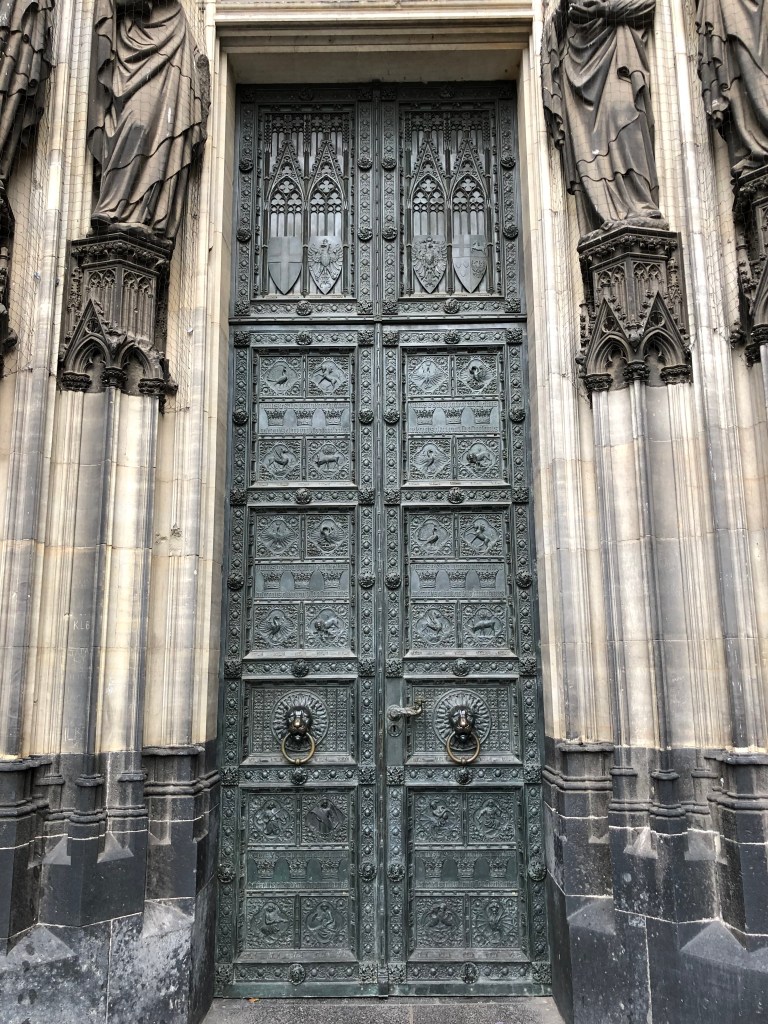
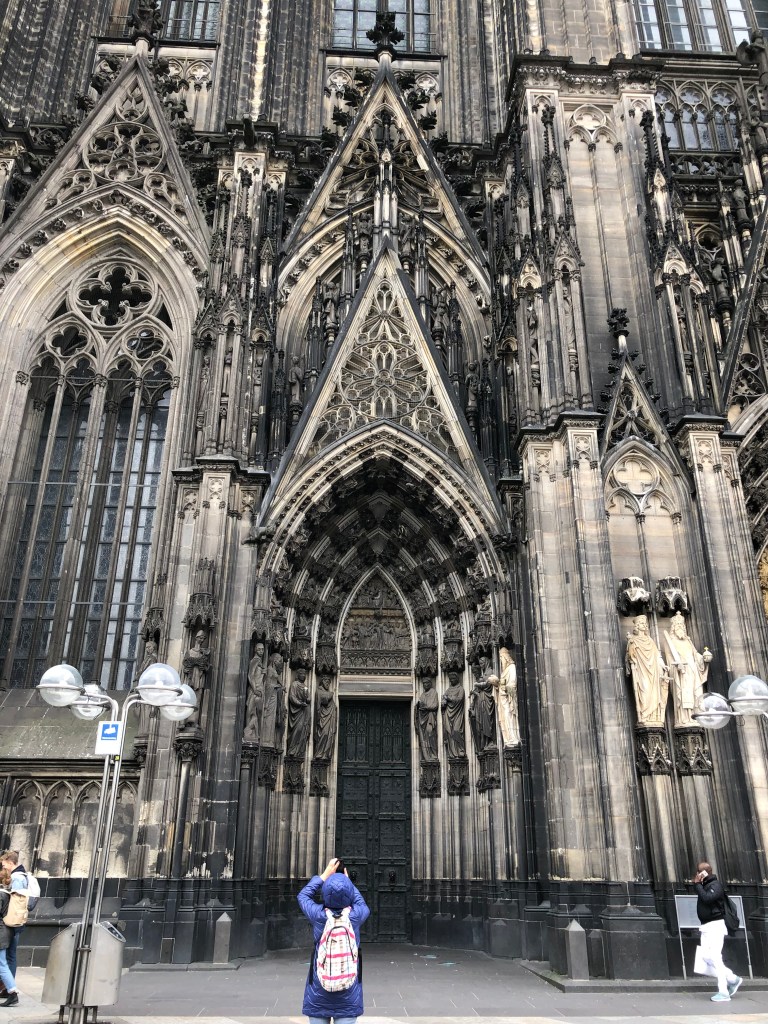
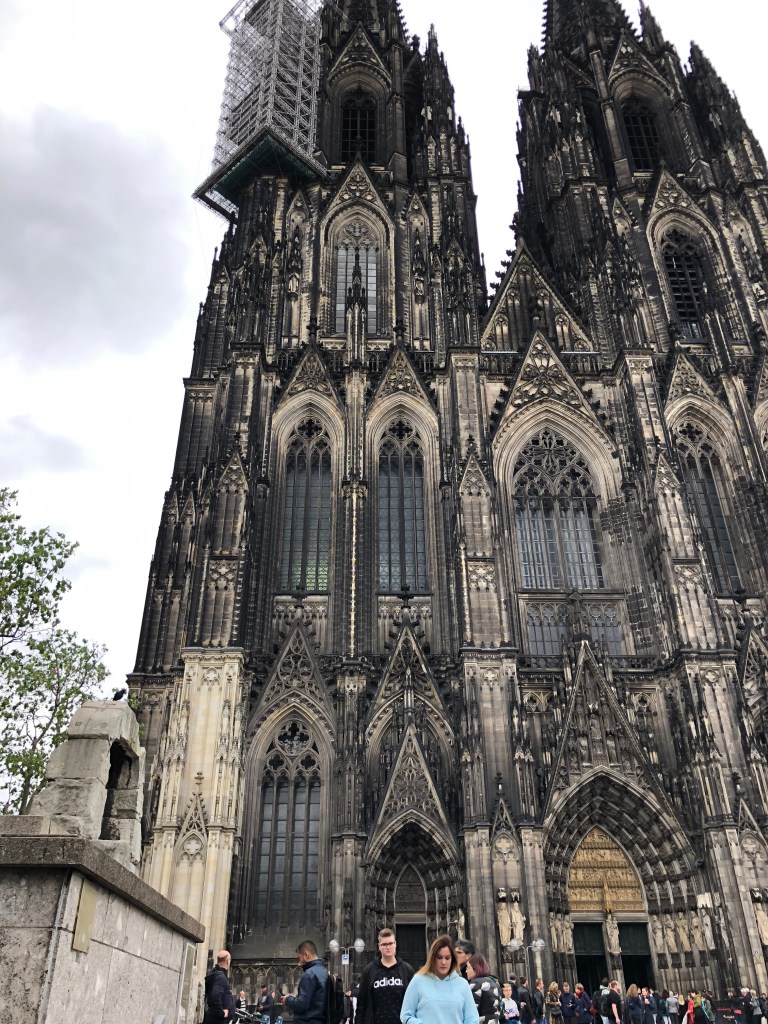
Then I went inside. Holy moley frijole! We just can’t build buildings like this anymore. And I’m sure will never again. I was further blown away by the glass, the scale, the sound quality, the materials, the verticality of it all. Surrounding the altar were fancy floor inlays and all sorts of displays and treasures, including what looked like a papal sarcophagus (which happens to be the name of my new band). I left this place in complete awe of it. Who would’ve thunk I’d fall in love with a Catholic German?
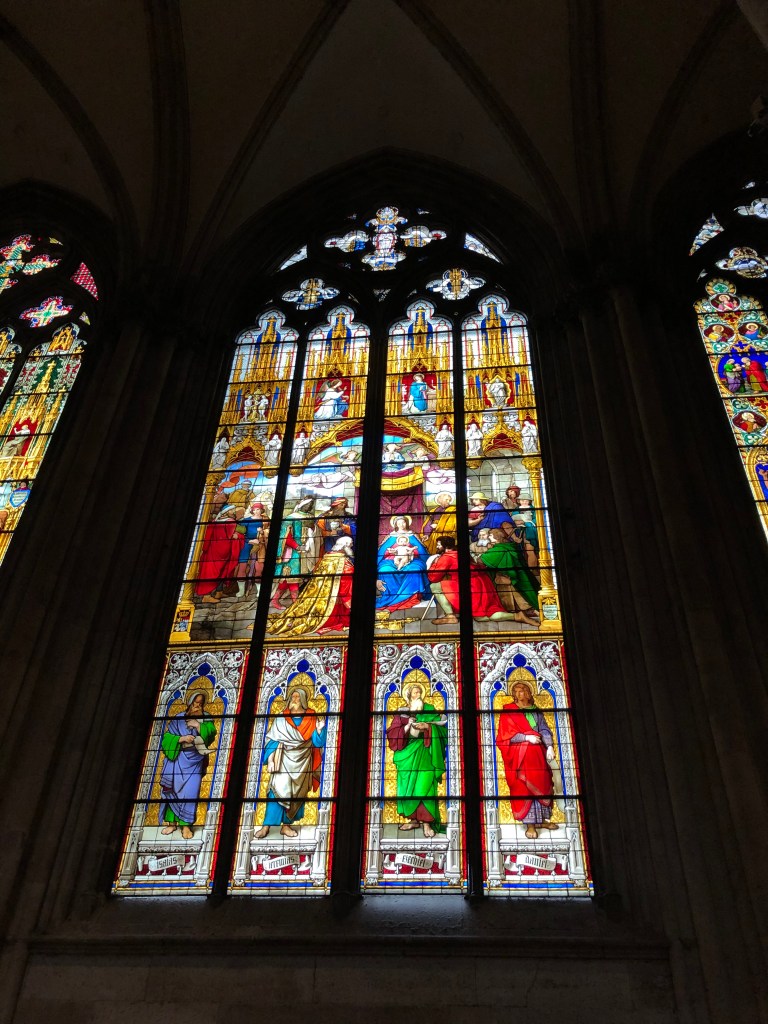
Stained glass windows were miles tall 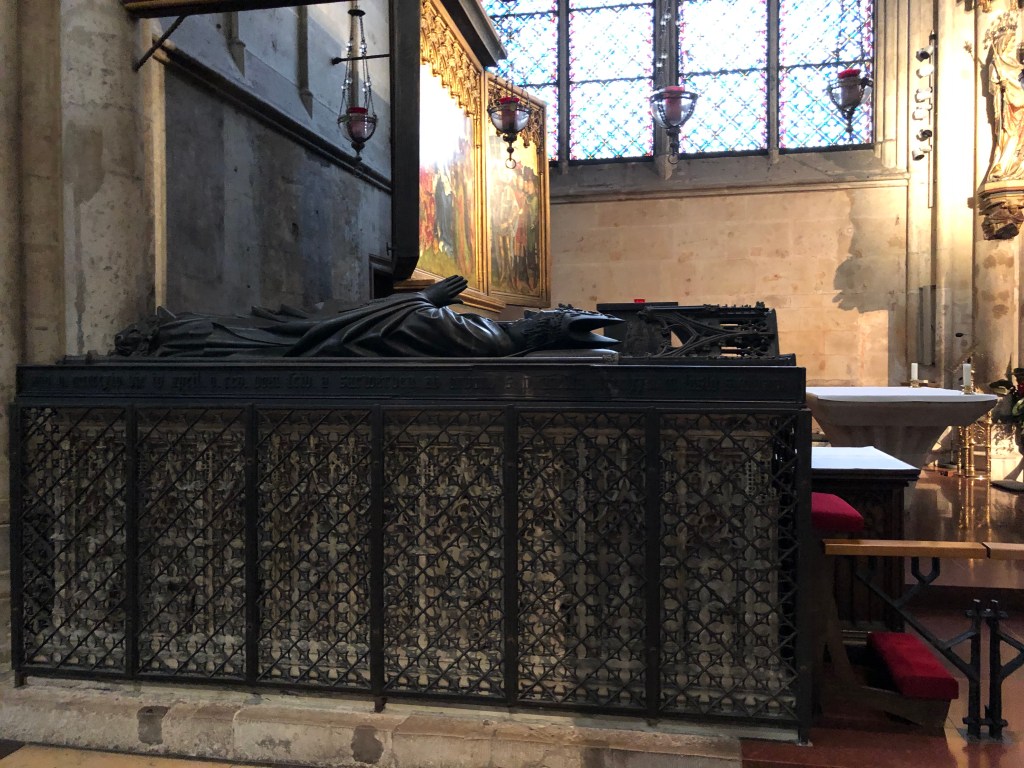
Papal Sarcophagi 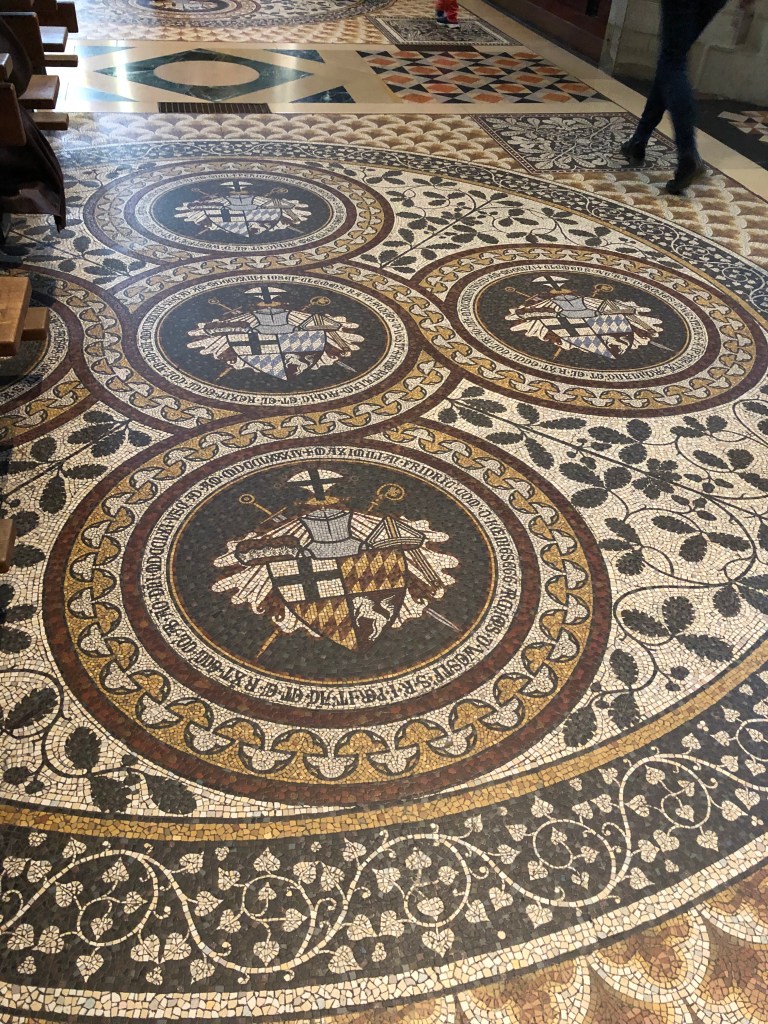
Fancy friggin floors 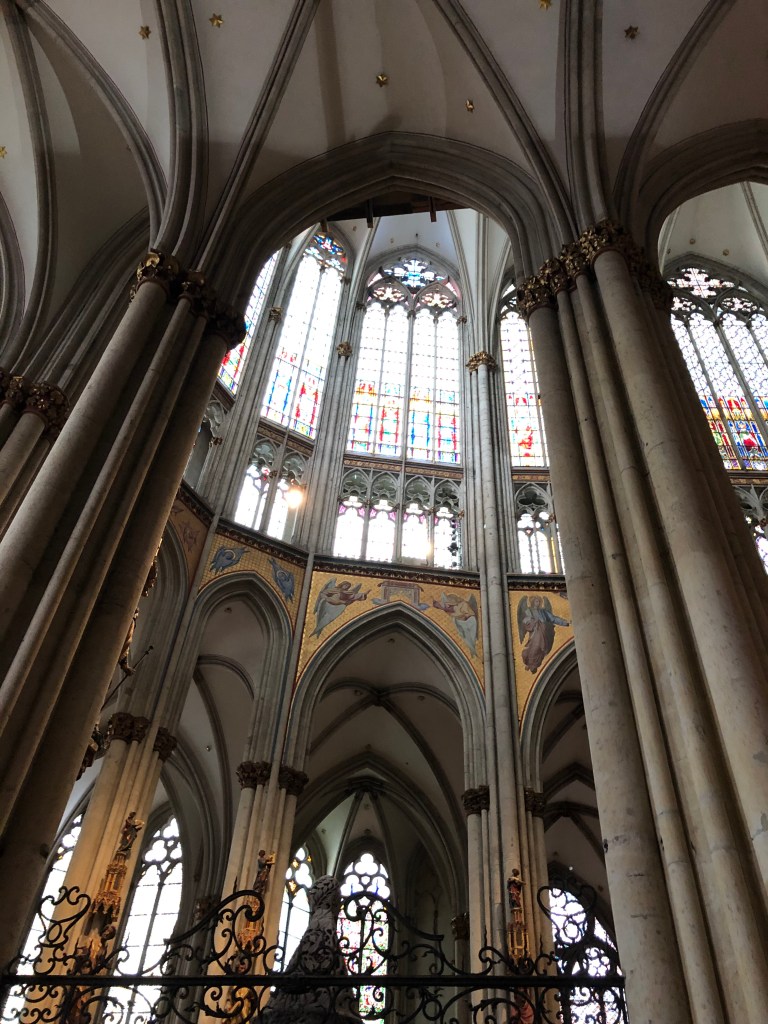
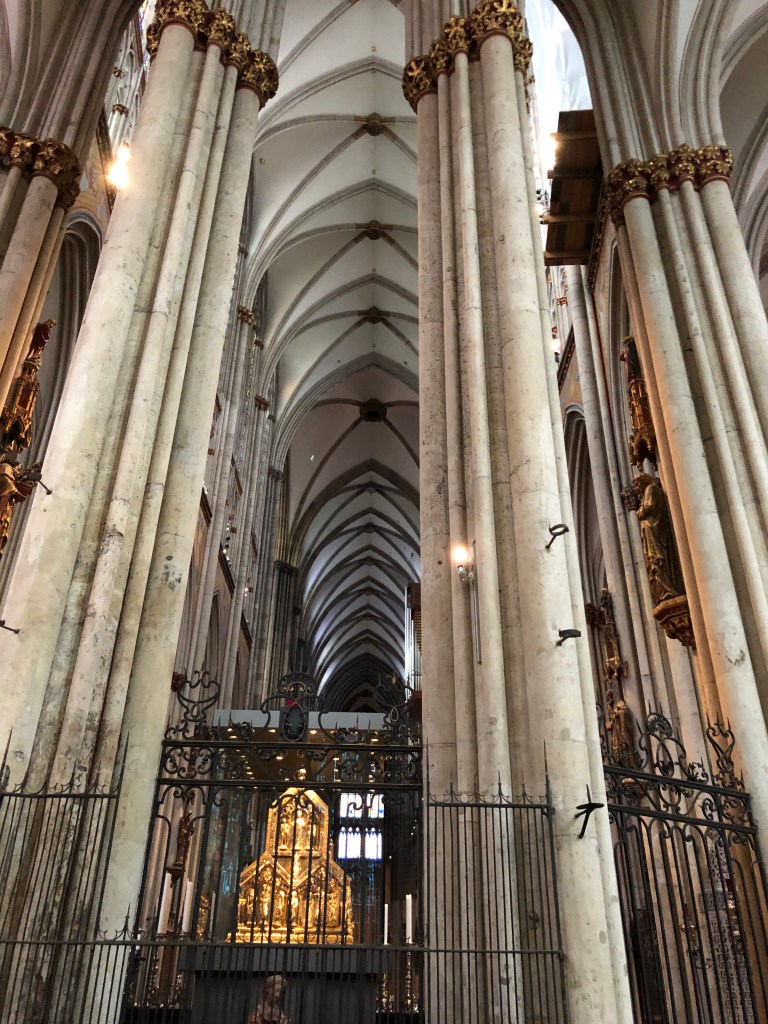
I worried that this was the last church I would appreciate (it wasn’t) because what could compare? Then on I went to my next landmark. Right across from the Dom is the Museum Ludwig. This filled the void the Mainz Kunsthalle left, having been underwhelmed by that art ‘museum.’
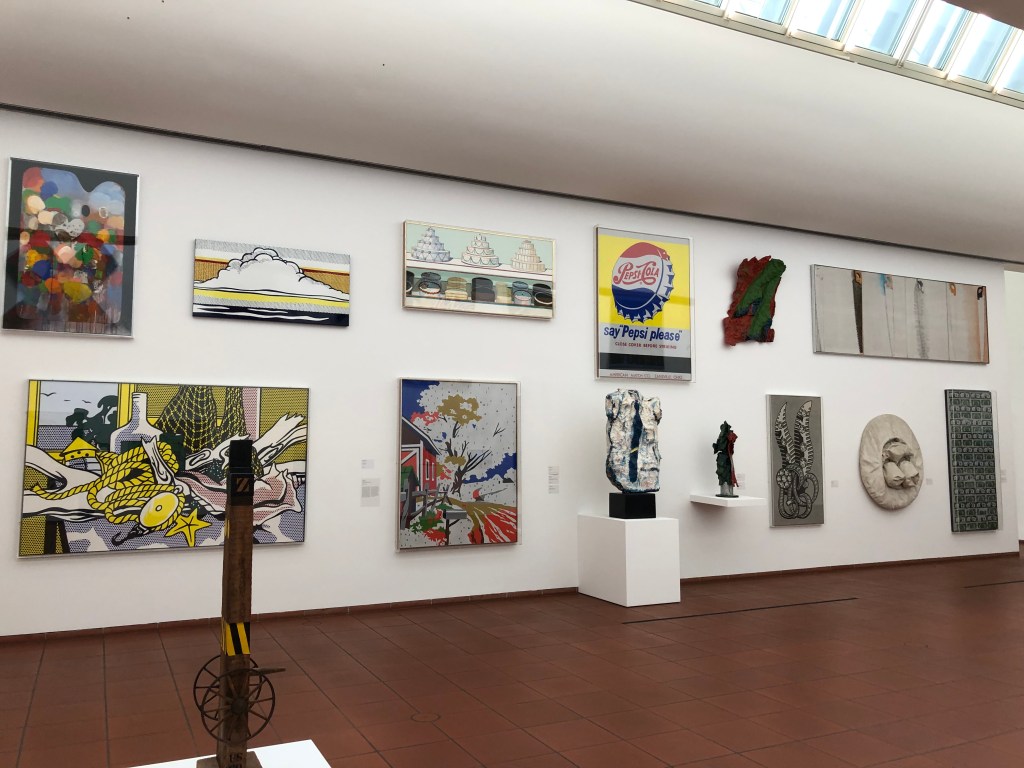
Ludig had lots of pop art 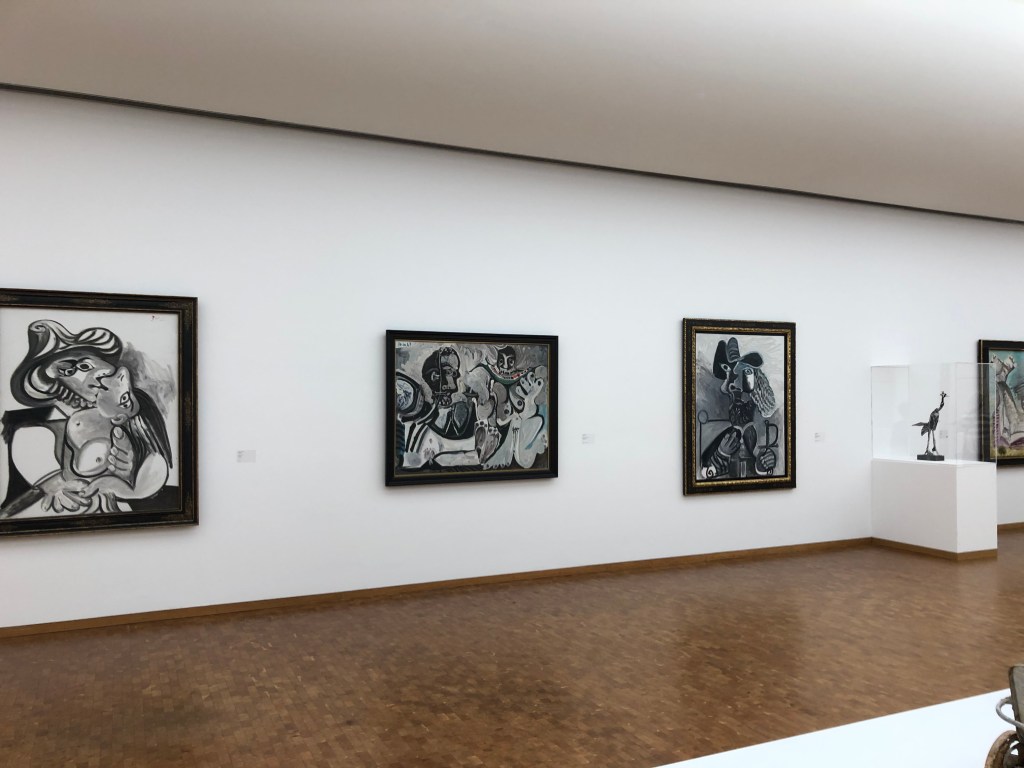
and one of the largest collections 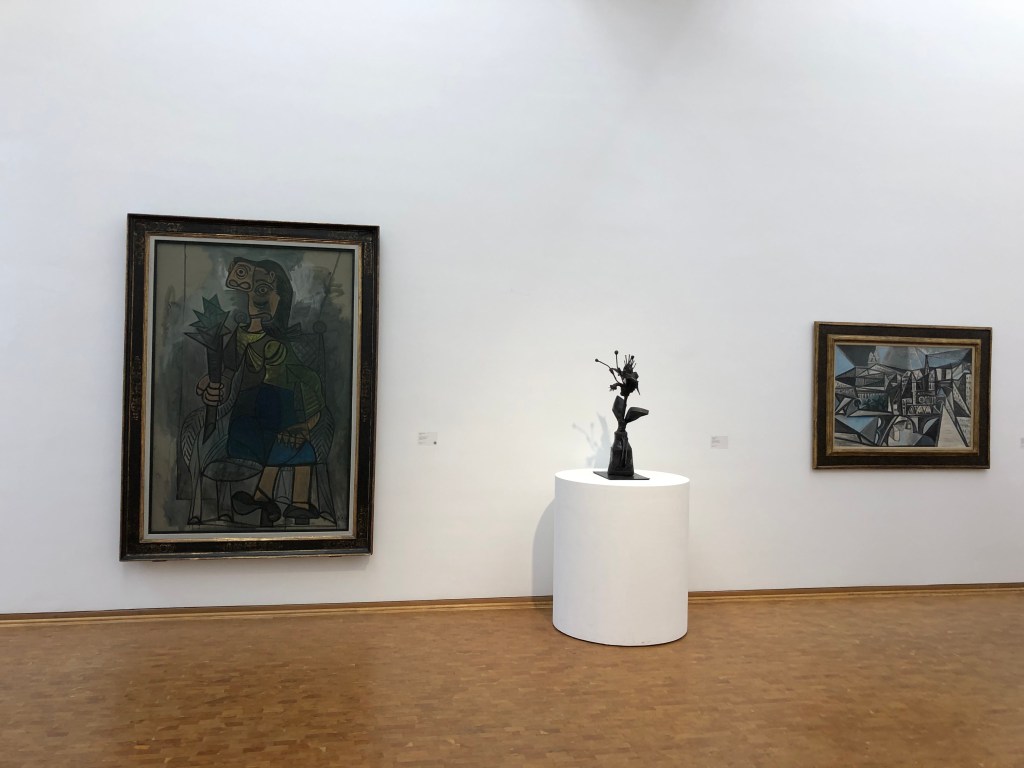
of Picasso’s works. 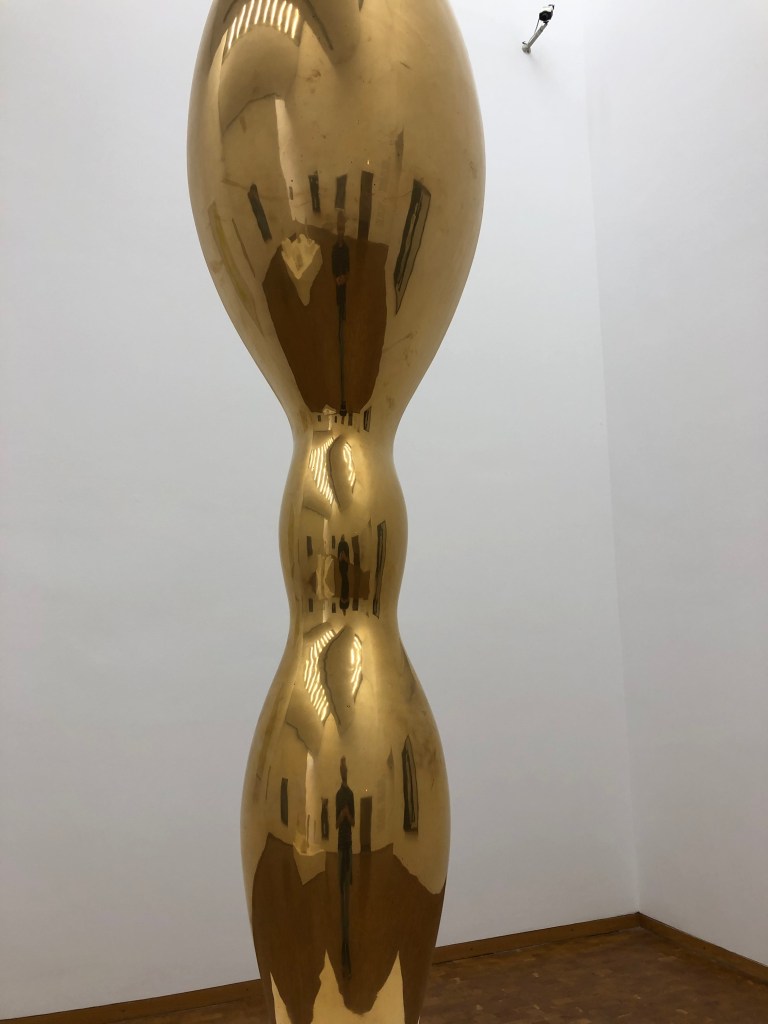
And if I didn’t do enough 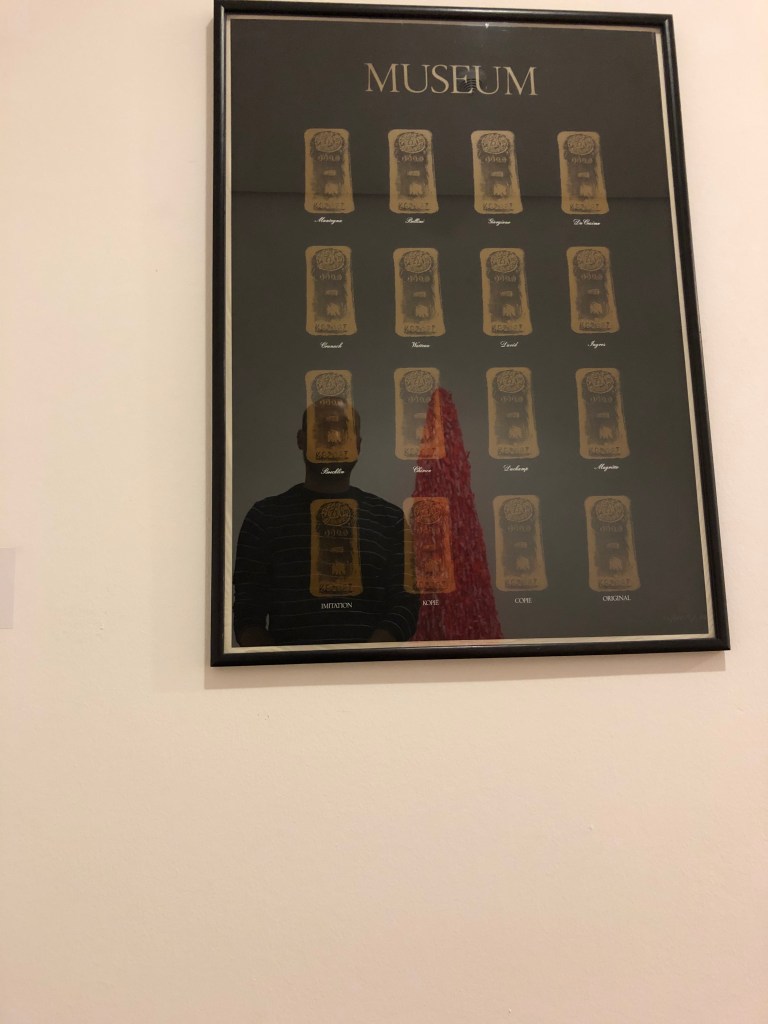
reflecting over Yom Kippur 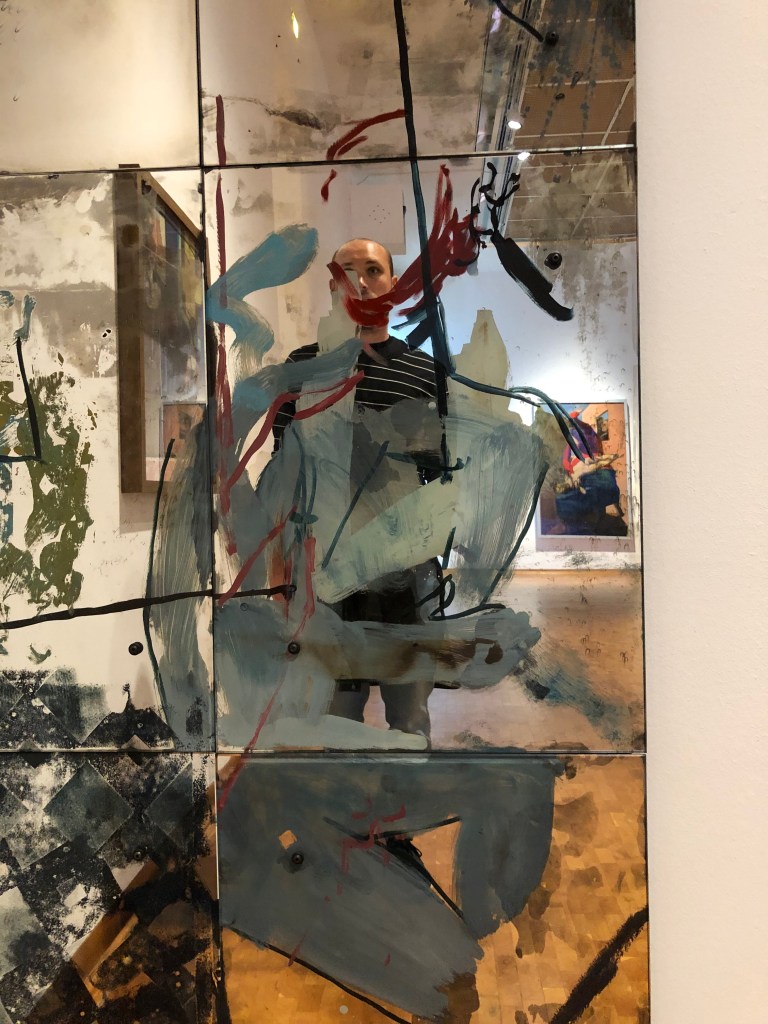
I reflected more here
After bopping around downtown I slowed down. I had one spot left to see in Cologne, my grandmother’s childhood home. This wasn’t far from my hostel, so I walked it. Both hostel and home are located on the ringstrasse, or ring road, a term I learned in a History of Cities course I took in undergrad. A more exact layout like Boston’s hub concept, Cologne is organized with arterial spokes emanating out from downtown and a couple of ring roads circling it. The spokes are the primary roads, rinstrasse segments are secondary, and then tertiary streets and whatnot filled in the rest. My grandmother’s childhood home, on Ubiering, was at the southeastern terminus of the ringstrasse where the central boulevard fanned out into a small park as it reaches the west bank of the Rhine. I really liked this neighborhood, where shops and restaurants contributed to lively sidewalks with people of all ages, and 4-8 story residential buildings stood above the wide street.
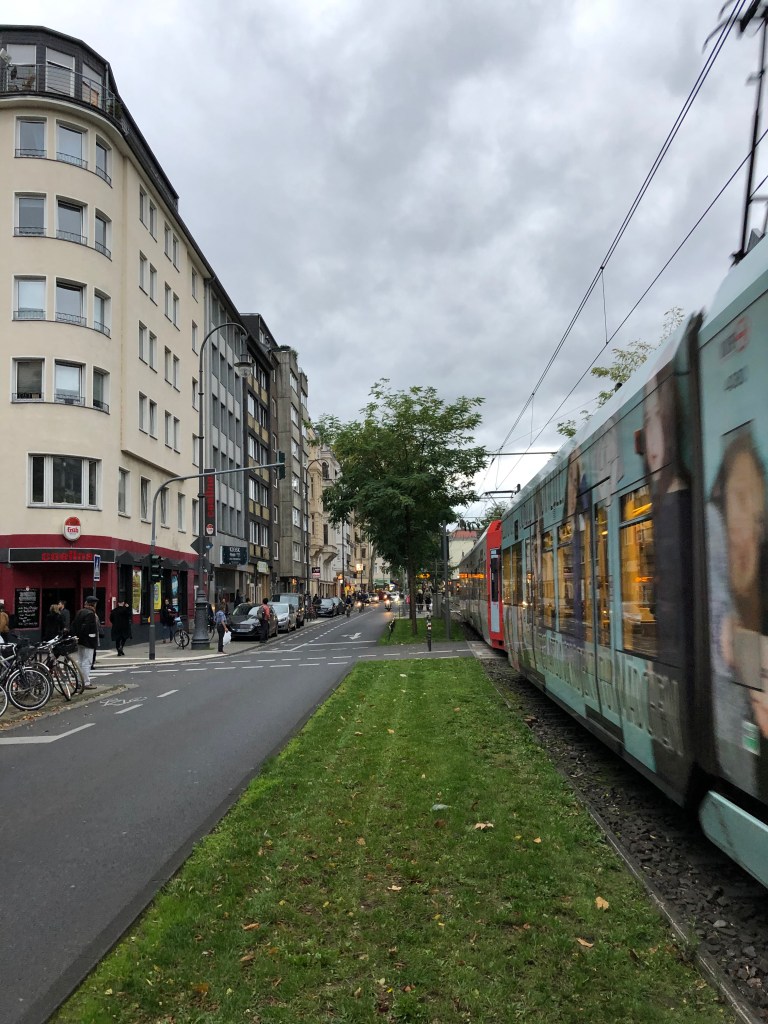
The tram also ran down the boulevard 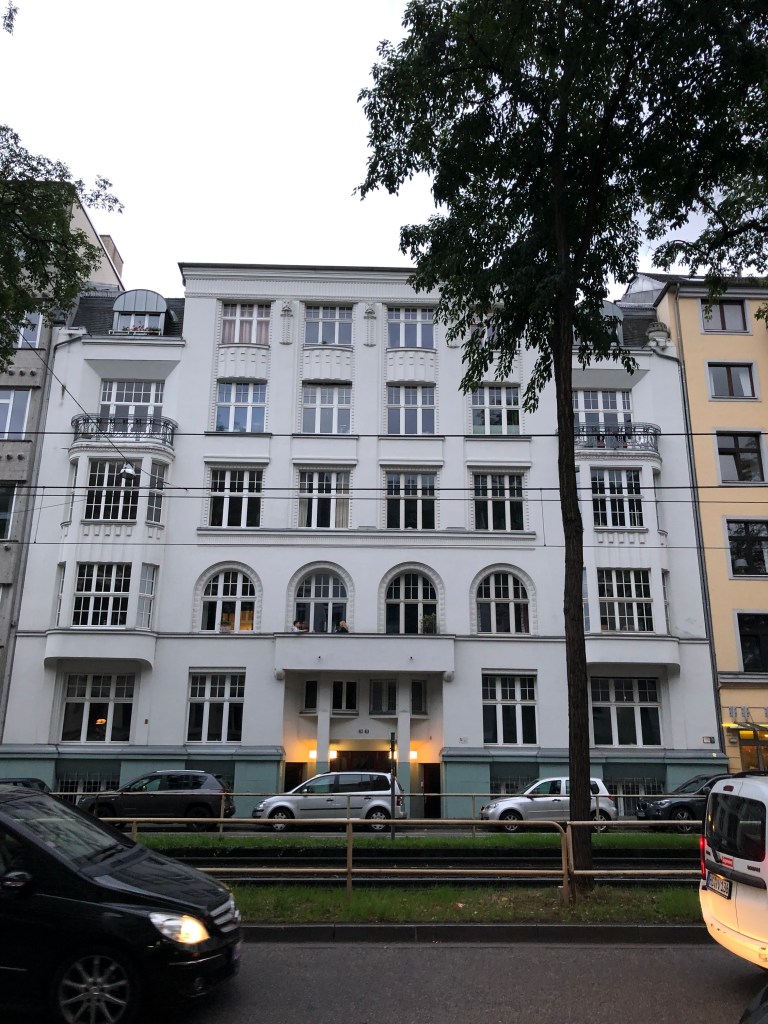
26 Ubierring 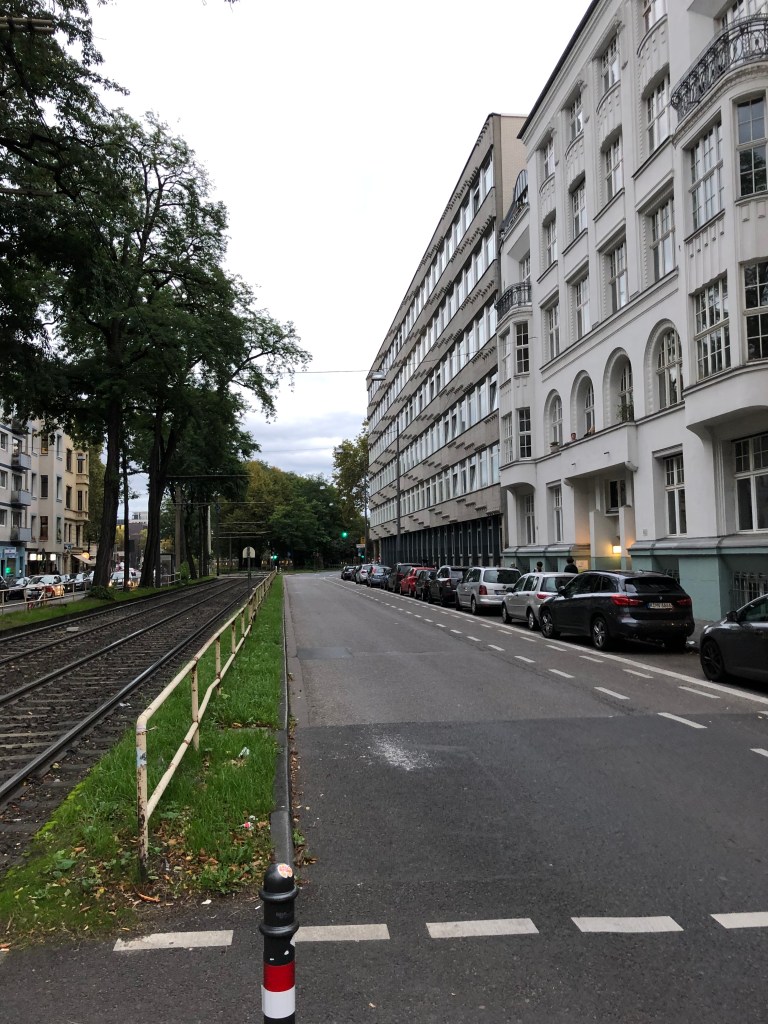
Looking toward the park
My last morning here, I got up early and went for a sunrise walk around the University of Cologne. It reminded me of BU, where it didn’t have much of a campus save for one long block with a near unending facade on one side of a boulevard. On my walk I hung out watching a crepuscular owl for a bit, walked through the edge of the Hiroshima-Nagasaki Park, and then passed by the rebuilt Roonstrasse Synagogue on the way to my car. There’s something magical about this time of day, when animal activity is high, human activity is low, and the sky slowly lights up. The sun rising close to 8am in October made me appreciate daylight savings time. I had now concluded my my maternal family history portion of the trip, and it was time to head west out of Germany.
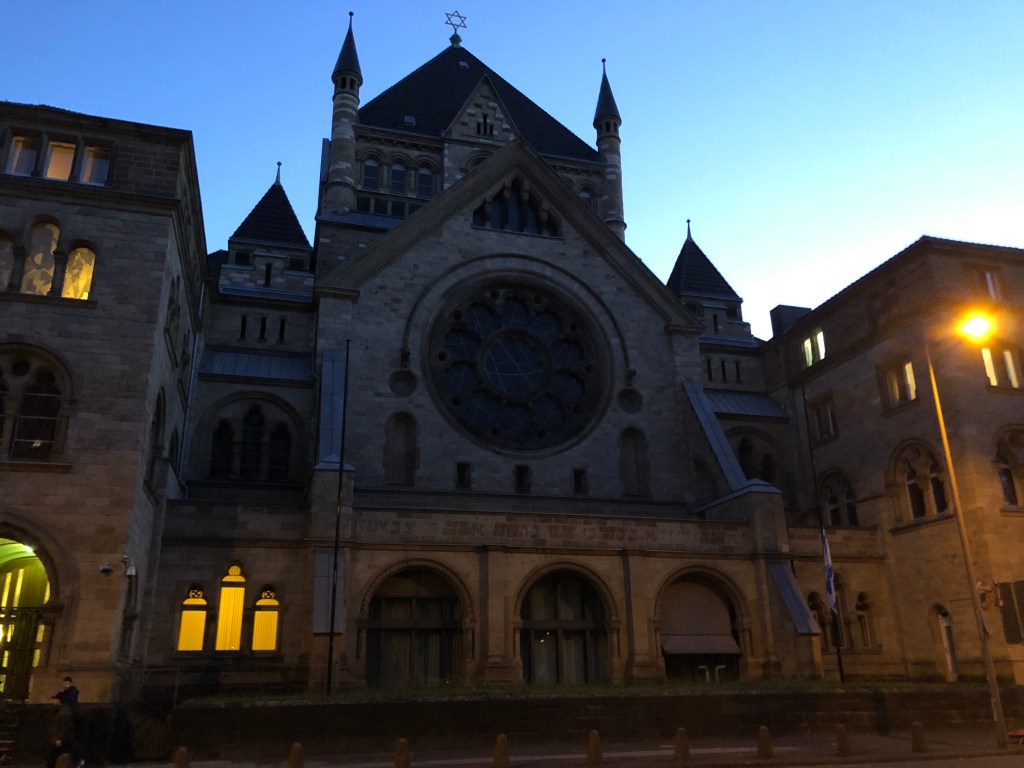
Roonstrasse Synagogue at sunrise 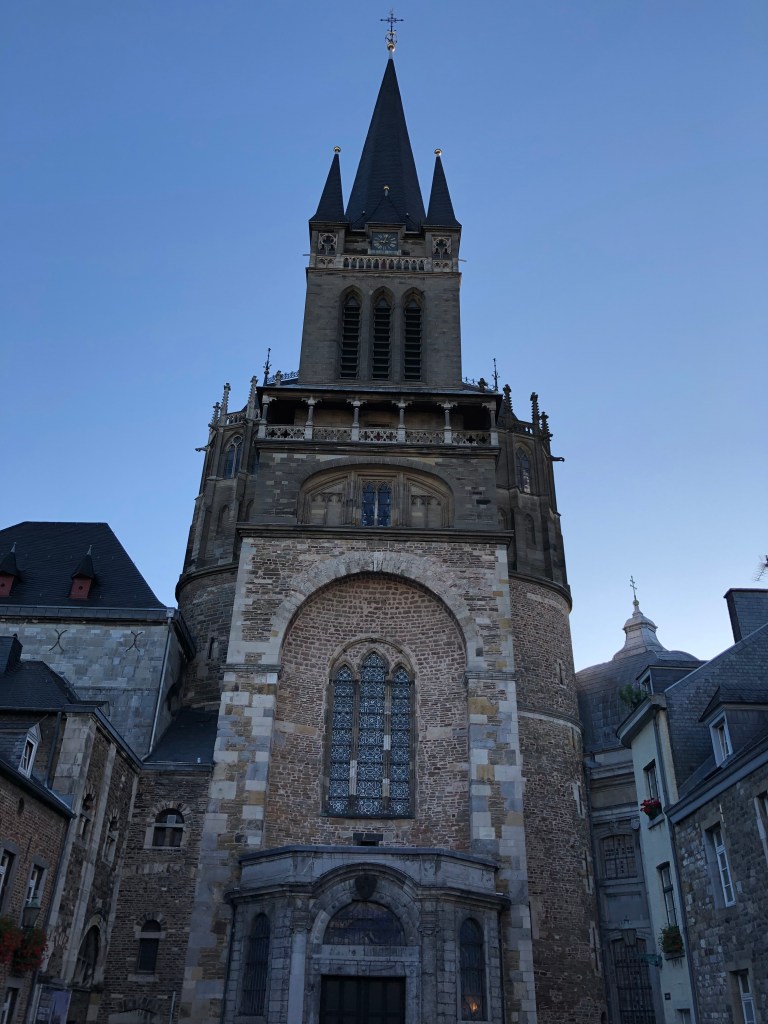
Cologne has lots of nice churches 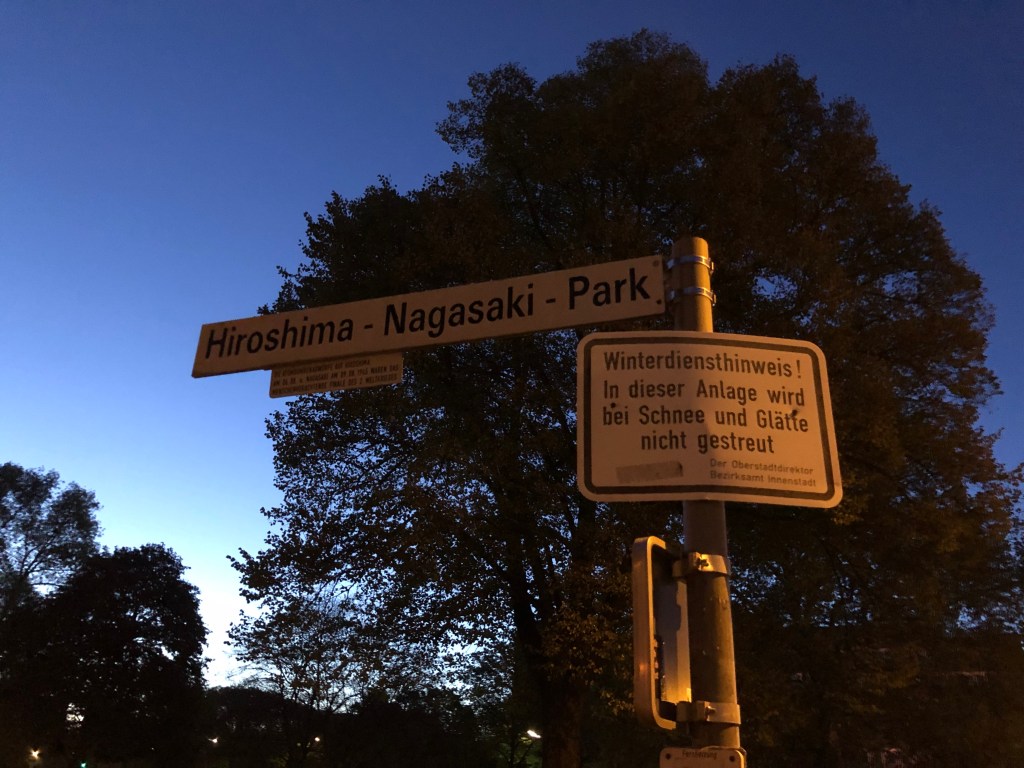
Widdershinning Weiss!!!
I decided to make one more stop in Germany at Aachen, a big town/small city along the way that had been recommended to me (thanks Peter). It had a nice Dom, the mosaic on interior of the ceiling was phenomenal. They are a pilgrimage site and were advertising their next one in 2021.
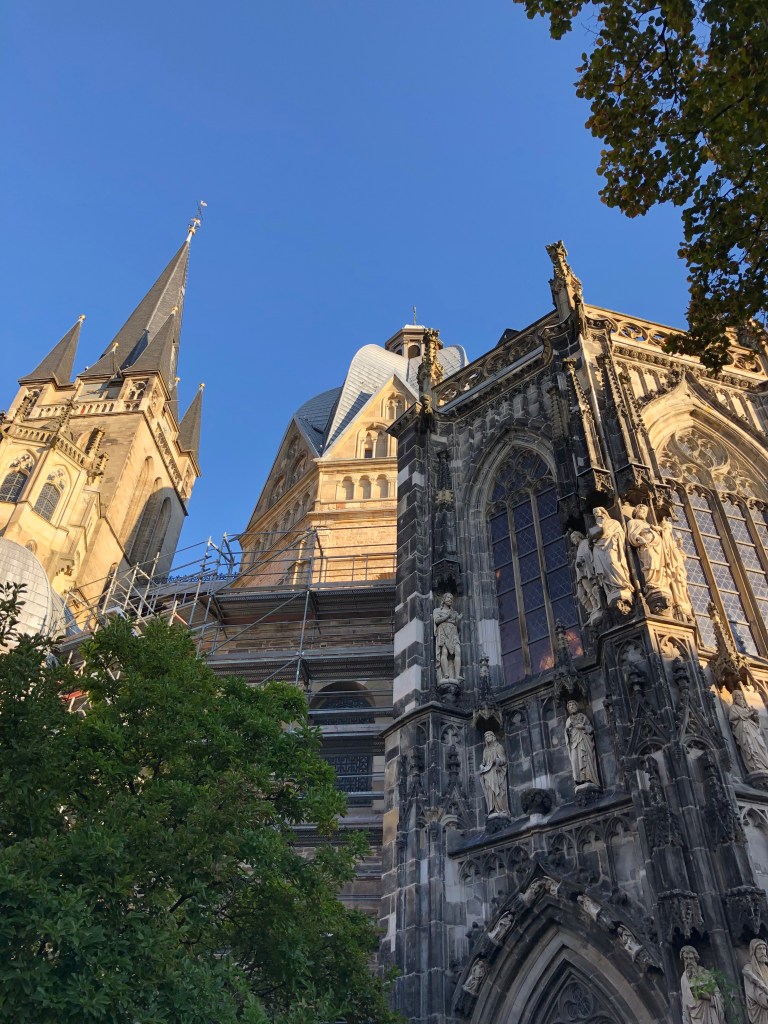
Portions were added over centuries 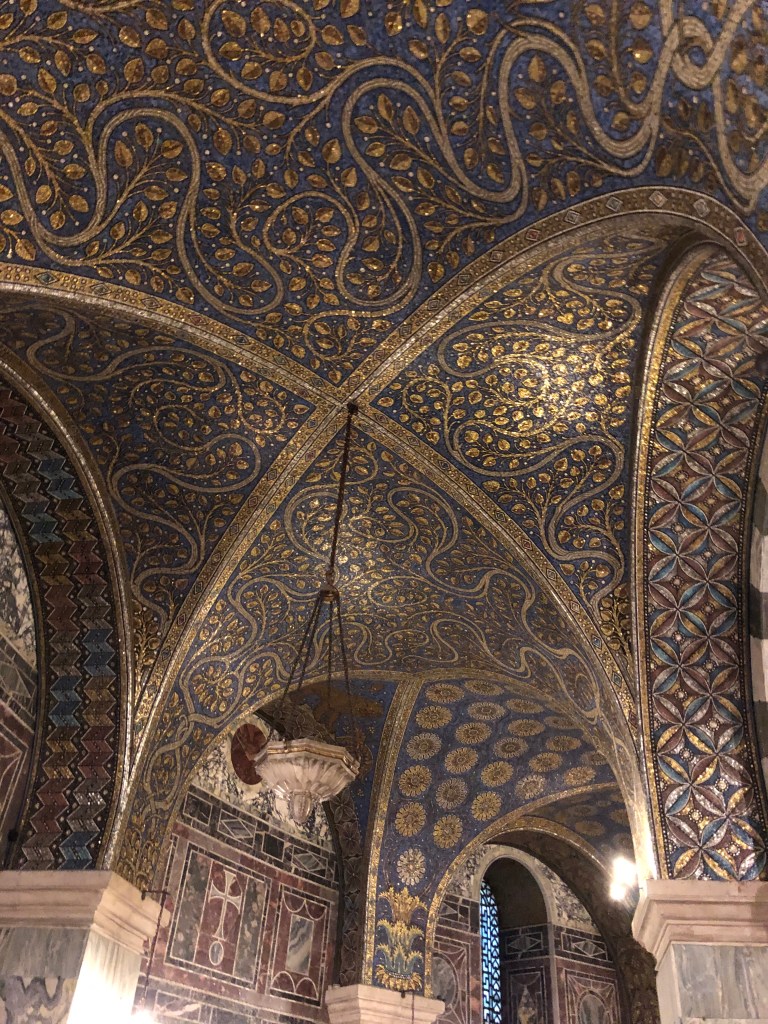
The ceilings were most impressive here 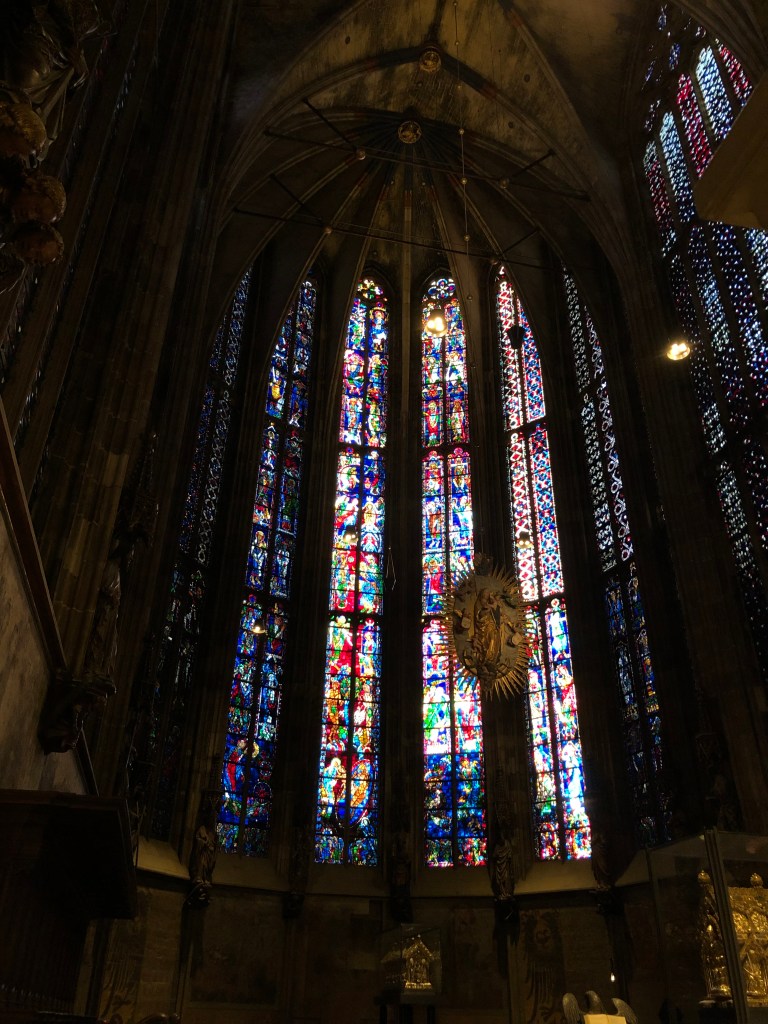
From the Dom I walked through a farmer’s market and around the town where there were many nice older buildings. Playful statues were literally everywhere here, and for me the highlight. What I couldn’t understand was how this place sustained so much shopping. Perhaps it is a regional hub, as I soon learned how rural everything else was about to be. I also checked out the RWTH university. Short of a crazy cantilever, mostly later 20th century buildings and nothing special.
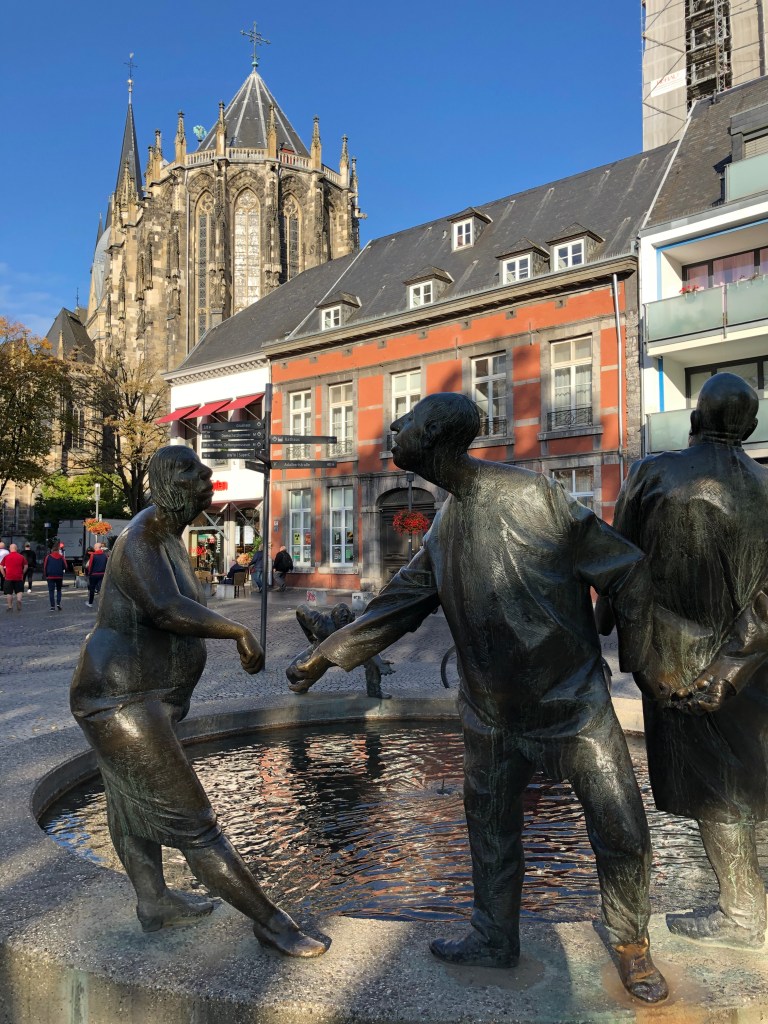
Sculpture and the Dom 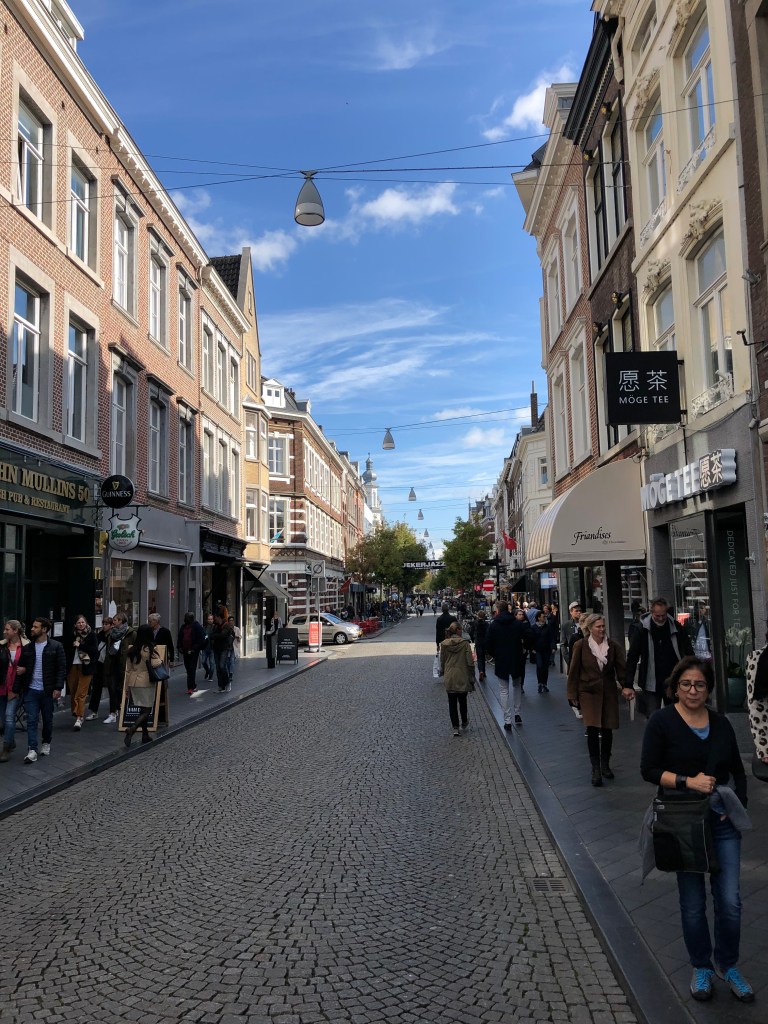
So many shopping streets 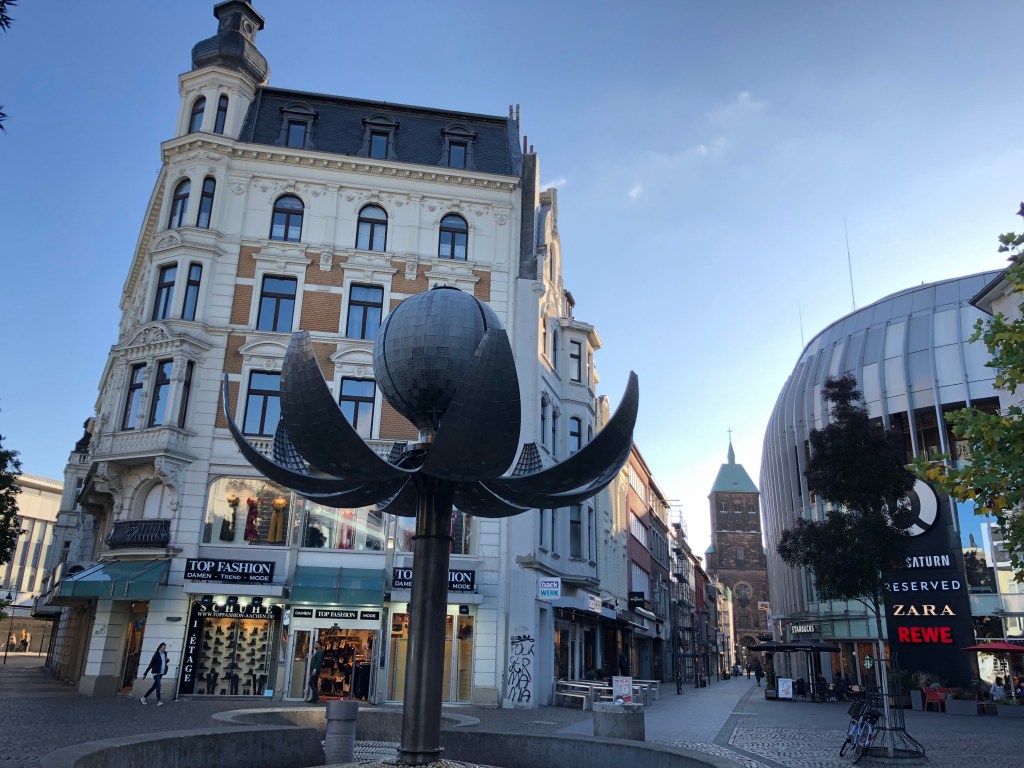
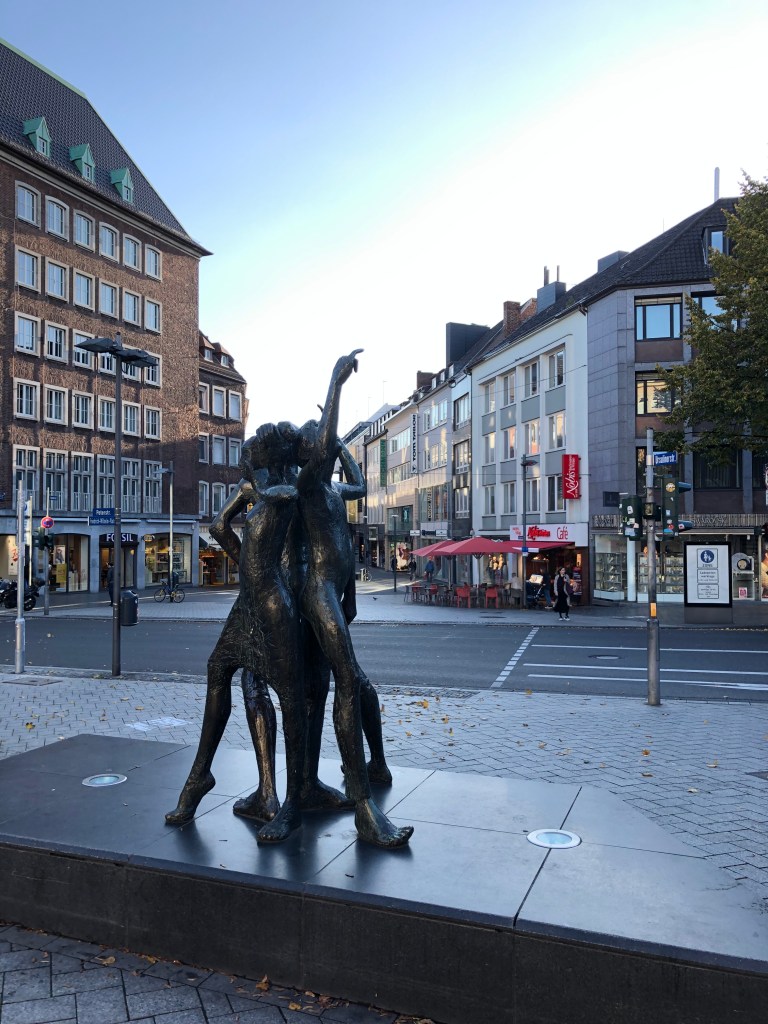
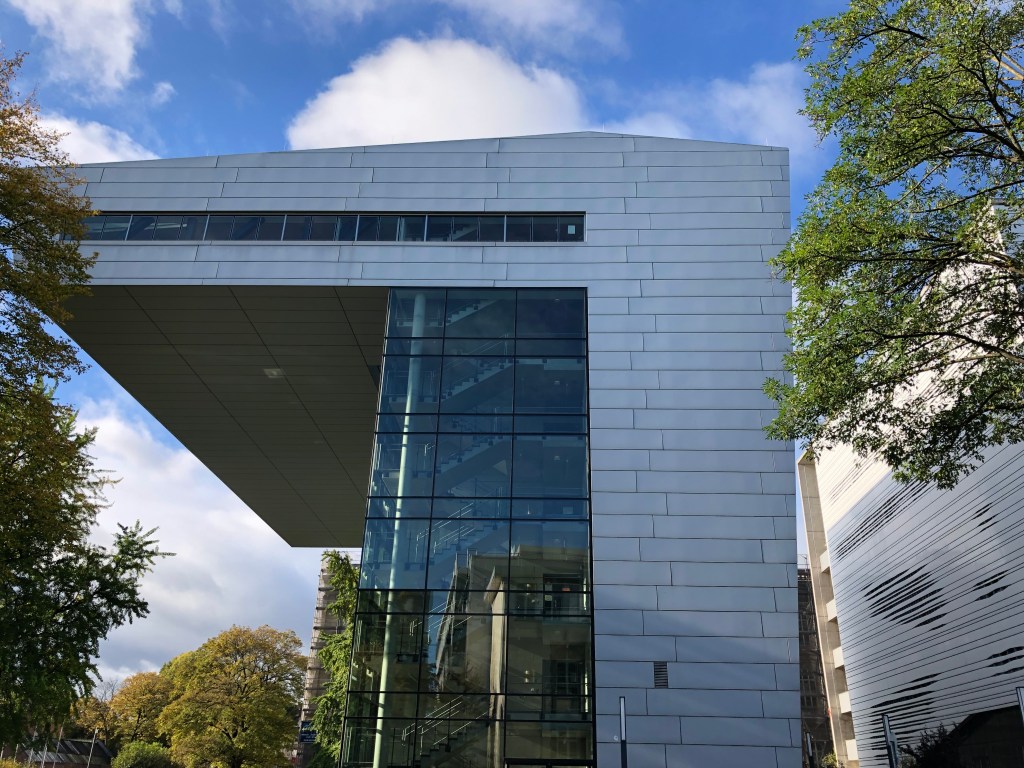
Epic cantilever at the university
From Aachen I put Germany in my rearview, and went Deutsch to Dutch; onto the Netherlands. You know, just for a quick afternoon. My first stop was to be the Drielandendpunt, but I came across this first, and went up.
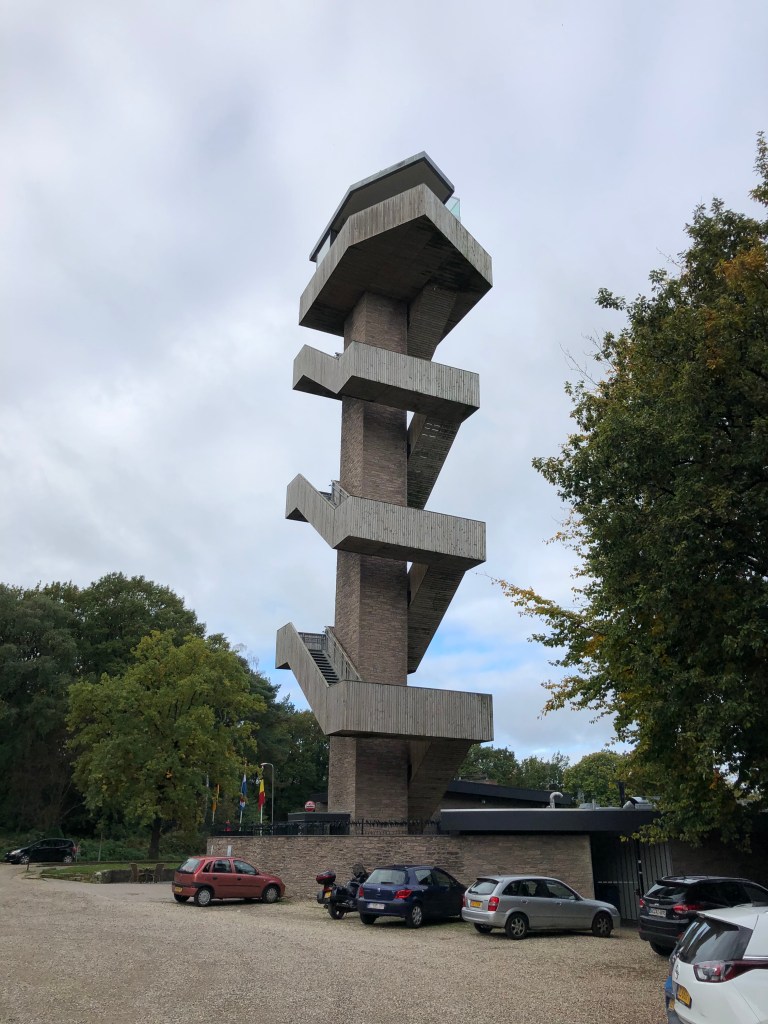
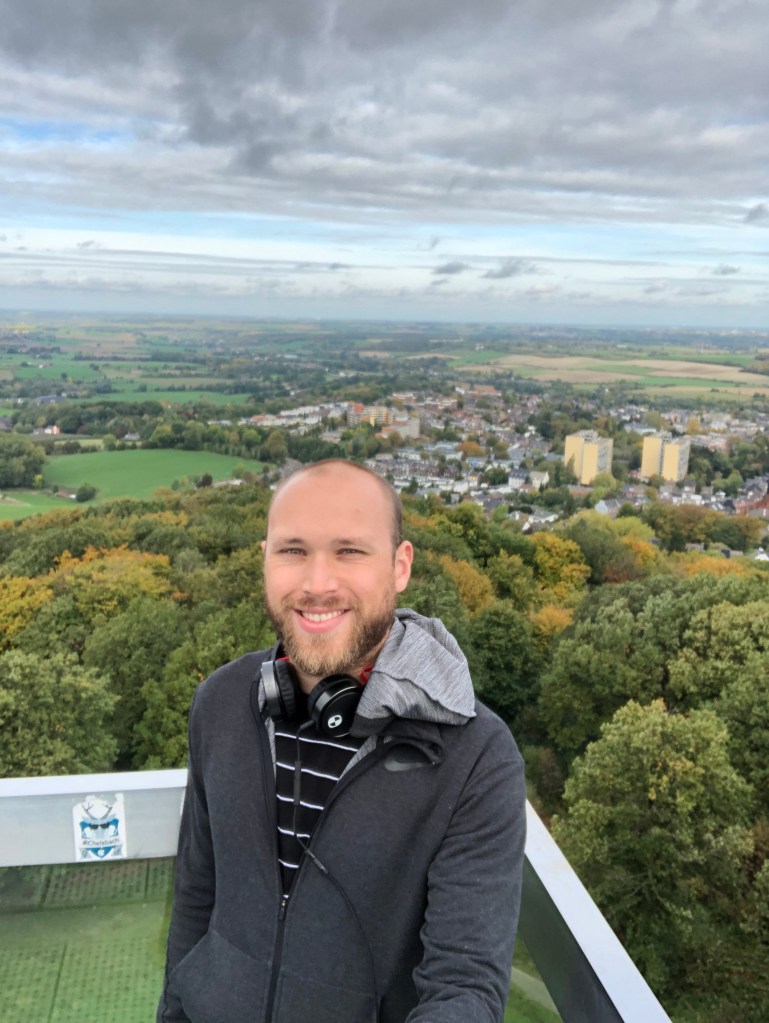
In addition to my GoPro, I did the unthinkable, forfeited my self-respect, and bought a selfie stick.
Then I made it to the Drielandendpunt, which is a park at both the highest point int he Netherlands and the three corners of Germany, Belgium, and the Netherlands. It was kitschy and catered to families. I came, I saw, I moved on. No worse for the wear save the 2 euros for parking. After I left things got noticeably Dutch on the ride.
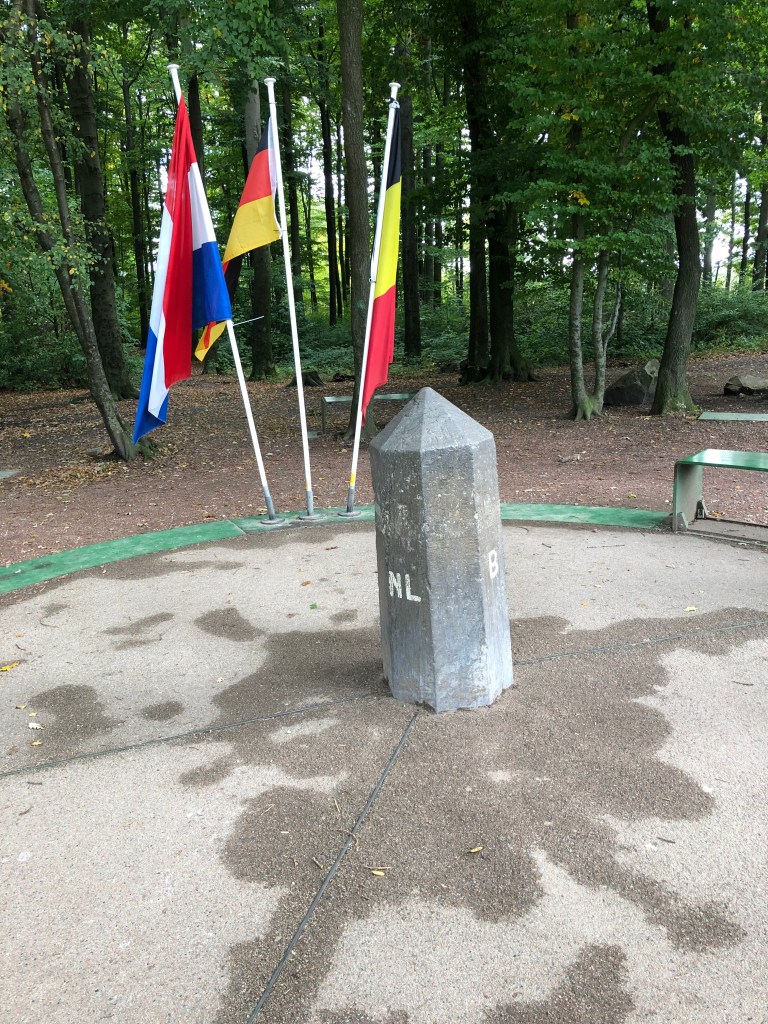
three corners, hooray 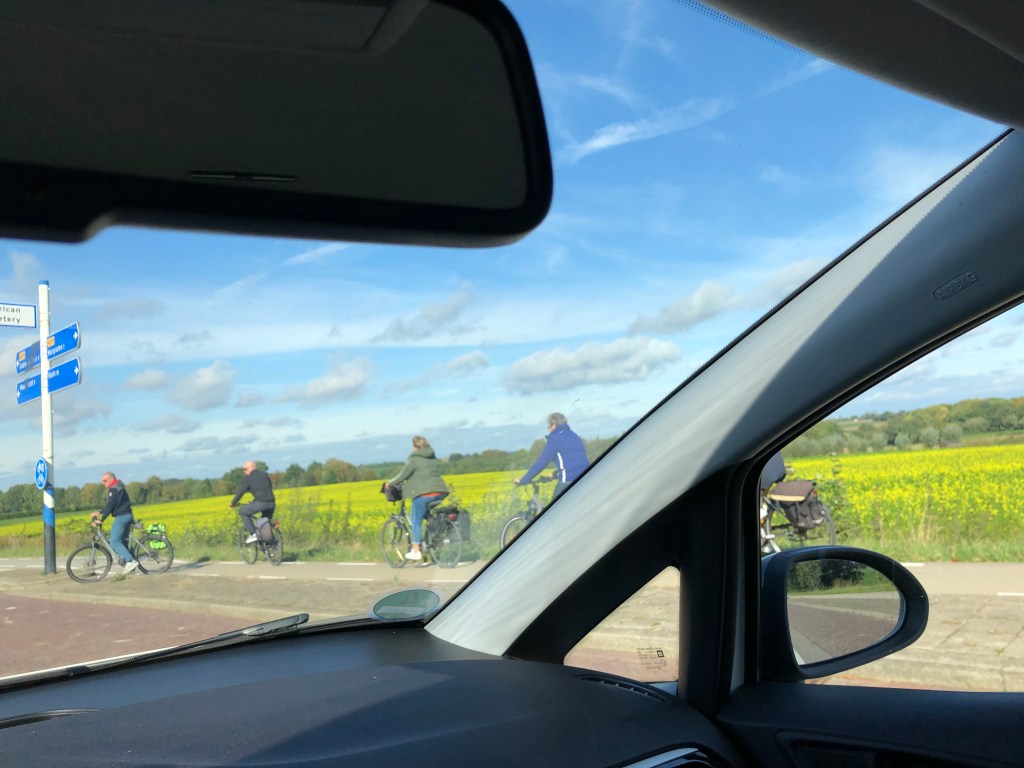
I could tell it wasn’t Germany anymore 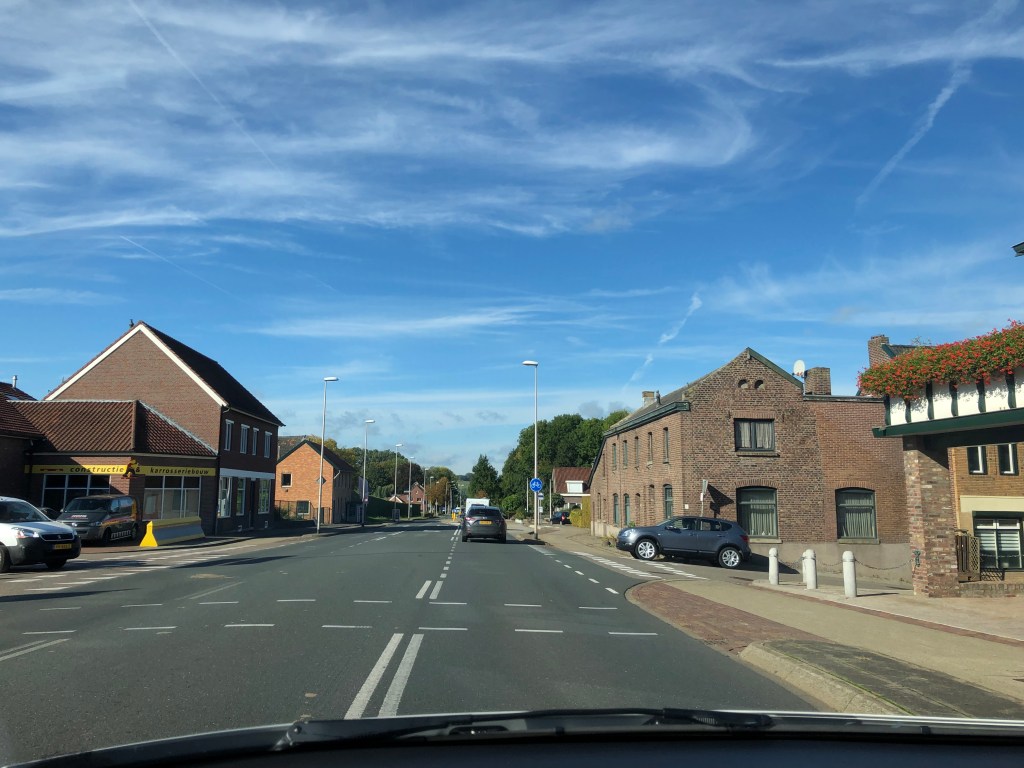
And the brick! So much brick!
I spent my afternoon in the second largest city, of the Netherlands, Maastricht. It’s a pleasant spot, again with a ton of shops in old buildings. I walked around and got lunch and checked out the downtown on both sides of the Meuse River.
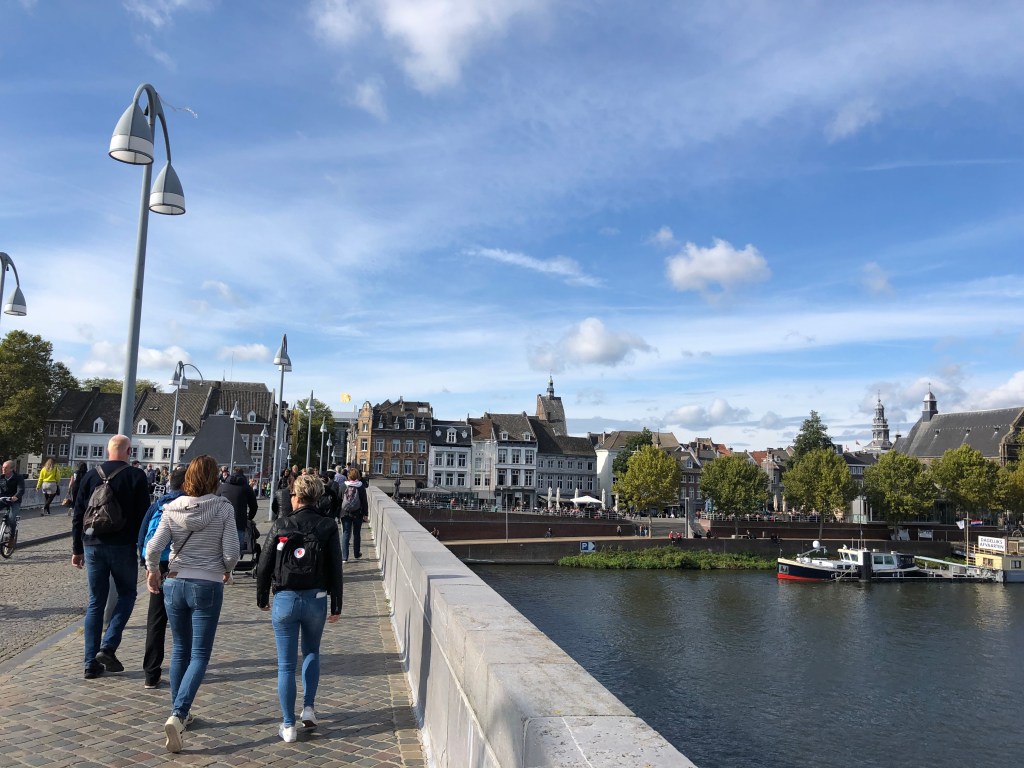
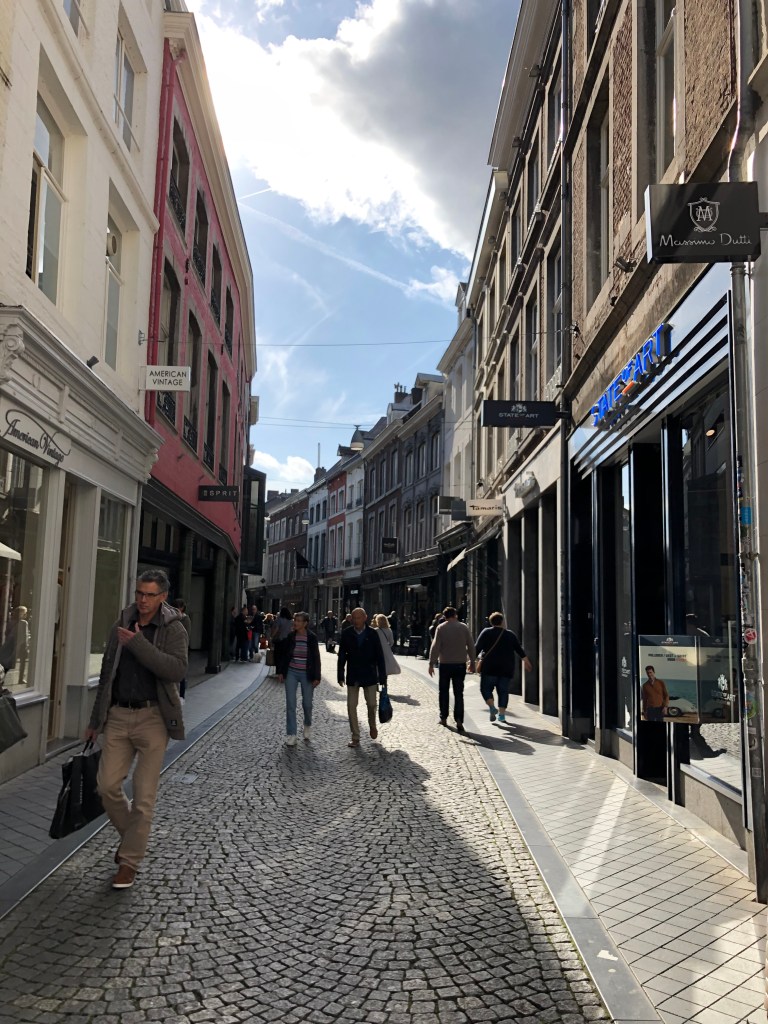
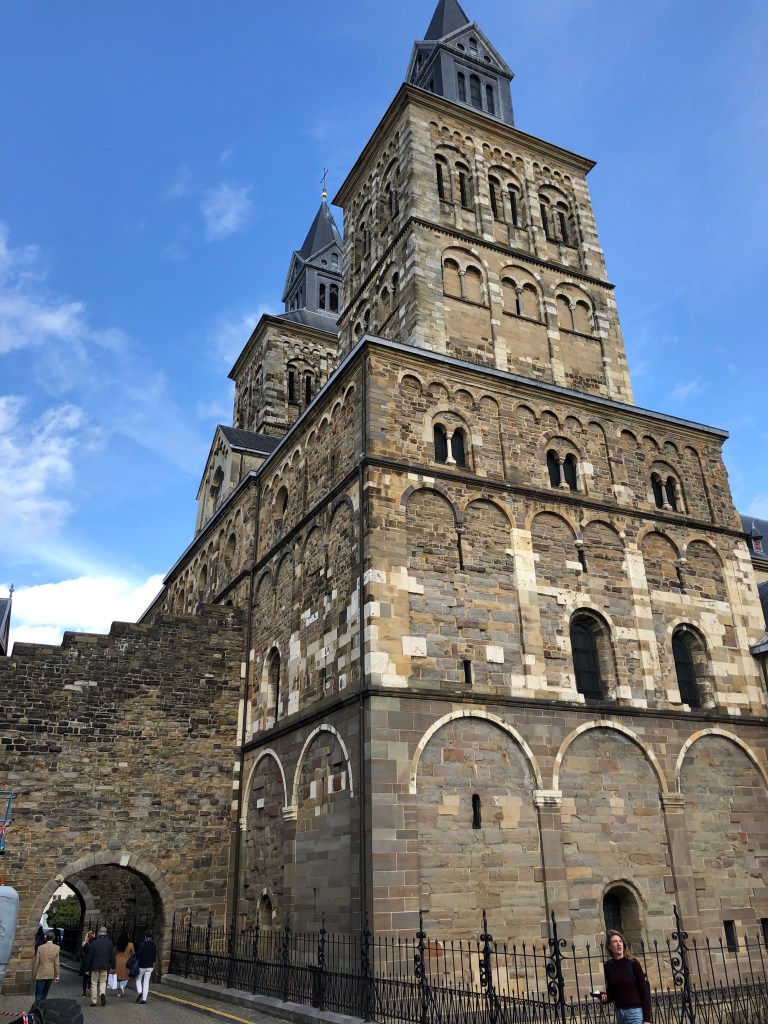
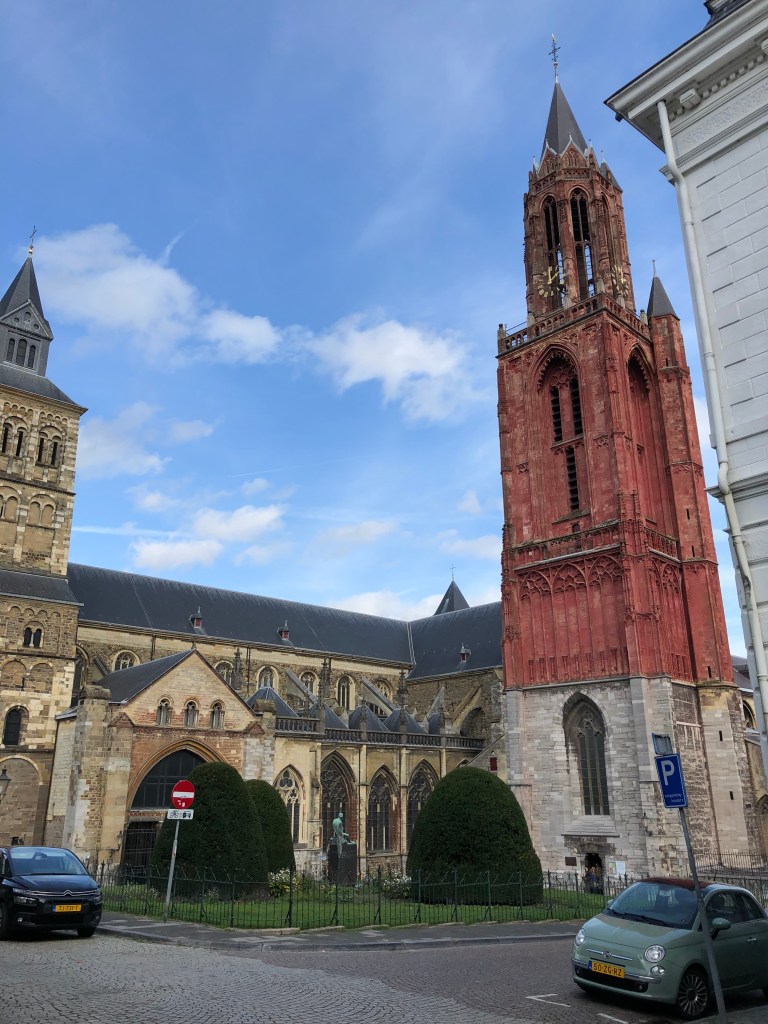
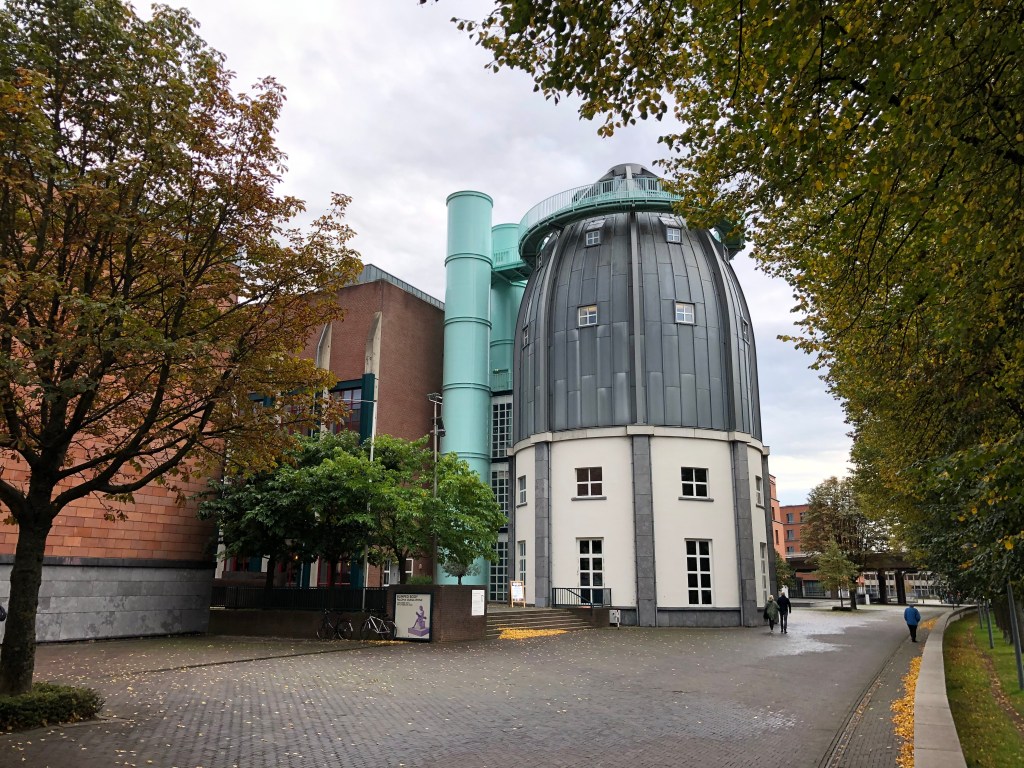
I also checked out the Bonnafasmuseum. Good but lesser than Ludwig.
With my 4 hours in the Netherlands in the books, I headed southwest into Belgium. The change in the countryside and architecture was less stark than Germany to the Netherlands. This part of Belgium didn’t have a ton of character. I got into Liege and headed to my AirBnB. Most of the buildings here are newer. After a nap I went for a long walk, got dinner, and then headed back to write up everything you’ve been reading this whole time. Walking along the river with the low light of the (one day from) full moon was the highlight of the night.
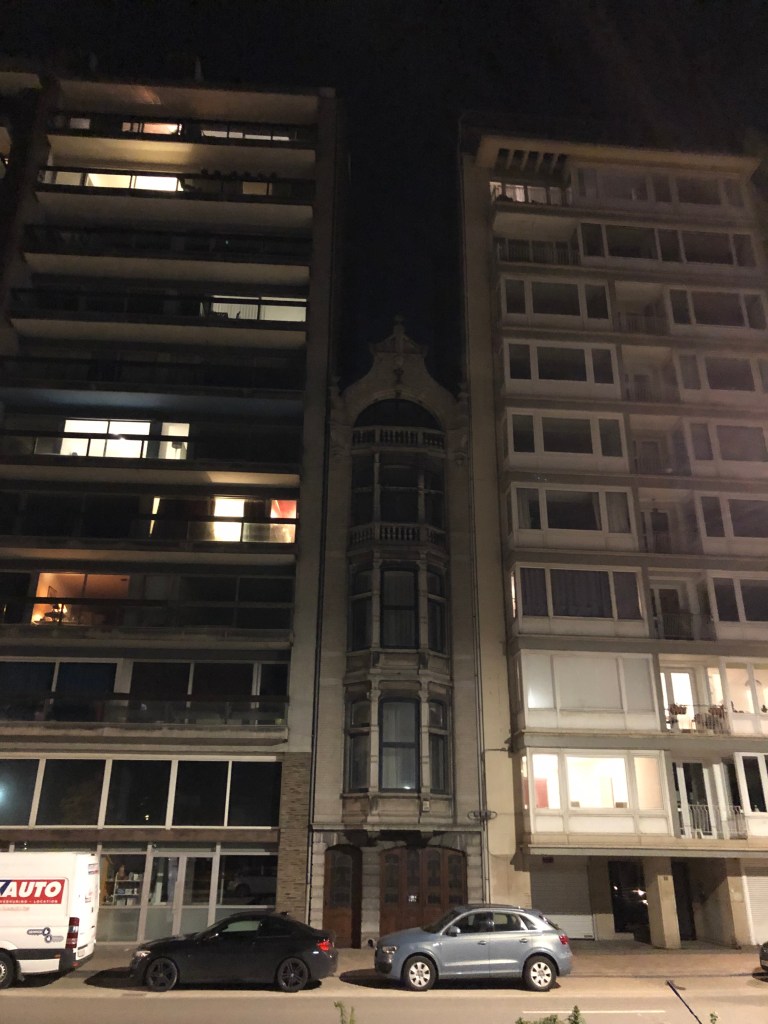
This photo is representative of the ratio of new to old architecture in Liege 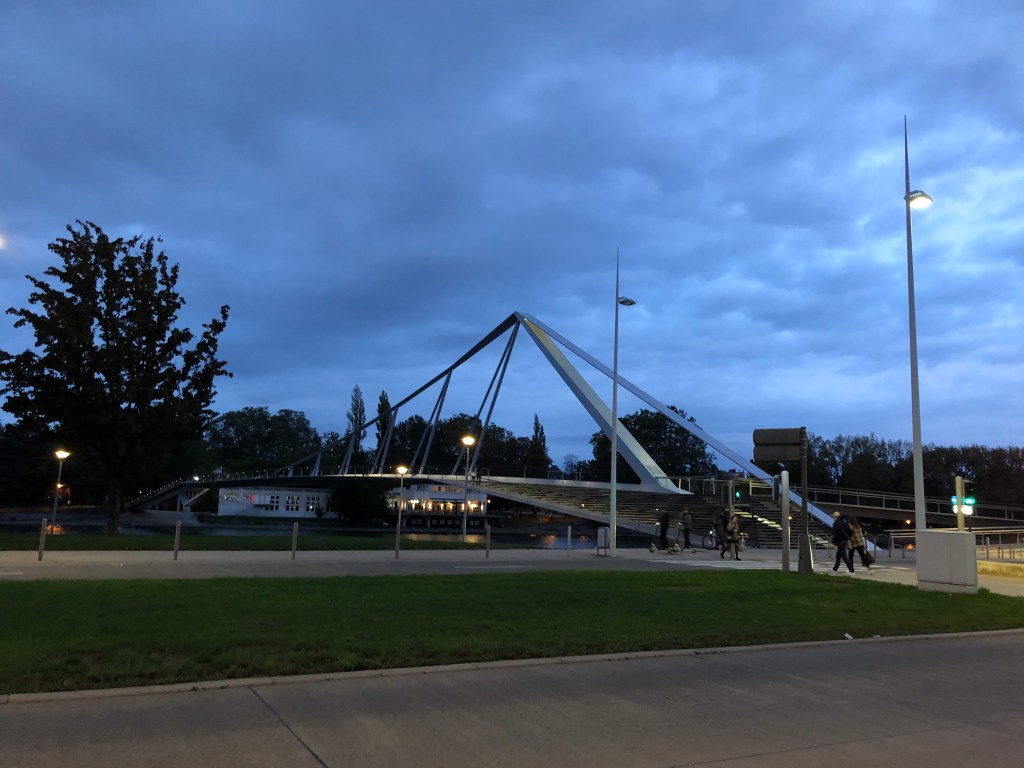
Interesting bridge 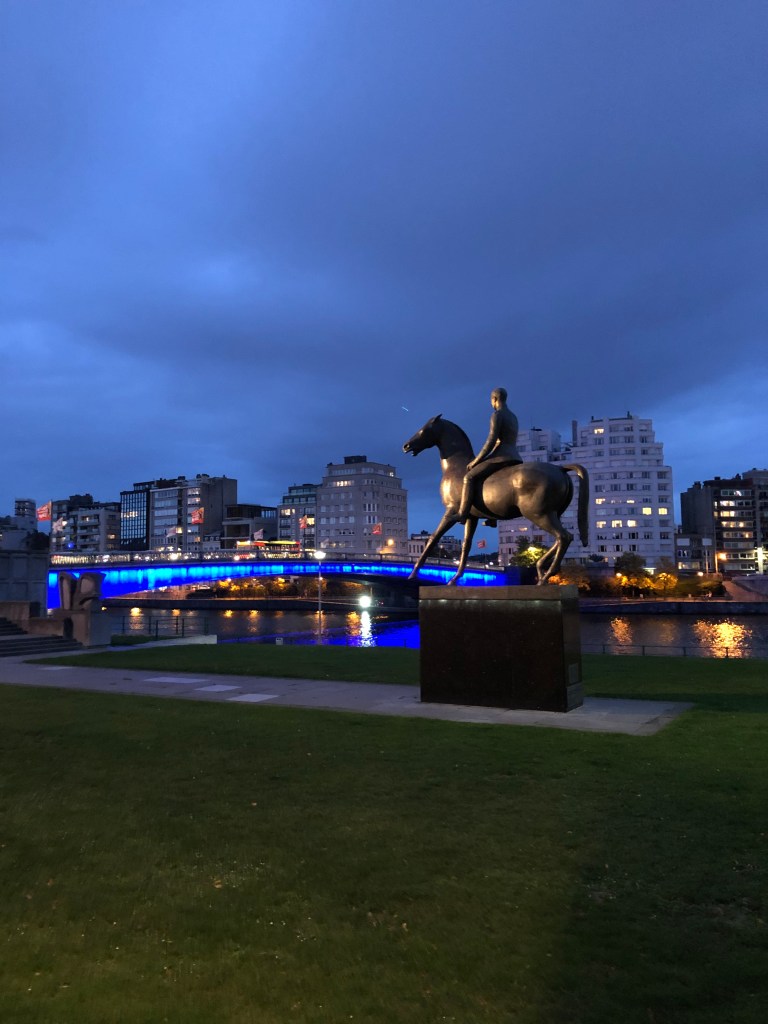
Big horseman 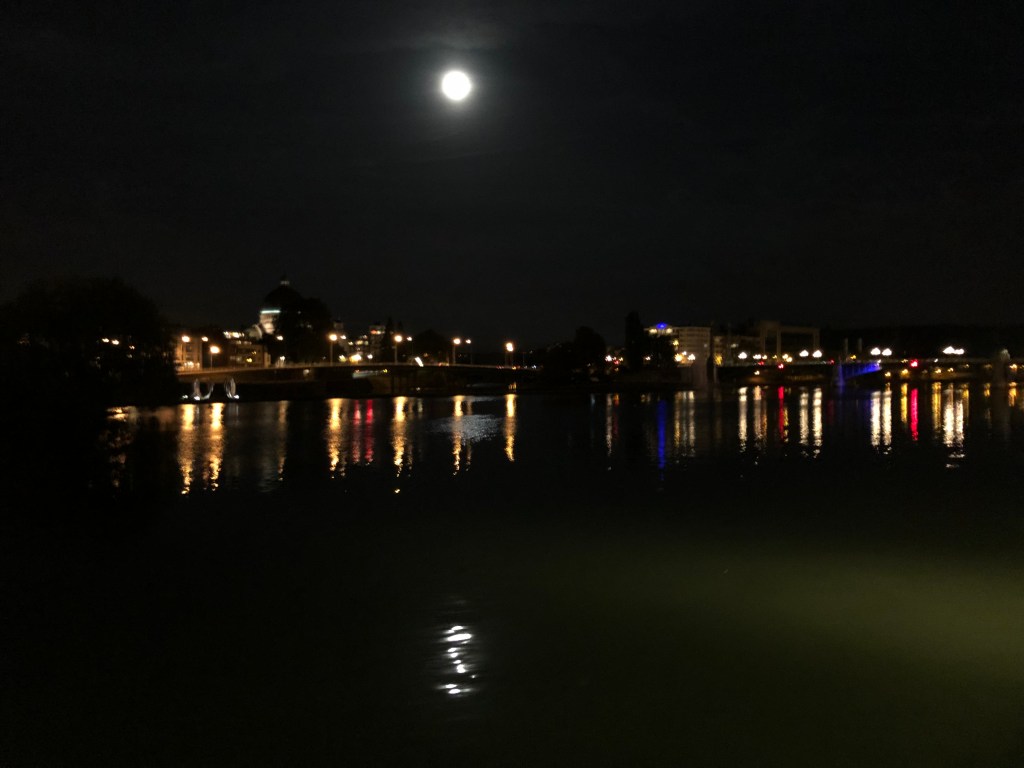
The Meuse splits Liege, same as Maastricht
I didn’t spend much daylight time in Liege, but here are some photos:
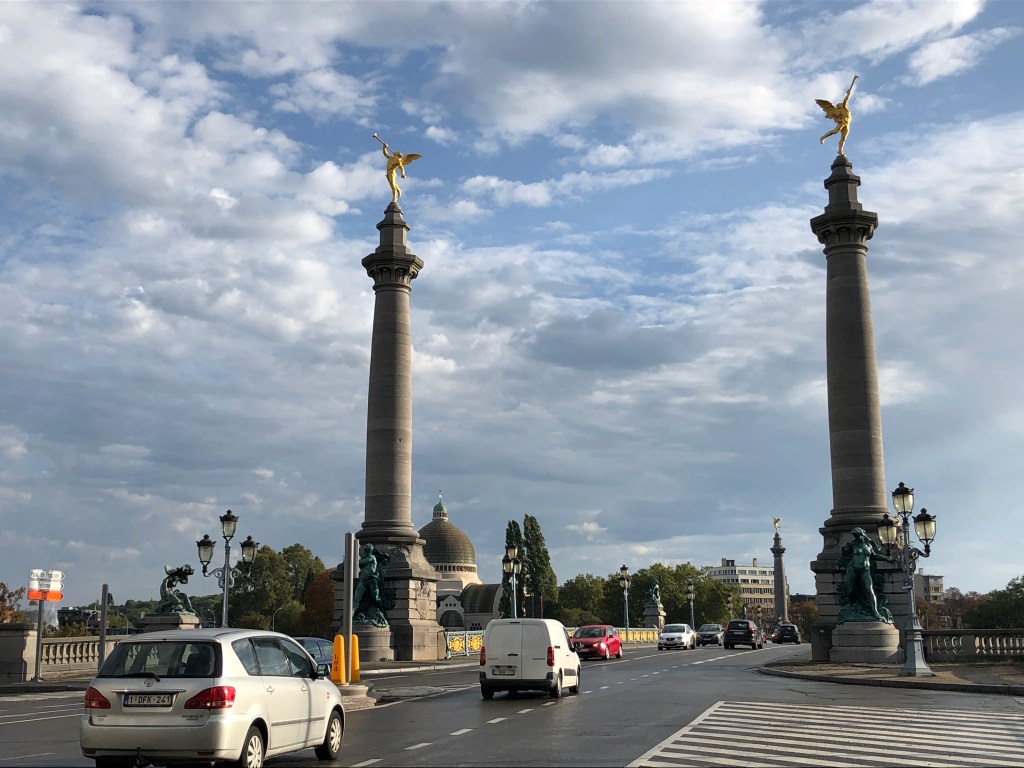
statue and dome across the river 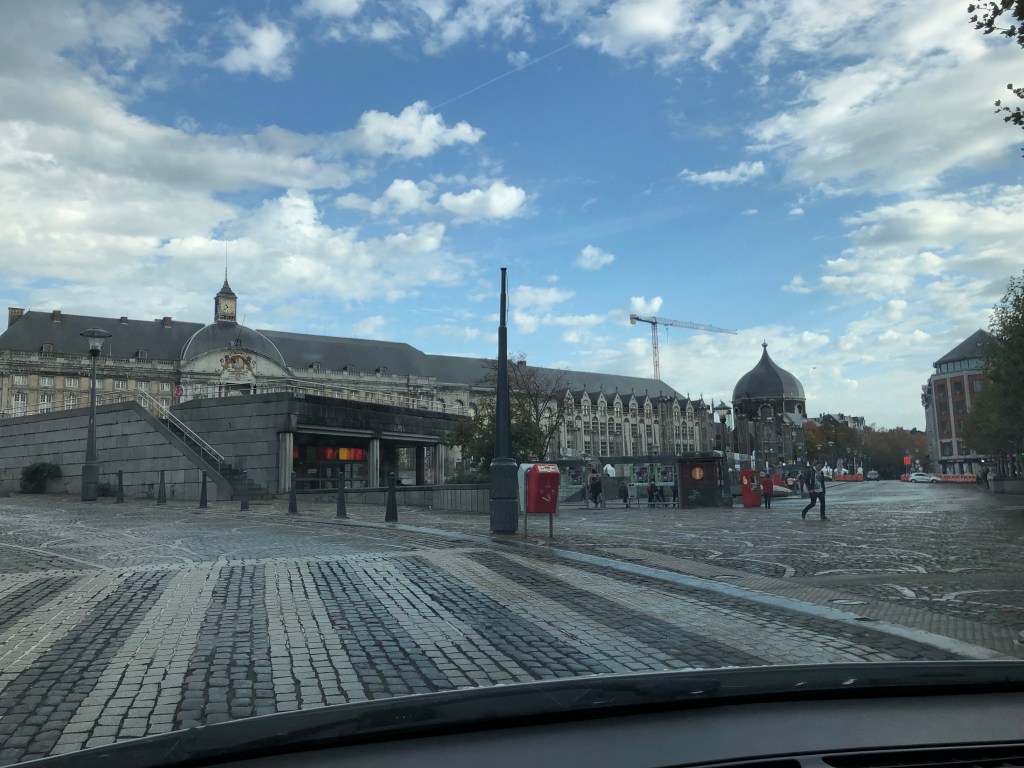
A cool plaza I guess? 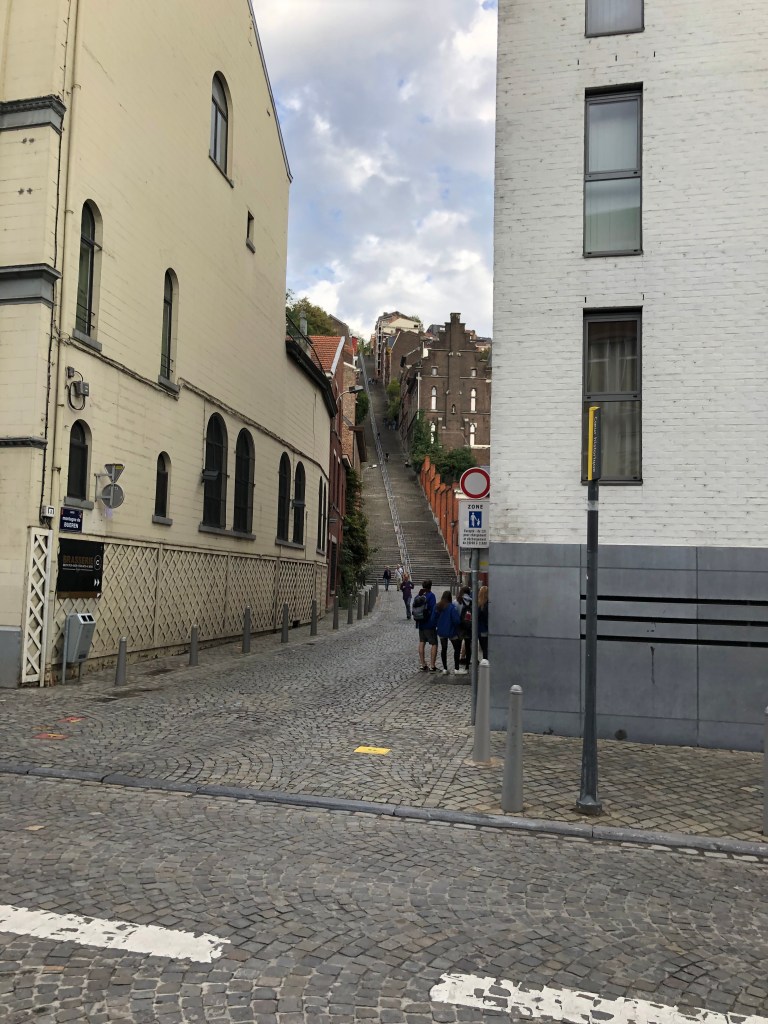
So many stairs 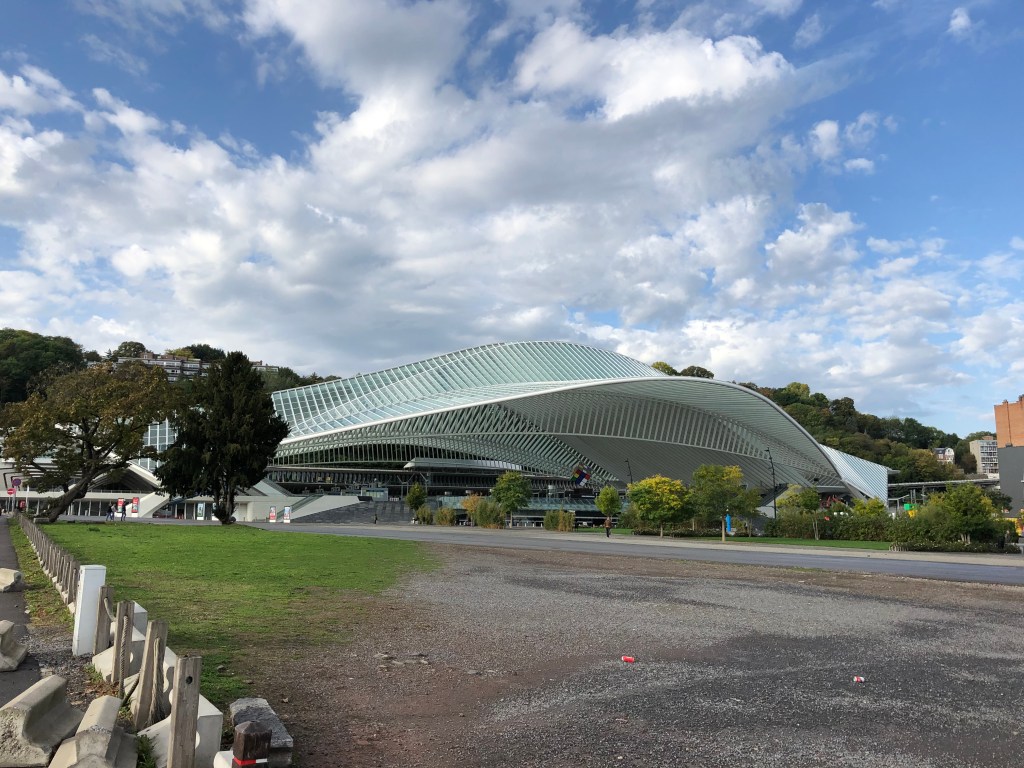
The train station was may favorite of the modern architecture 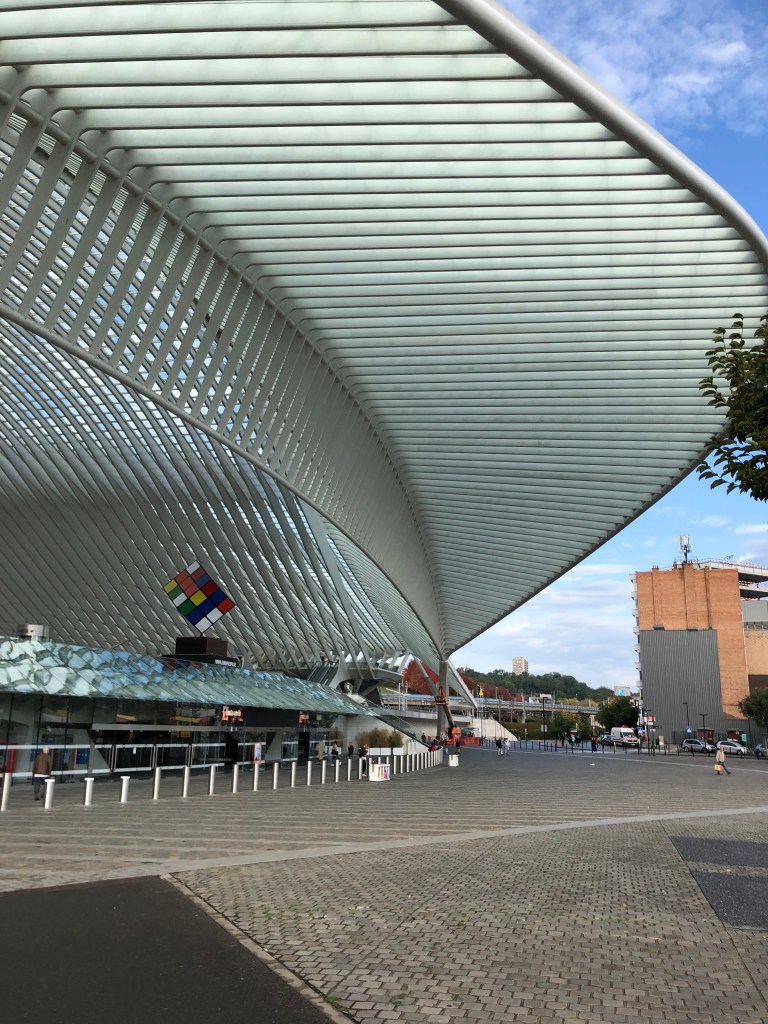
There was a Rubik’s Cube in the train station
My morning in Liege only had one destination: Une Gaurfrette Saperlipopette, a tiny bakery. Oooh baby did it smell sweet! I don’t understand how this waffle was so good, but it was. Sweet, sticky, crisp, and chewy on the outside, yet light and doughy on the inside. And it was warm. And as filling as a piece of lembas.
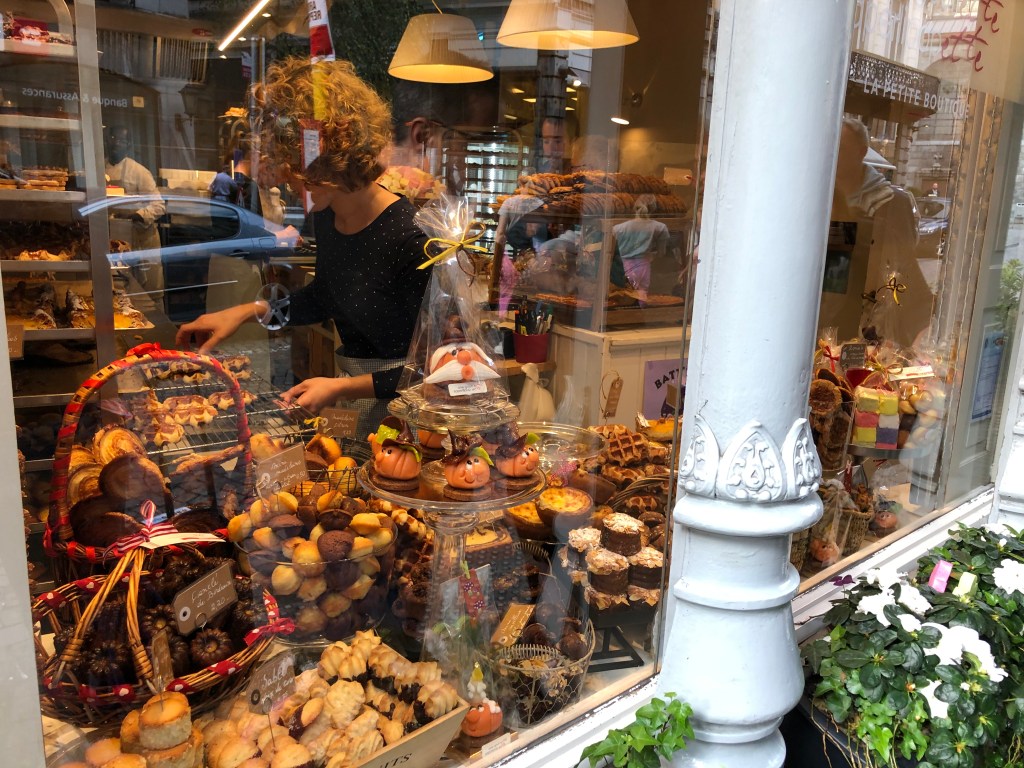
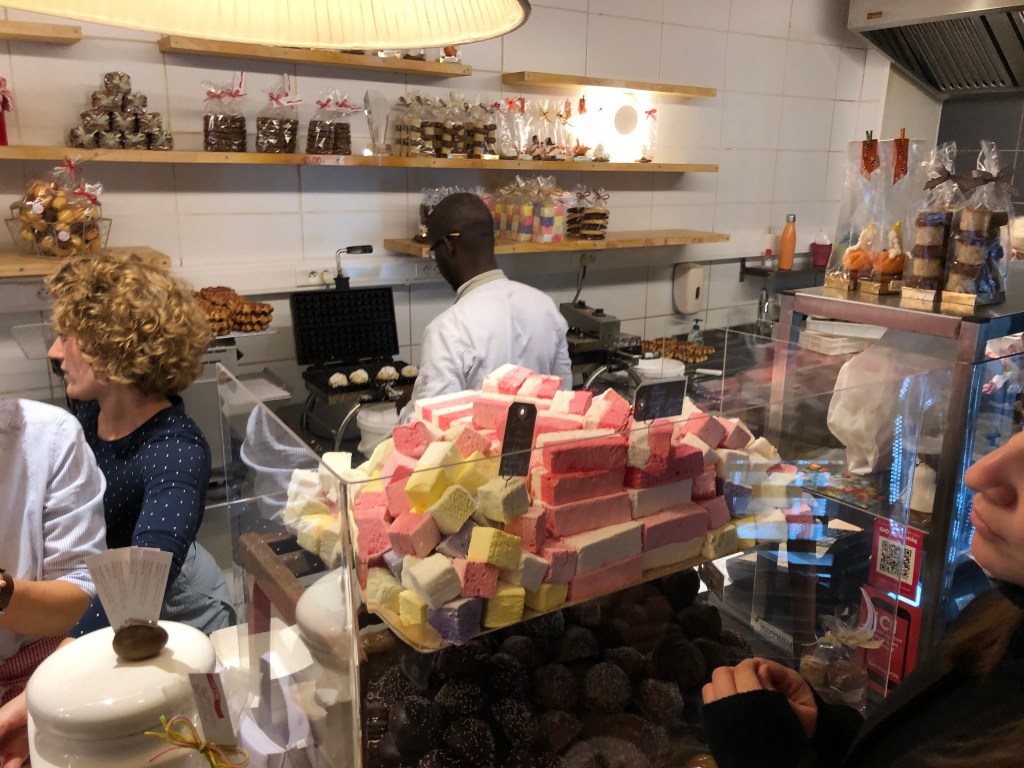
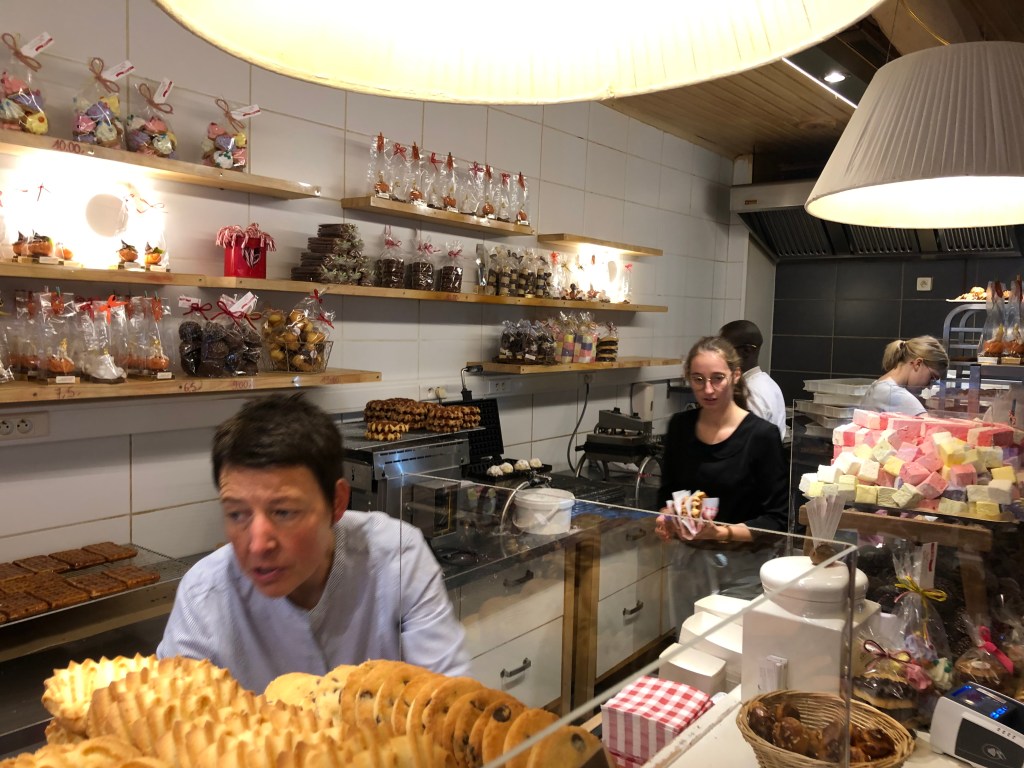

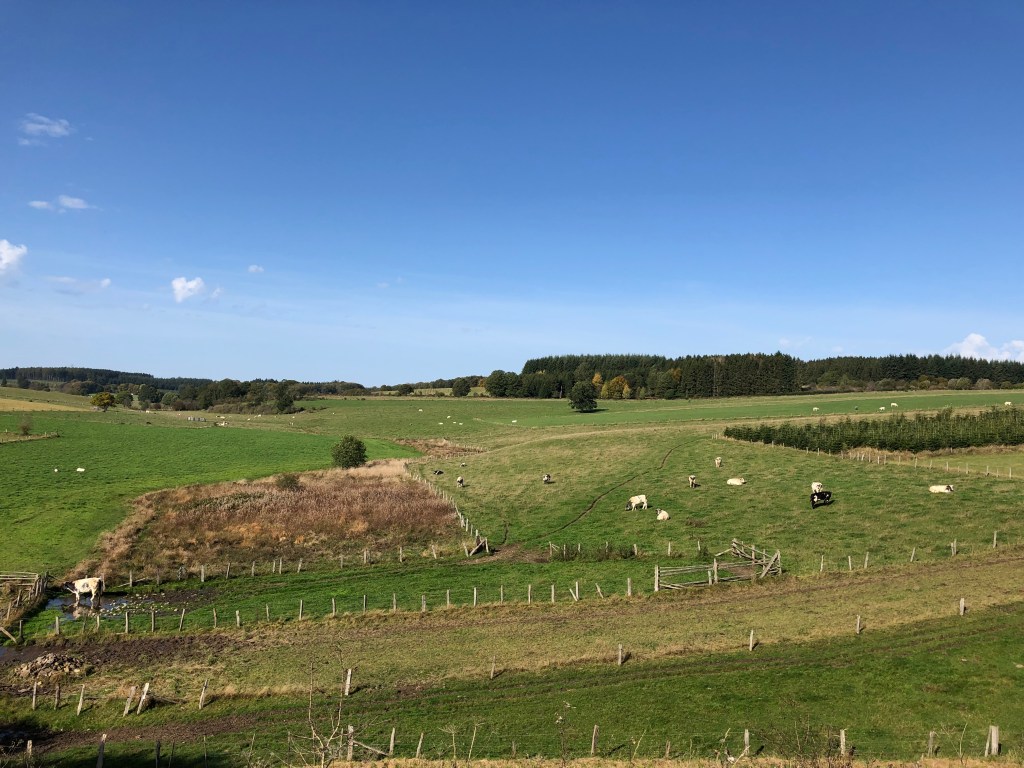
I didn’t think the drive from Liege to Luxembourg would be anything special, but the Belgian countryside was beautiful with its rolling pastures and bridges spanning predominantly evergreen forests, and more topography than I would’ve expected.
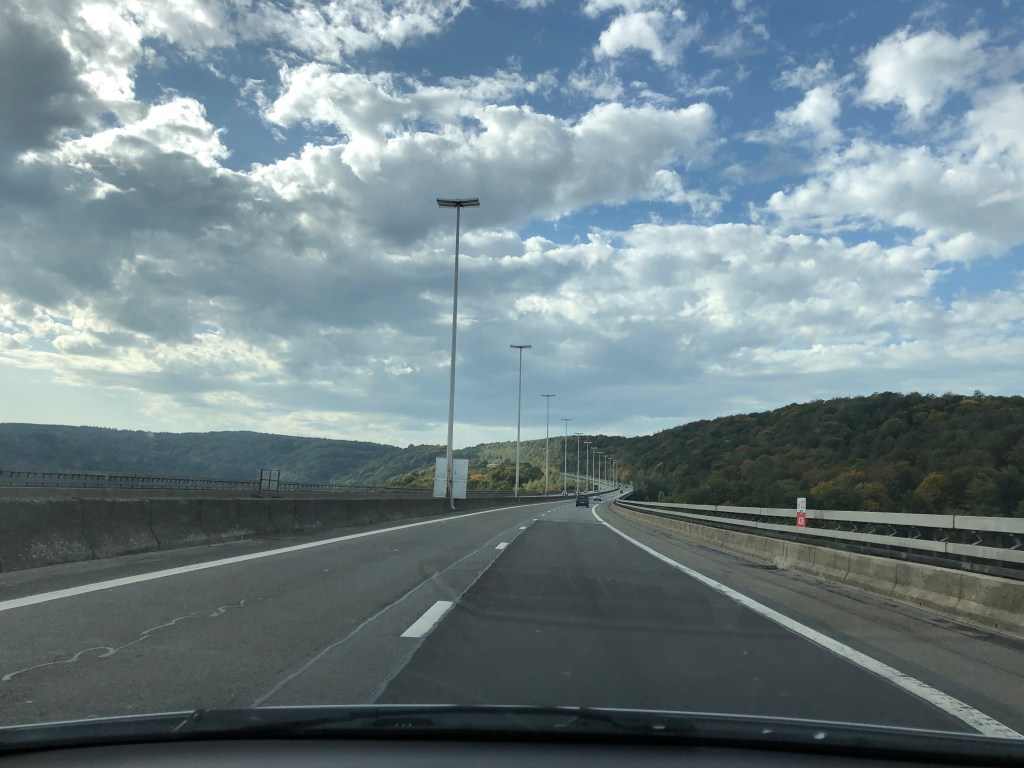
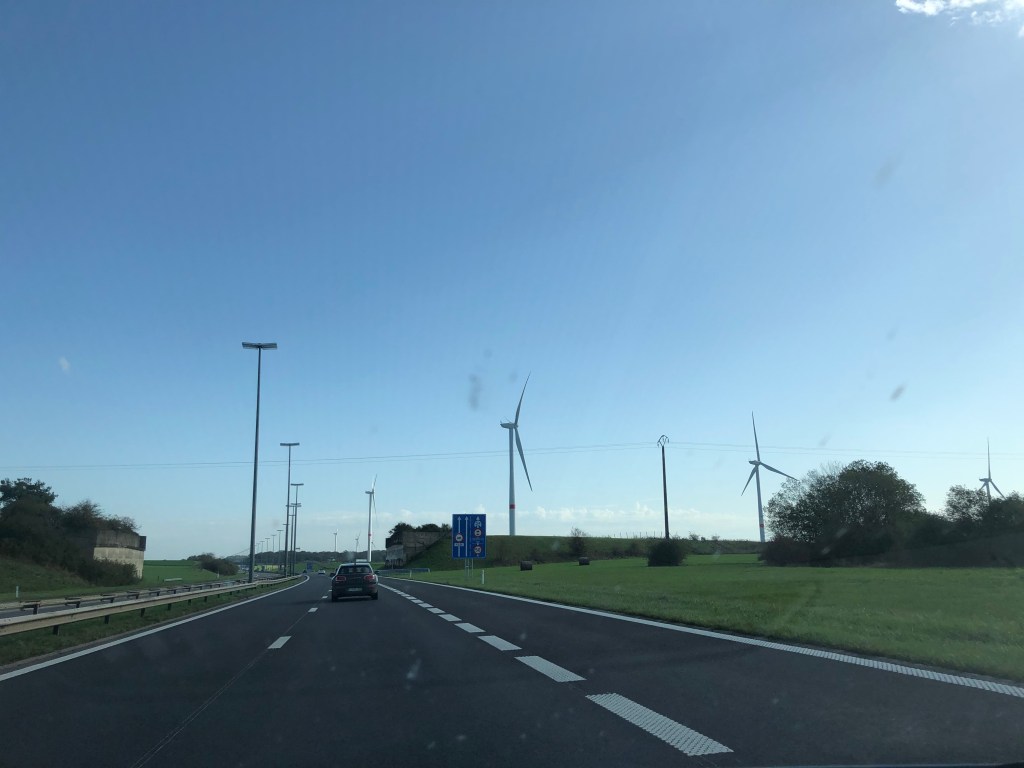
Now onto my fourth country in two days. I drove straight to it’s namesake, Luxembourg, which felt like Paris Lite. Like Belgium, French is mainly spoken here (though Luxembourgish is a language. Keep in Mind, this whole country is smaller than Rhode Island). Anyway, Paris Lite had a lot of beige (limestone?) buildings, black tiled roofs, iron and bronze accents, curves and domes. Rather than a river running through it, a wooded valley splits the city which makes for some quite lovely scenery.
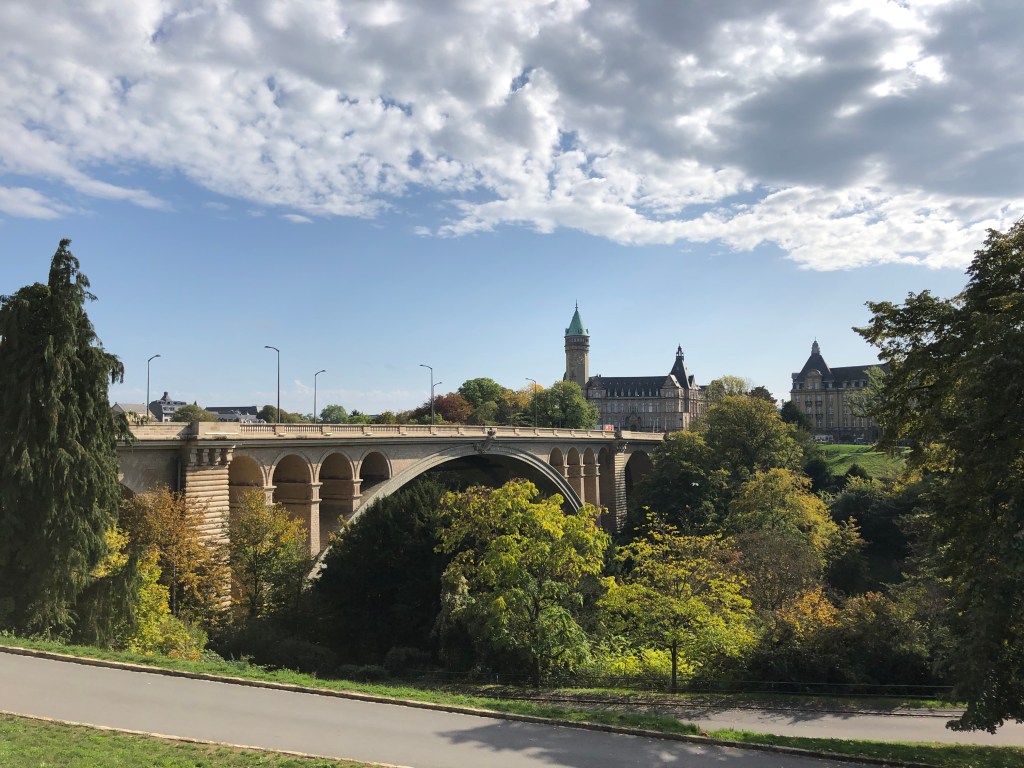
Really nice bridge connecting Luxembourg 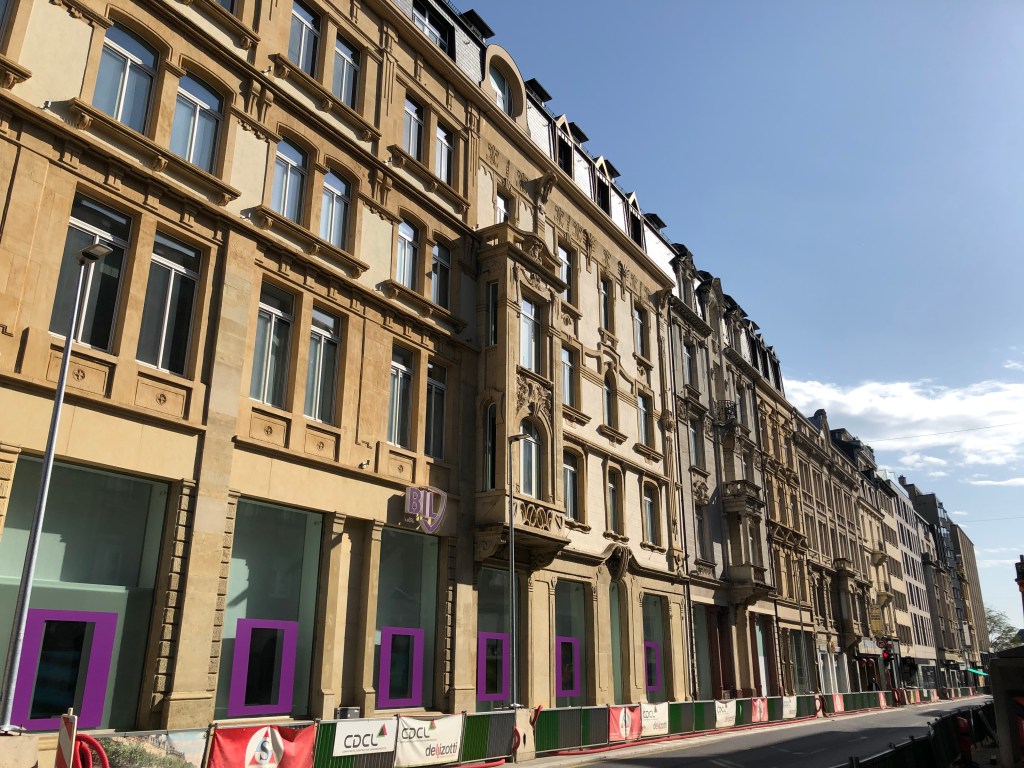
Parisian-esque architecutre 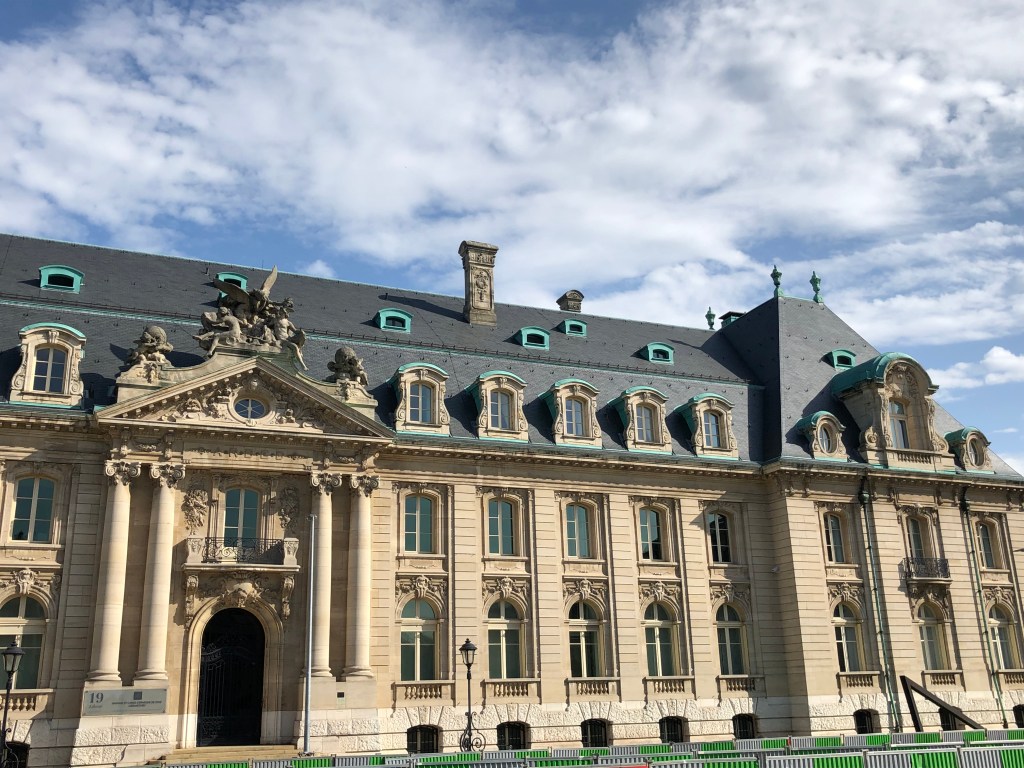
Paris Lite 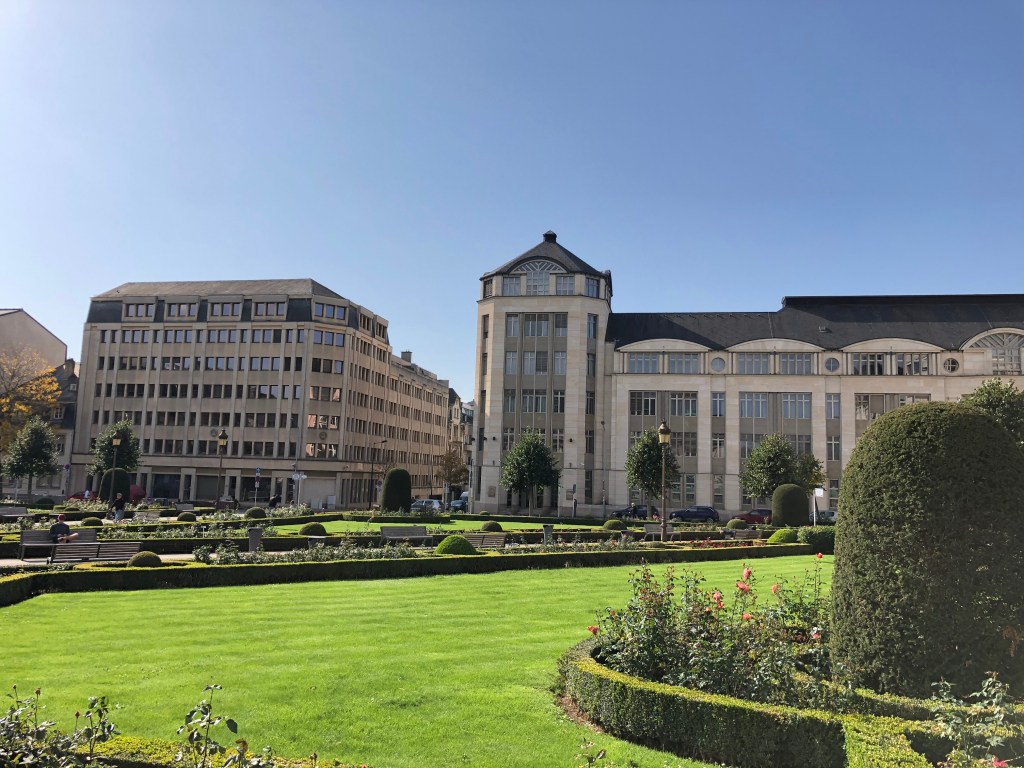
The new buildings cameflouged with the old 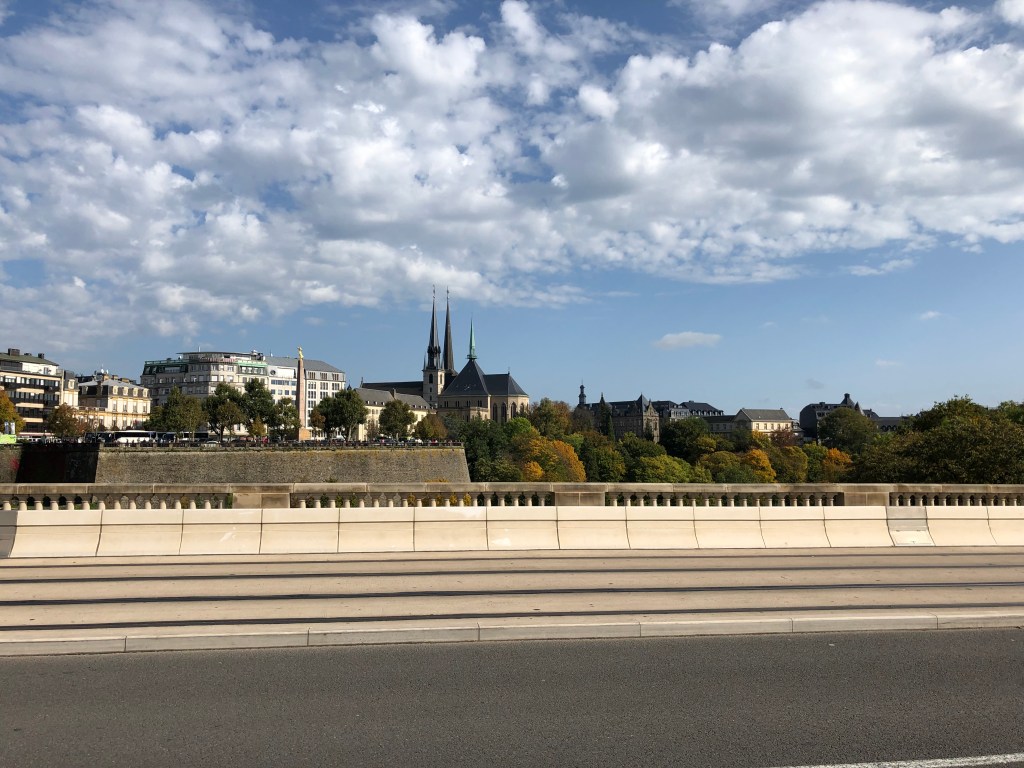
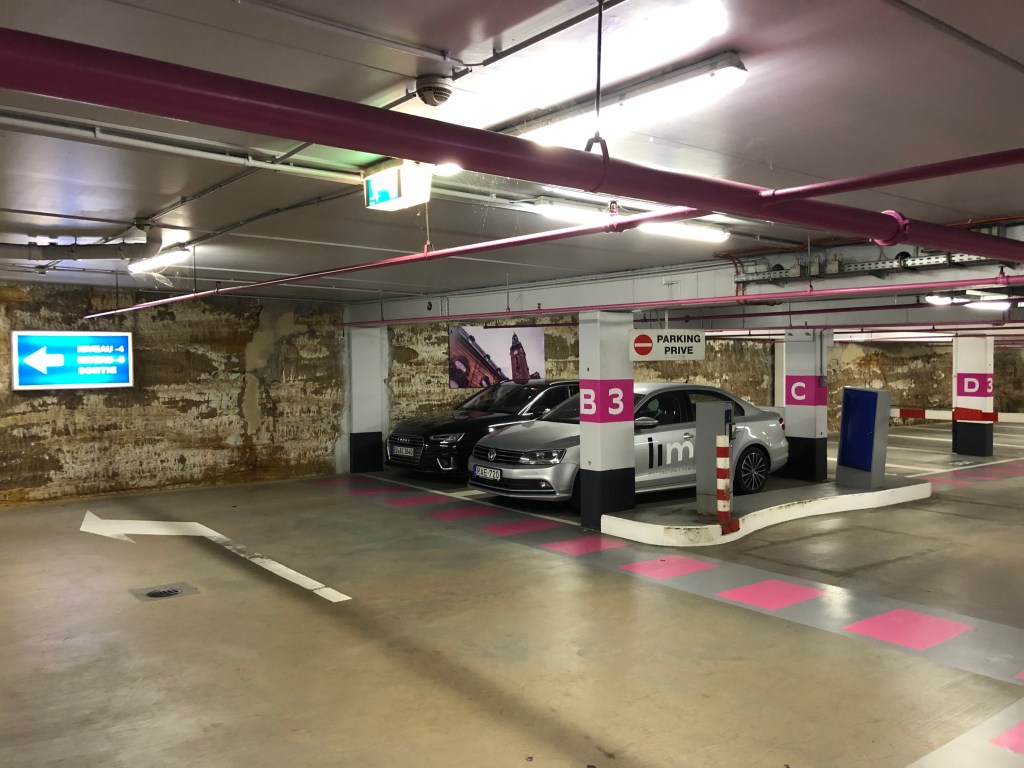
The Parking Garage felt historic
But my time in Luxembourg (city) was short. Next stop: Esch-Sur-Alzette. The second largest city in Luxembourg, which is a borderline meaningless statement, but that’s this city’s only characteristic. The drive featured less beauty and more industry – factories and blah landscapes. The city itself is a poor man’s Luxembourg, so twice removed from Paris, if you will. Essentially, it’s a Eurotrash breeding ground, as track suits and sweatpants appear to qualify as formalwear here.
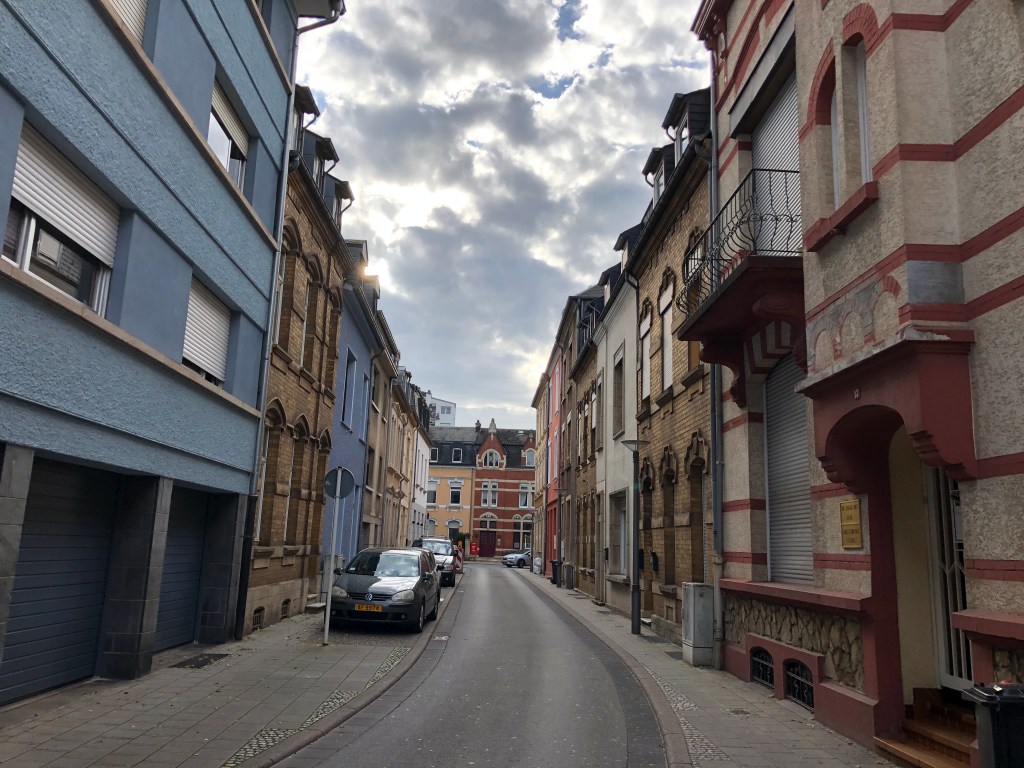
A cute, perhaps non-representative photo of Esch 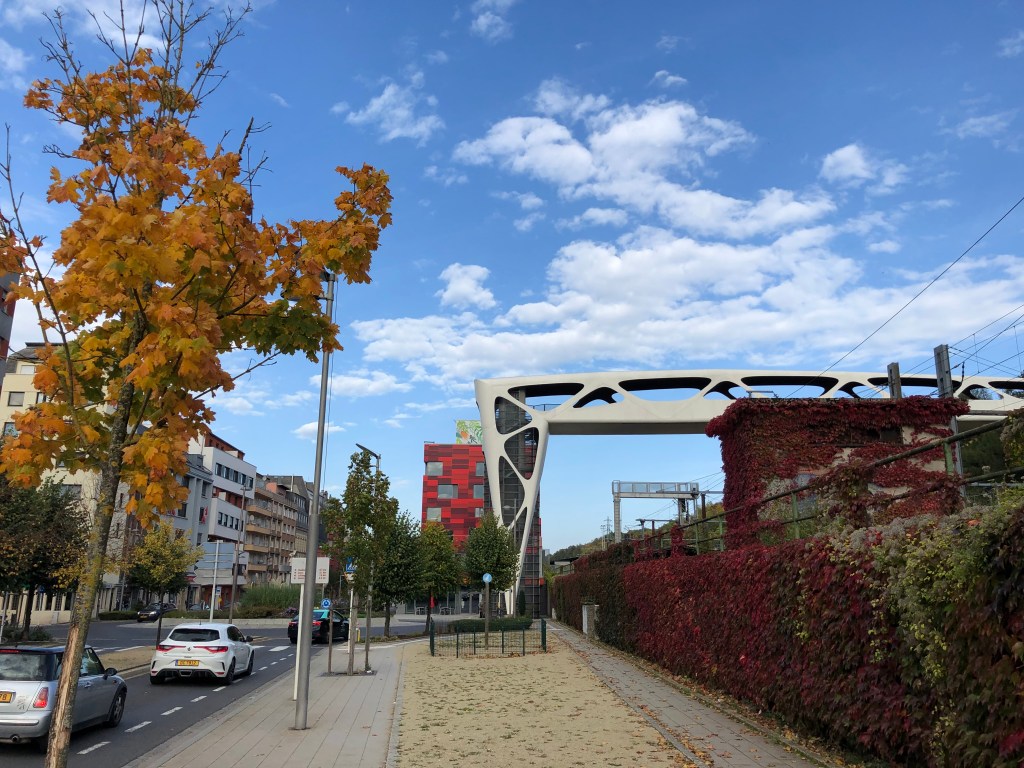
The train station, my hostel in the background, and some foliage 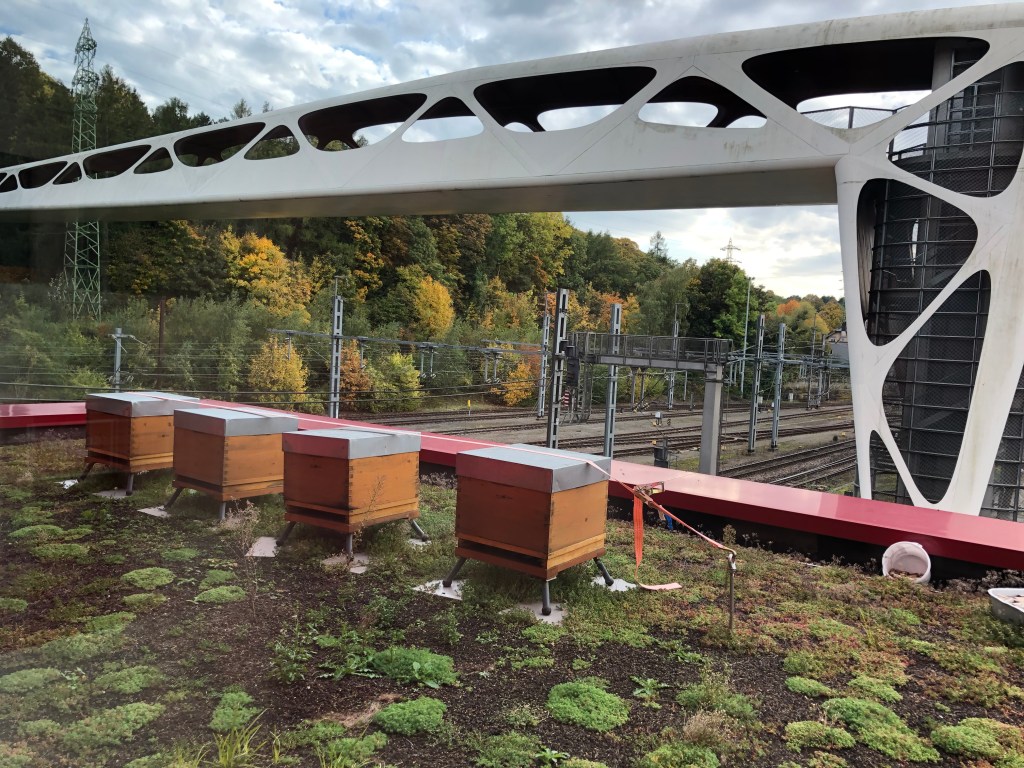
There were bees on my hostel’s green roof!
An otherwise odd spot to have on my itinerary, I visited Esch-Sur-Alzette for one reason only, and it wasn’t to see the impressive and unique post-industrial turned modern university campus of the Luxembourg Institute of Science and Technology (LIST).
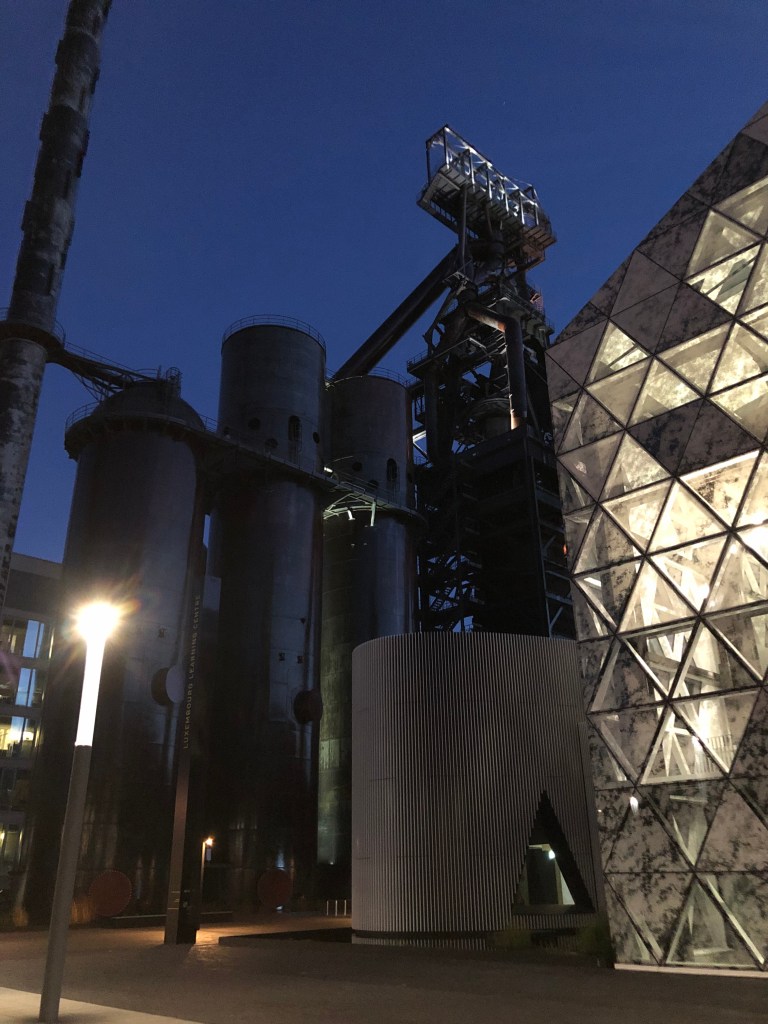
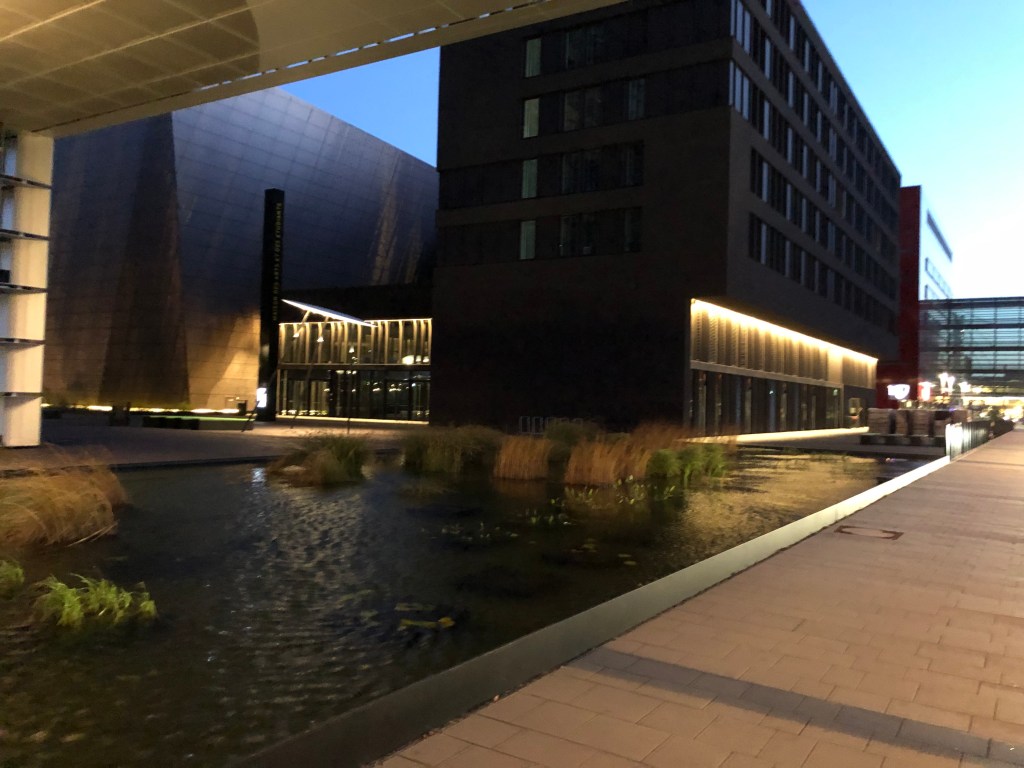
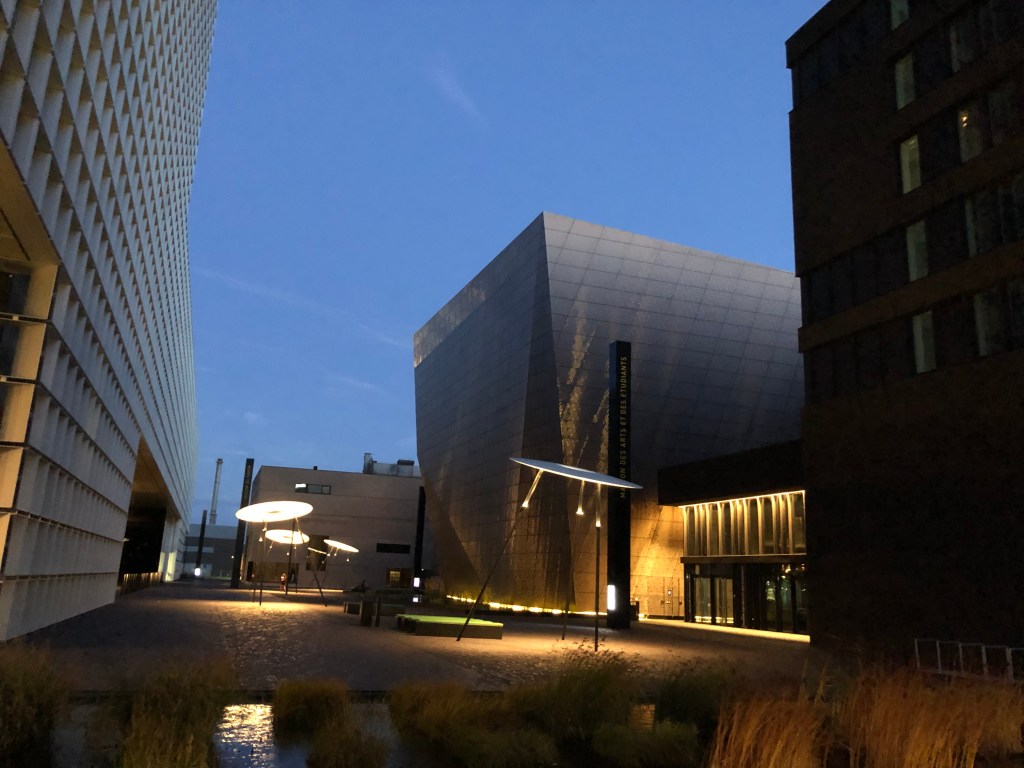
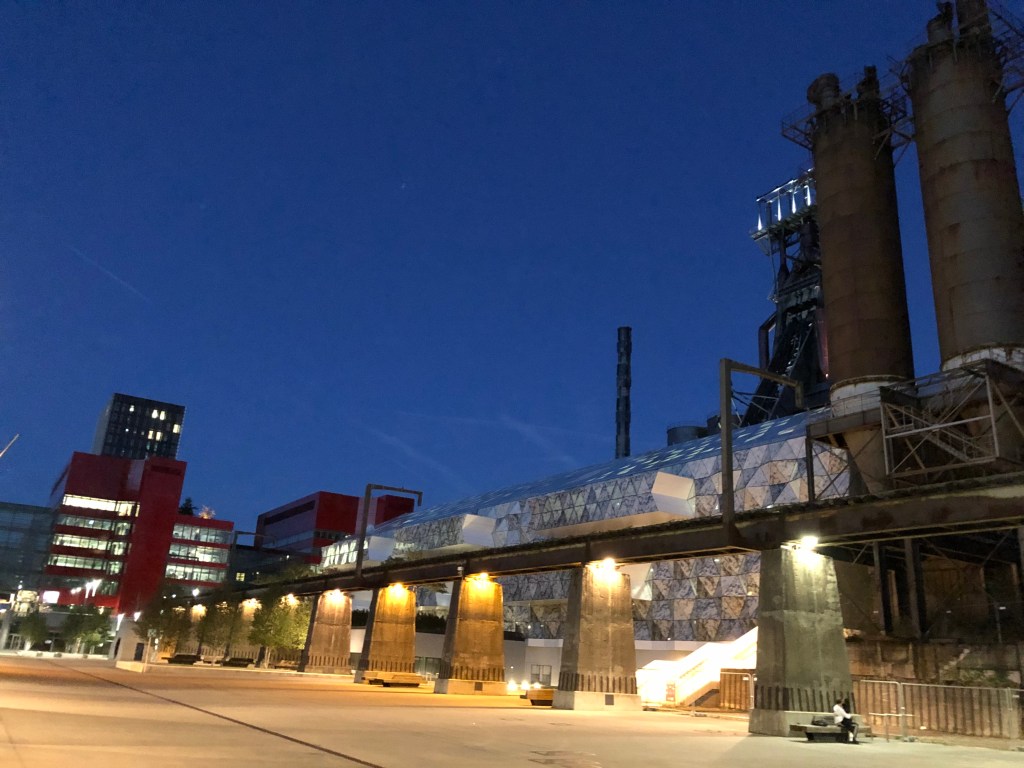
No, I came to Esch to see King Gizzard and the Lizard Wizard, an Australian metal band I had originally hoped to see two days prior in Cologne, but it sold out a while ago. So I had some float in my trip while waiting for this Sunday night show, which allowed me to add the three countries points west of Cologne. Which was a win-win, because King Gizzard rocked.
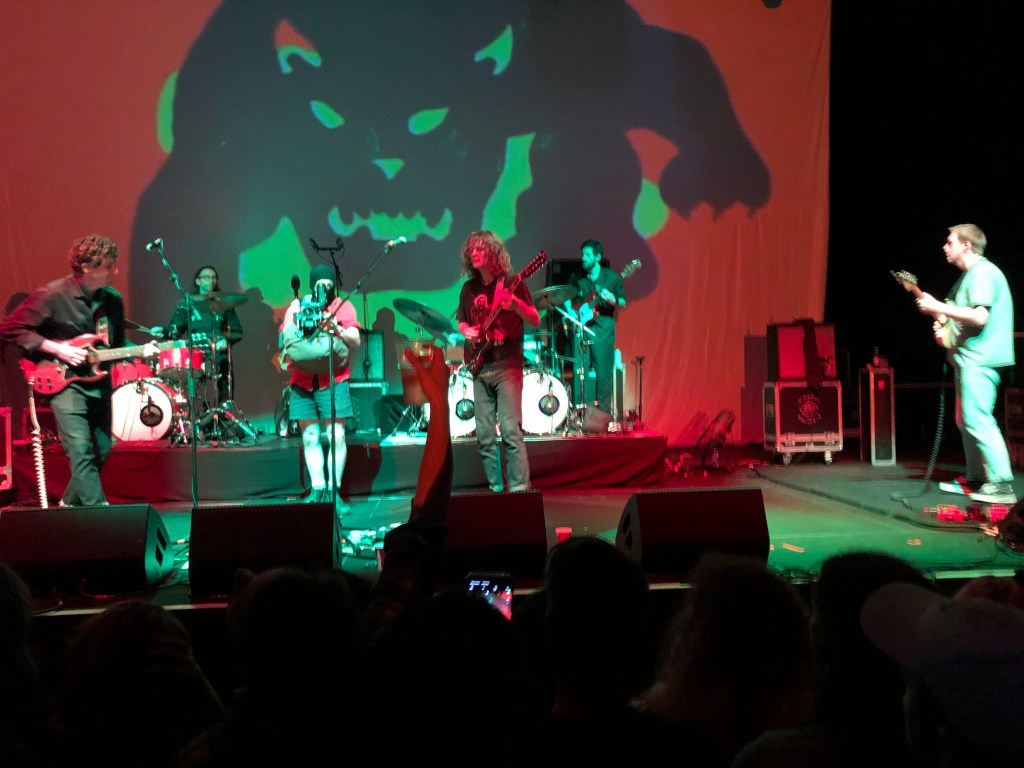
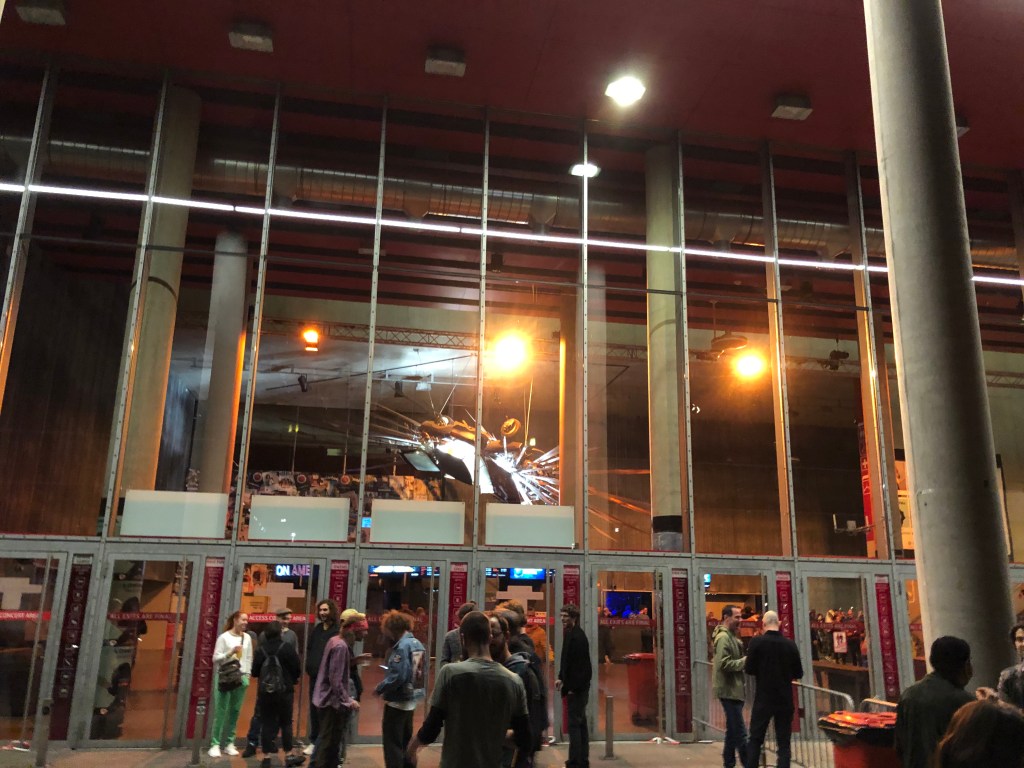
The venue was sweet, and had a big precast foyer with a Frank Miller type car suspended 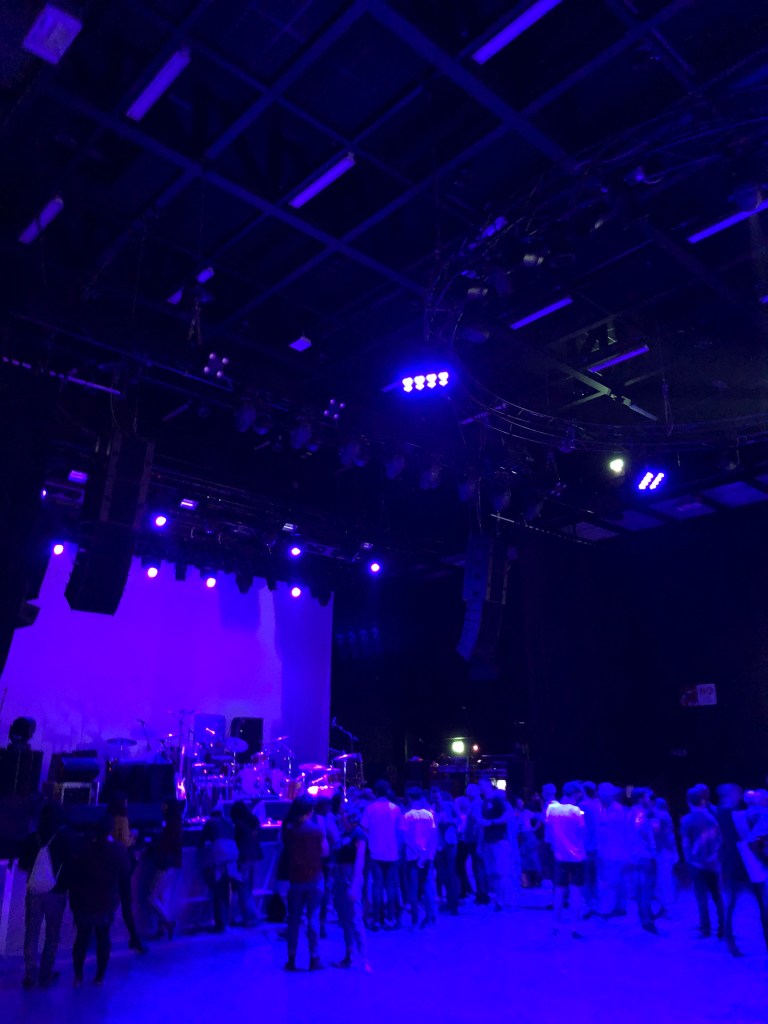
Inside the sound quality was good and there was a tension grid a la UMass Boston’s University Hall! 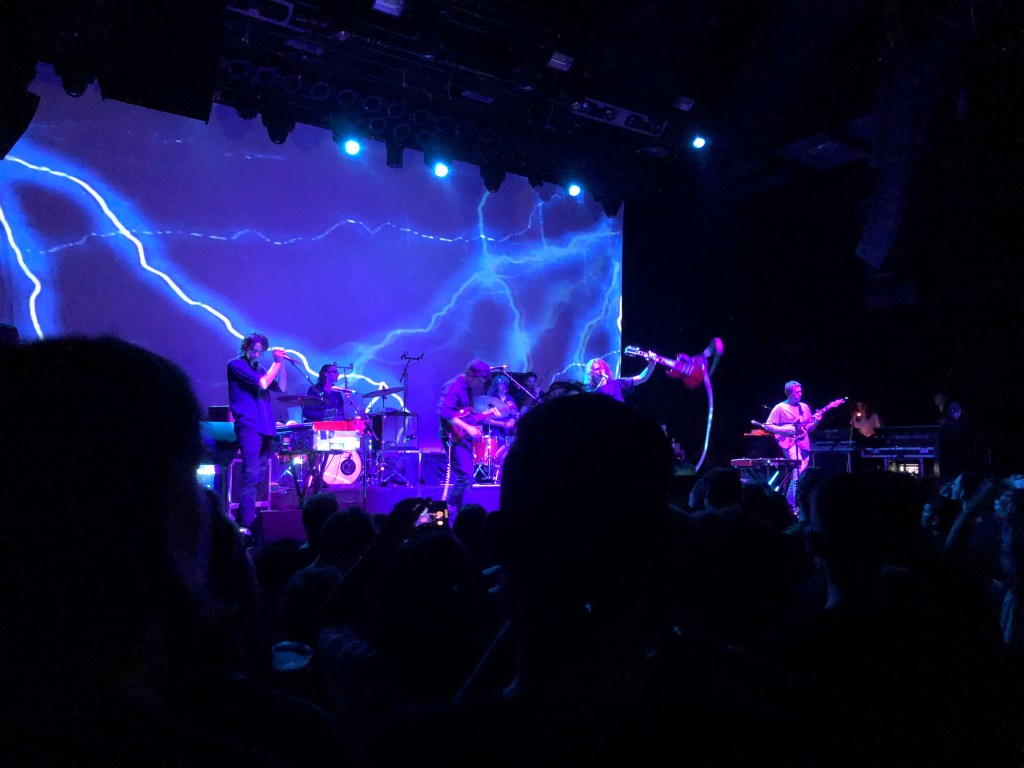
On my 30+ minute walk back from the venue I happened upon a History Professor and Architecture PhD from LIST. They shared that the biggest critique of the new campus is the lack of green space. After briefly discussing higher education campus planning and our reviews of the concert we parted ways, and I returned to my hostel. The end, for now. You’ll have to stay tuned for the dramatic conclusion of my central European whirlwind, coming to you after the song of the moment.

 Widdershinning Weiss
Nice travelogue, oh wandering one. And by the way, “winterdienst hinweis” (two words, not one long one…they clearly just didn’t have room on the sign…but you’d think as long as German words are they would have planned for that?) means “winter service notice” and the rest of it was telling you to watch out for snow and ice.
I gotta give you extra points for the “literal” trans of Assmanshausen (but I think Proctologist is Proktologe) and perhaps we can think of fun first names for the Assman clan?
LikeLike
Andrew it sounds and looks like you’re having a great time. I think the time and energy that you spent connecting with your family history is admirable. I hope you enjoyed all of these places/ countries as it sounds. Keep on enjoying!
LikeLike
I thought that train station looked like a Calatrava, and it is! I love his work.
LikeLike