
Chappy Chanukkah, Merry Christmas, Joyous Kwanza, Good Festivus, happy holidays, etc. etc. I must apologize for two things, one is the hiatus I took from posting, and two is for not widdershinning. A rush of visitors and activity have gotten in the way, and with you likely preoccupied with holidays, I felt no pressure to keep up my good pace of posting. I’ll be playing catch up for a few posts now that I’m approximately 2 weeks behind.
From Vietnam I west west to Cambodia, where I only visited Siem Reap (give or take). Even if you haven’t heard of Siem Reap you might be familiar with Angkor Wat. And if your response to that is Angkor… What?, then read a book; it’s the largest religious site on the planet (and should be one of the seven wonders of the world, but got outvoted)!
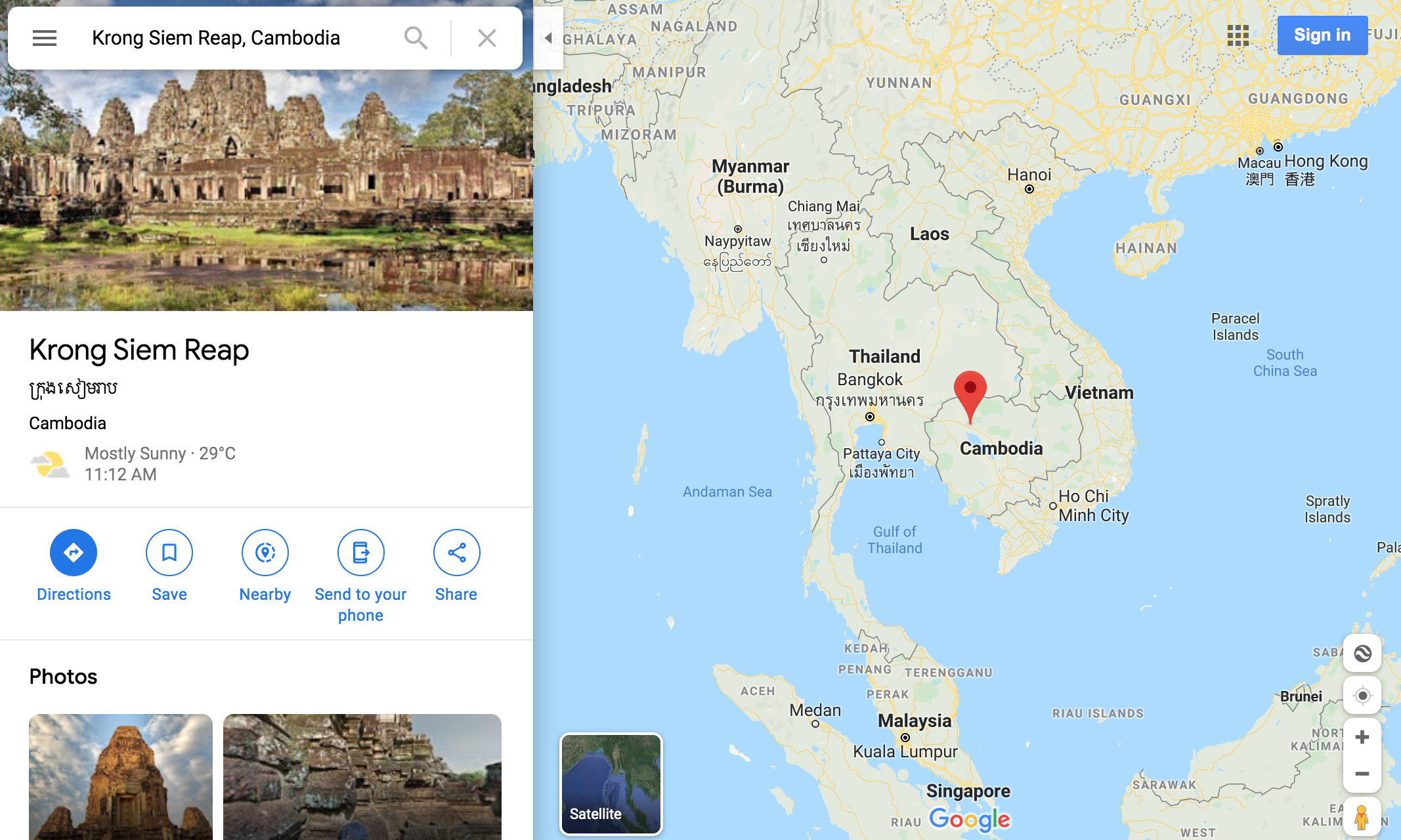
I arrived in Siem Reap Cambodia easily, paid my entry few for yet another visa, and took a tuktuk to a hostel where I was spending one night. I wound up drinking with some Brits, an American, German, and Dutch, which culminated in going out to a bar, so I scrapped my idea of doing a sunrise tour of one or more temples the follow morning. Instead I opted for the hostel’s free walking tour in the late morning, which was probably the worst tour I had gotten all trip. The guide was a young Australian woman who was working at the hostel because she never wanted her trip to end.
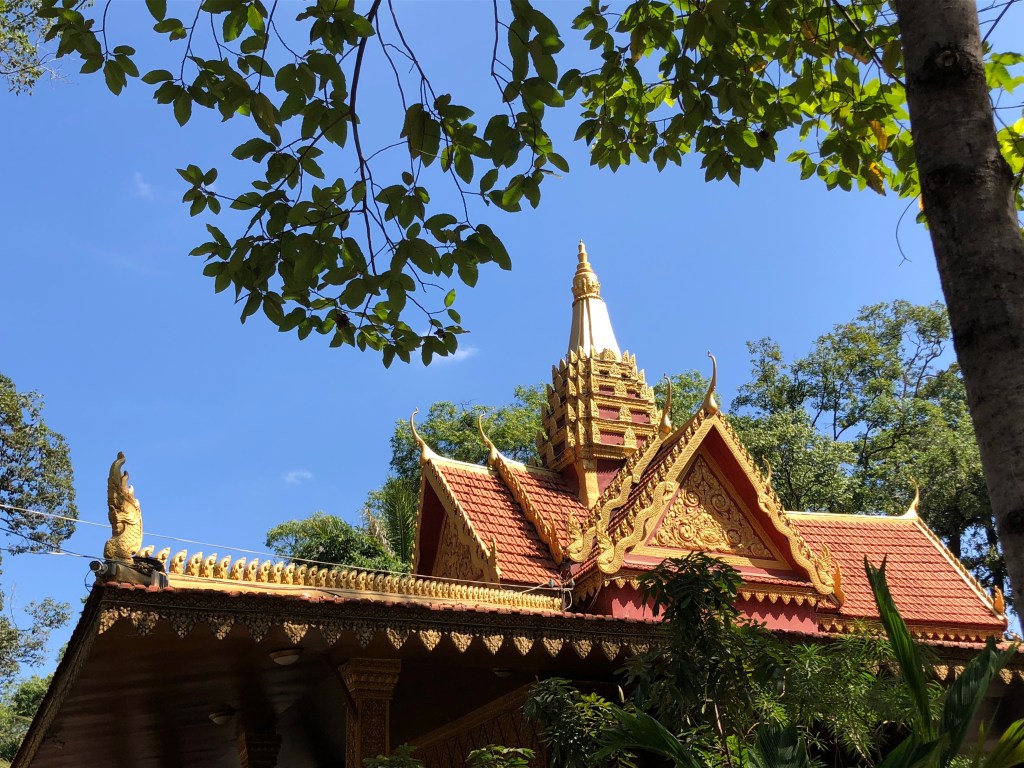
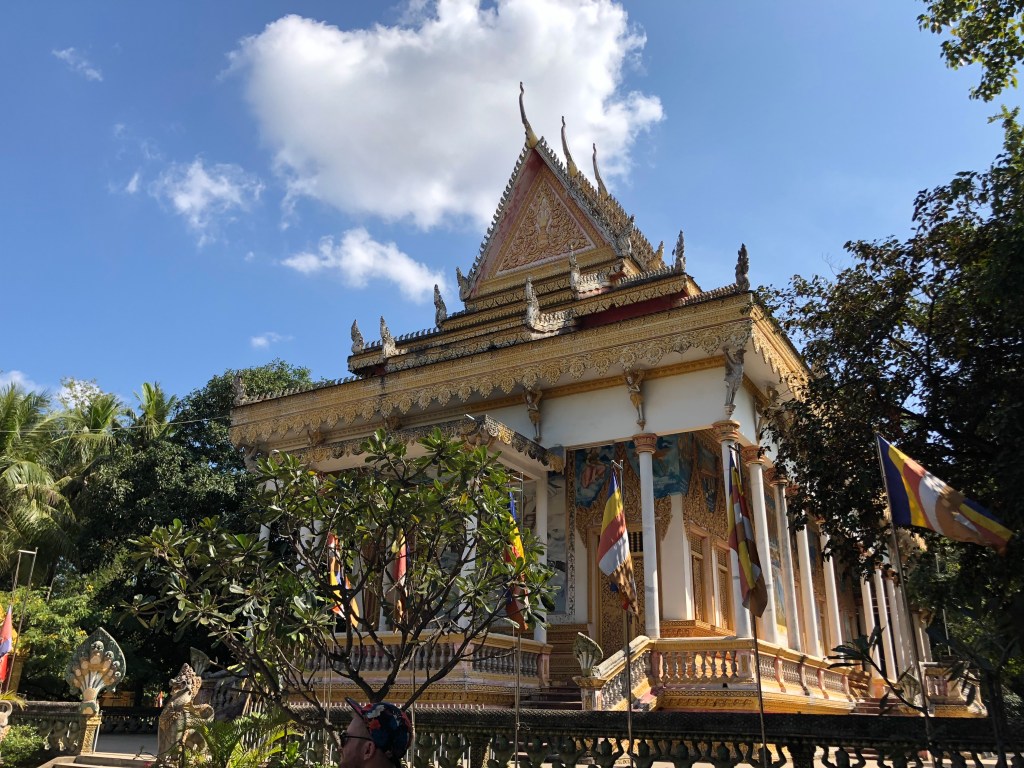
In spite of the poor guide I saw some of the town, some quality ‘standard’ temples, and learned enough to supplement the research I had done on Cambodia or little background knowledge I already had. One piece of advice we received was to avoid talking to locals about history or politics, as the Khmer Rouge’s genocide impacted everyone and was still a sore subject. Mostly as a function of the limited time I had, I avoided some of the more depressing tourist opportunities that touched on this. Instead, this morning was just ‘downtown’ Siem Reap, which was Cambodia’s capital form the 16-19th centuries. The city had a big construction boom to support tourism in the last thirty years thus most of the architecture was modern and nondescript.
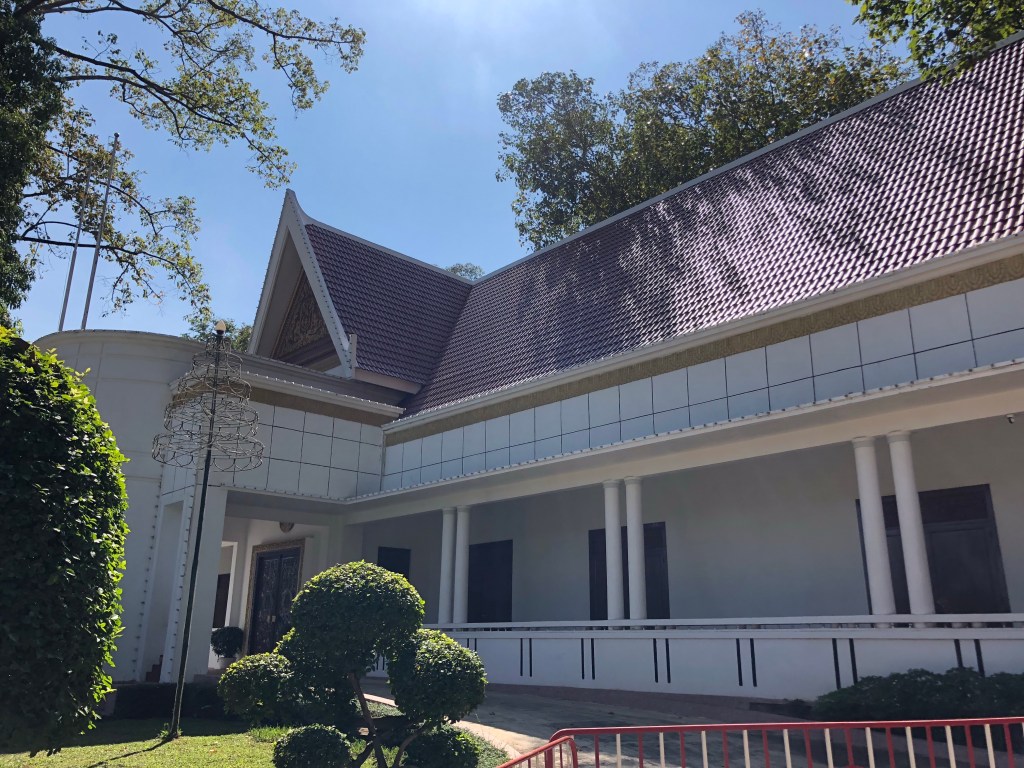
The local king’s palace looked like a suburban dentist’s office form the outside 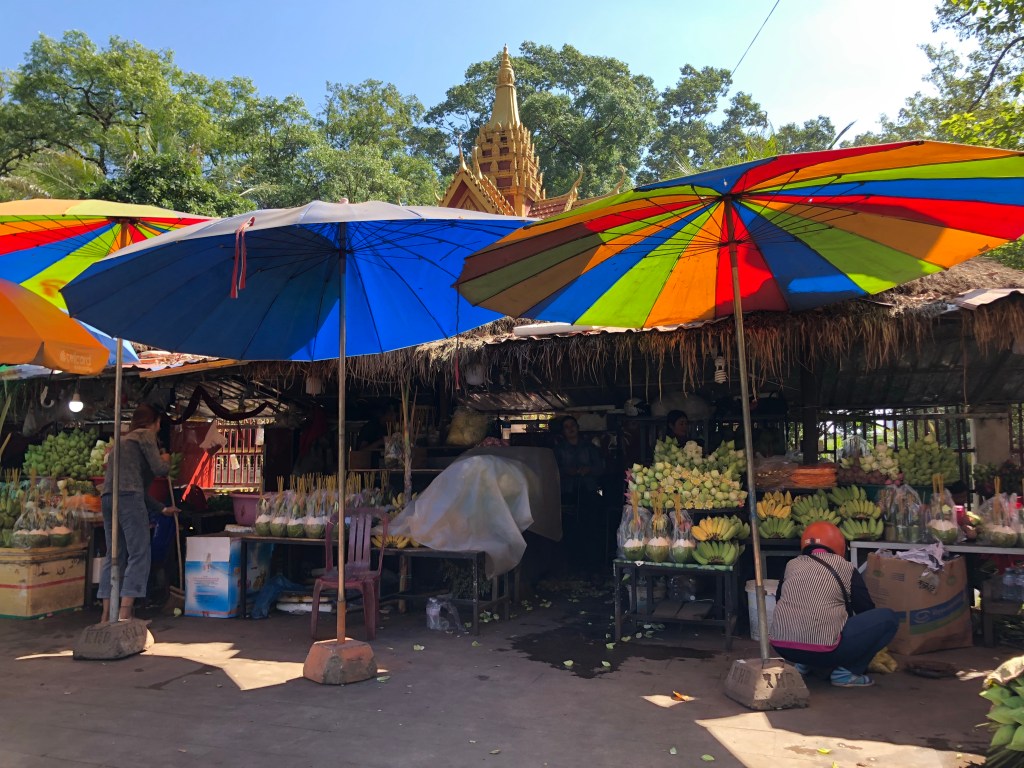
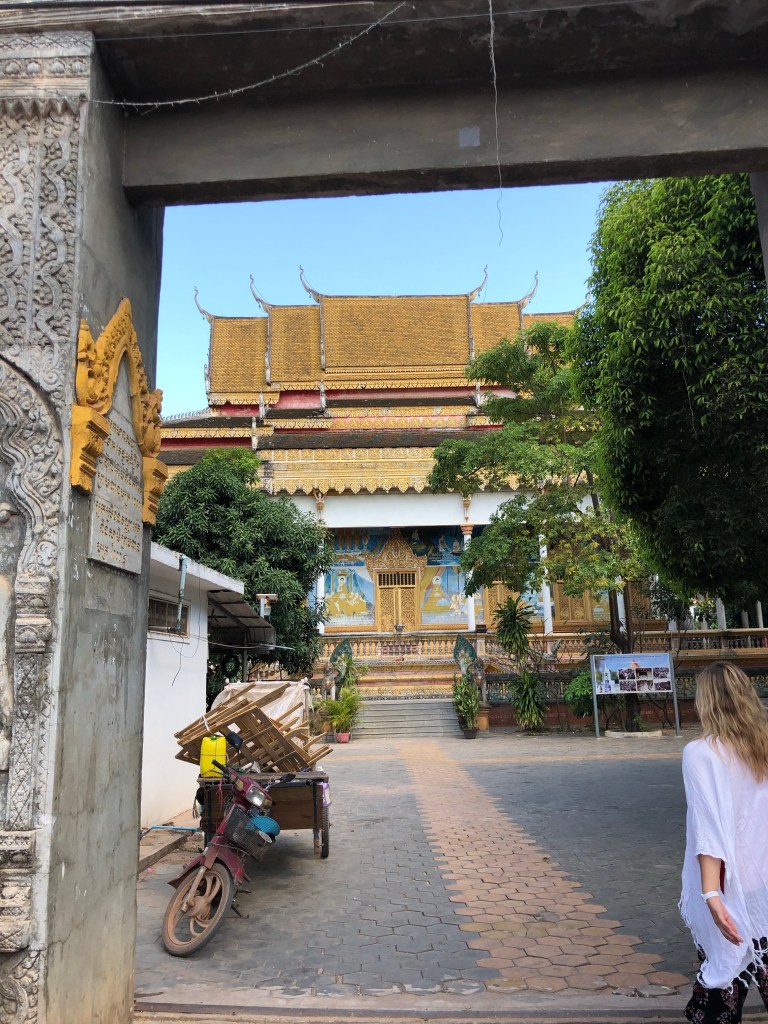
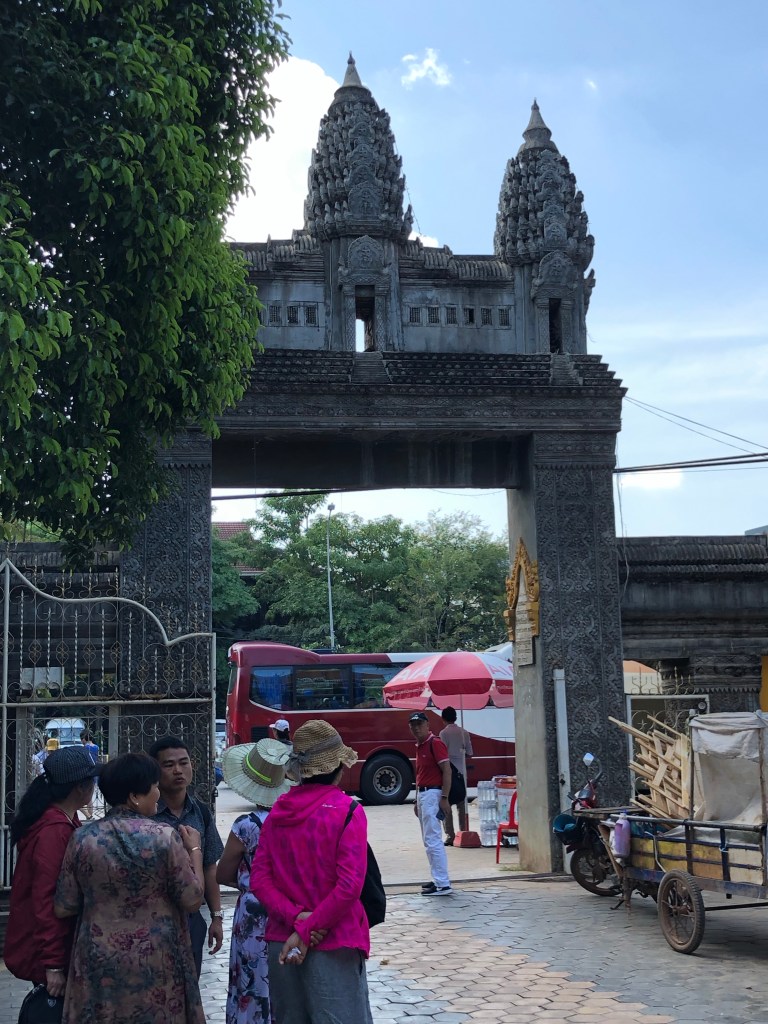
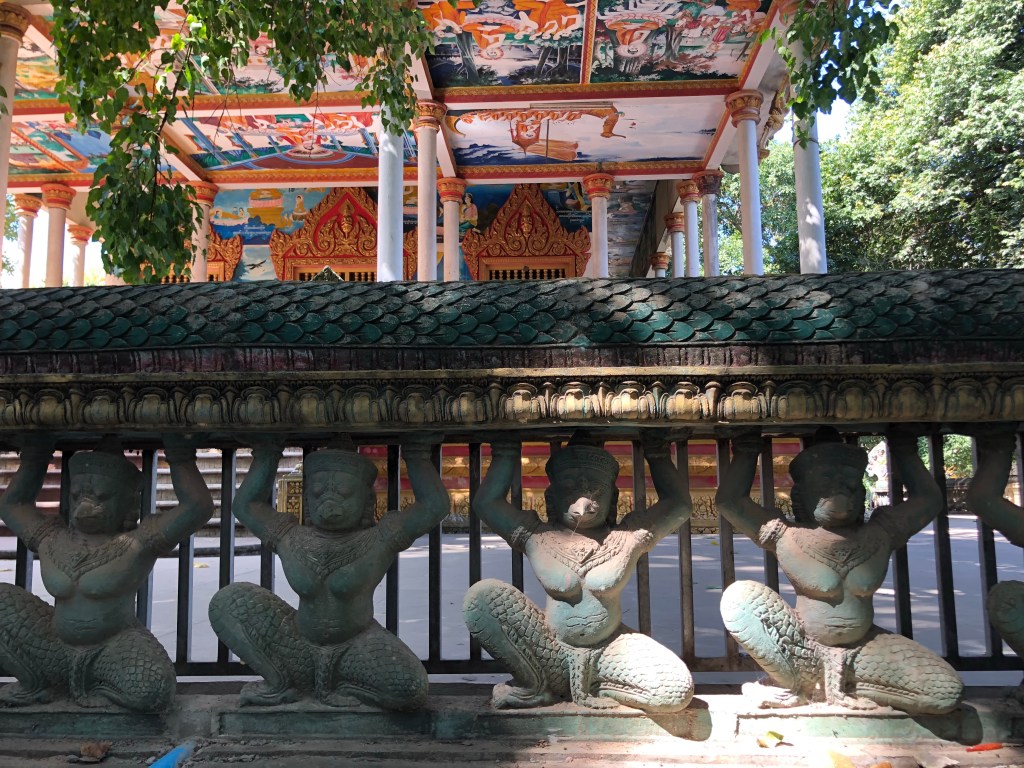
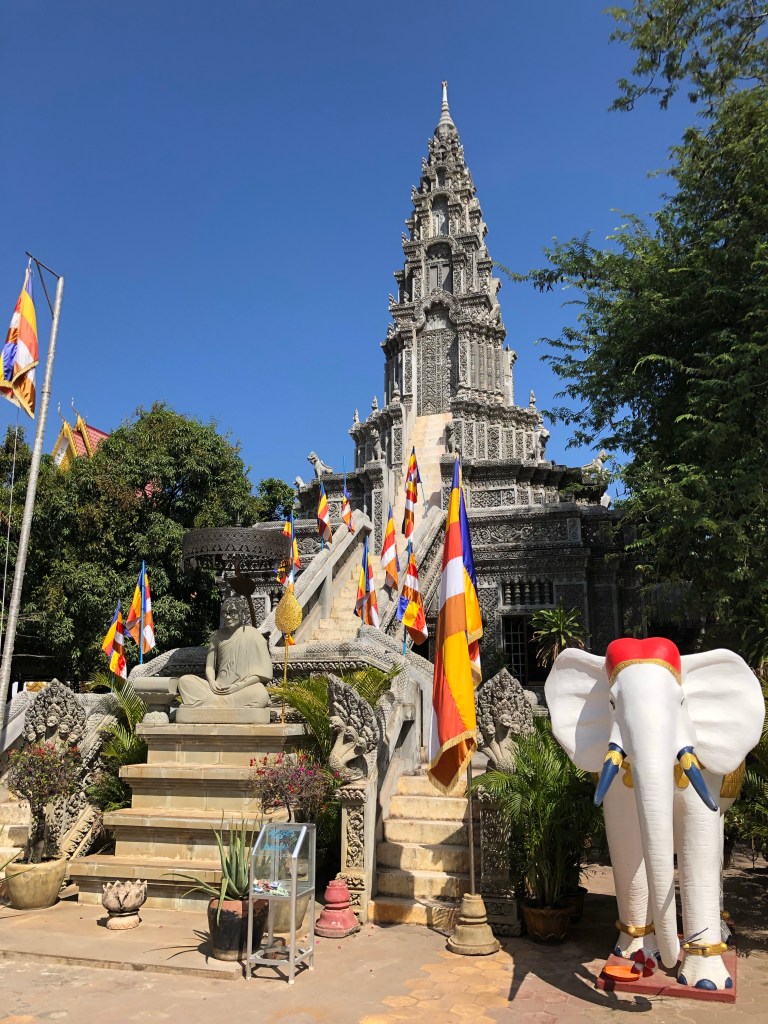
After walking around Siem Reap for an hour or more I headed to a nice hotel where I met my cousin Karen who had just flown in from San Francisco. Karen and I spent our afternoon afloat; on a whim we booked a tour of a “floating village” about an hour south of Siem Reap on the massive lake Tonle Sap. We visiting during the dry season, so we were treated to a stilted village moreso than floating. We boarded a sampan and got a private tour down the river. The police station, school, homes, etc were all high above us.
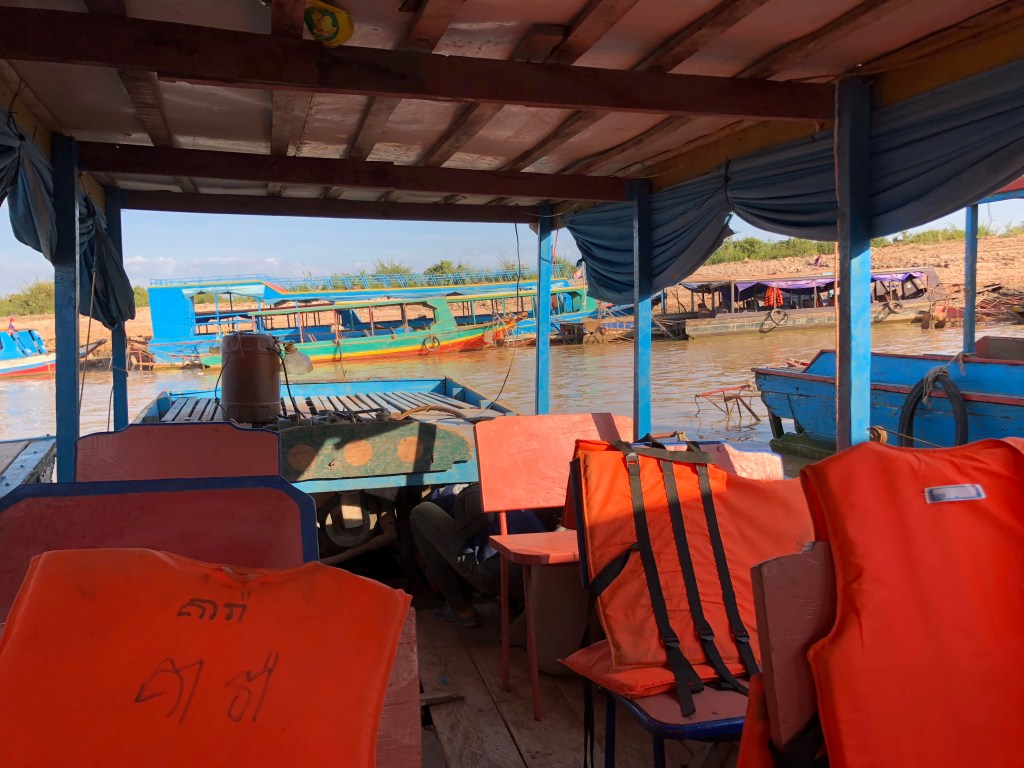
We hopped in a small sampan 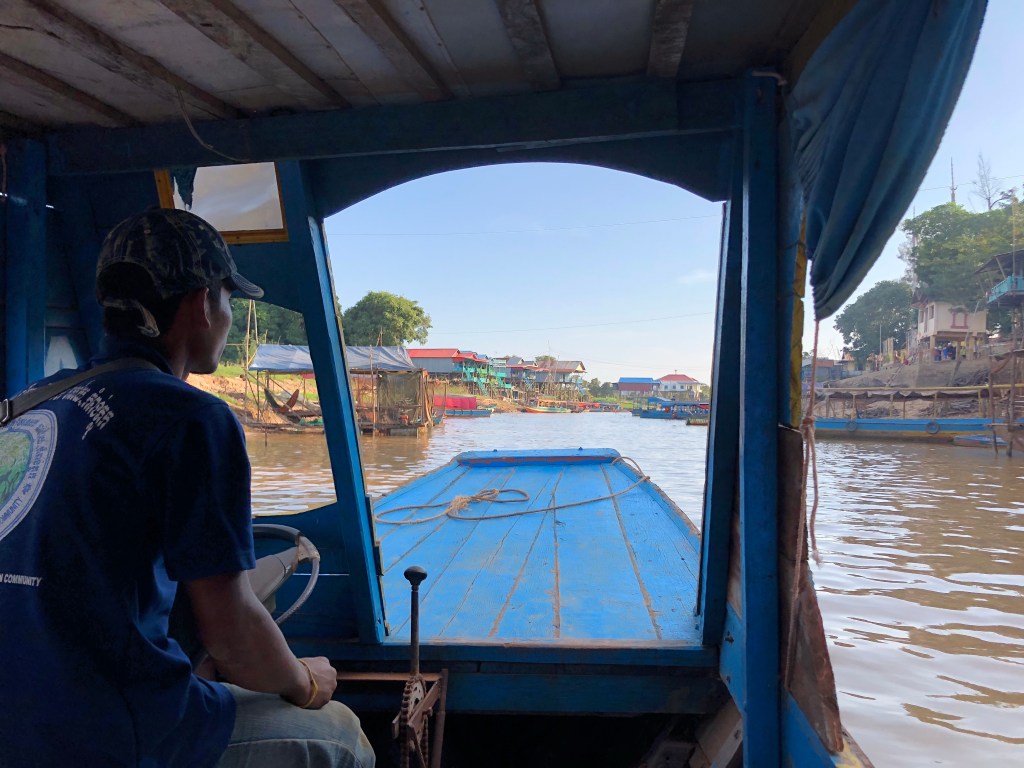
We lucked out with a private tour 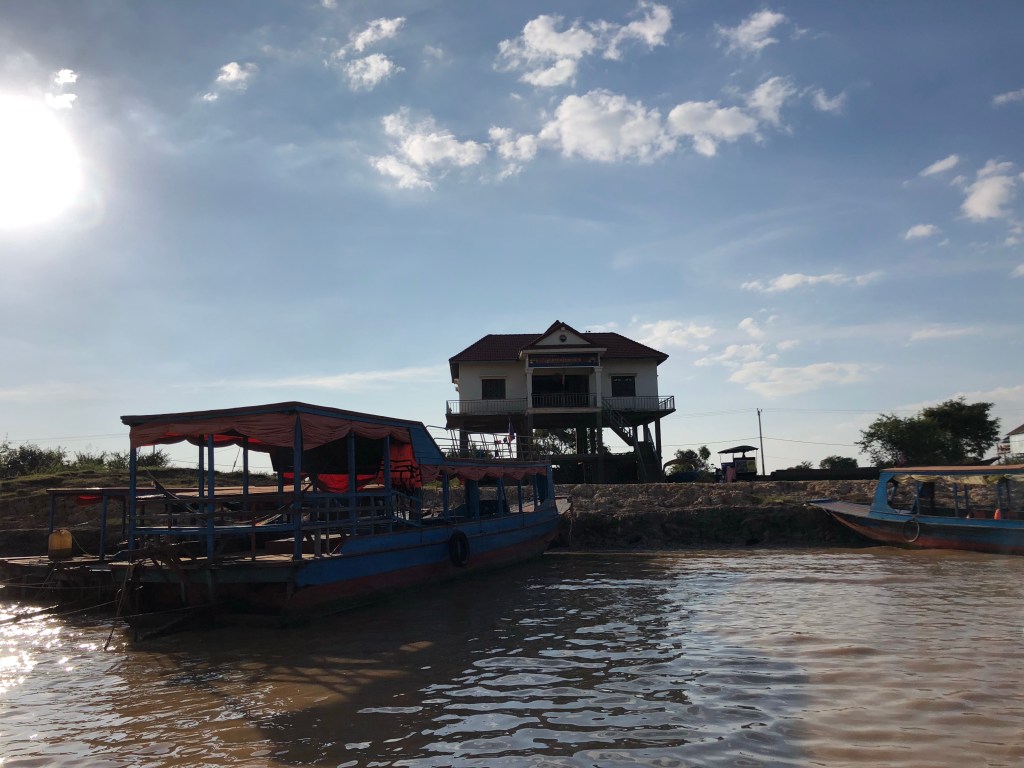
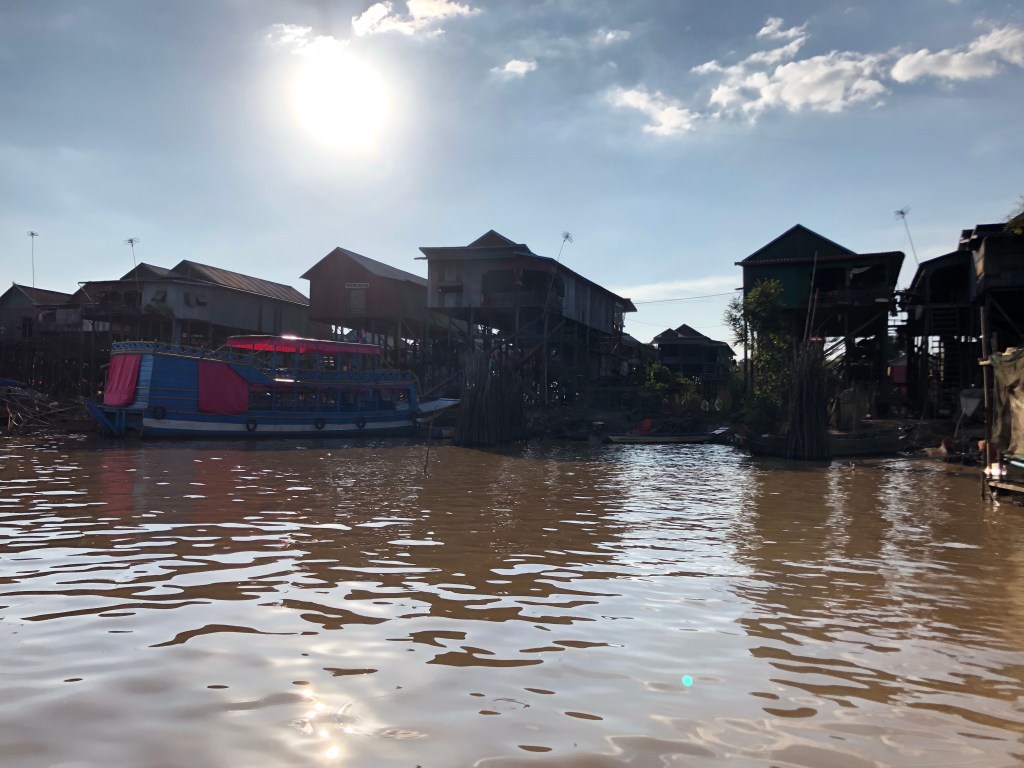
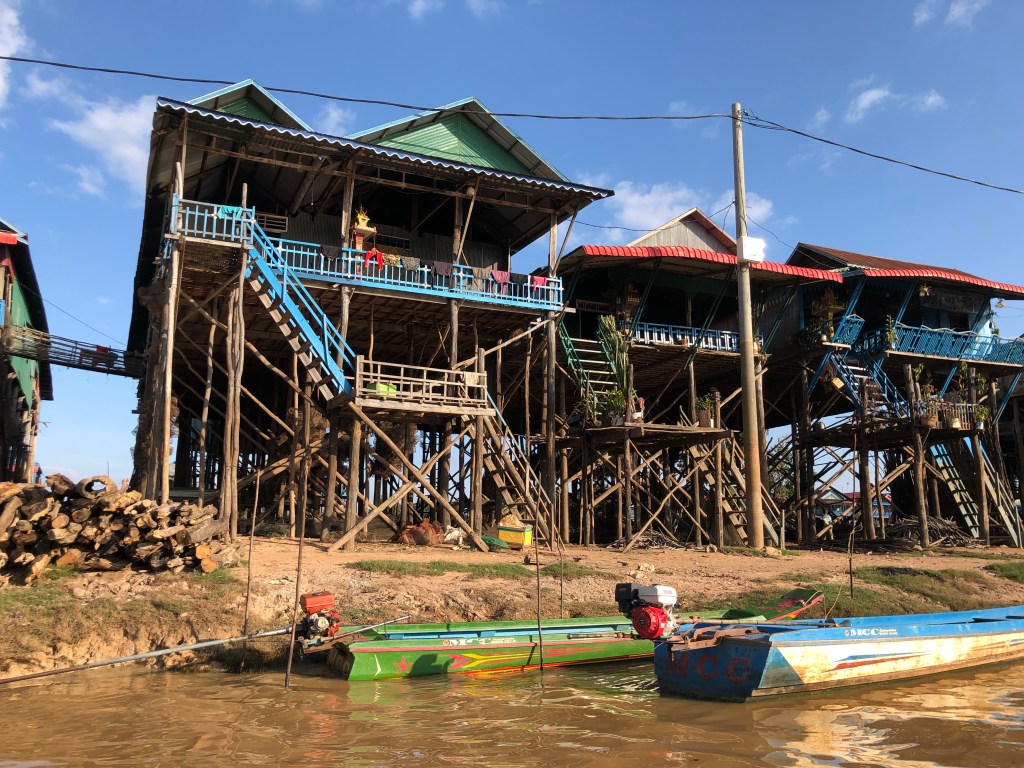
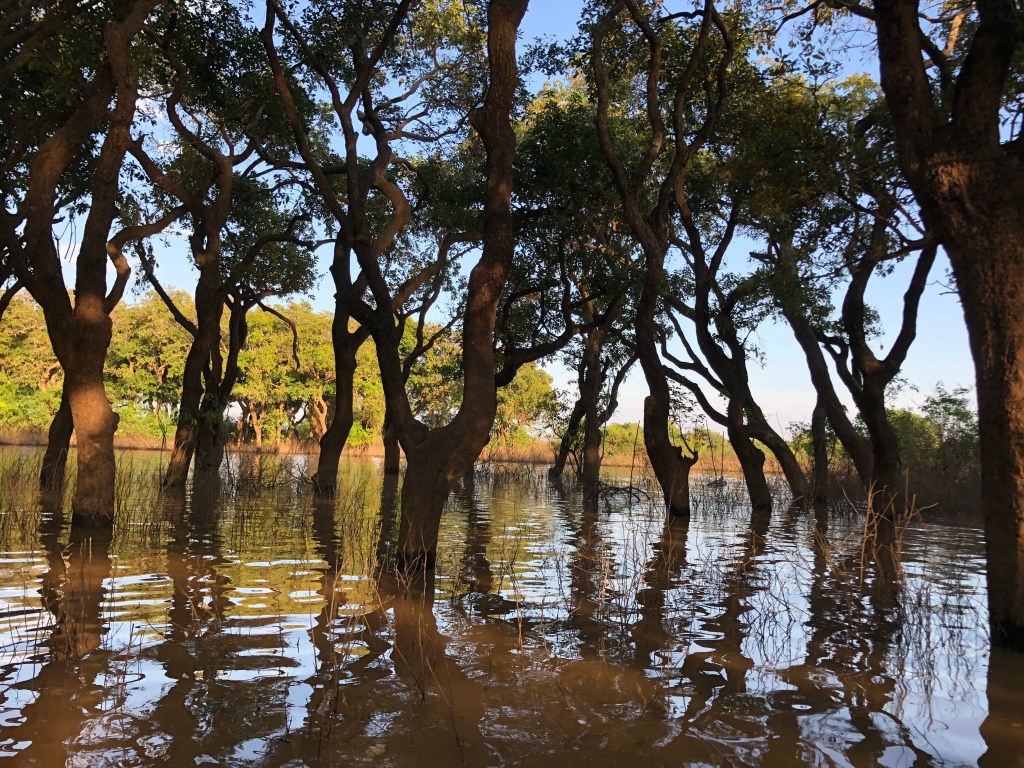
As we arrived at the lake we pulled up to what was legitimately a floating restaurant. Here we boarded a tiny canoe-like boat and rode through overgrown trees. The weather was great and the ride was wonderful. We agreed the only negative part was when we pulled up to a few boats nestled between the dense water-rooted trees, where a woman tried to sell us crap we didn’t need at silly prices, either for ourselves, for our boat rower, or “for the school.”
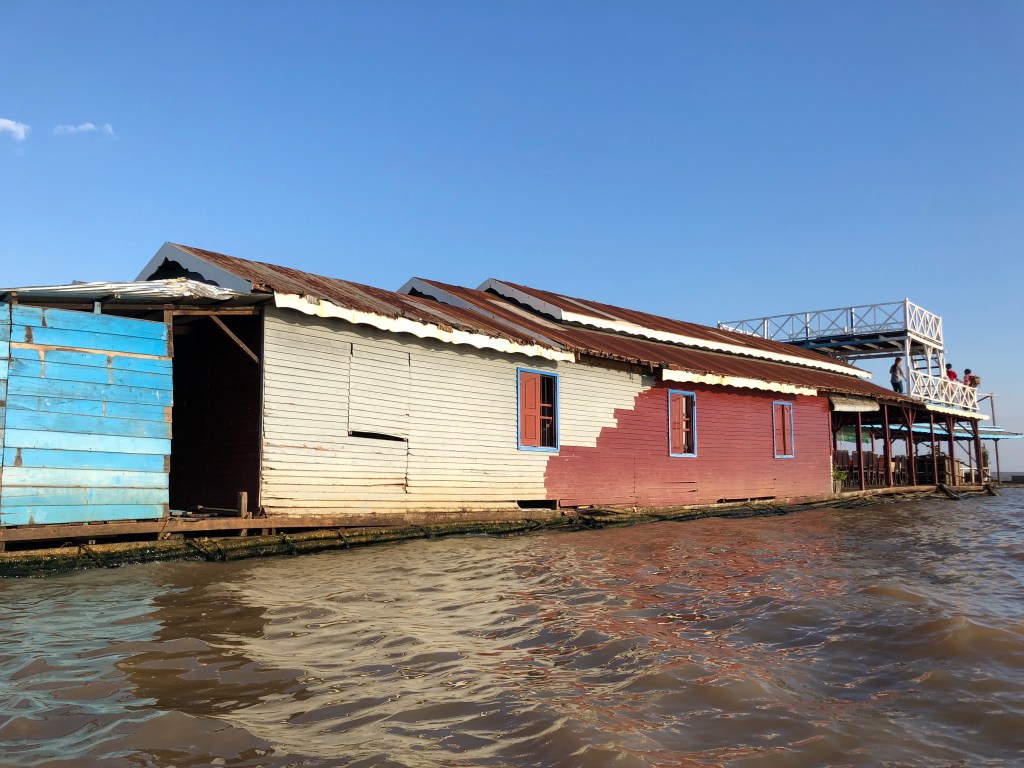
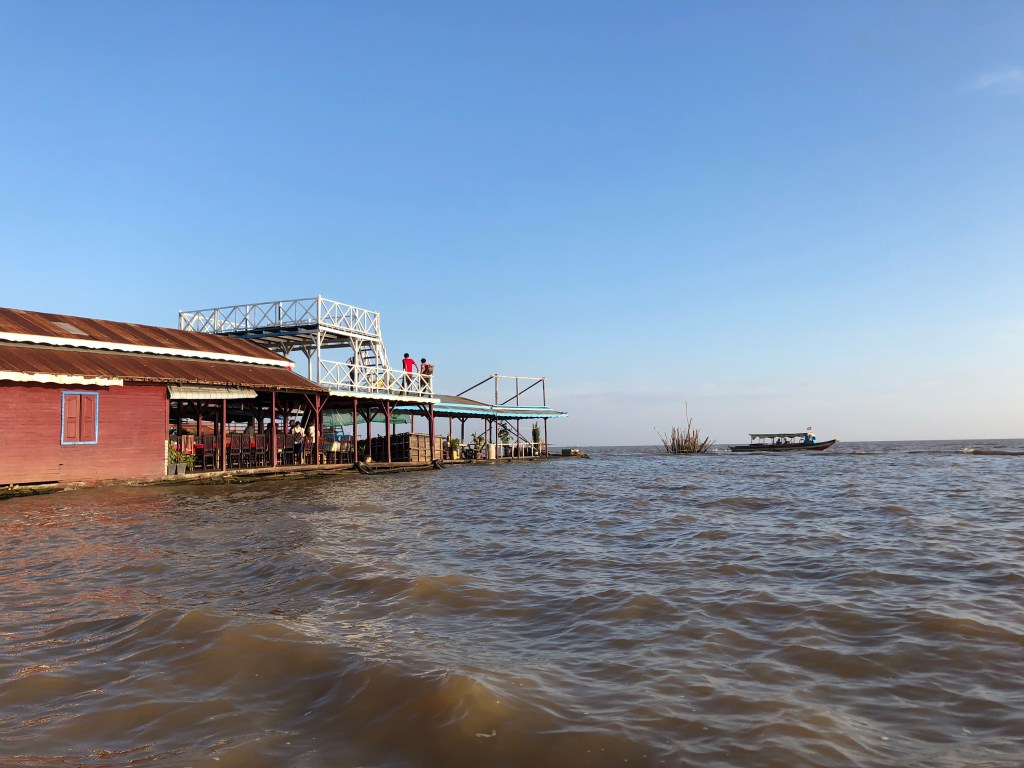
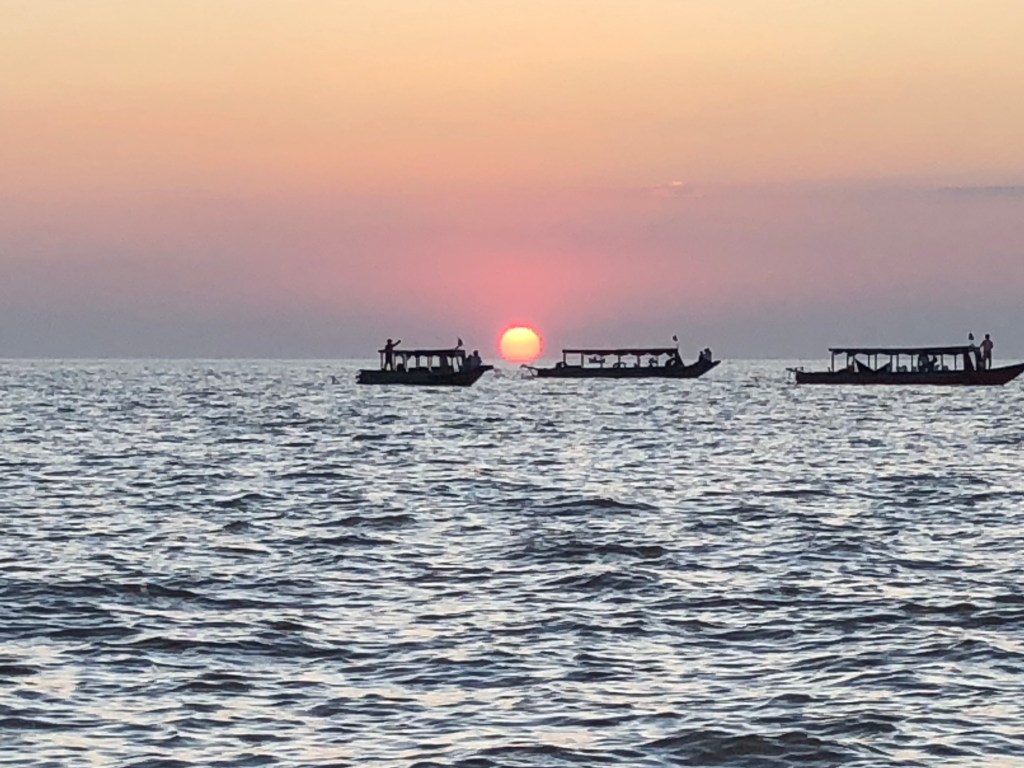
We headed to a different floating restaurant which had a floating crocodile pen. Here we got a drink and hung out watching the sunset over the lake.
The next day we booked a private tour of many of Siem Reap’s temples. Our first stop was Bantaey Srei, the oldest temple we’d be seeing this day, having been built in 967 by Hindu priests. This was a stop on the ‘big tour,’ situated in a large circle of temples, while the more popular ‘small loop’ was a trifecta of temples we did that afternoon. Bantay Srei was known for its once-pink stone.
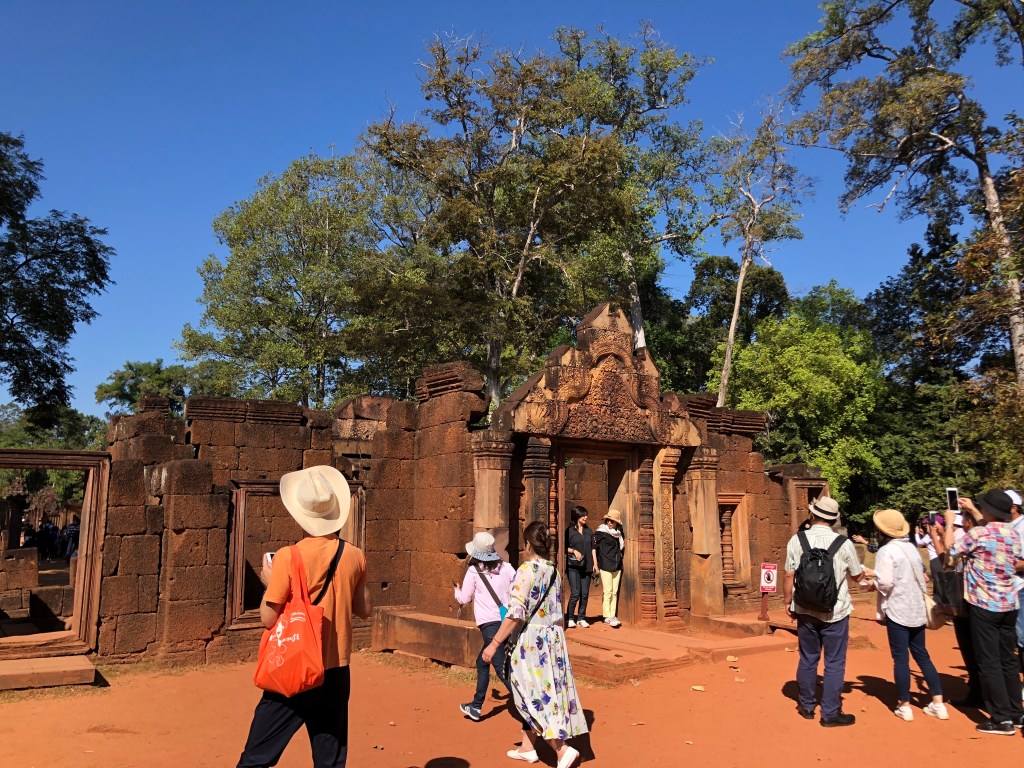
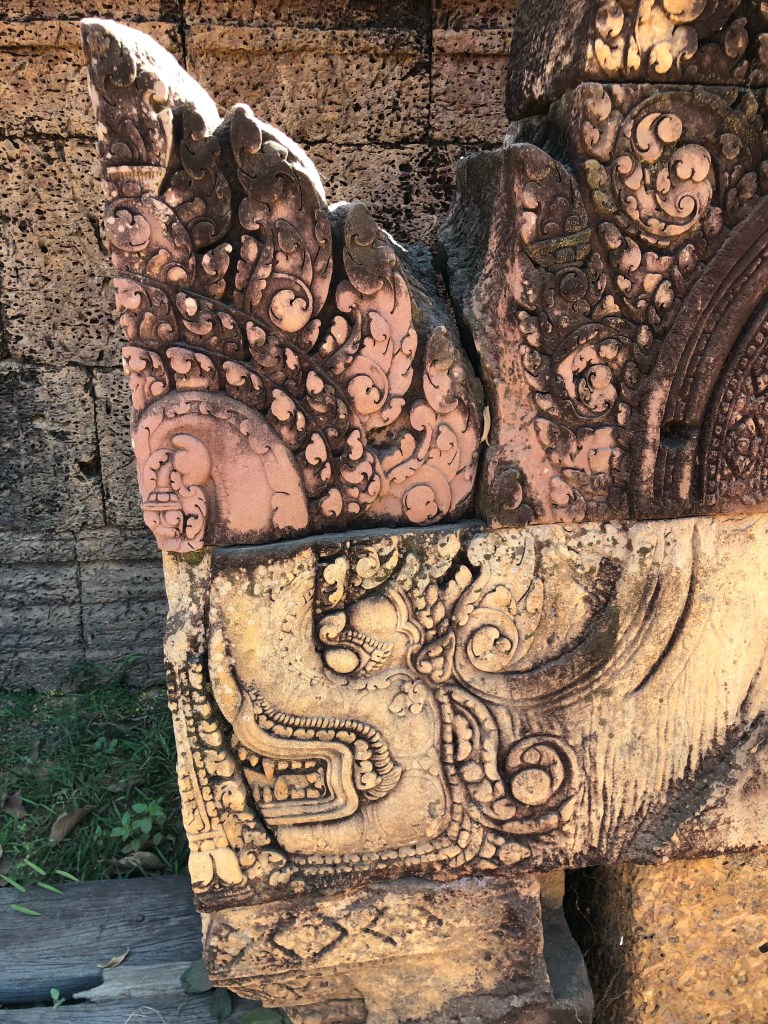
It was abandoned from approximately 1500-1900, when it was rediscovered by a French explorer, who was once celebrated and eventually jailed for illegally selling and exporting Cambodian artifacts. The sandstone temple was never painted, and is drawn from a local gray quarry and far away pink quarry. Within the temple wood has deteriorated while the stone remains. It was the first temple to be restored, in 1931.
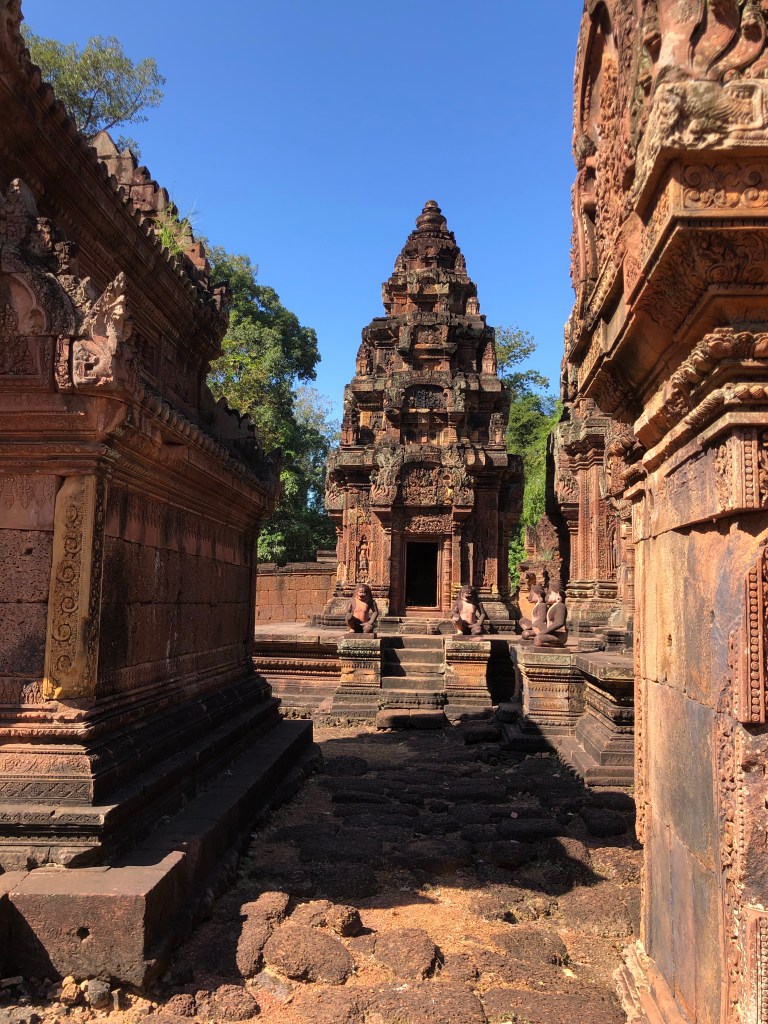
lavastone
The Cambodian name for the lava stone directly translates to crispy rice stone, and is 50% iron, 50% sandstone. My favorite factoid that we learned from our wonderful tour guide Mao (nickname “Chairman”) was about the foundations. All of the local temples rest on a subgrade of sand, which much be kept wet to maintain its strength to support the temples. Temples therefore all have moats and nearby reservoirs to maintain their structural integrity.
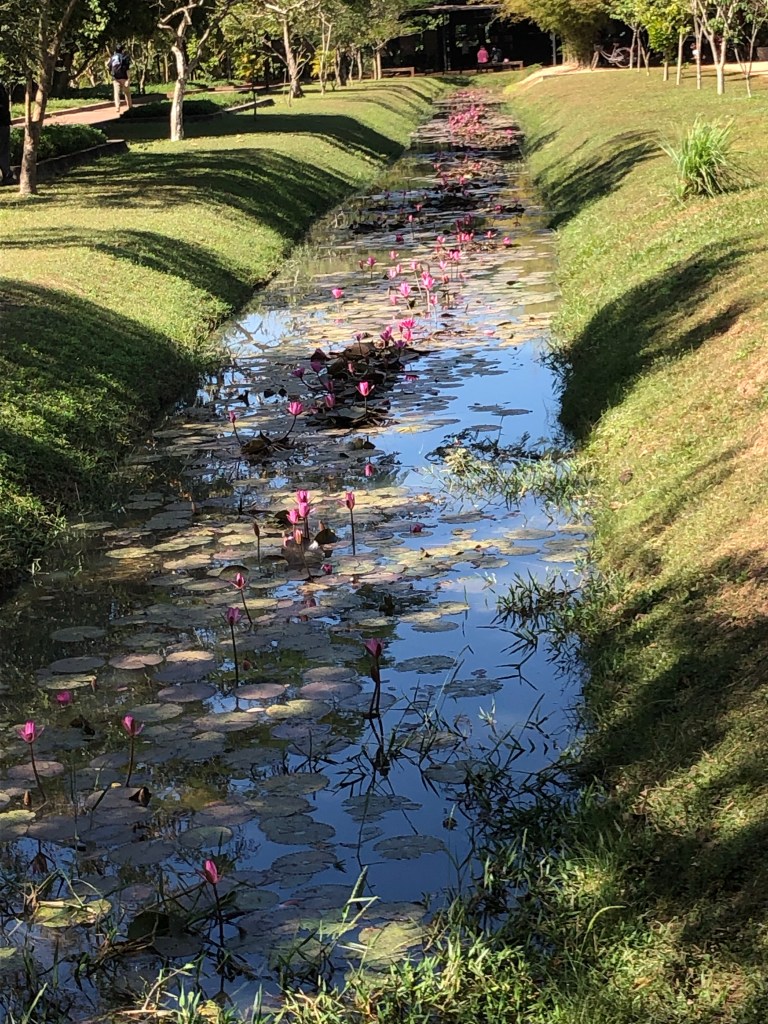
Lilly moat 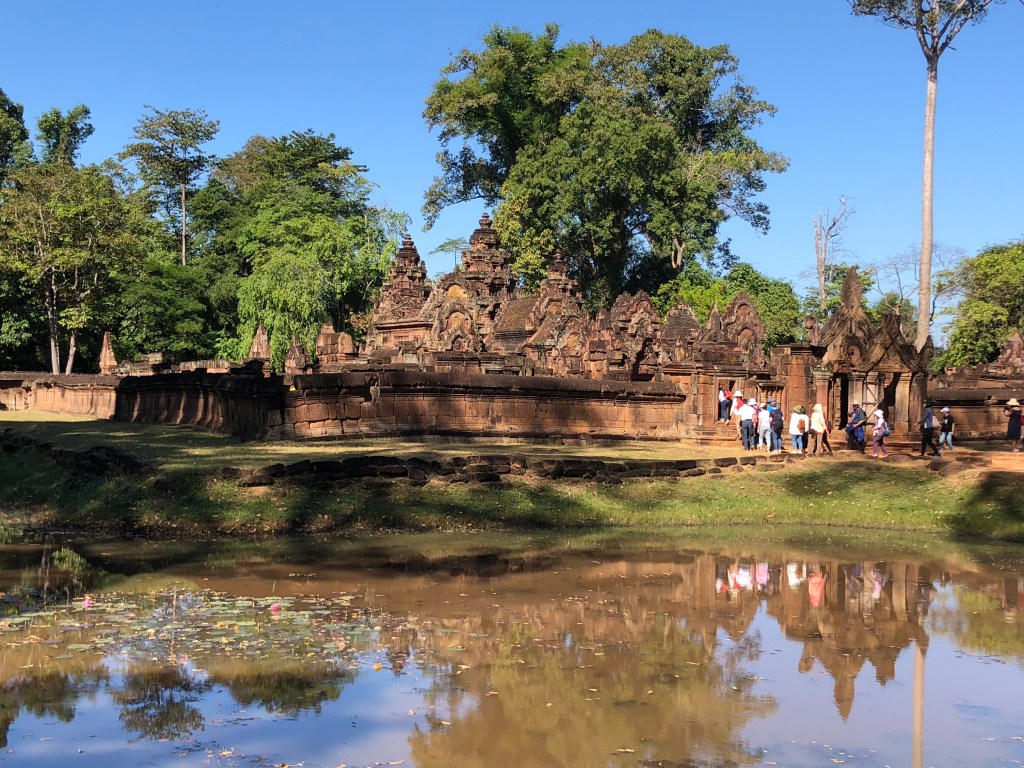
Our next temple was Pre Rup, similarly built in the 960s this one by a king rather than monks. Also a Hindu temple, Pre Rup’s main draw was a platform we could wander around and enjoy the color of the sun of the brick towers.
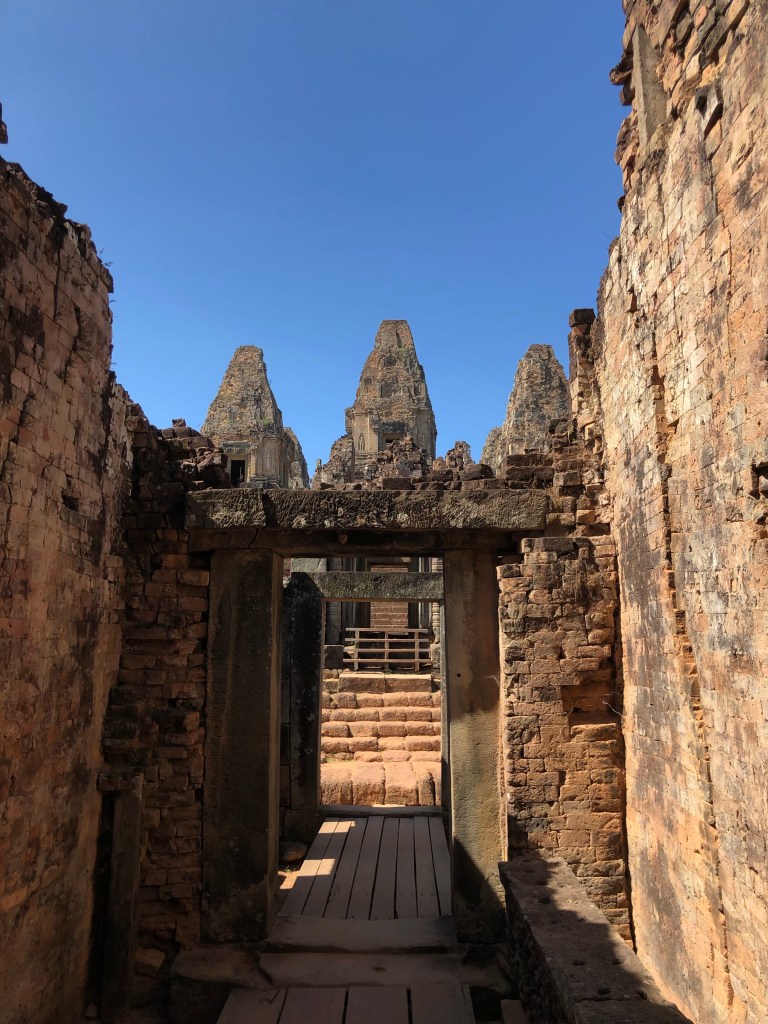
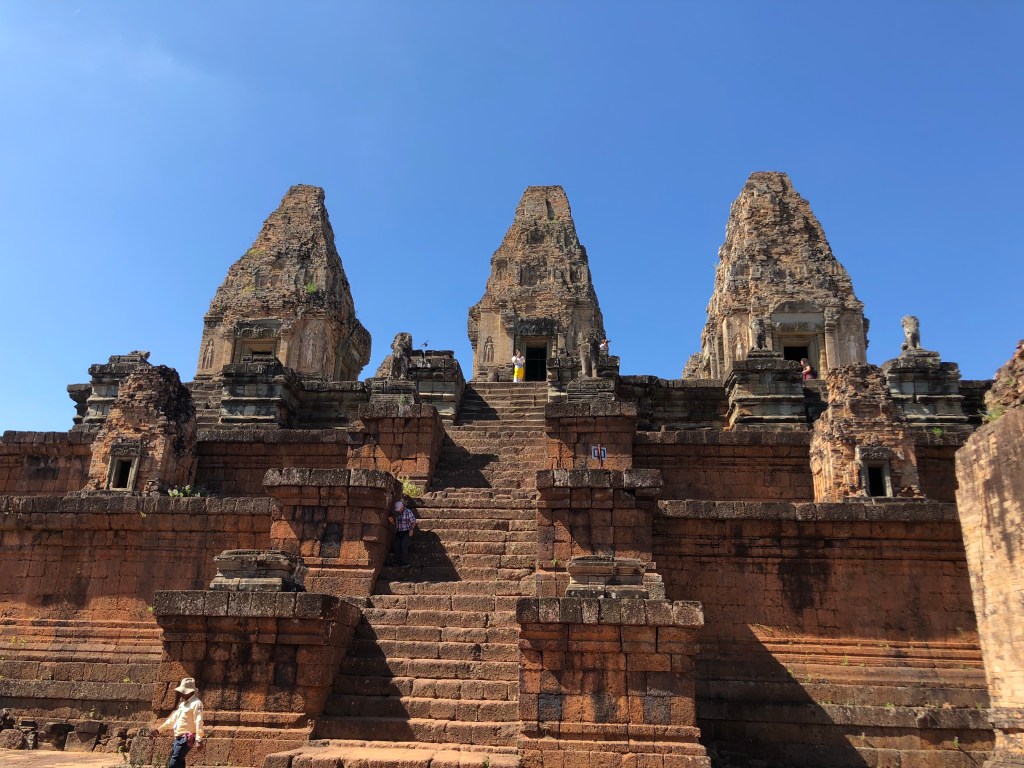
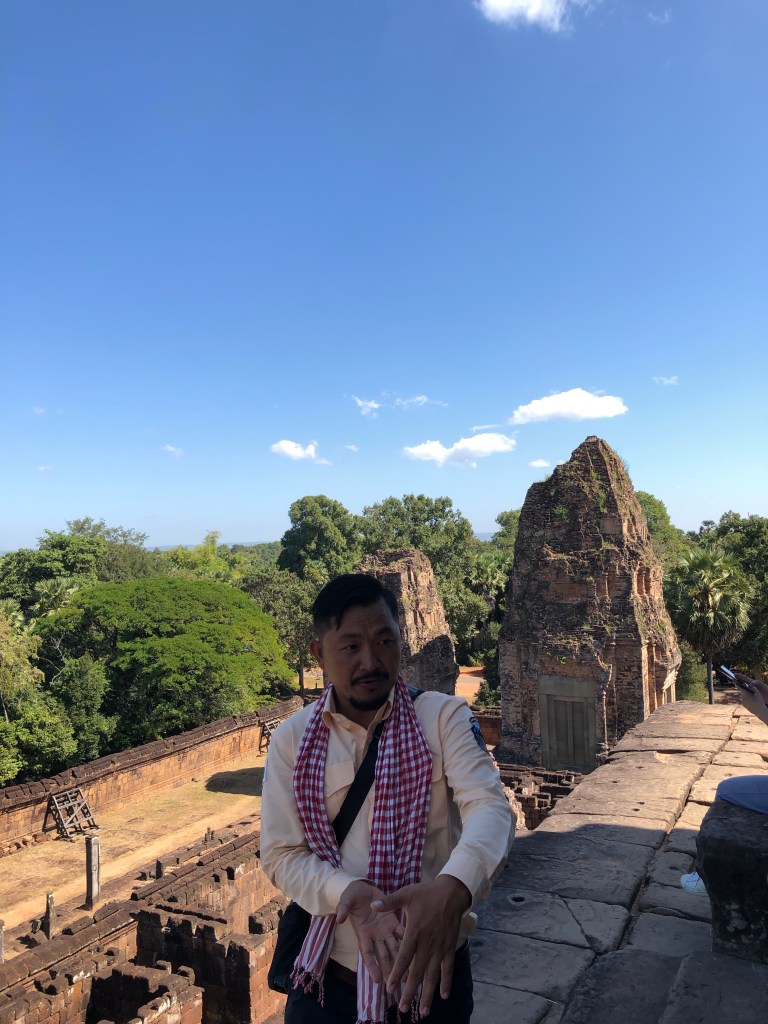
Hi Mao! 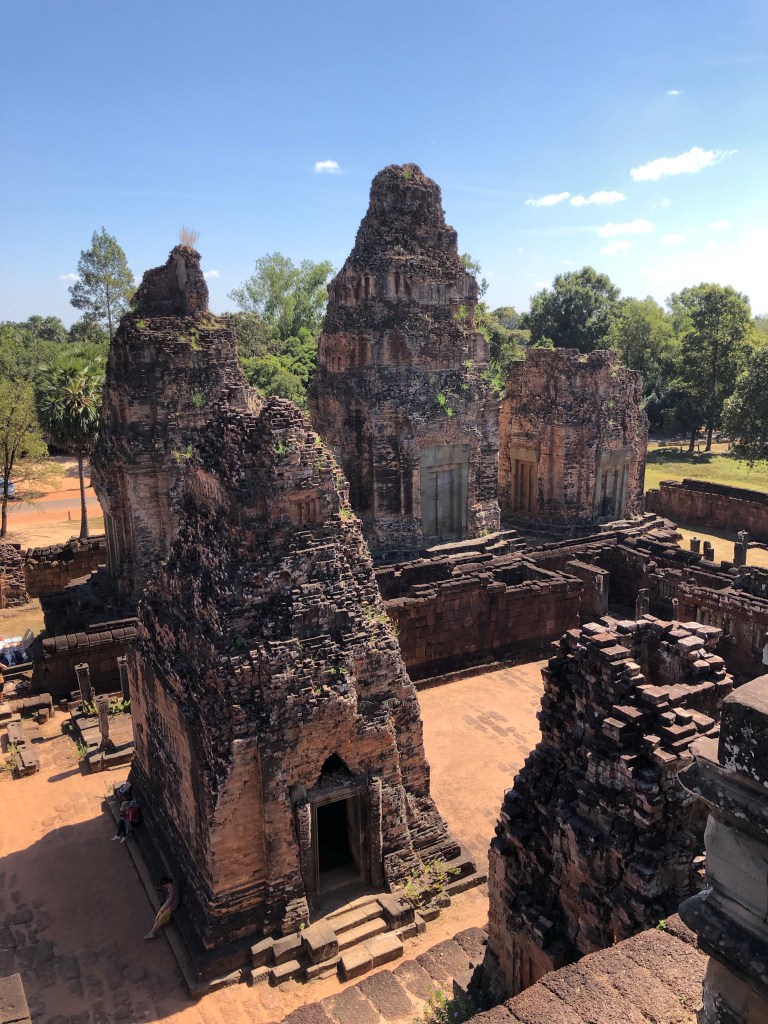
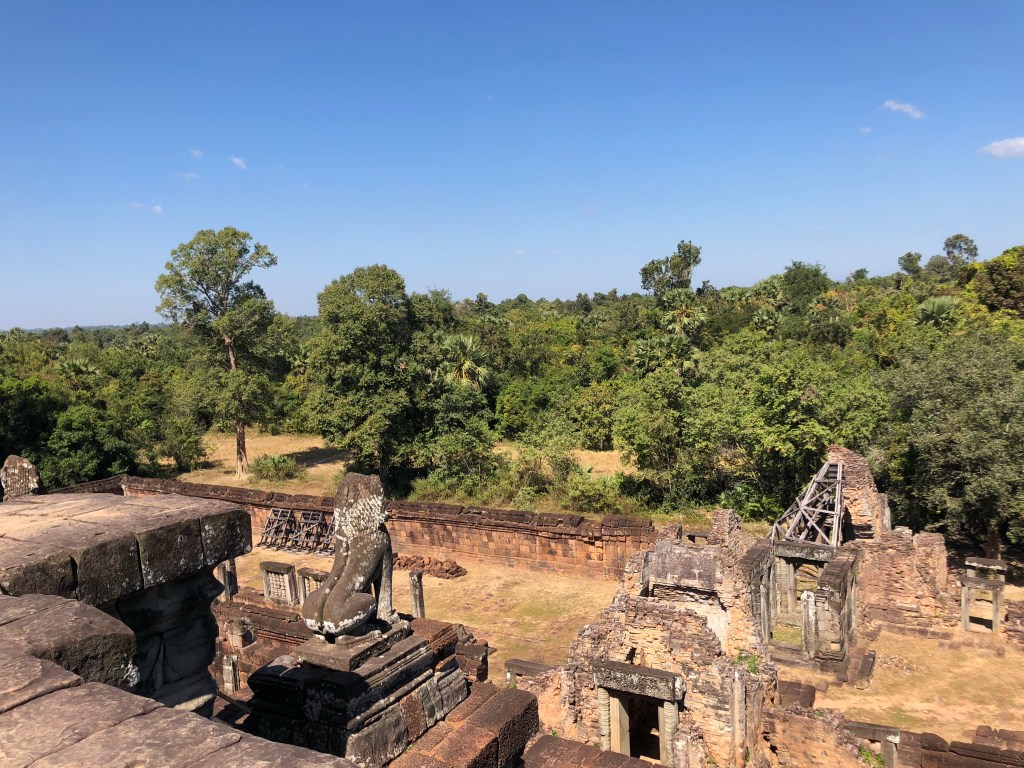
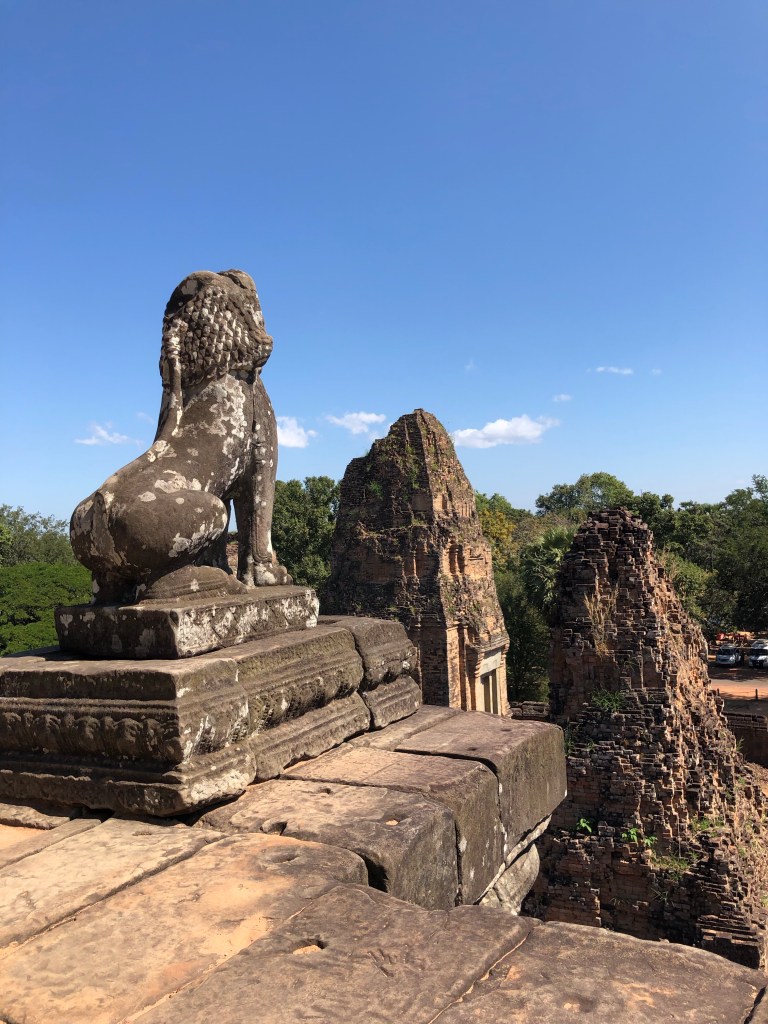
Lion’s rear
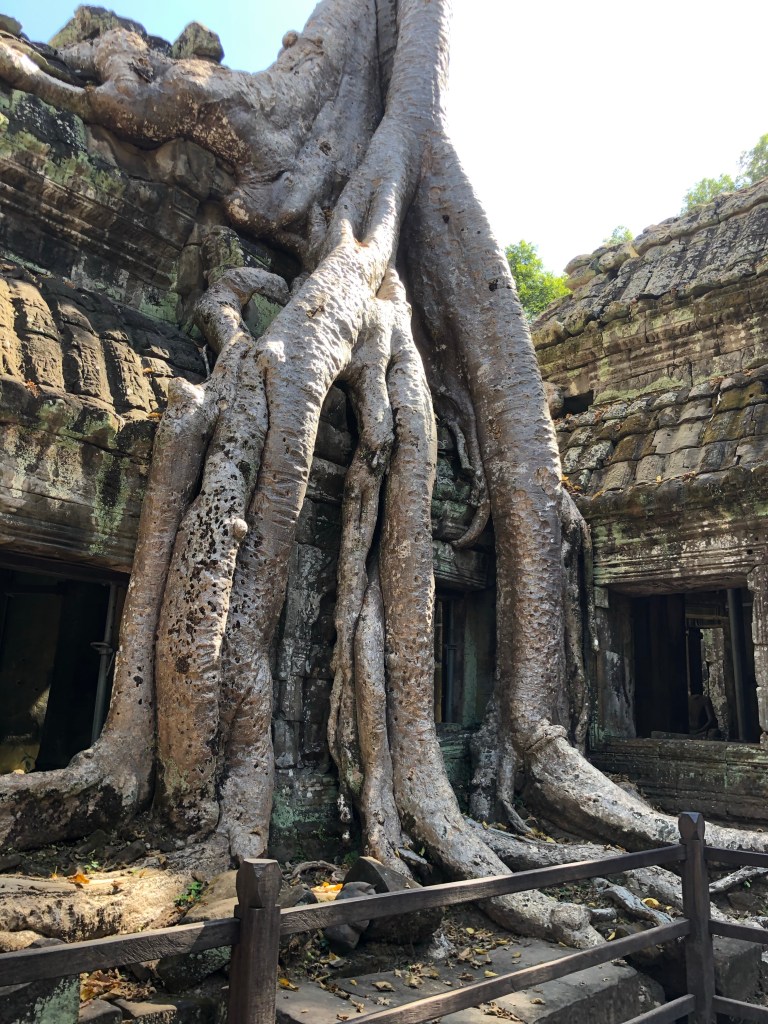
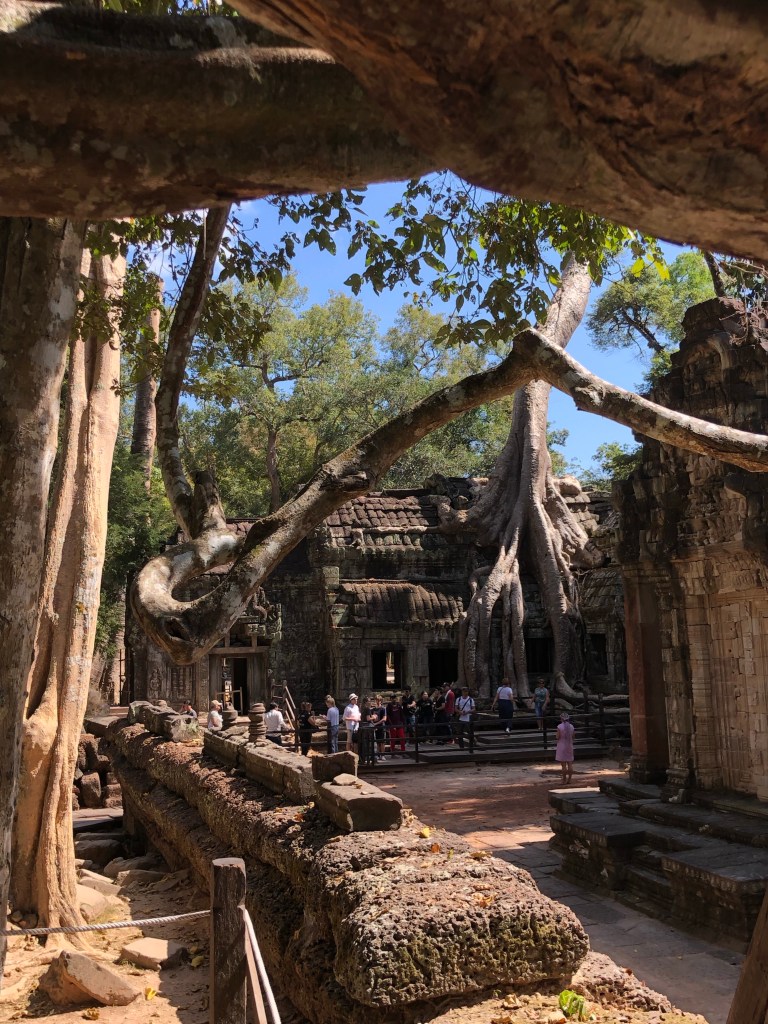
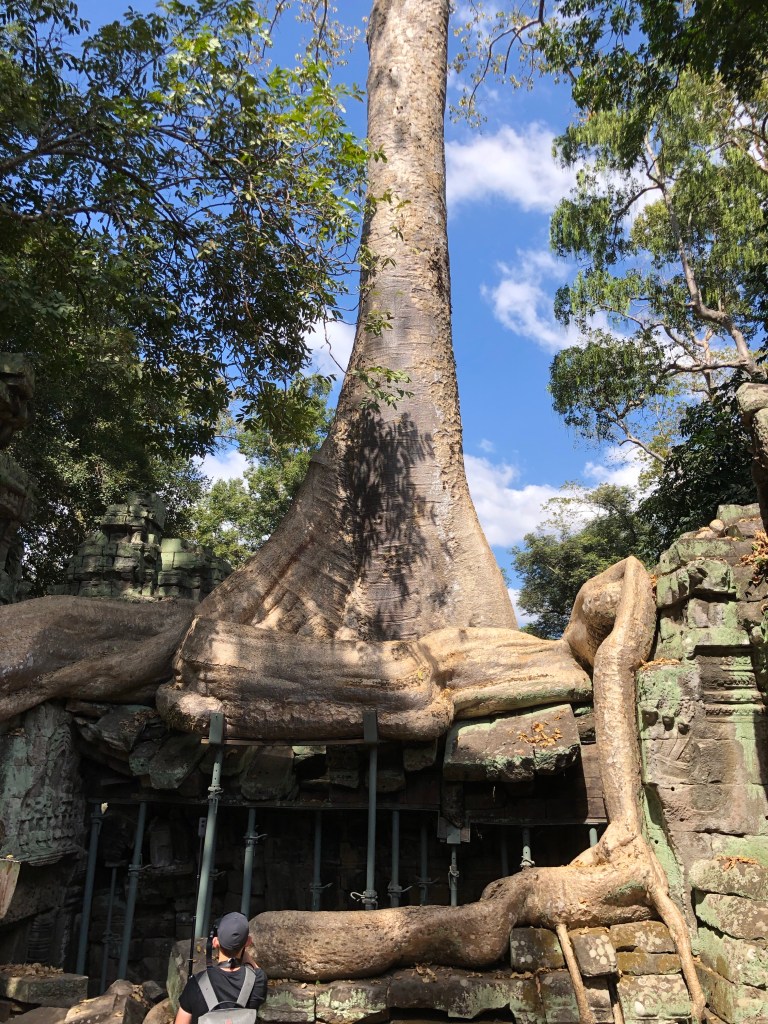
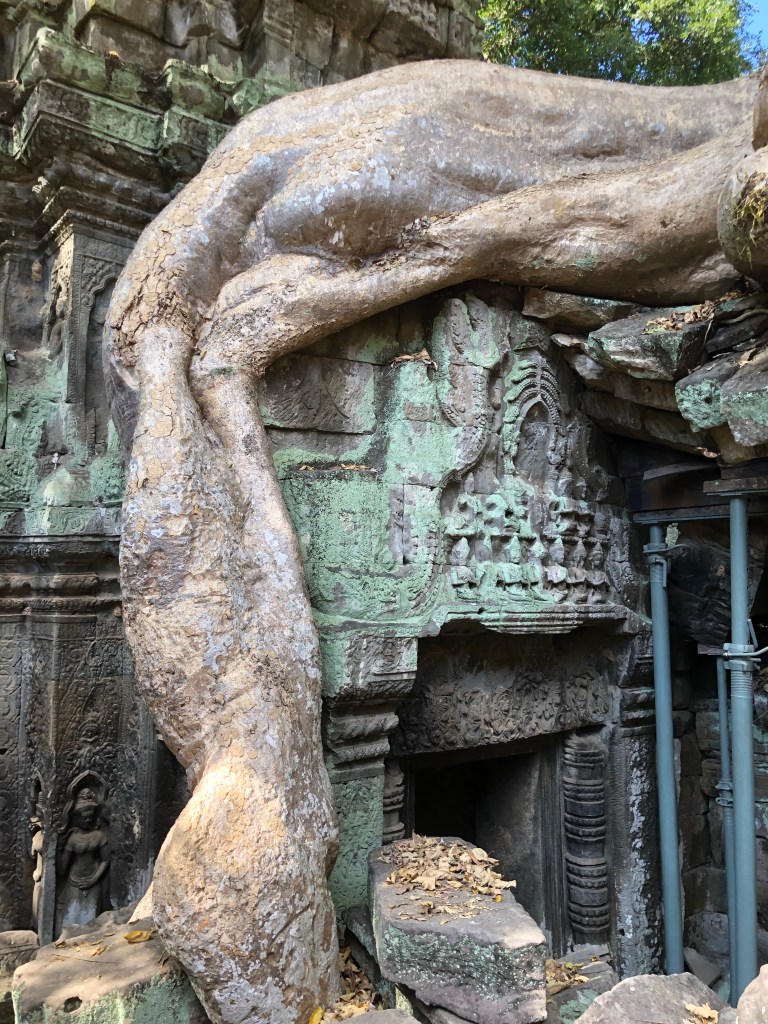
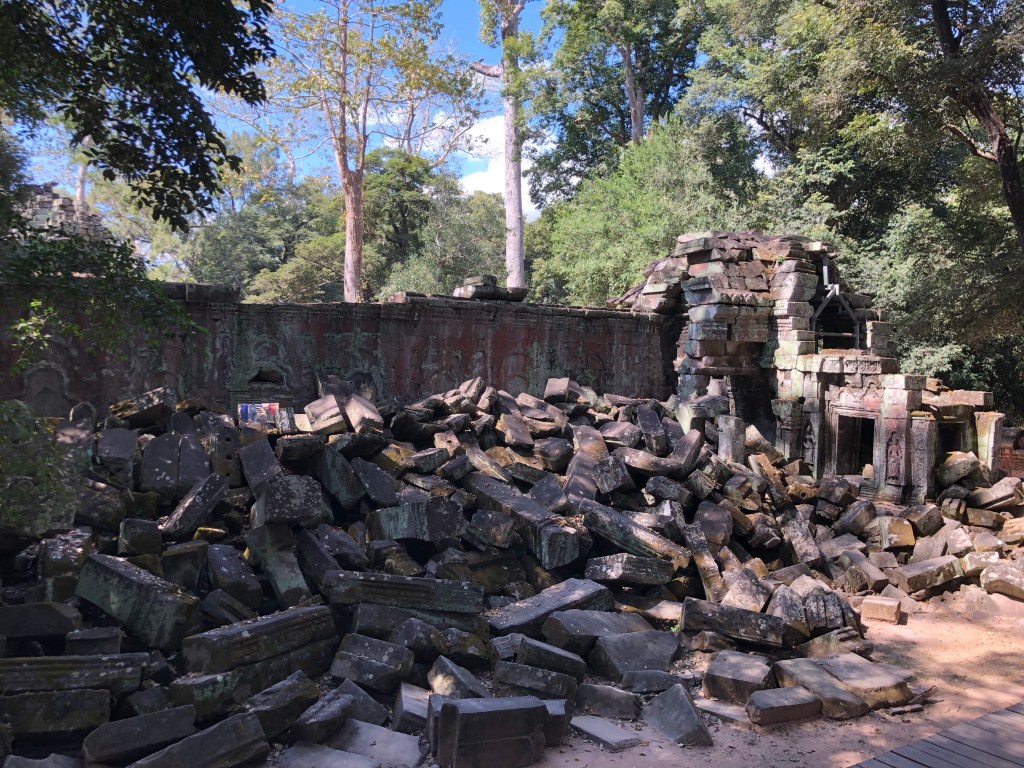
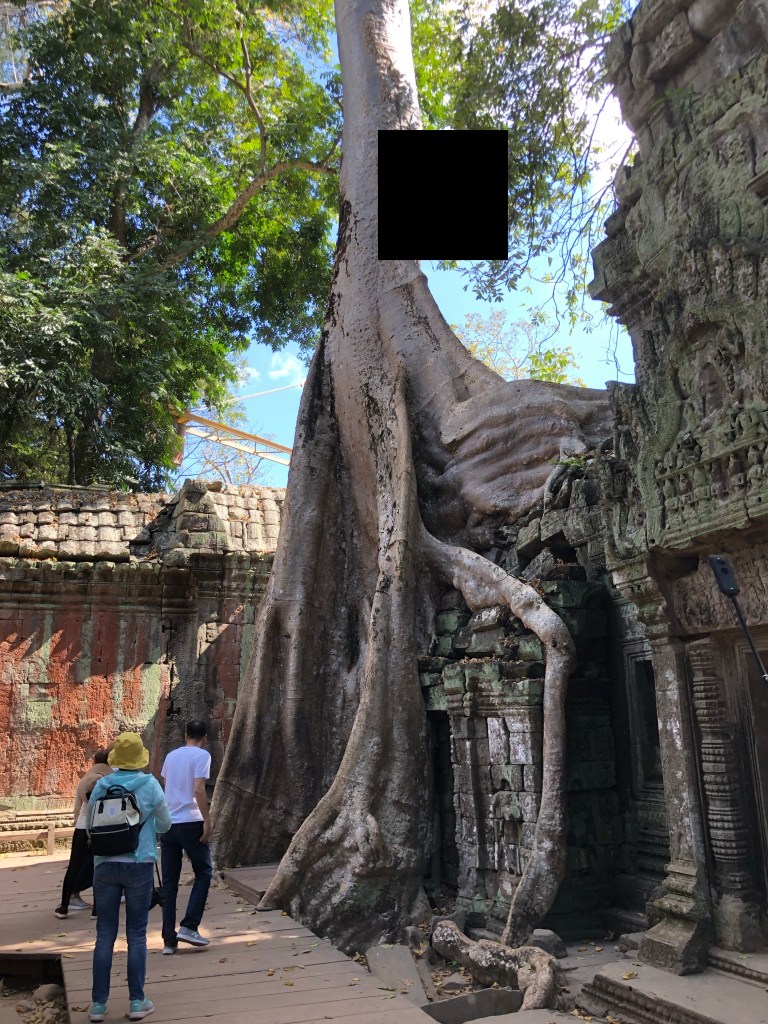
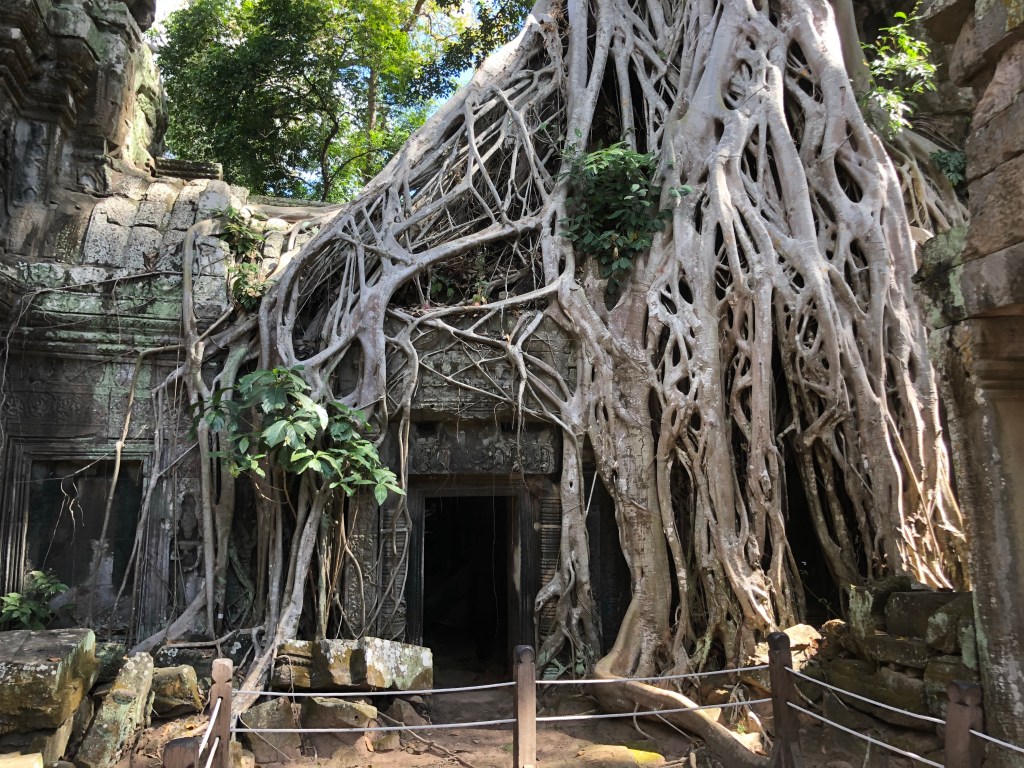
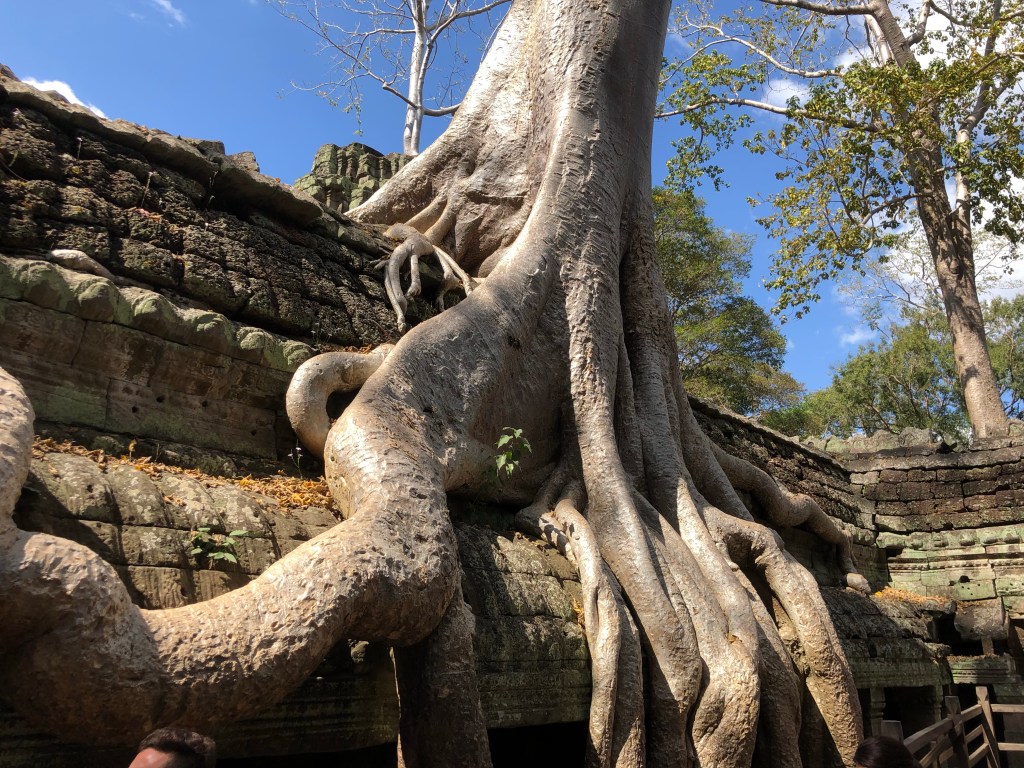
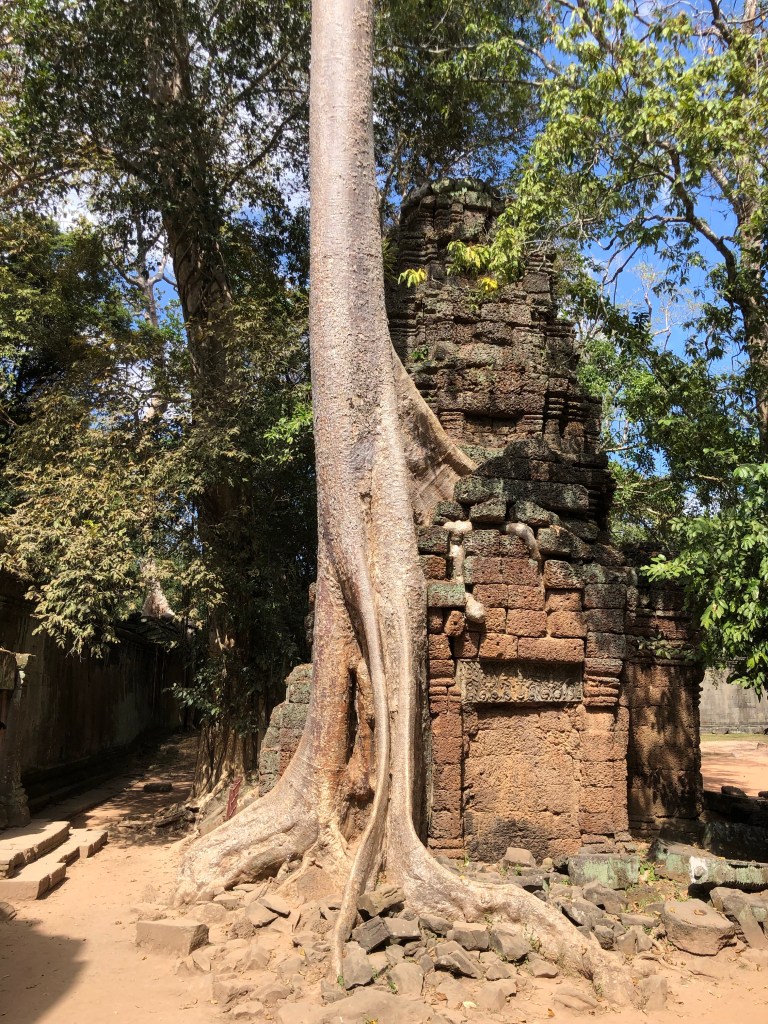
Having saw two Hindu temples, we now moved on to the Buddhist temple Ta Prohm, built in the 1200s. Ta prohm is known for its ebony trees growing on terraces and walls and tops of buildings (ebony wood is used for piano keys). It is a stunning display of nature overtaking an impressive stone complex built by man. Karen and I were both excited for this one (it is the reason she came to Cambodia en route to Vietnam) and we didn’t even need to be sold by the fact locals shared repetitively; this was where Tomb Raider with Angelina Jolie was filmed. We must’ve been told this 10 or more times. It was gorgeous. The only negative was waiting for crowds to finish their photo shoots so we could see everything (pr get our turn to snap pictures).
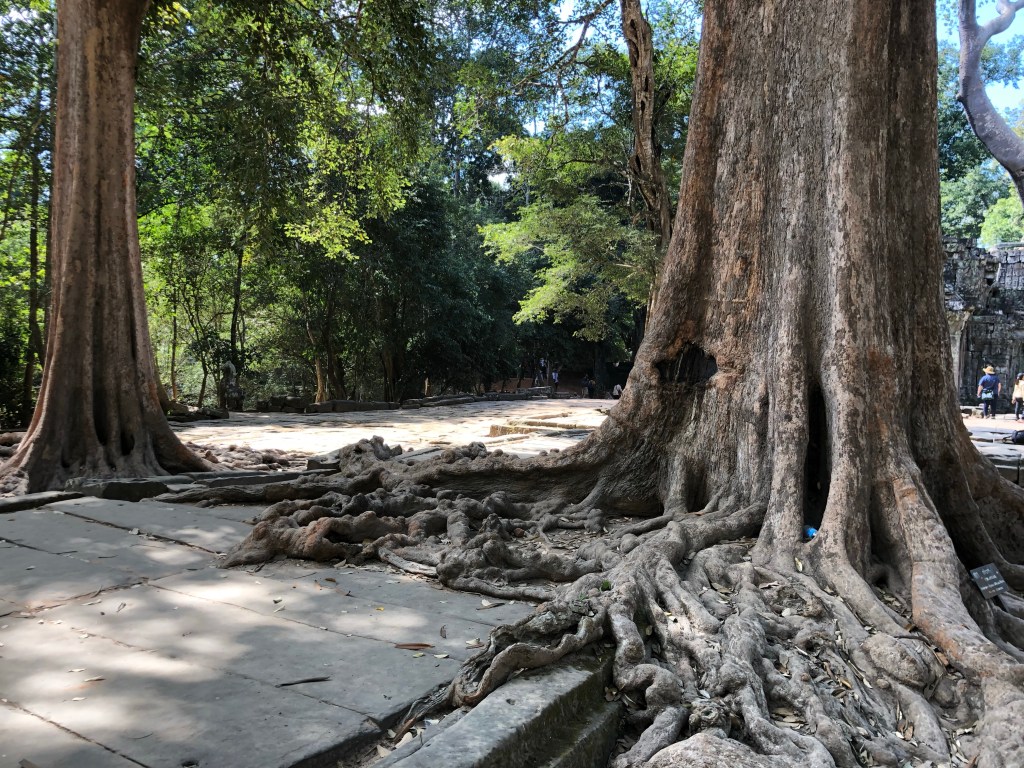
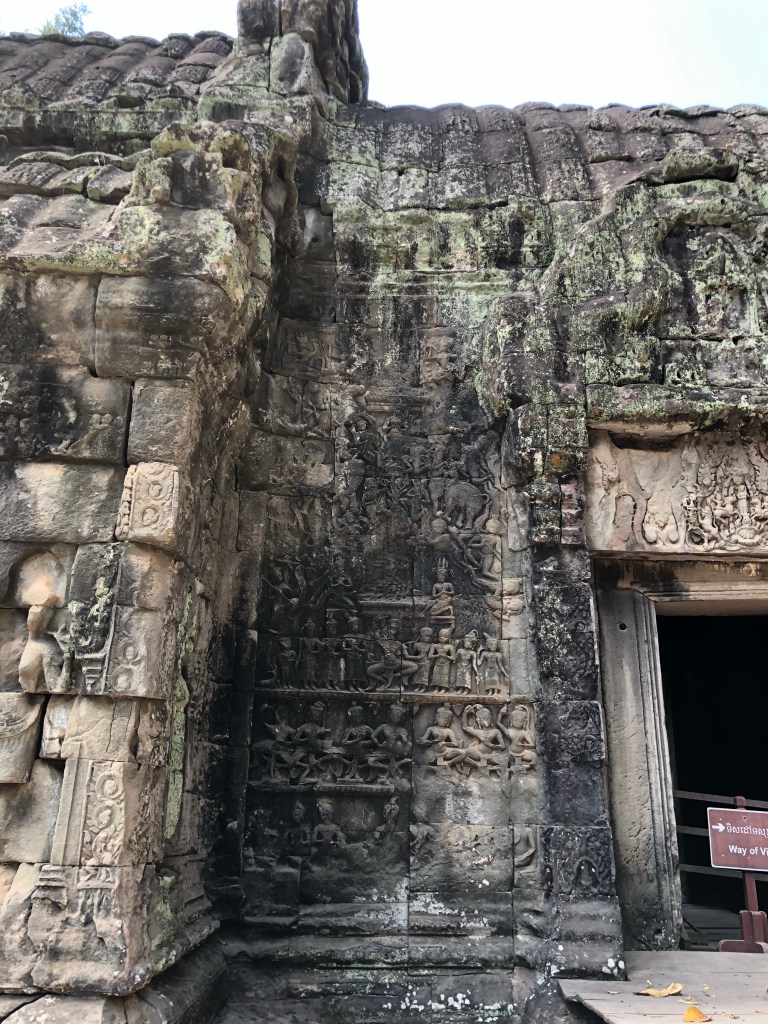
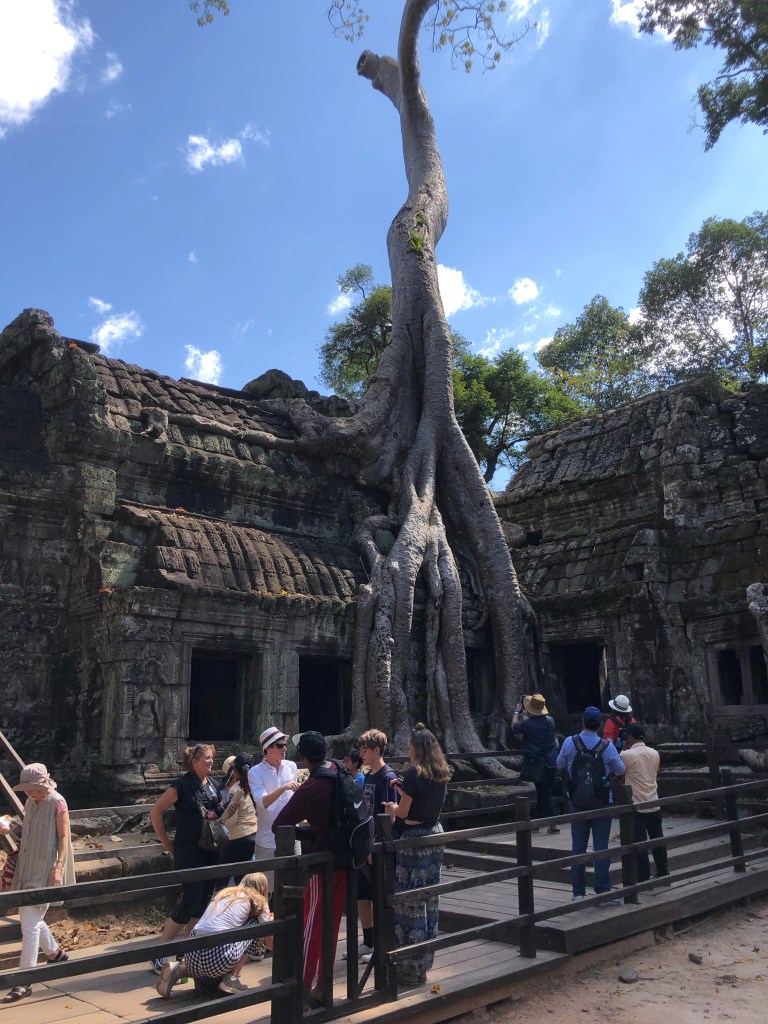
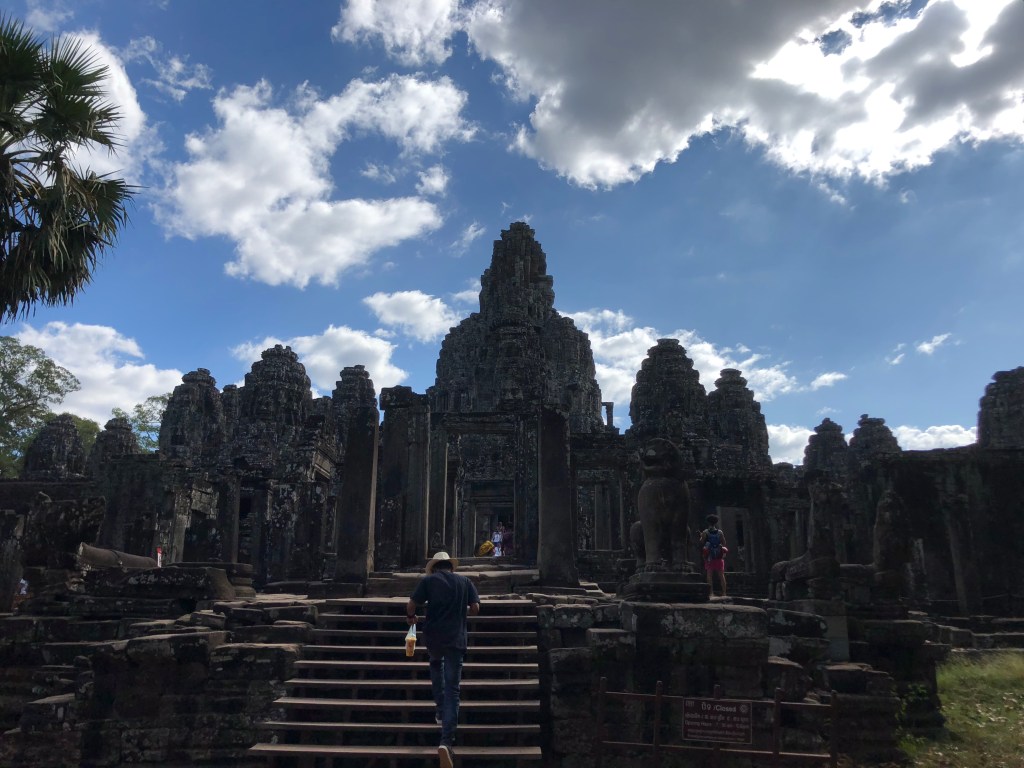
After lunch we headed to Bayon, which was our tourguide Mao’s favorite temple. Here we were welcomed by Buddhist lion statues, symbolic of power when used in Hinduism. There was a large relief depicting enemies – cham people from central Vietnam. built in 1181. Youngest temple built of stone. Following temples were brick and wood.
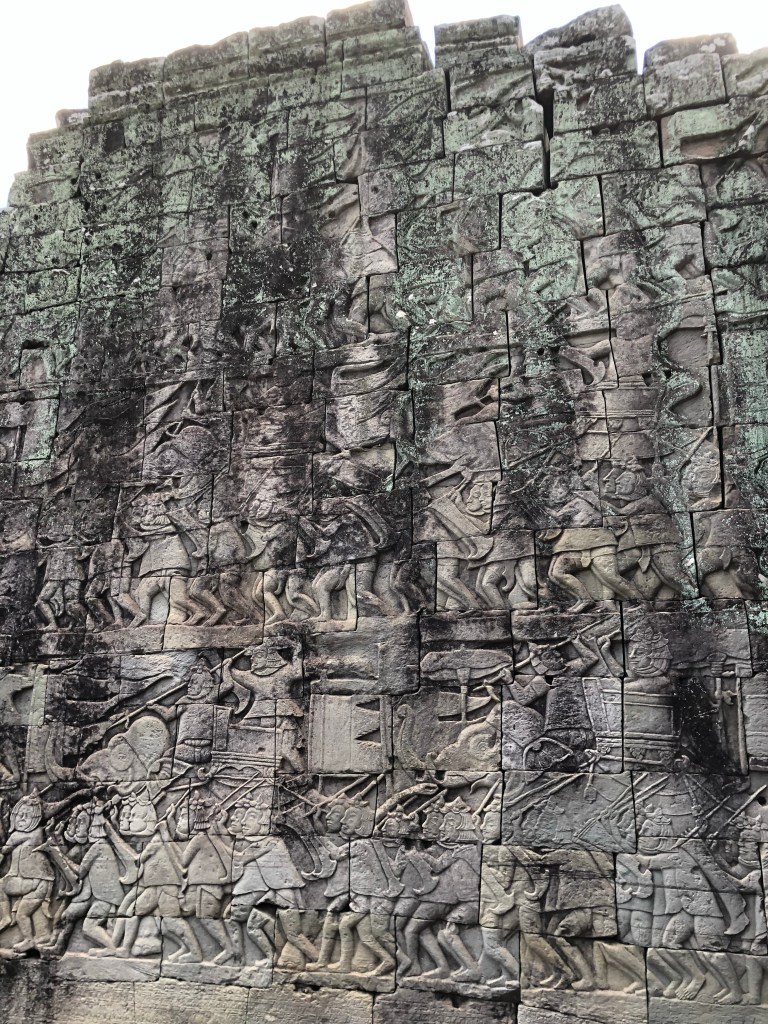
Relief with Cham army 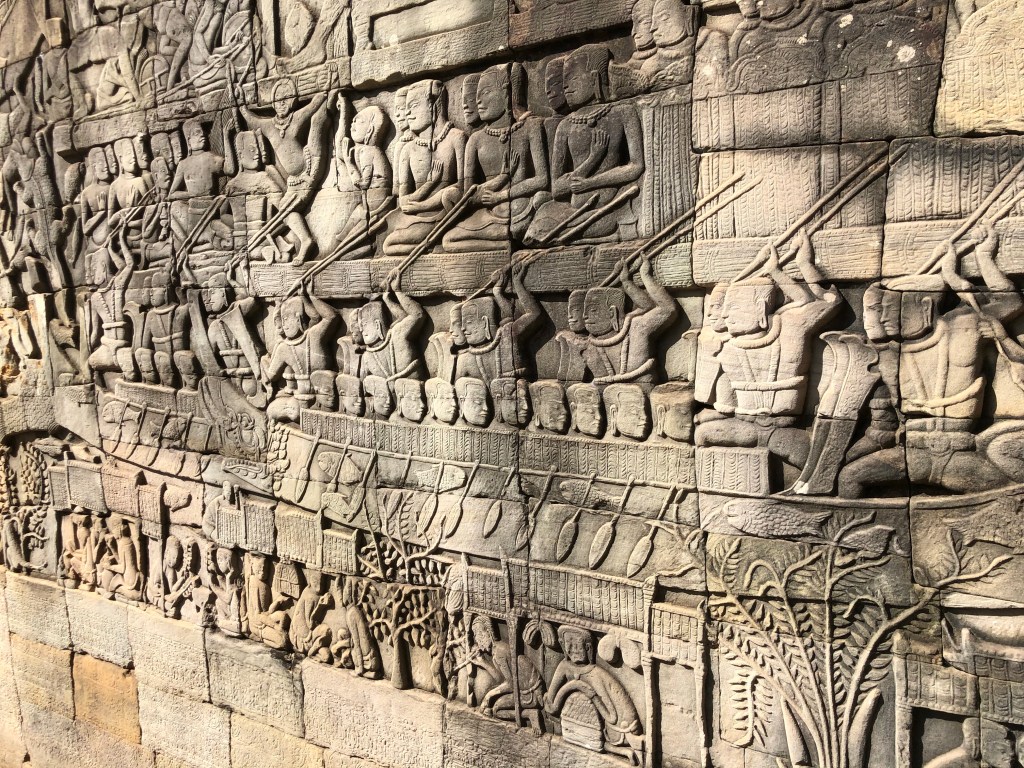
The levels depicted society’s classes 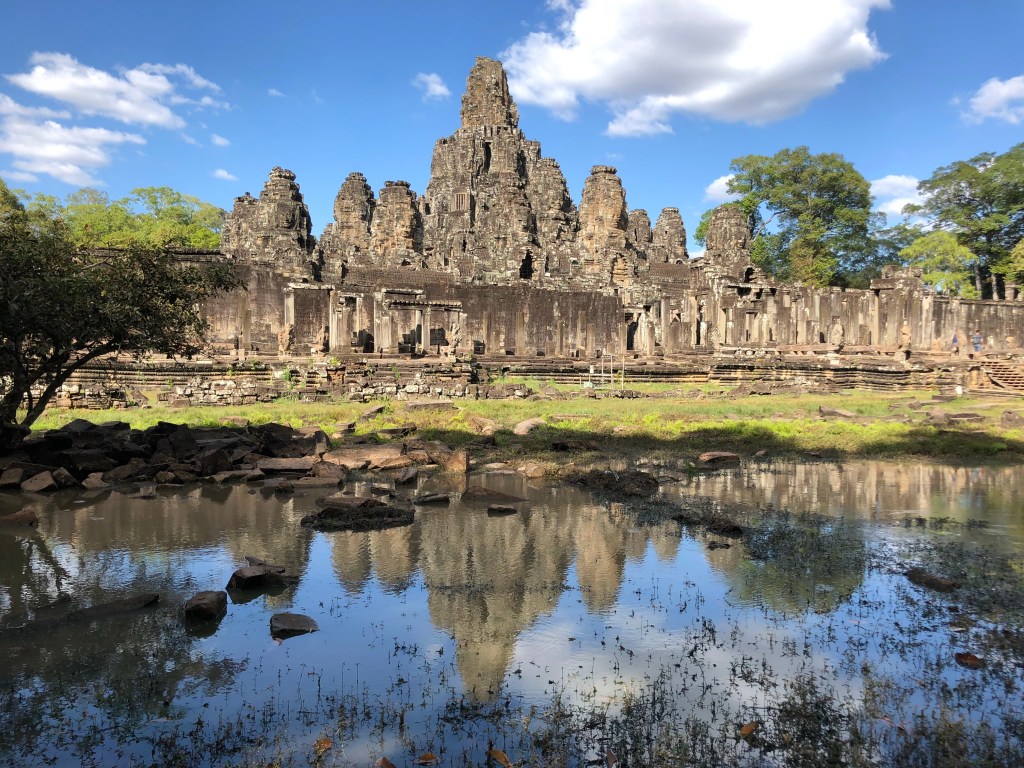
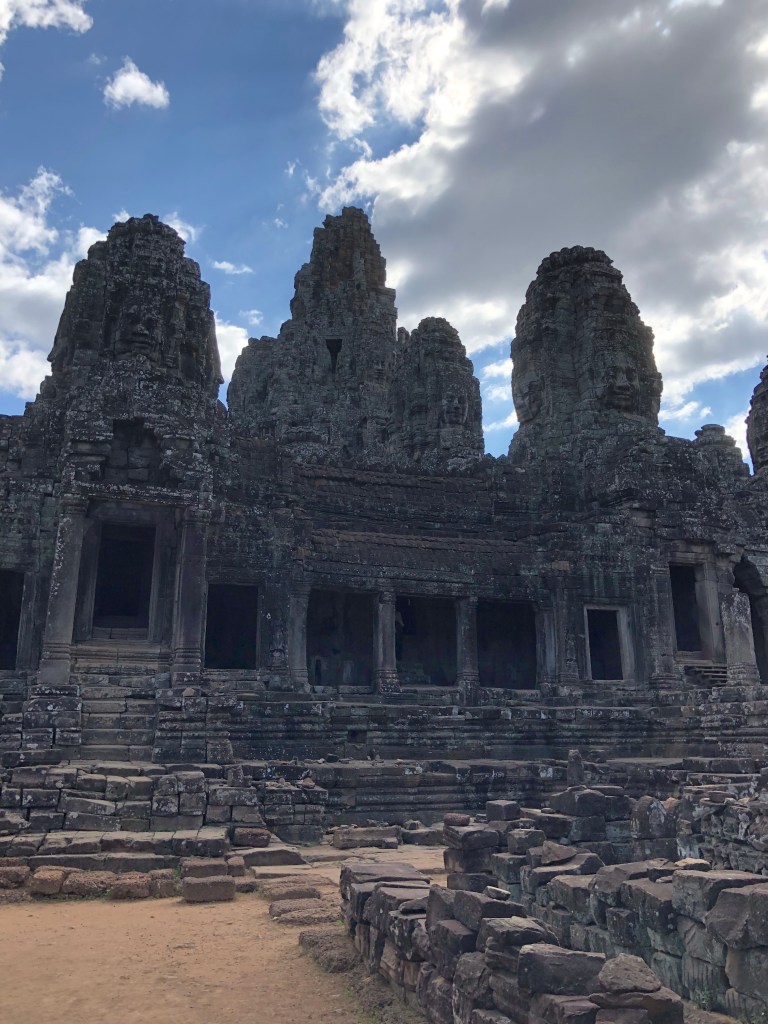
Bayon was built with 54 of the buddha-faced towers, of which only 39 remain. The number 54 was symbolic of the provinces in the Khmer kingdom. Each tower had four faces, facing north, east, south, and west, except for the central tower which was round and had 8. The towers and faces were really enjoyable to walk around and view. Come January 2020 visitors will not be allowed to the third level where you can get up close to the faces so our timing was lucky.
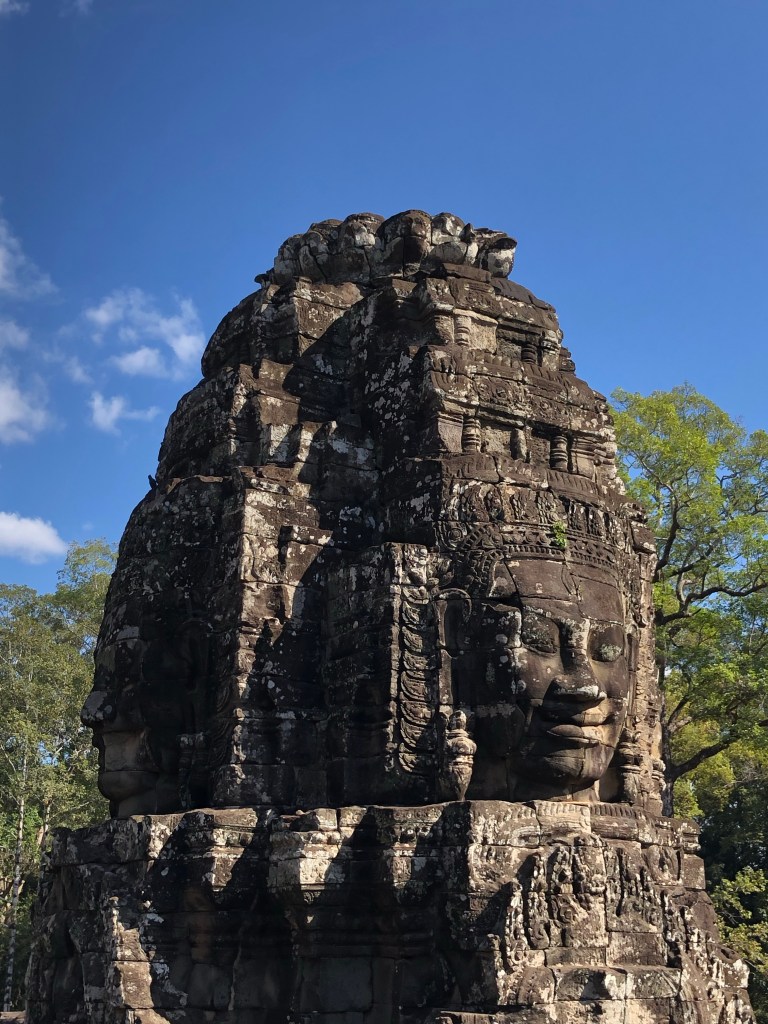
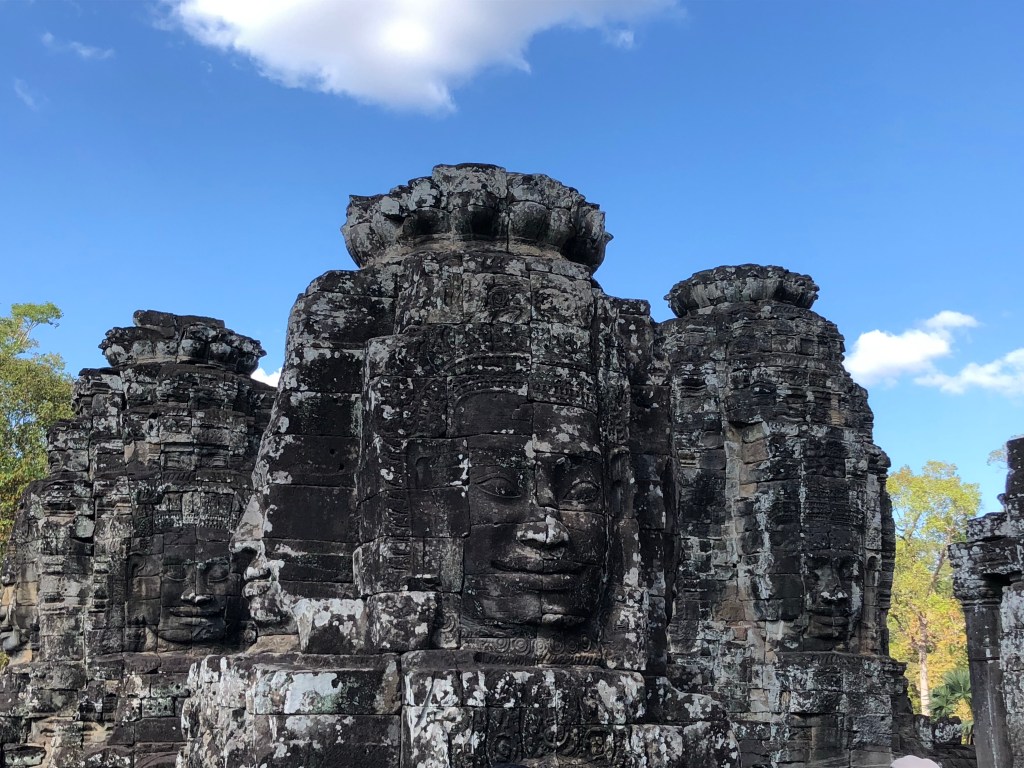
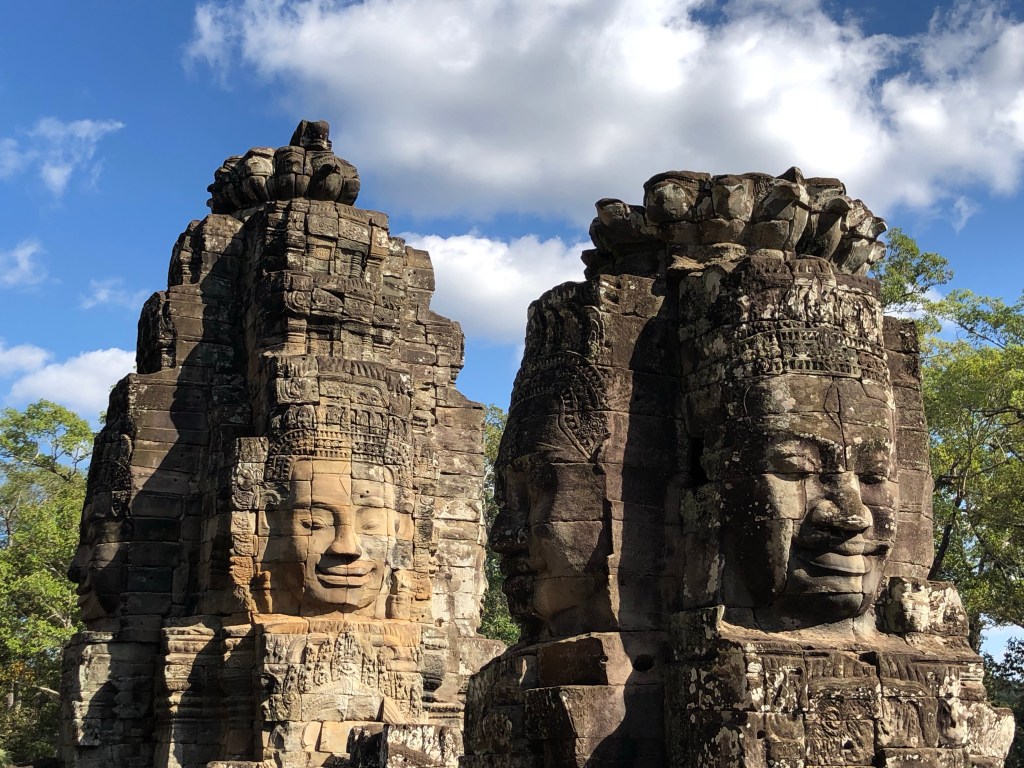
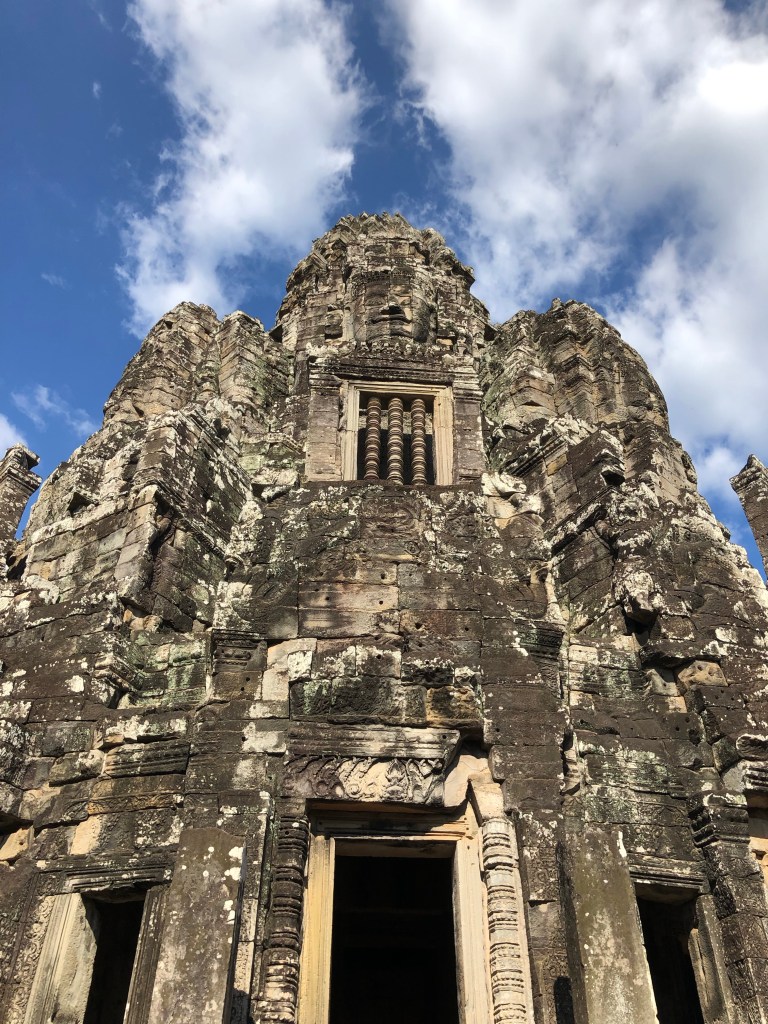
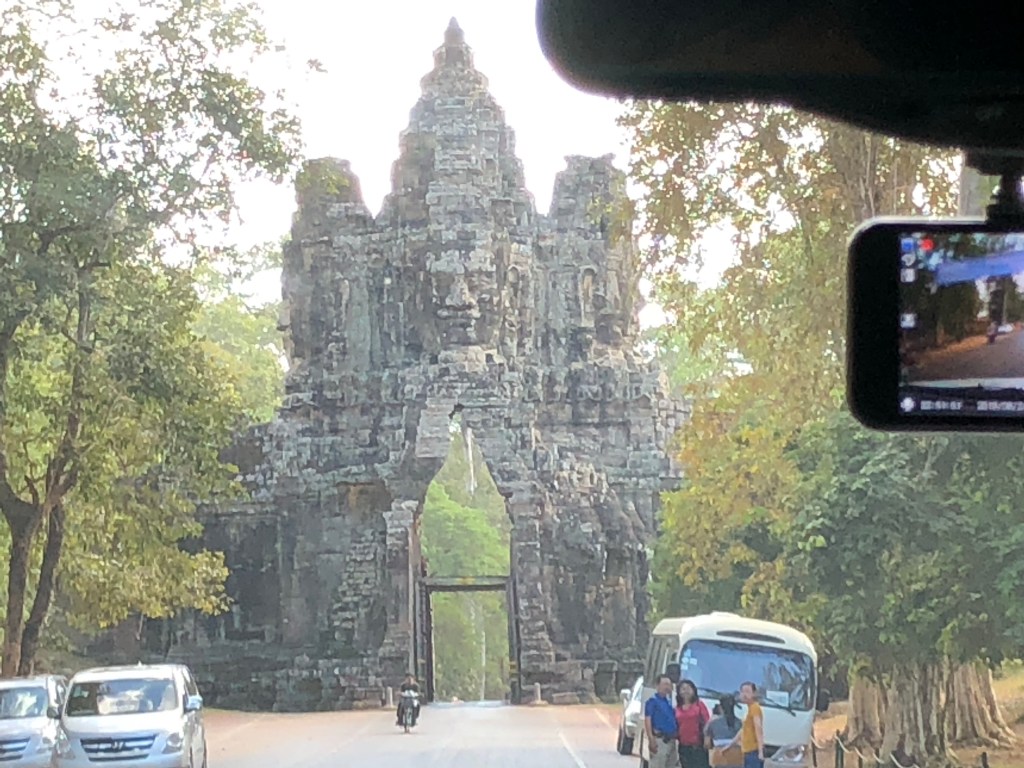
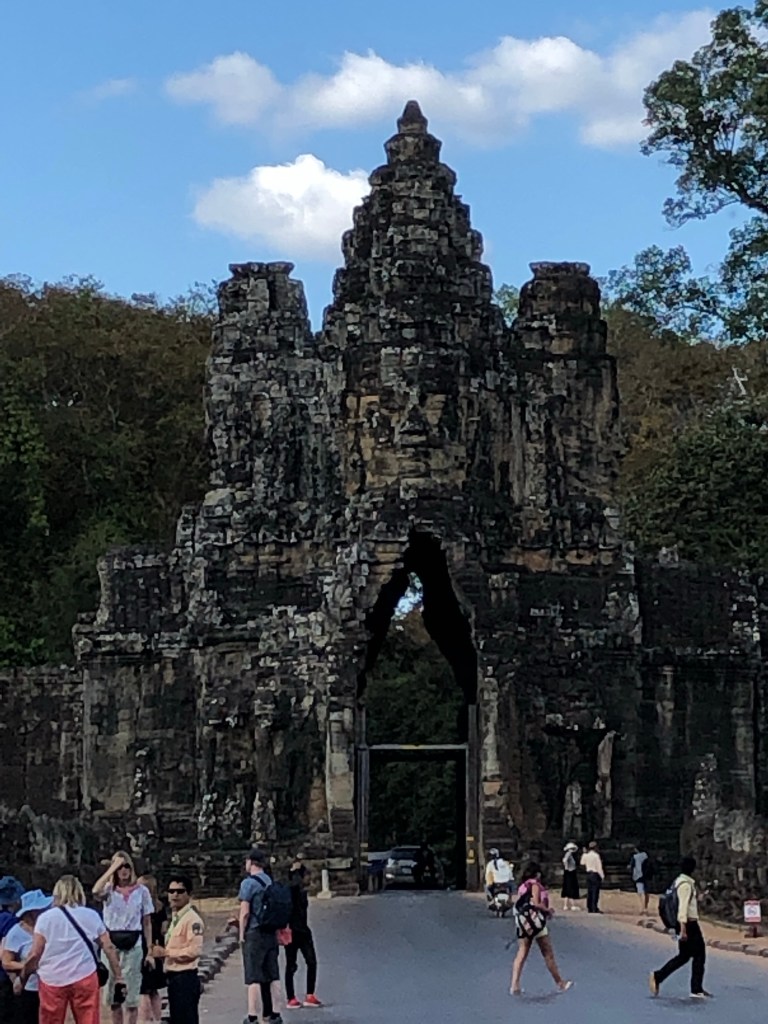
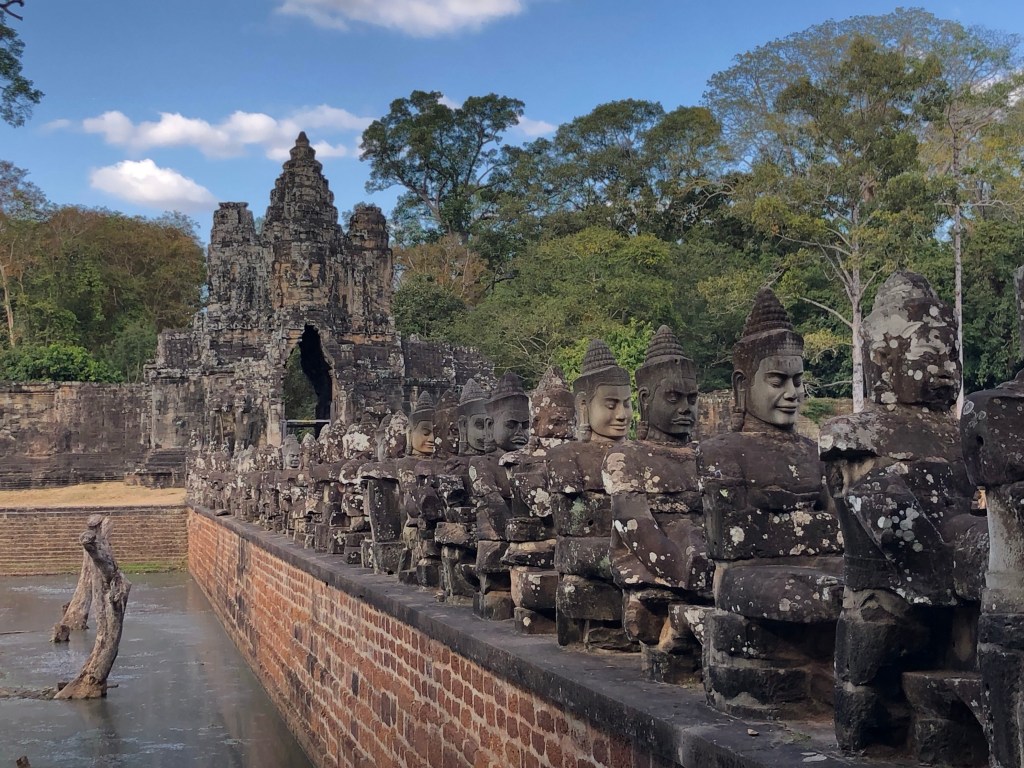
we drove through a historic gate after Bayon…
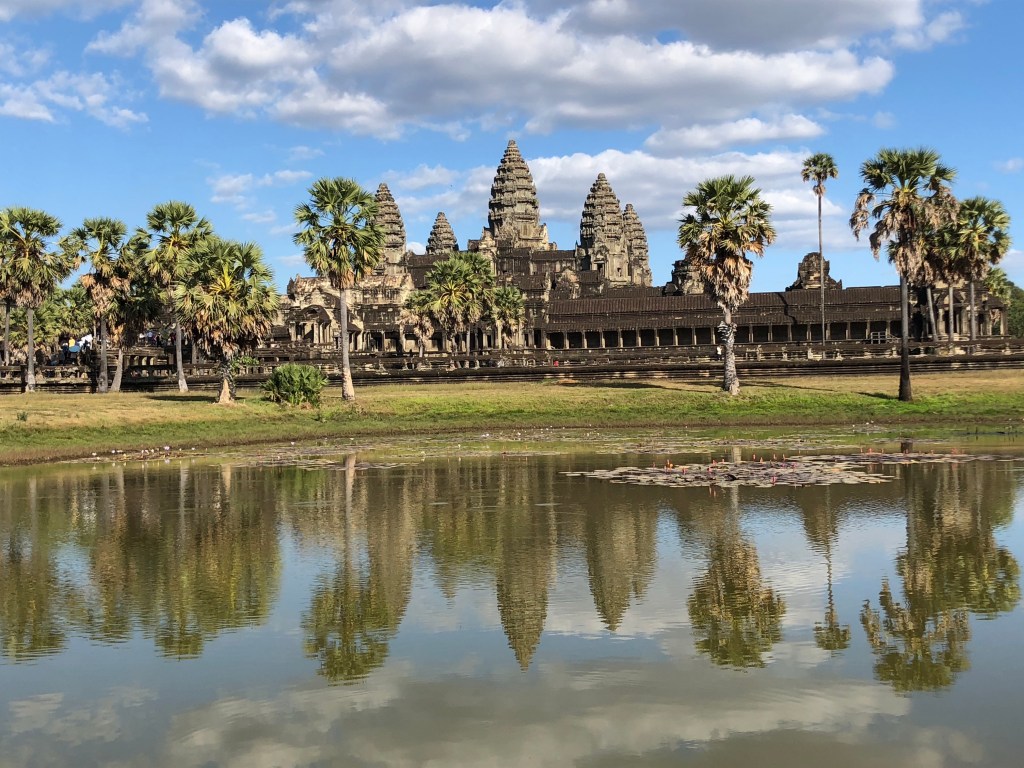
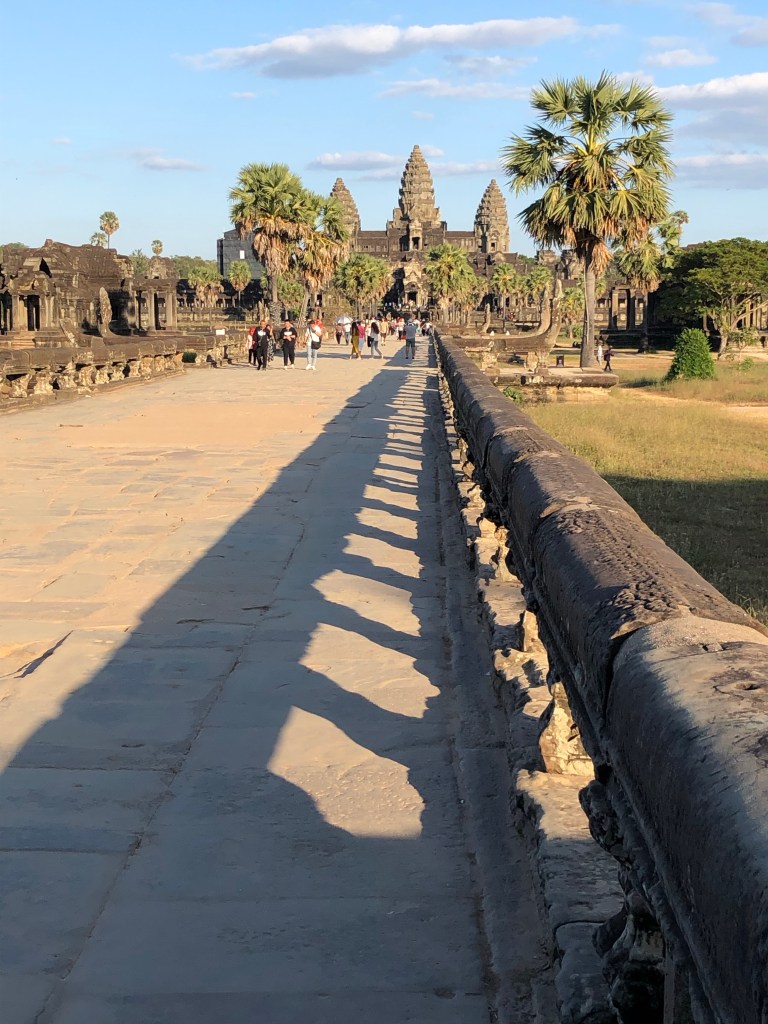
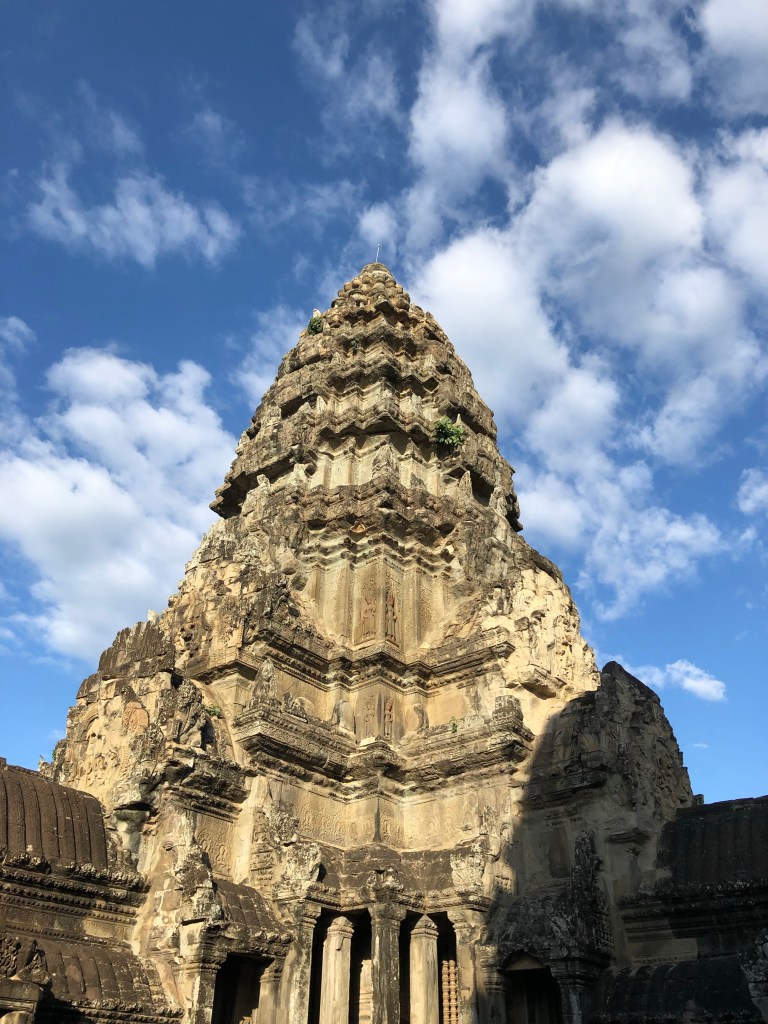
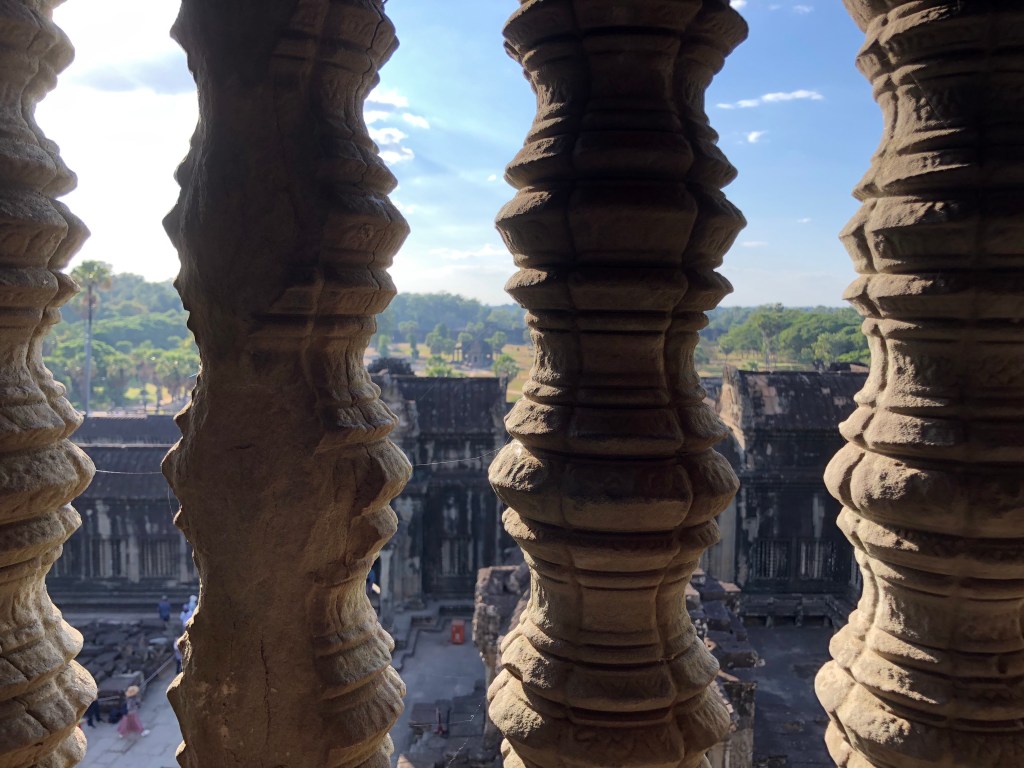
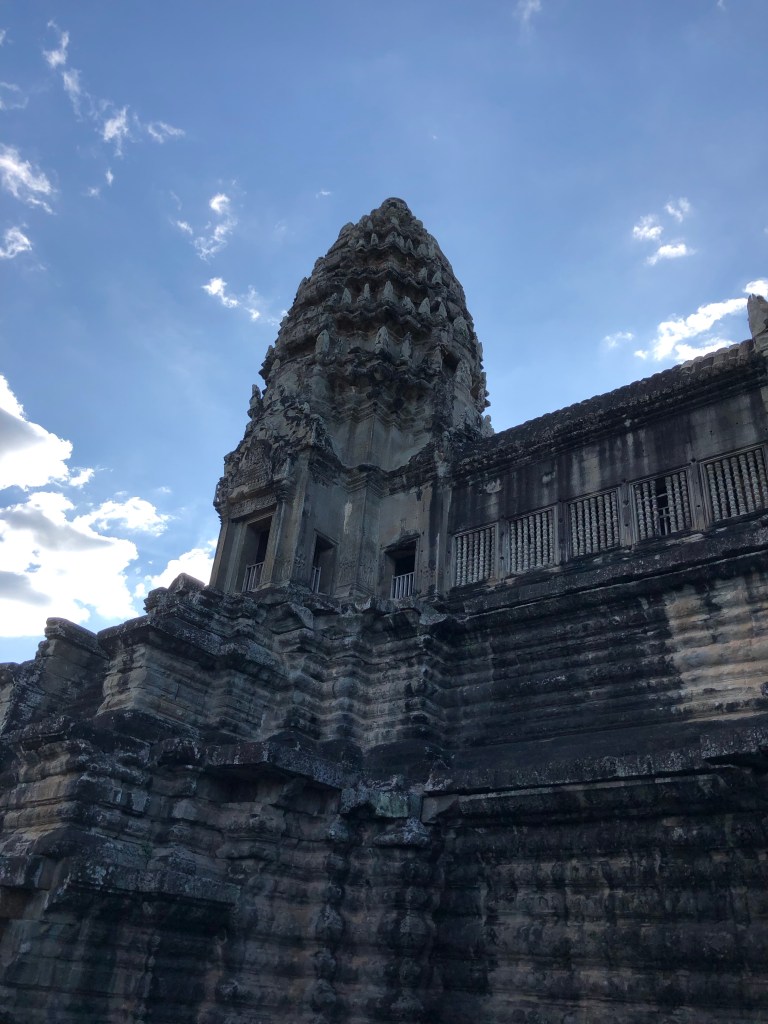
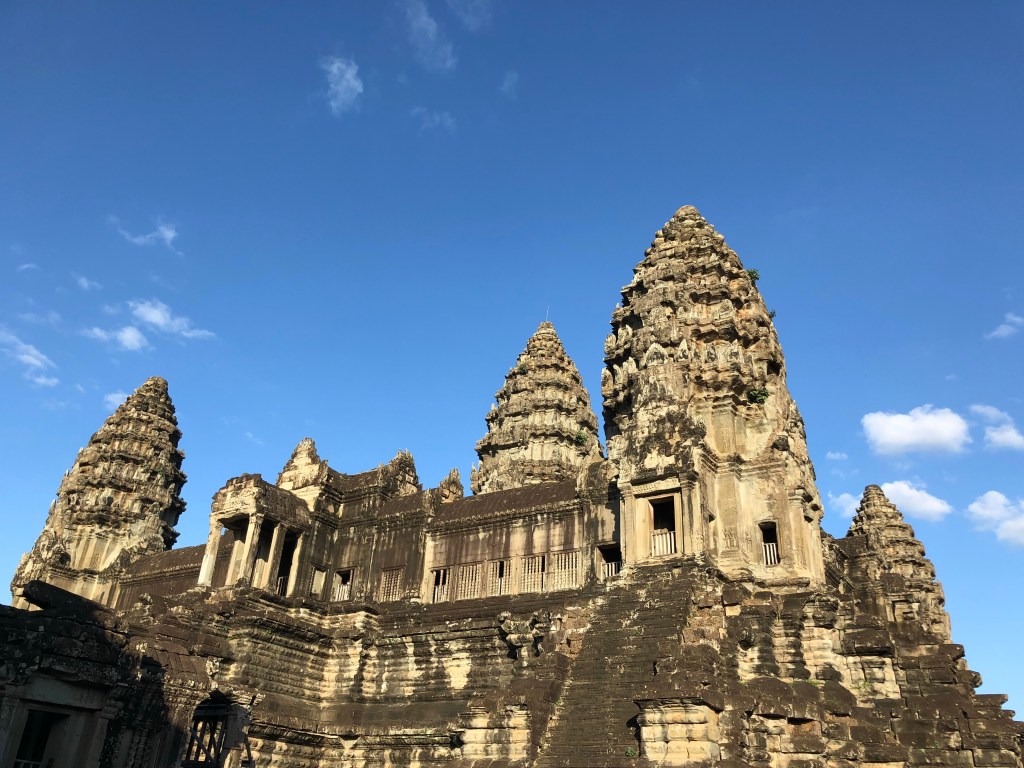
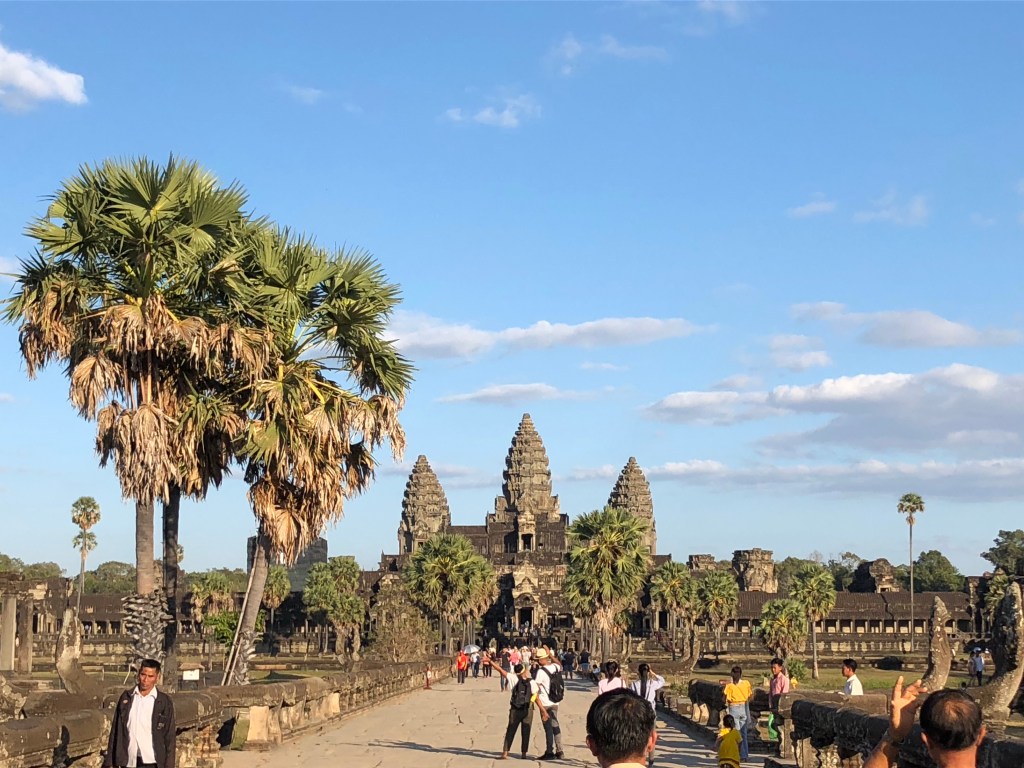
Our last stop was the star of Siem Reap, the temple of Angkor Wat. This was the largest temple and site, and holds the title of the largest religious site in the world. It is a Hindu temple that was built from 1113-1150.
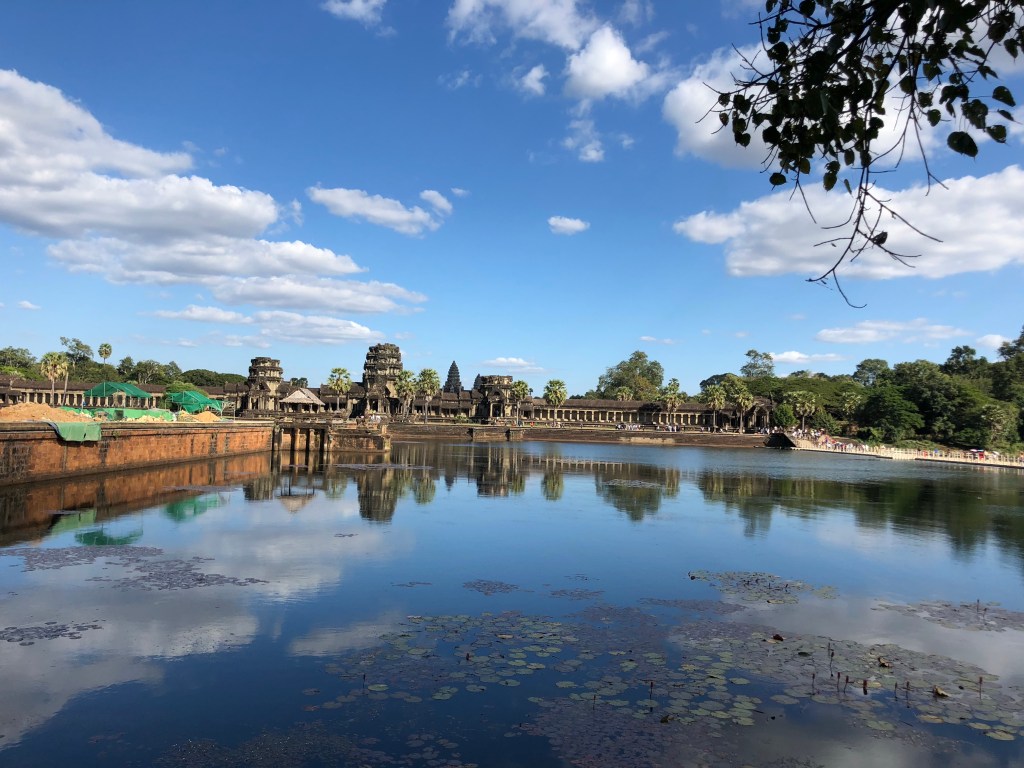
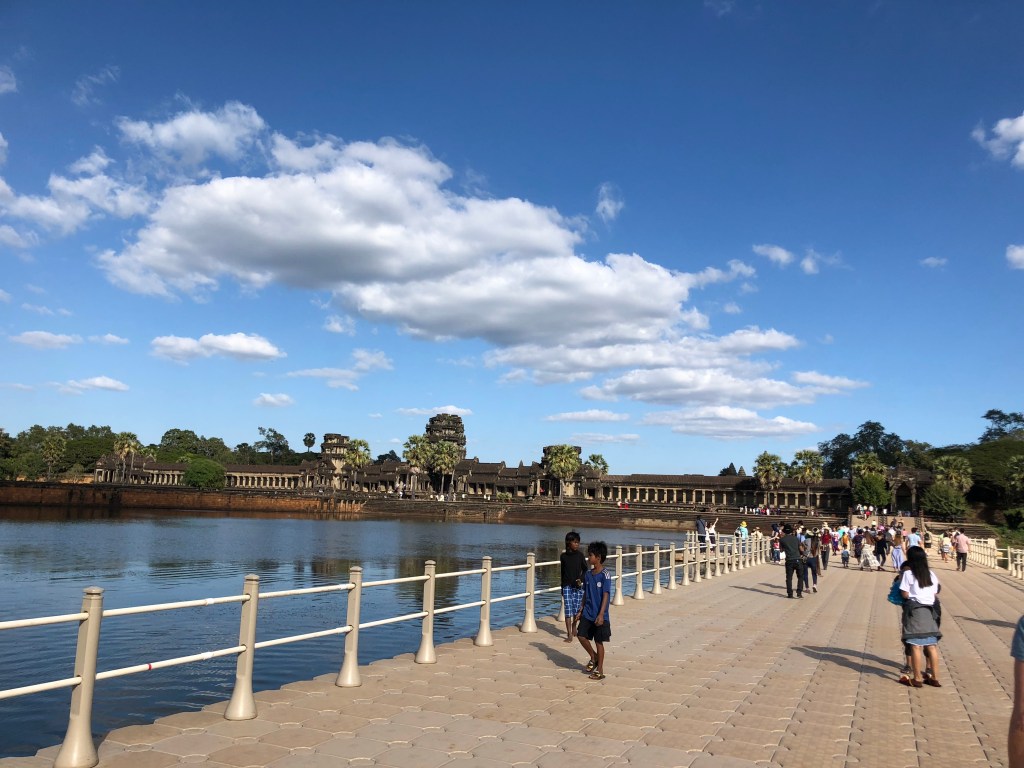
The “snake bridge” causeway was being restored, so we took the temporary floating bridge to walk across the temple moat. The 37 years it took to build this temple took 300,000 workers and 6,000 elephants and included building the moat, quarries, transporting the stone, and of course the temple’s construction. The required foundation for it all is 10 million tons of stone.
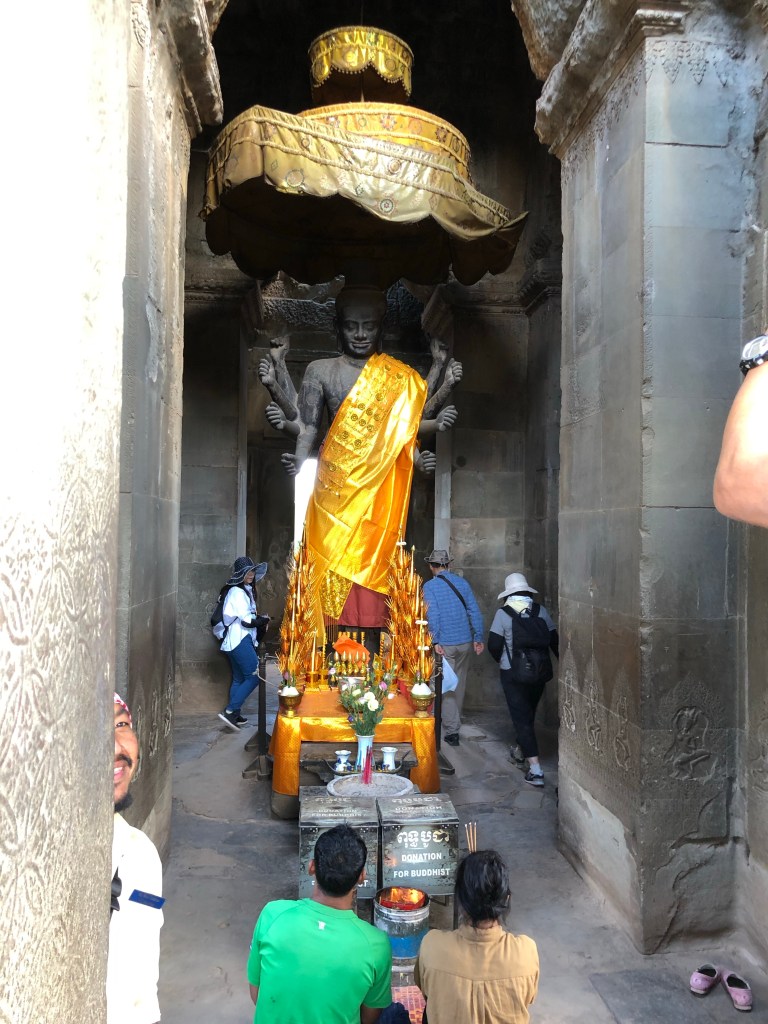
Angkor Wat was reopened to tourism in 1992. The first thing you see inside is this statue of Vishnu.
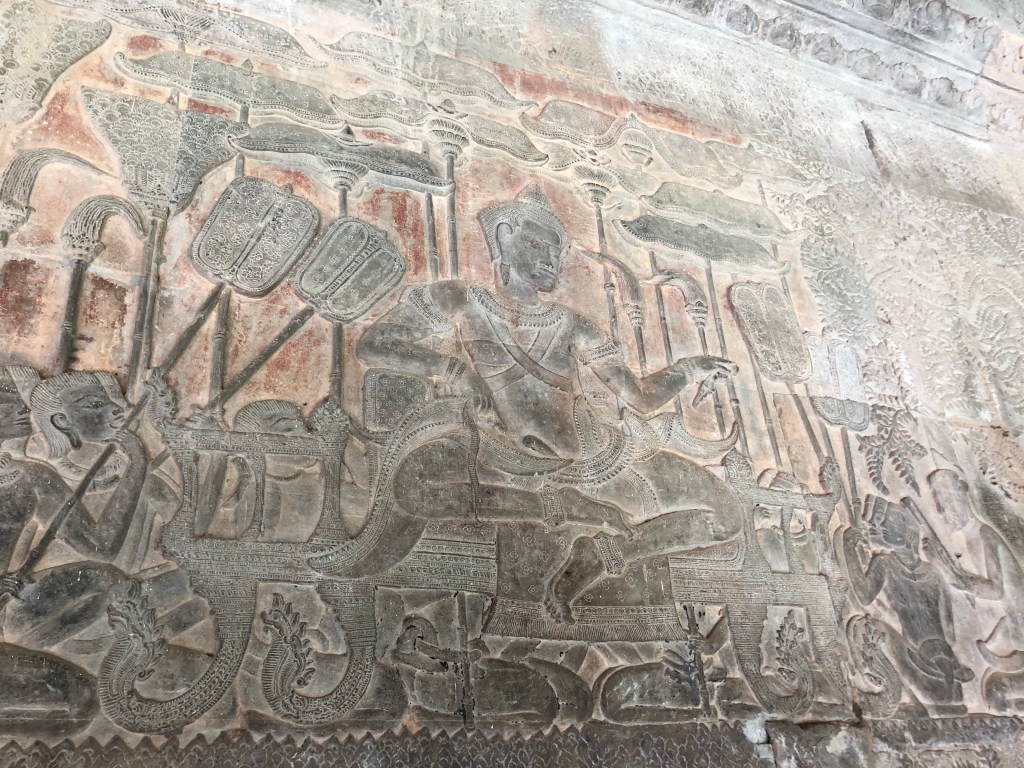
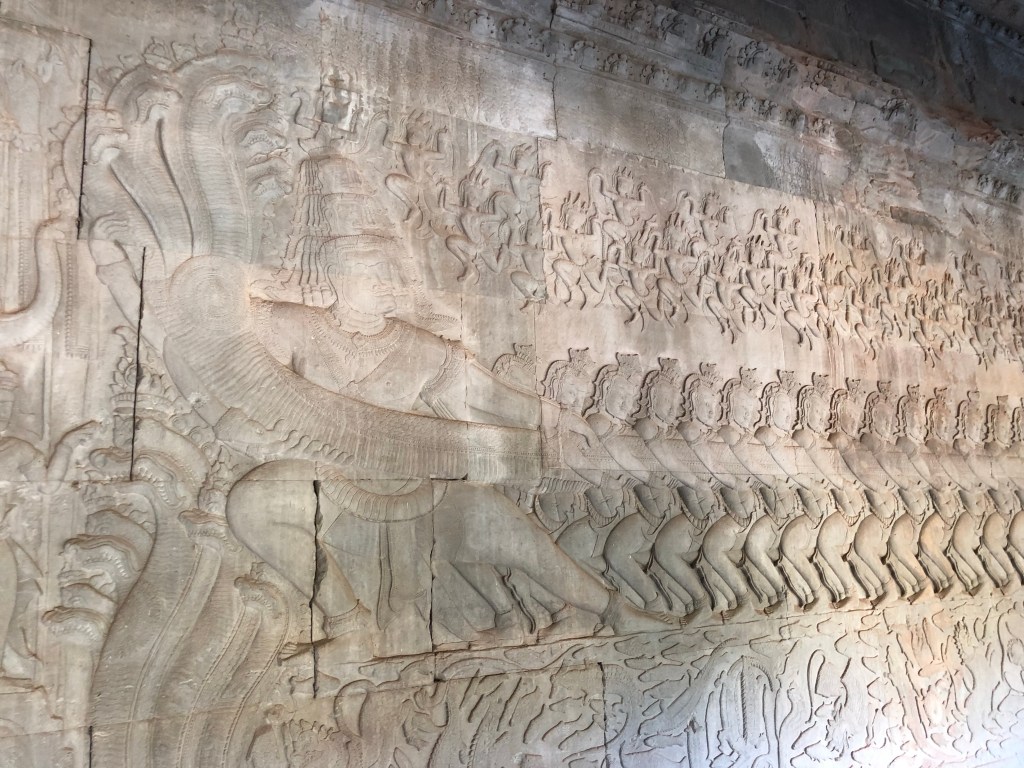
The maximum heigh for any building in Siem Reap is 5 stories so that nothing is taller than the 65 meter Angkor Wat. On the reliefs inside Angkor Wat there are plenty of scene of 37 heavens, 32 hells, and more than 1,700 women carved along the facades which make up part of the king’s heaven. These were originally painted gold, and later red in the 16-17th centuries. Now the stone is largely bare. The Thai controlled Angkor Wat for some time, but the French brought it back under Cambodian rule in 1907.
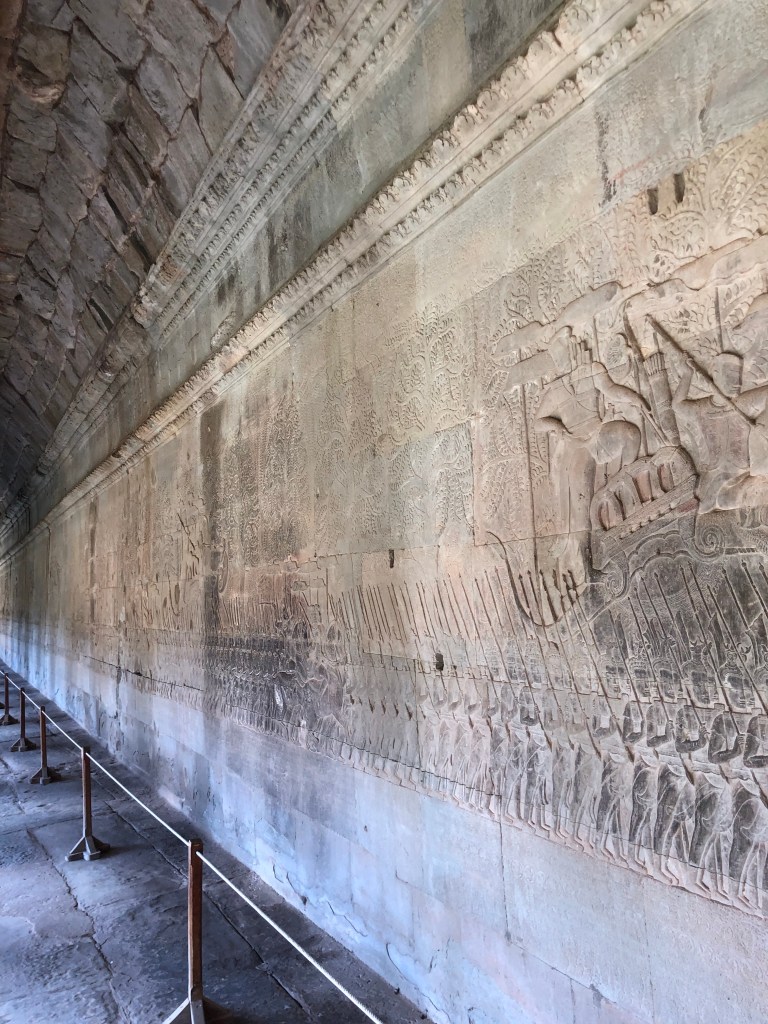
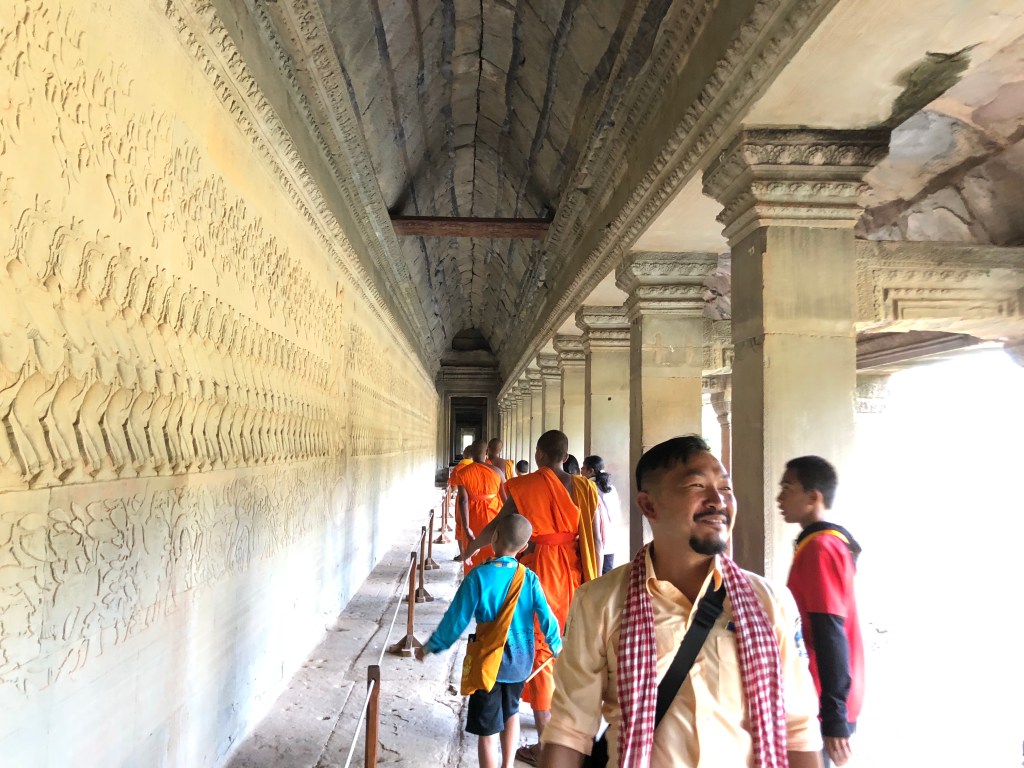
Mao! 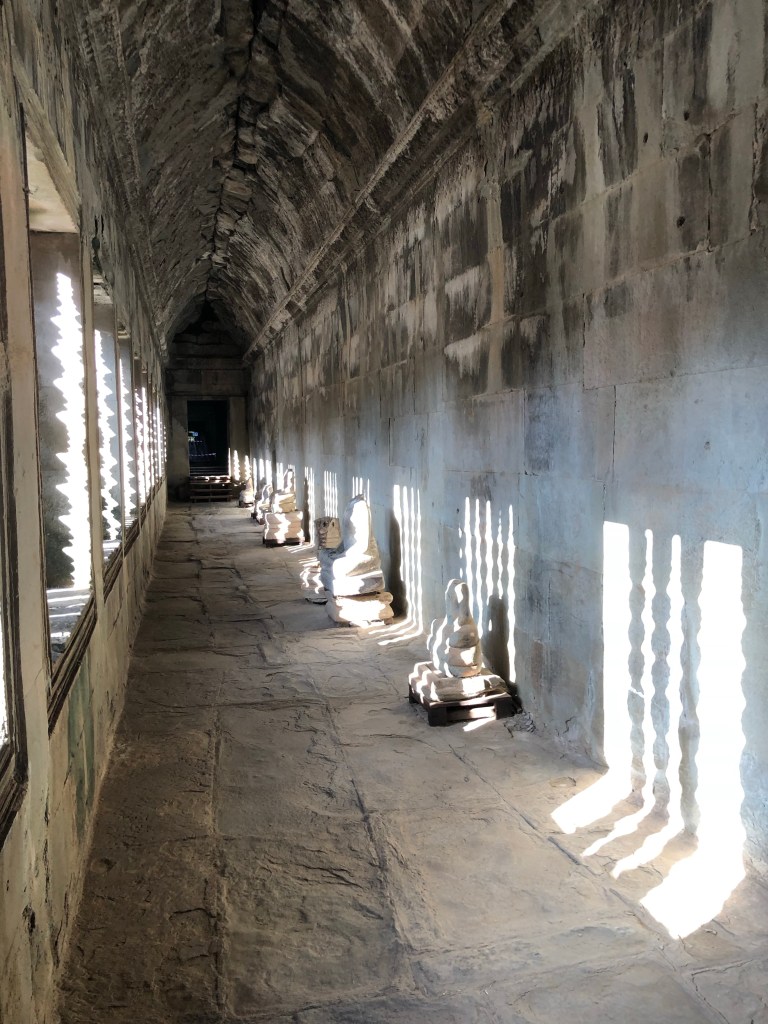
Between the three temples of Ta Prohm, Bayon, and Angkor Wat, I was hard pressed to pick a favorite. However the scale and age of Angkor Wat was quite impressive. Walking outside of it you really got the whole sense of it, but up top it didn’t seem quite as large.
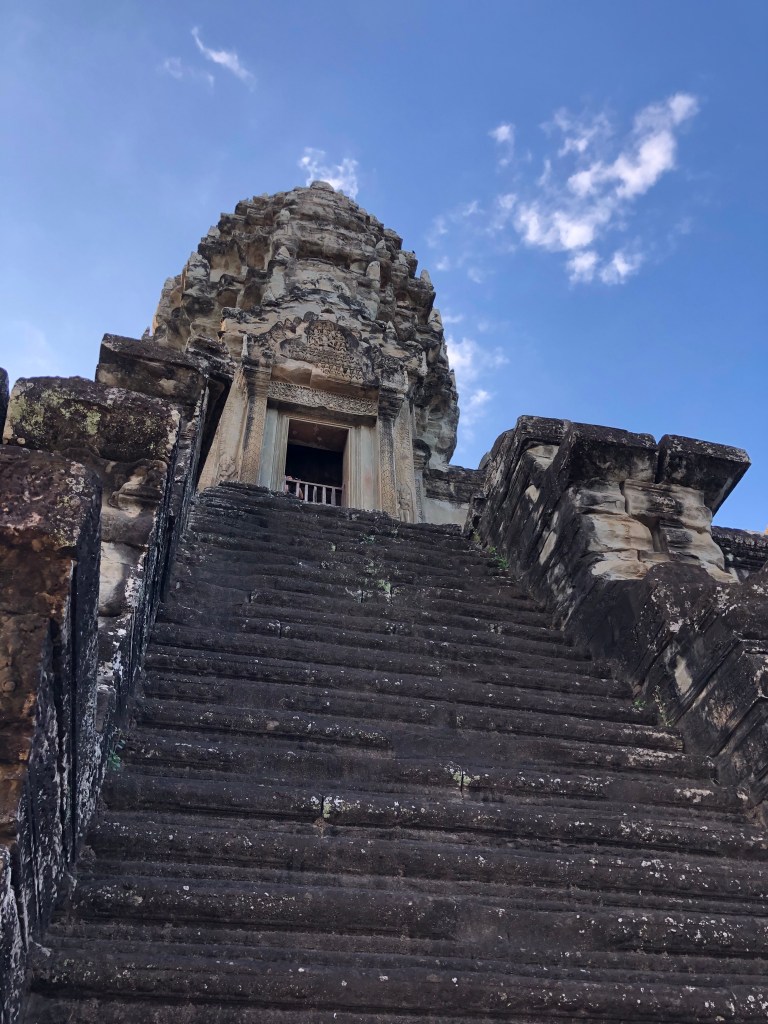
After Angkor Wat I went for a swim back at the hotel, had dinner, and a quiet evening after a marathon day of touring temples. In the morning Karen and I had breakfast and said our goodbyes as she headed to Vietnam and I flew to Chiang Mai. And to close this post our: Wat Deaner was Talking About.

 Widdershinning Weiss
Really loved these shots of the Temples- very Tomb Raider, Indiana Jones vibe- did the urge to climb and seek out treasure grab you?
LikeLike
Yep
LikeLike