
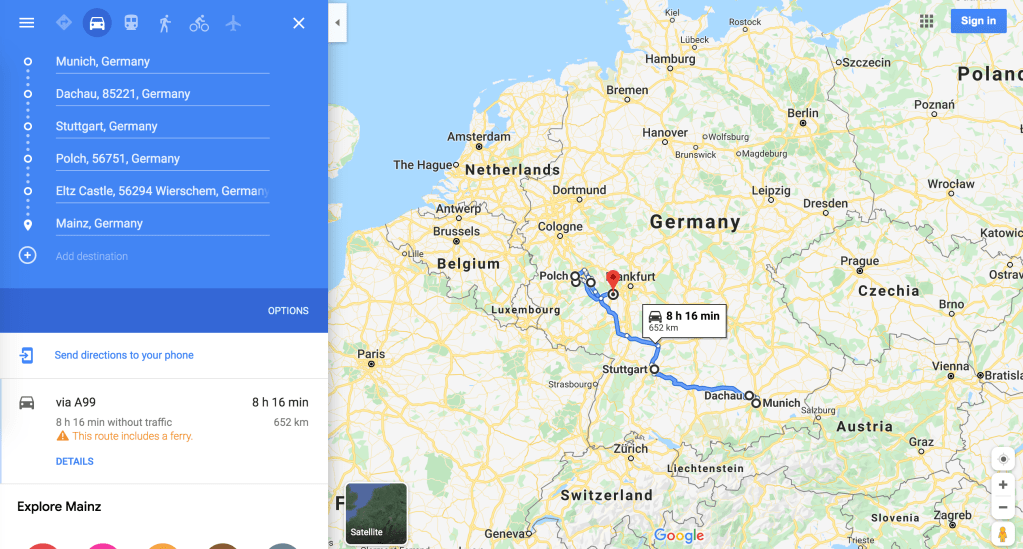
On Monday morning I picked up my dinky 4-door Opel Corsa and headed north to the Munich suburb of Dachau. Yes, to visit the Concentration Camp. I spent a couple of hours walking through the grounds and exhibitions. It was a pretty heavy experience, which continued to hang with me and percolate through my thoughts for the following days. The exhibition did well to tell the story of the political events that lead up to the Holocaust, much of which I had never learned, in addition to what transpired at Dachau. With few exceptions, the video clips and photos weren’t as disturbing as I had mentally prepared myself for, while the audio was the more intense medium. There were multiple school trips of varying ages, and I wondered if it was somewhat censored by design. Dachau also began as a camp for political opponents in 1933, and preceded the torture and murder of Jews and other Holocaust victims, this history also might have diluted what I dreaded seeing. I later realized I took no photos here. Nothing seemed appropriate at the time, and I know I won’t forget it.
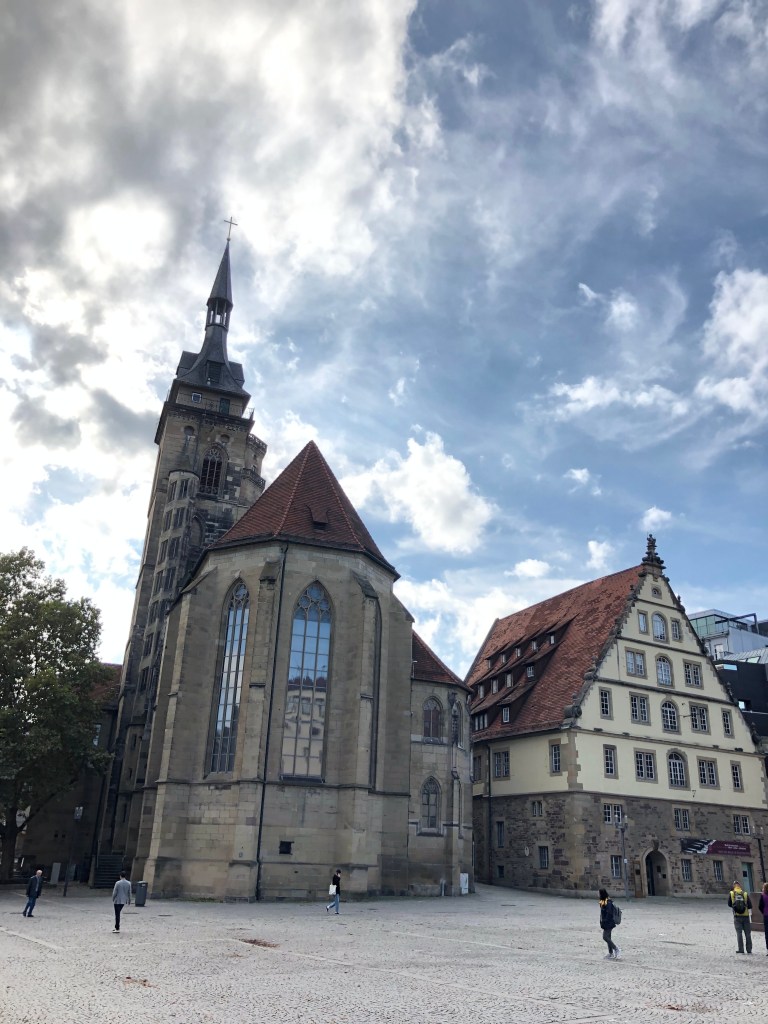
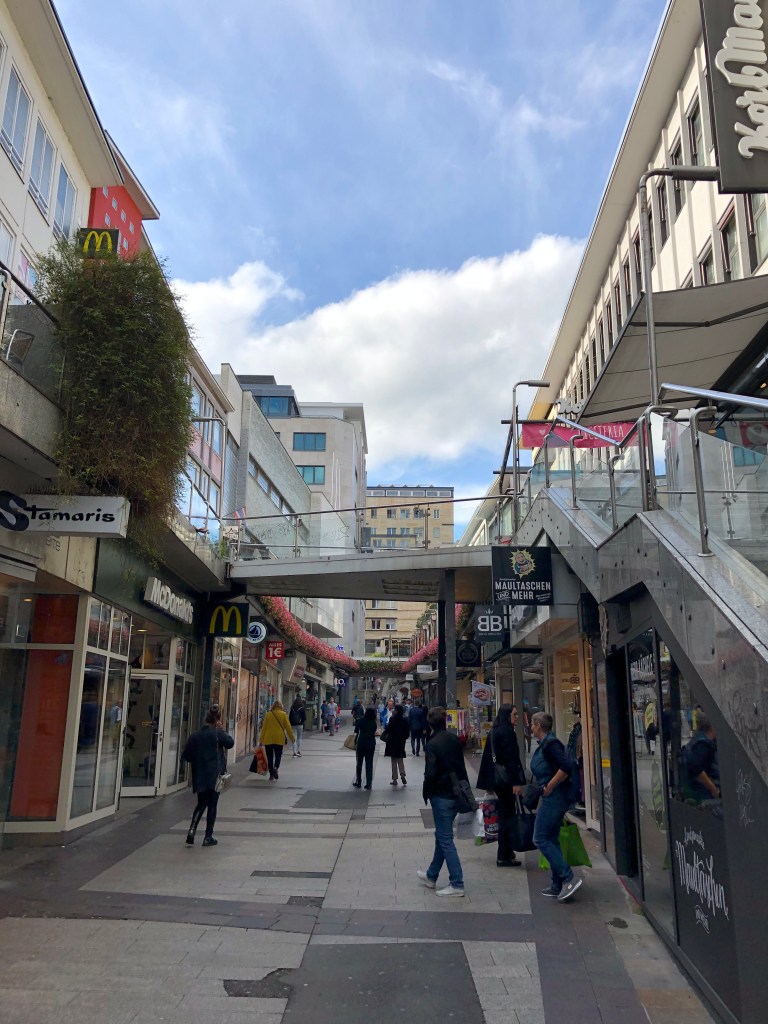
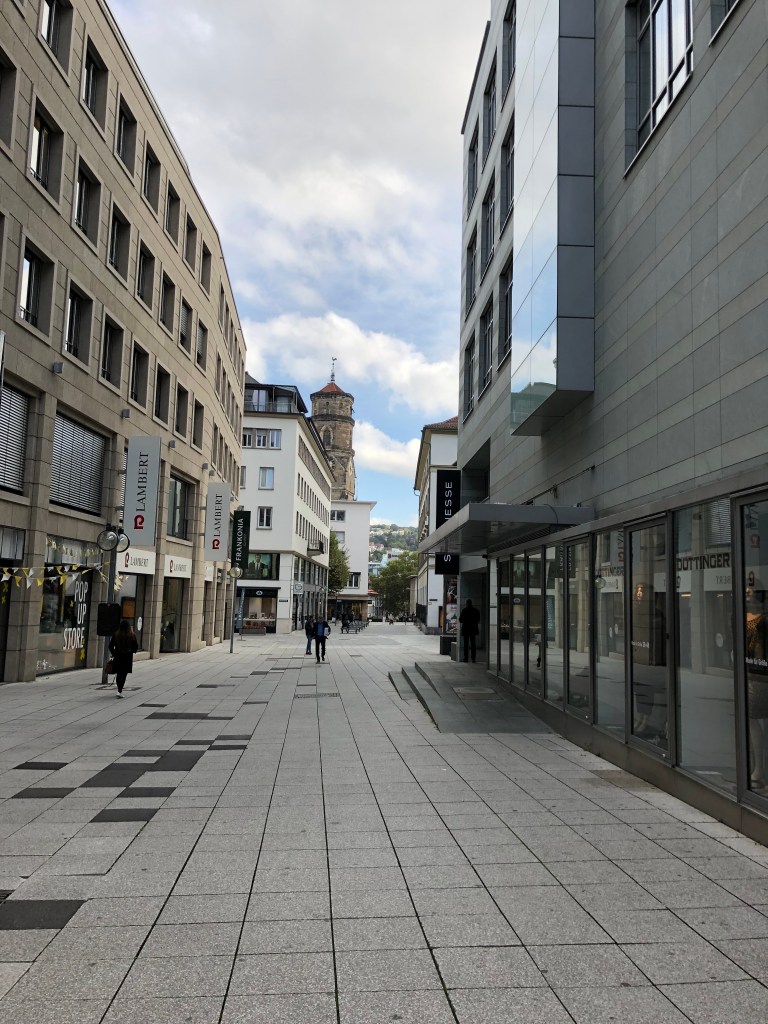
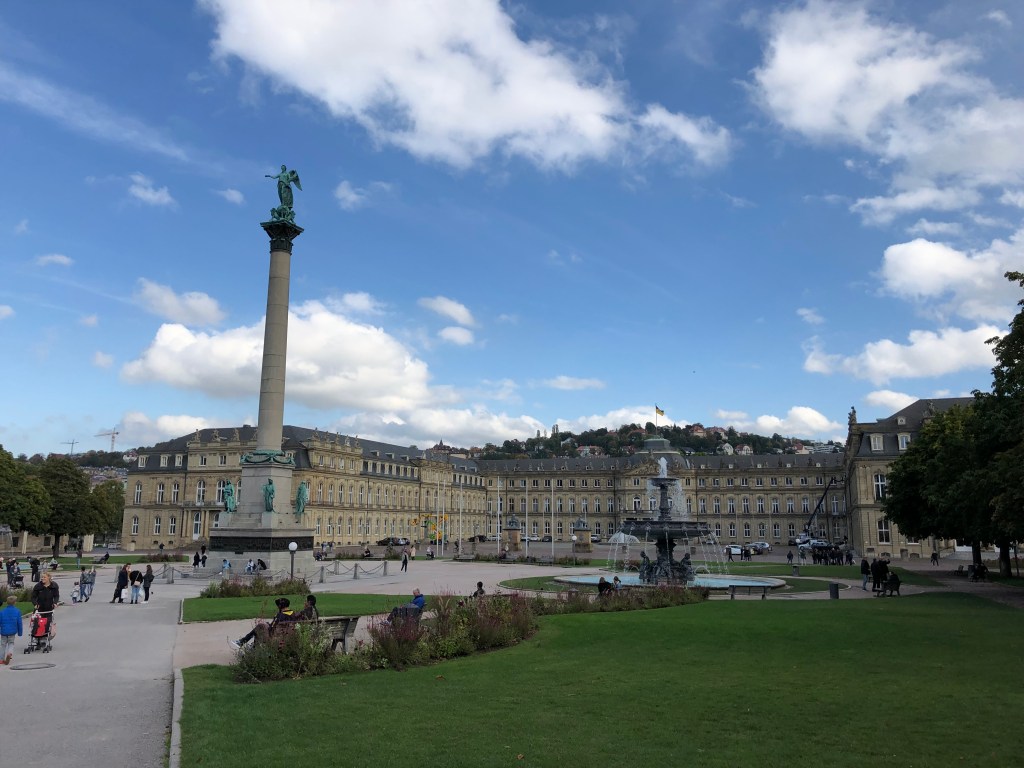
From Dachau I grabbed lunch and headed northwest, my destination the small town of Polch where my grandfather grew up. Finally some sun on the road. I think it was the first sun I saw since sunrise on the plane. On the ride I felt myself needing coffee, so I picked the nearby city of Stuttgart to pull off and grab a cup, and I’m glad I did. I went to the best rated cafe I could find, and then did about 15 minutes of sightseeing. Stuttgart was more how I picture a European city. tree lined streets, overflowing planters, pedestrian-only blocks, many plazas with public art and fountains. It’s art and hilly topography reminded me of Seattle. As I walked around, I couldn’t help but wonder if it was the change of scenery, or what a good night’s sleep, some sun, and a double espresso does to give me the opposite experience of the more drab Munich.
Back on the Autobahn, I began regretting not spending the money to upgrade my Corsa to some with a little more gusto. It handled fine, but wasn’t built for a road with no speed limit. Driving through the rolling hills with towns off in the distance reminded me of route 17 through the Catskills. While many Germans like to speed, their use of the left lane is exceptional. People would pass and get back over to the right, even if only for a few seconds with no one on their tail.
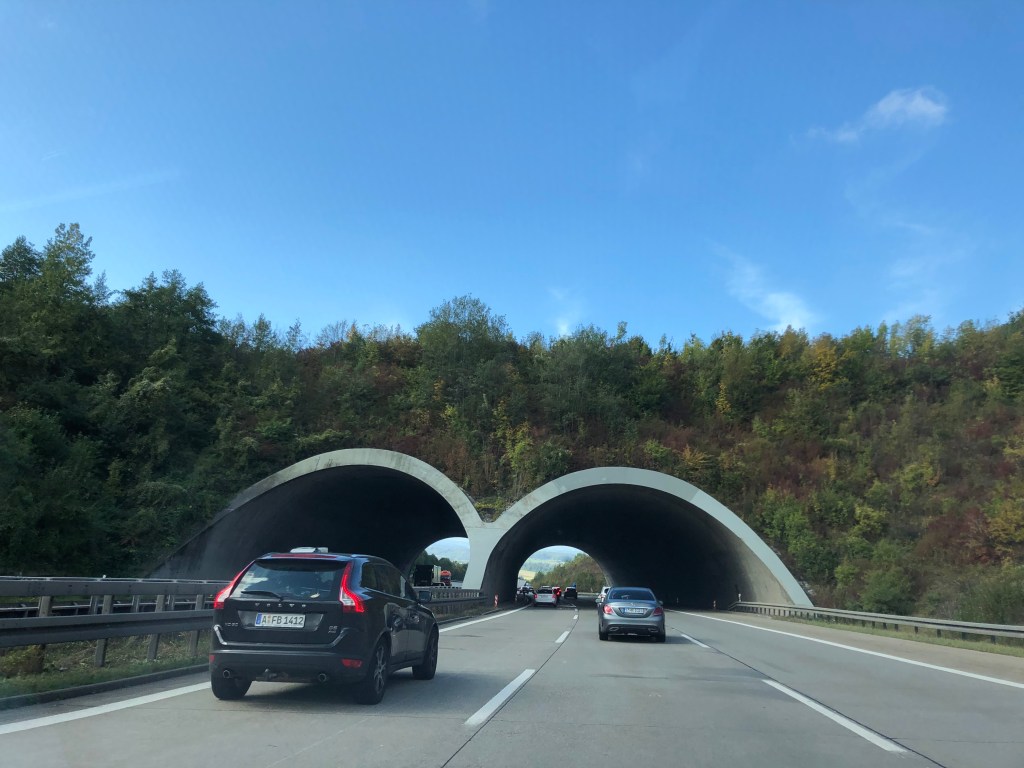
cute tunnels 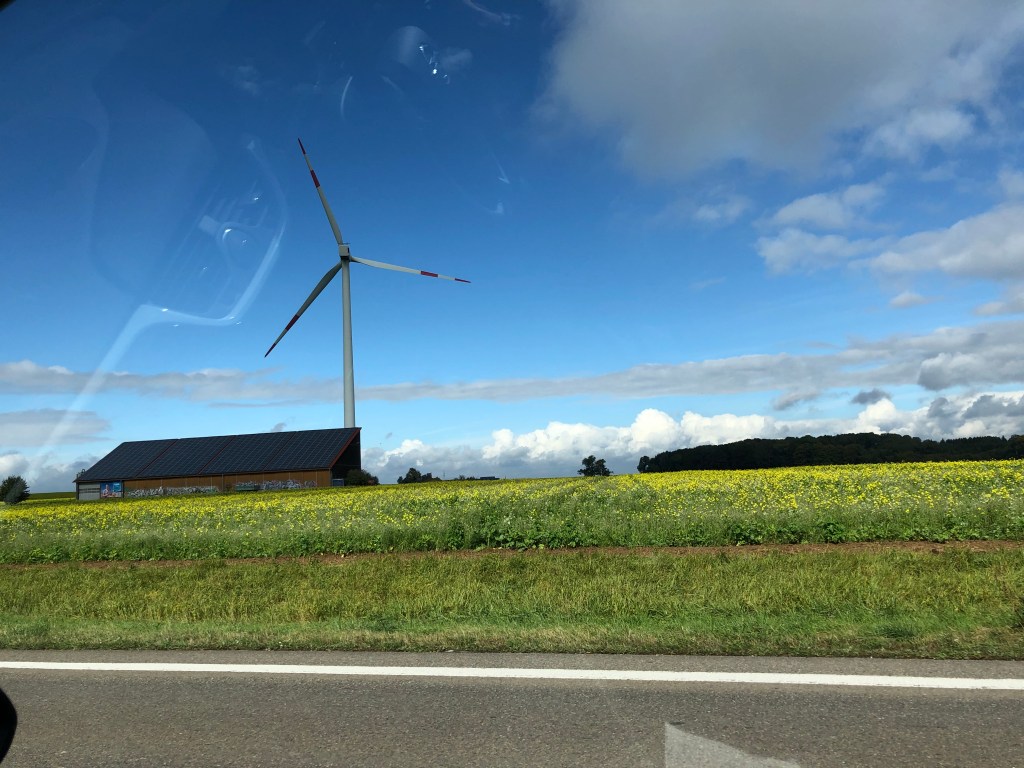
sunflowers and wind mills 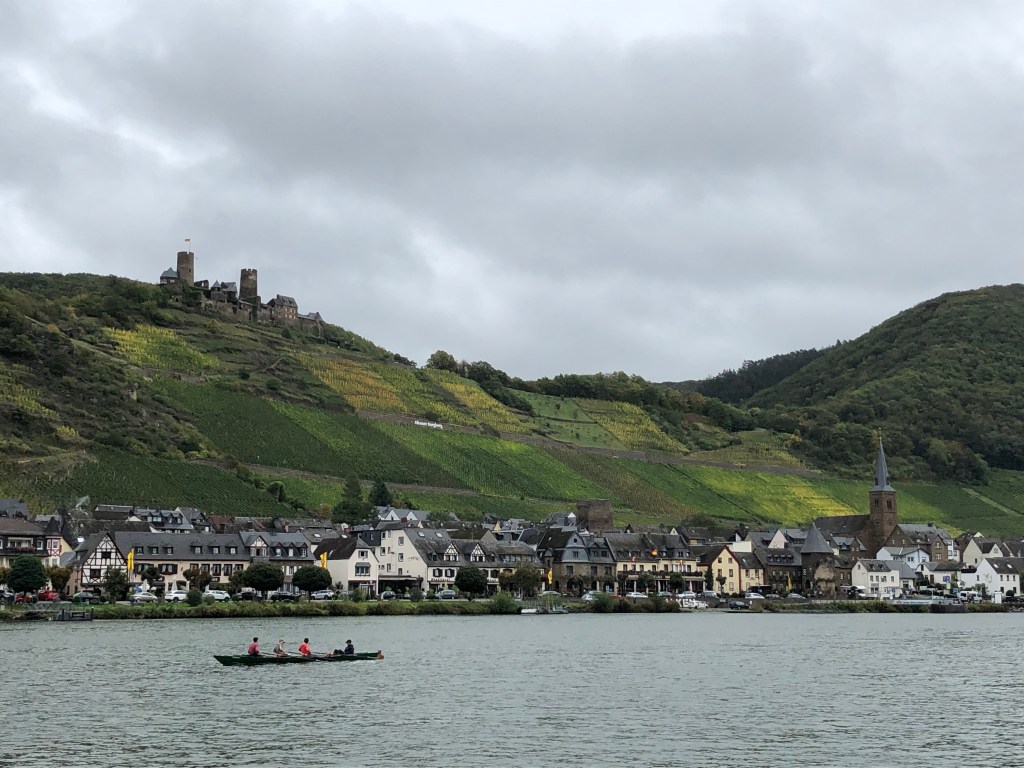
a castle I didn’t visit overlooking the Rhine
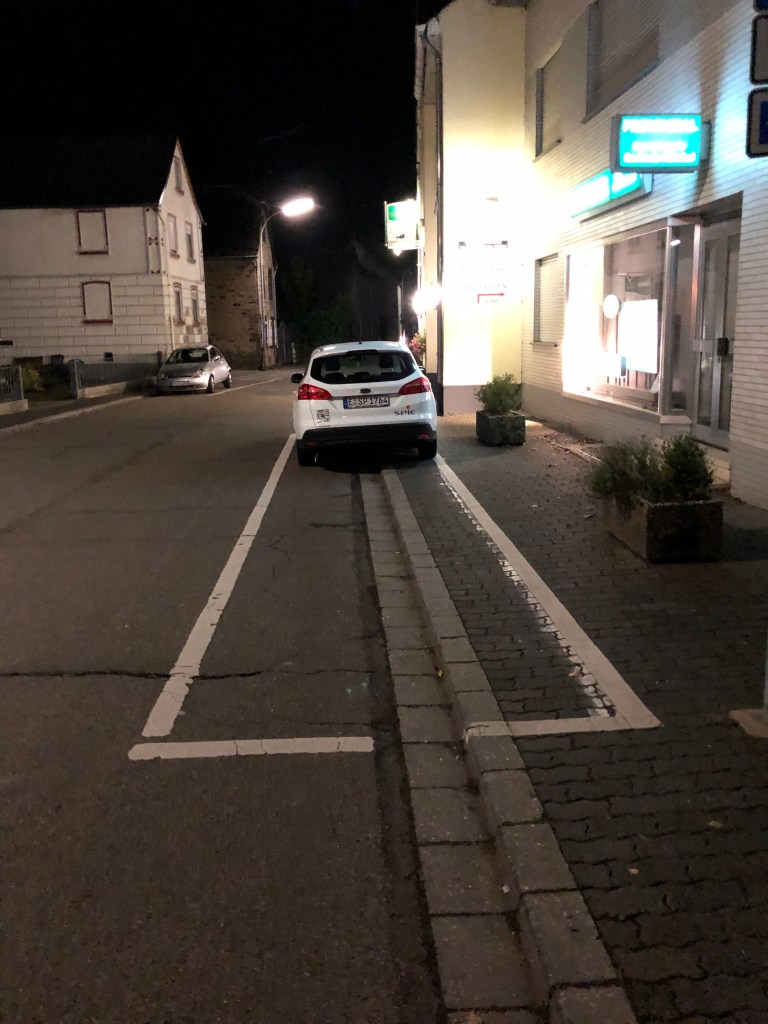
As I approached Polch, a thick fog set in. The start of no more sun for a few days. Polch is a small town about a half hour west of Koblenz and an hour south of Cologne. There’s a small center with a few sparse businesses, a handful of residential streets, and a large surround of farmland. My ancestors here bred and sold horses. The streets were narrow (many 2-way only allowed 1 car at a time), but people seem to have gotten creative over the years to make the space meet their needs:
I parked and walked to the hotel around 7:30pm. There was no main entrance, and a sign in the door of the hotel’s shuttered restaurant directed me to the adjacent cafe. The young woman working their seemed perplexed that I was asking for a room. She conferred with her mother sitting in the corner (the only other person there), and told me I can stay. I dropped my bags and as I headed out to dinner, her father appeared and stopped me to ask for my passport. He struggled to find both paper and a pen to write down my information, and was dumbfounded that I hailed from New York. As I walked to eat I felt lucky that the second of the two Polch restaurants I could find online, the steakhouse-pizzeria, was open (neither of these appeared on Yelp). Shortly after walking in, the only 2 guests in the 60-seat restaurant left. I ordered a steak, glass of wine, and water. They asked if it’s ok that the water’s warm, but not how I’d like the steak done. It was rare, and good. As I ate, someone came in and picked up takeout. A busy night for them after all!
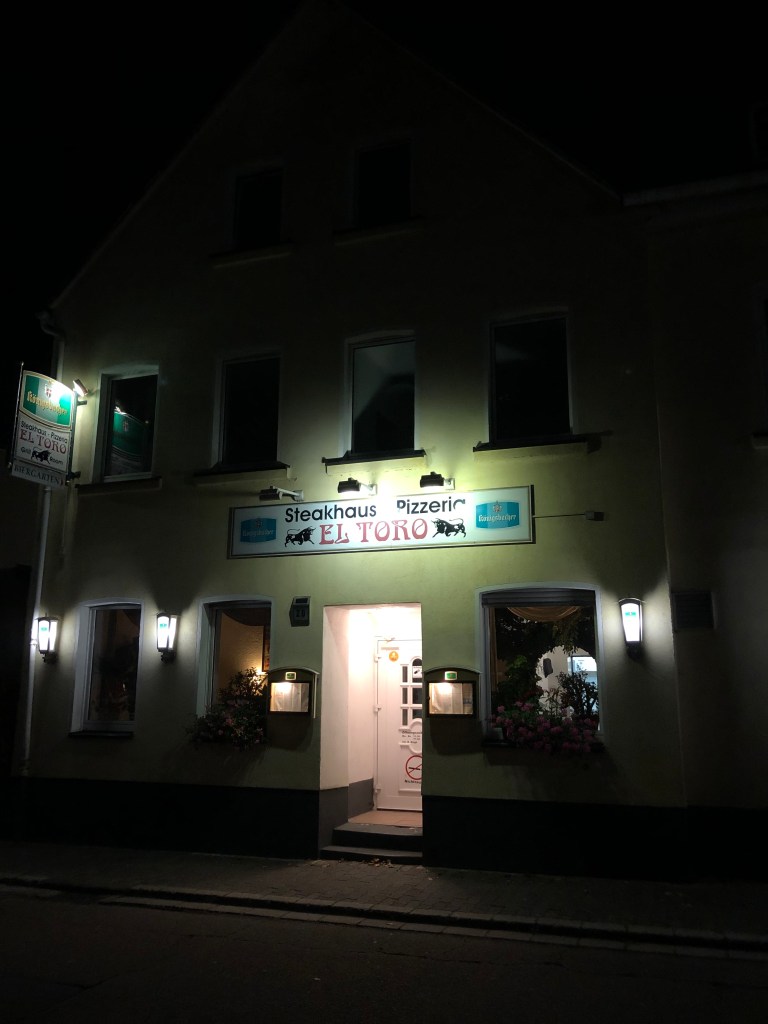
The restaurant from the street 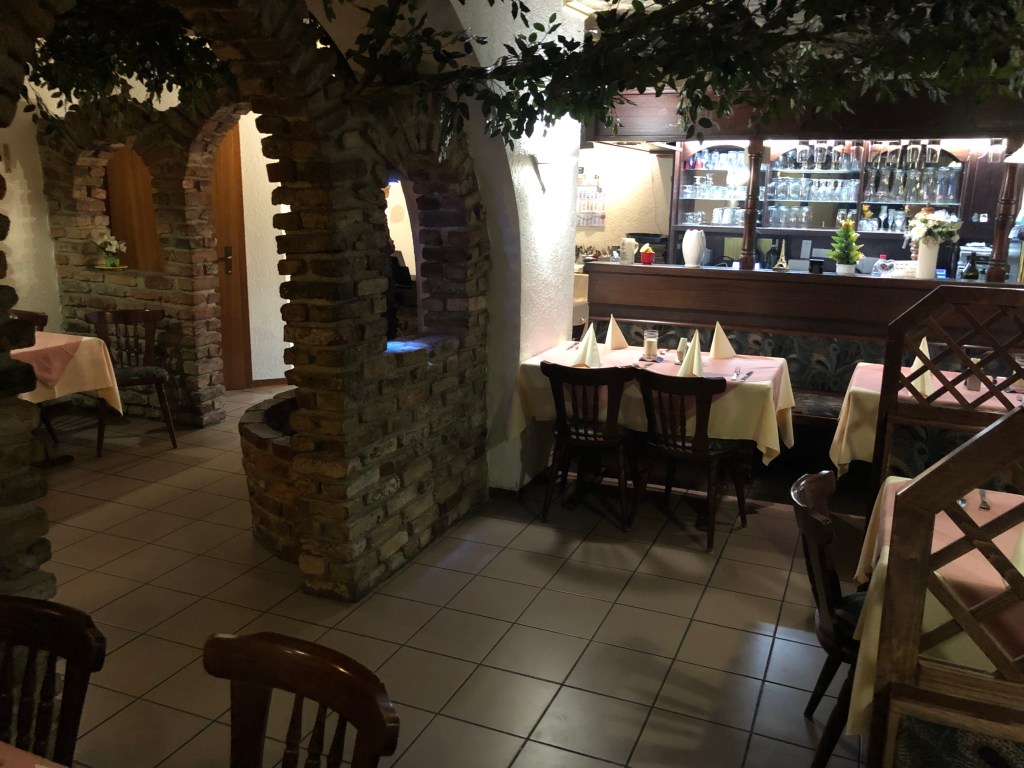
The restaurant interior 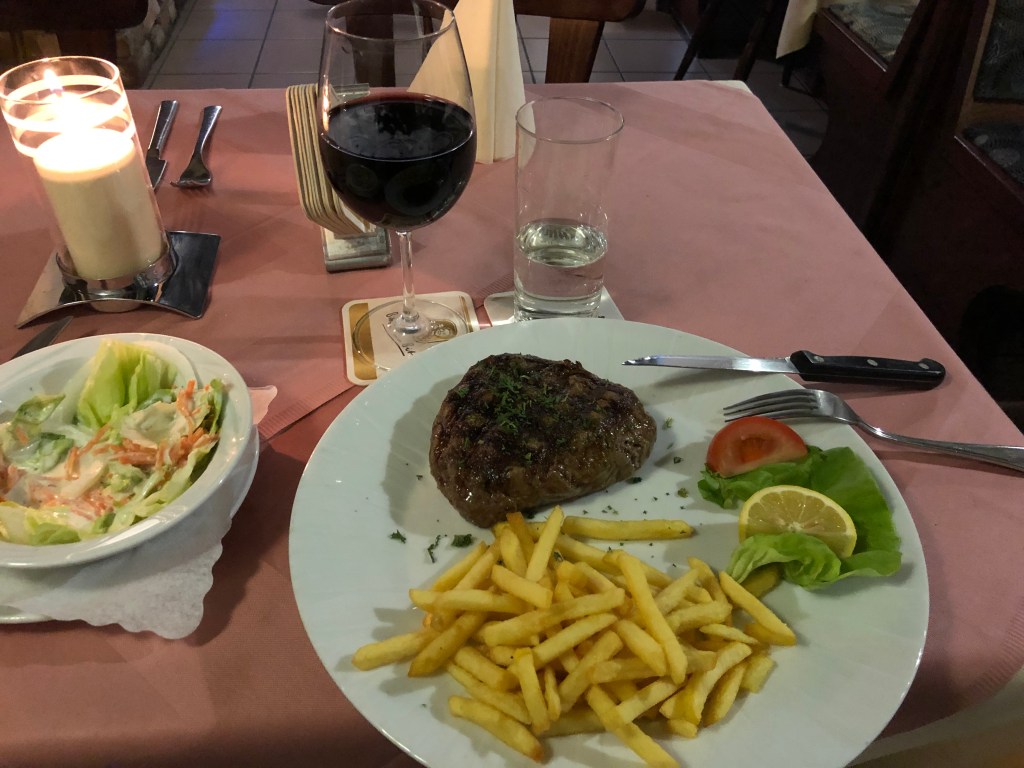
Dinner 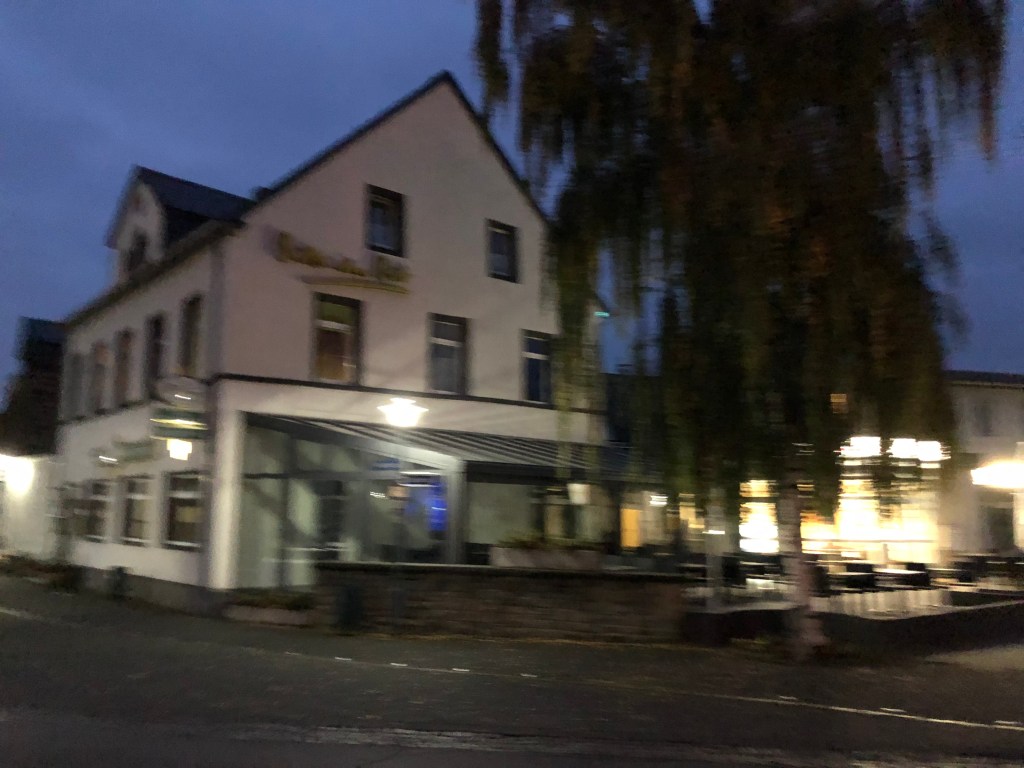
My hotel for the night (foreground: former restaurant. blurry background: cafe)
In the morning I walked a couple of blocks to see the house my grandfather grew up in. I then walked a little further and basically did a lap of the residential part of the sleepy town. Having gotten a sense of the place, it made sense that about 100 years ago when my family built a house with an indoor toilet it was the talk of the town.
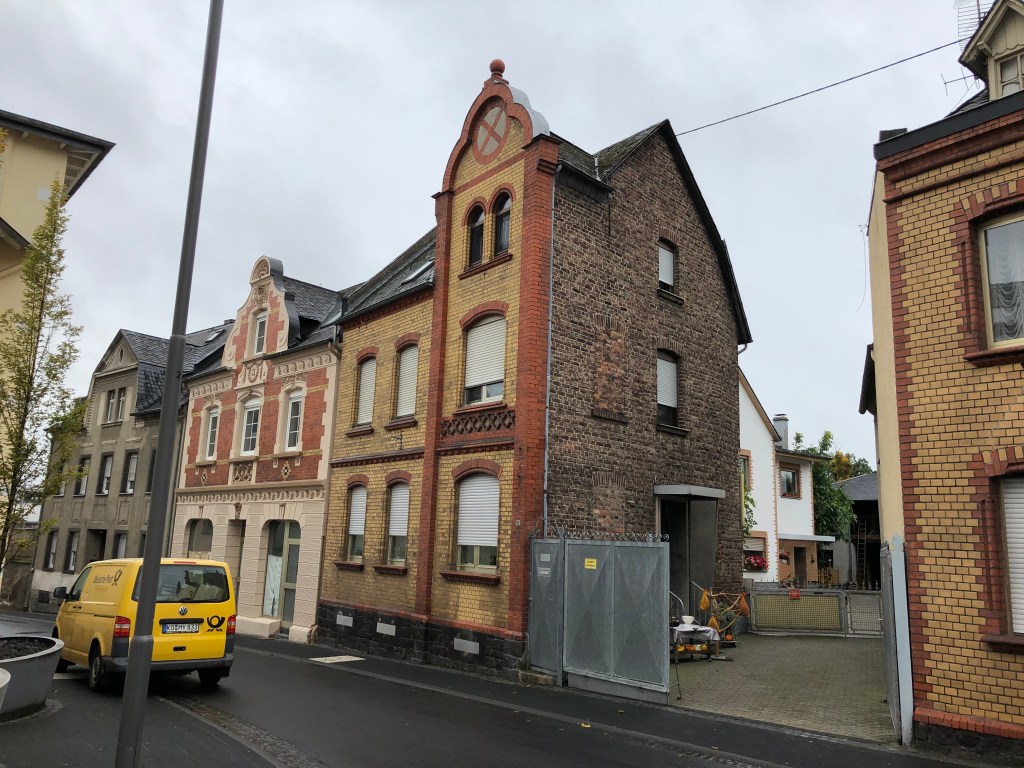
My grandfather’s house 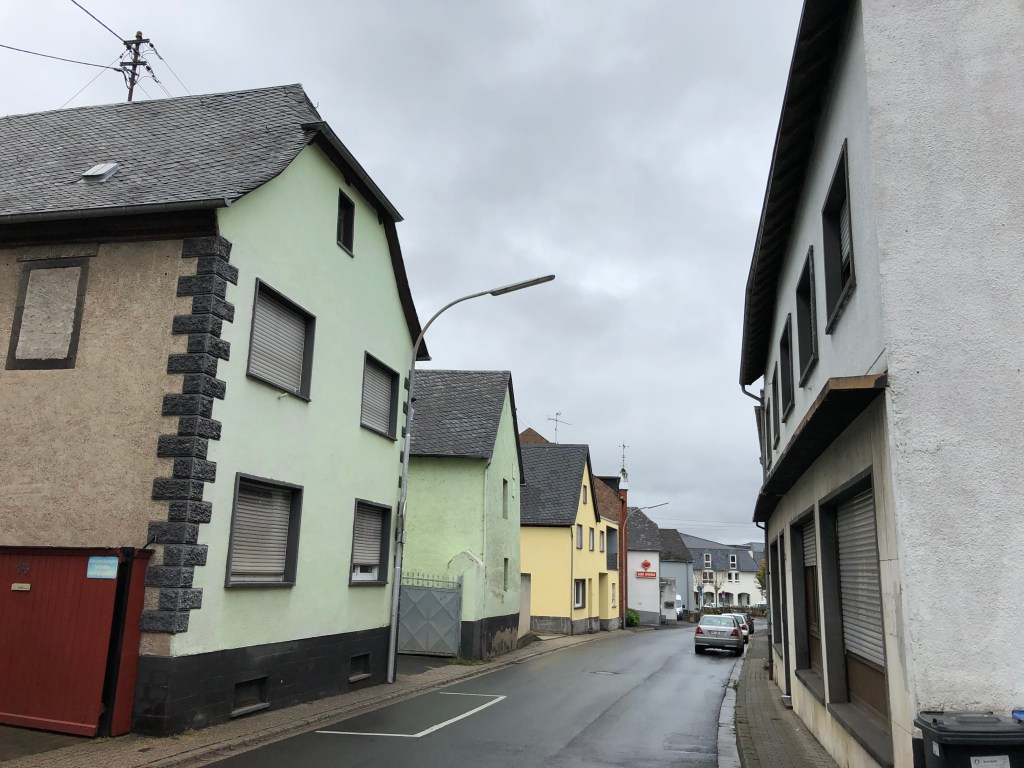
My grandfather’s street 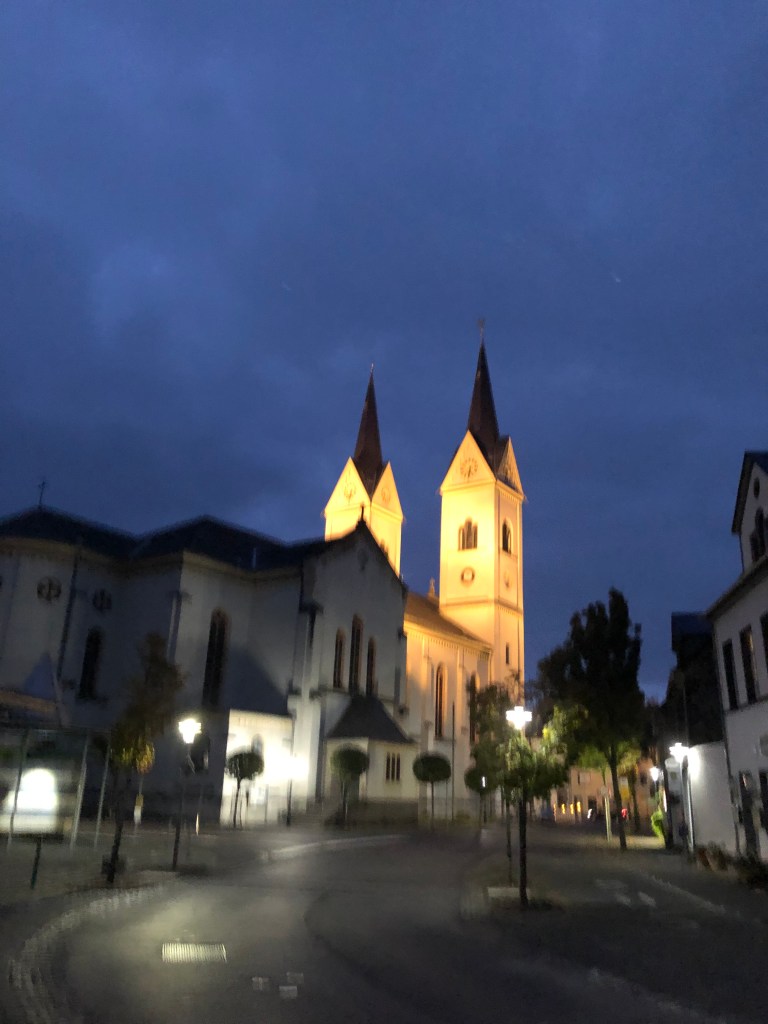
Church in Polch town center
After Polch I headed to see my ancestors in the Jewish cemetery in neighboring Mertloch, which survived the Holocaust unscathed. The cemetery does not appear on any maps, and was probably 2,000 square feet in the middle of cropland. Most of the headstones were illegible, but I recognized some surnames on the well-reserved ones.
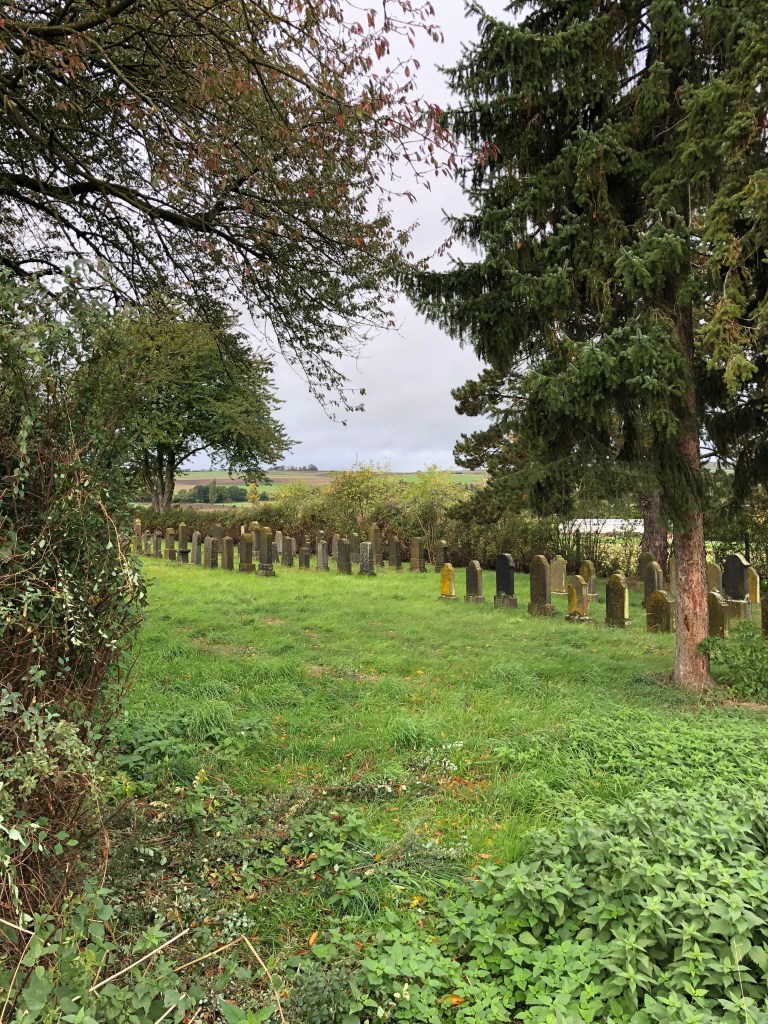
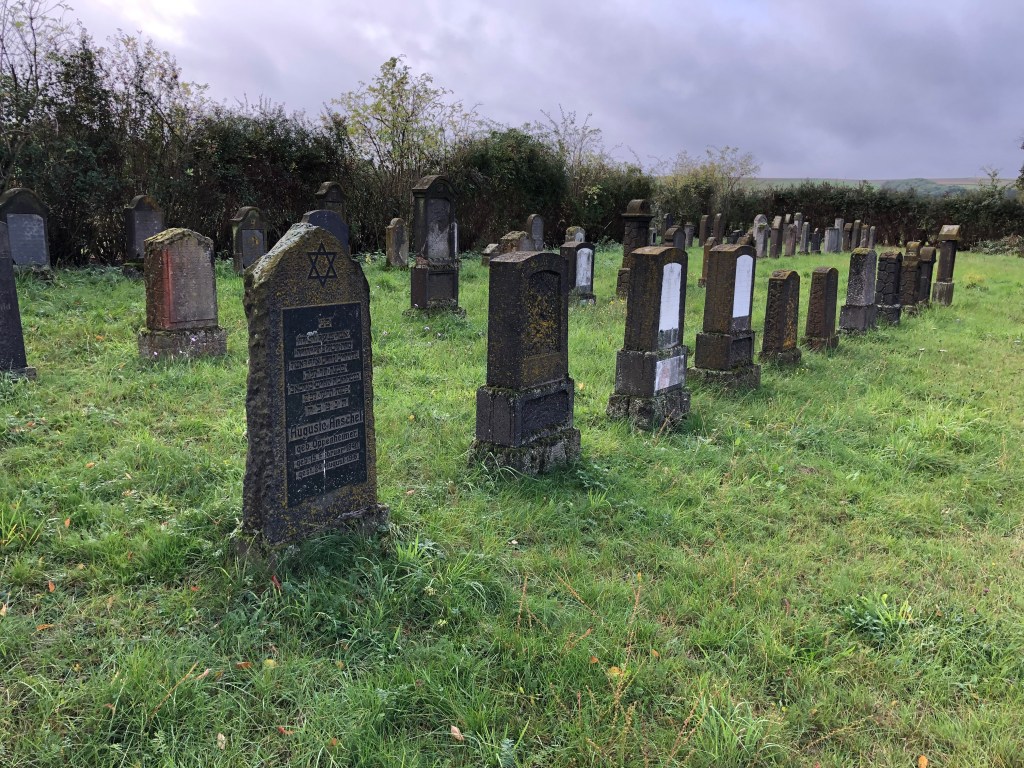
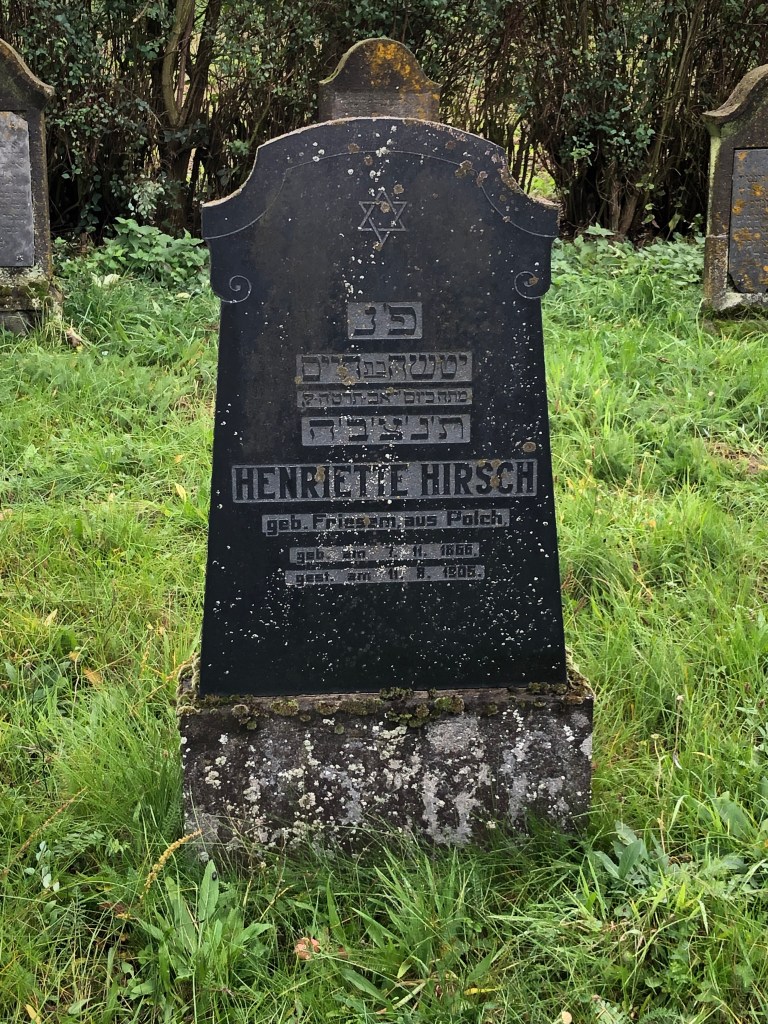
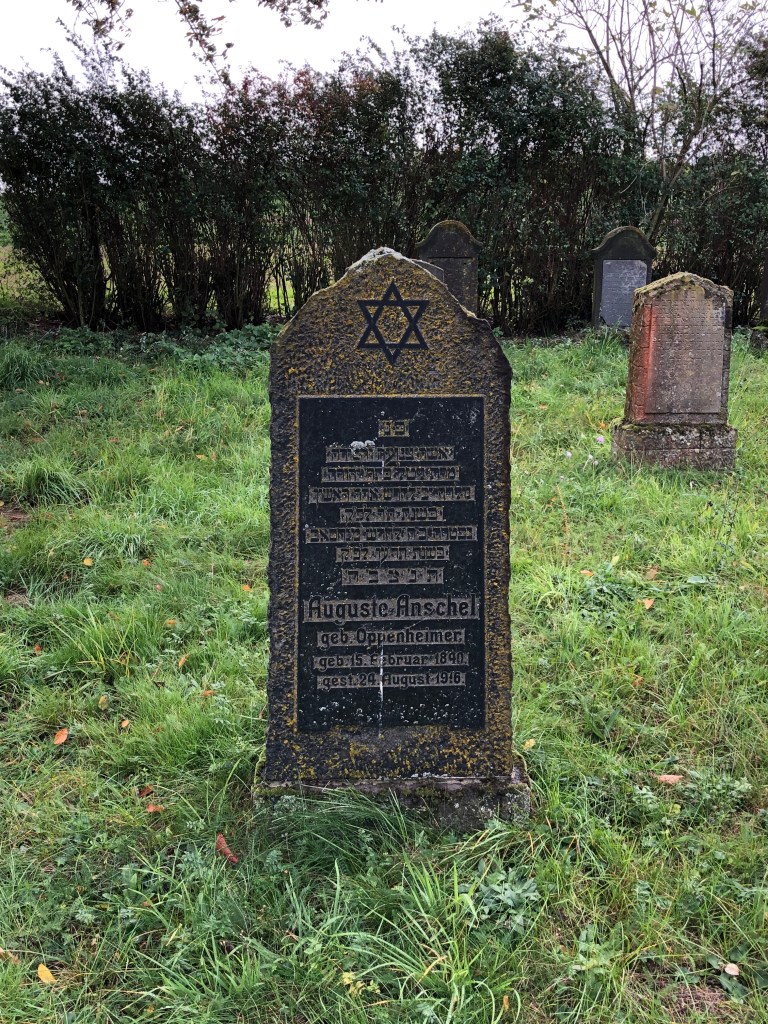
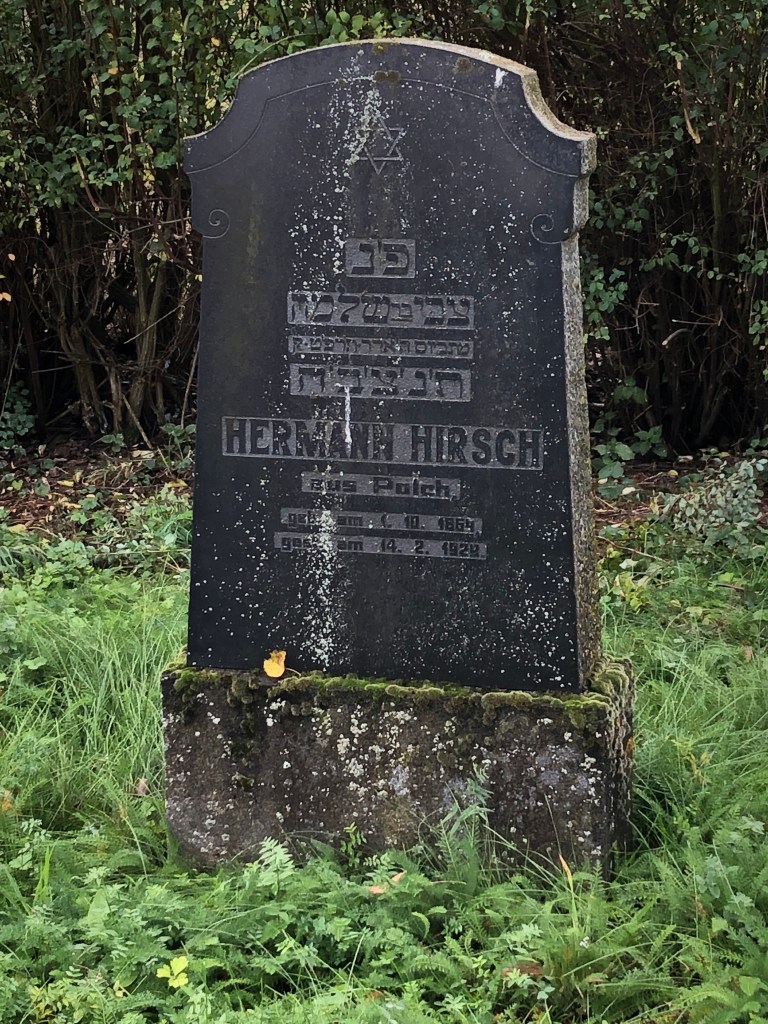
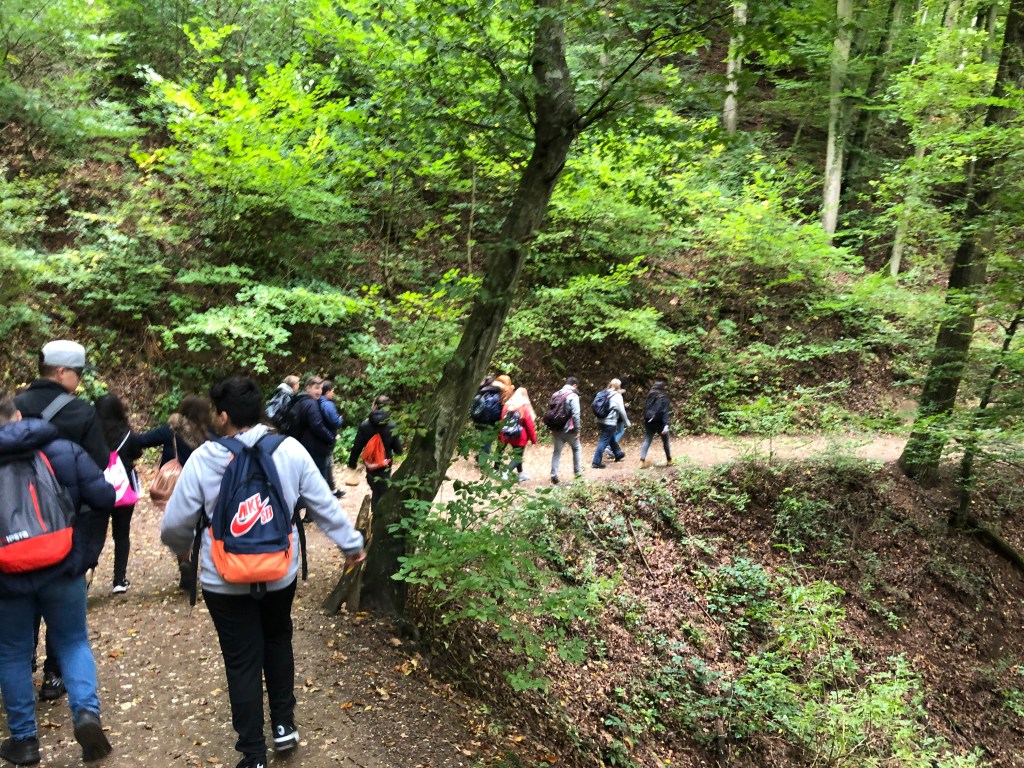
After Mertloch it was onto the castle of Burg Eltz. I drove amongst more farms to the next town, and then descended into the wooded lowlands through tight curves and overgrown trees. From the parking lot I began what could’ve been a pleasant pensive walk with the sounds of the birds, the wind rustling the leaves, and a stream in the distance at the base of the hill. Instead I was surrounded by a (middle school?) class trip and the shouts and shoving of pre-teen boys.
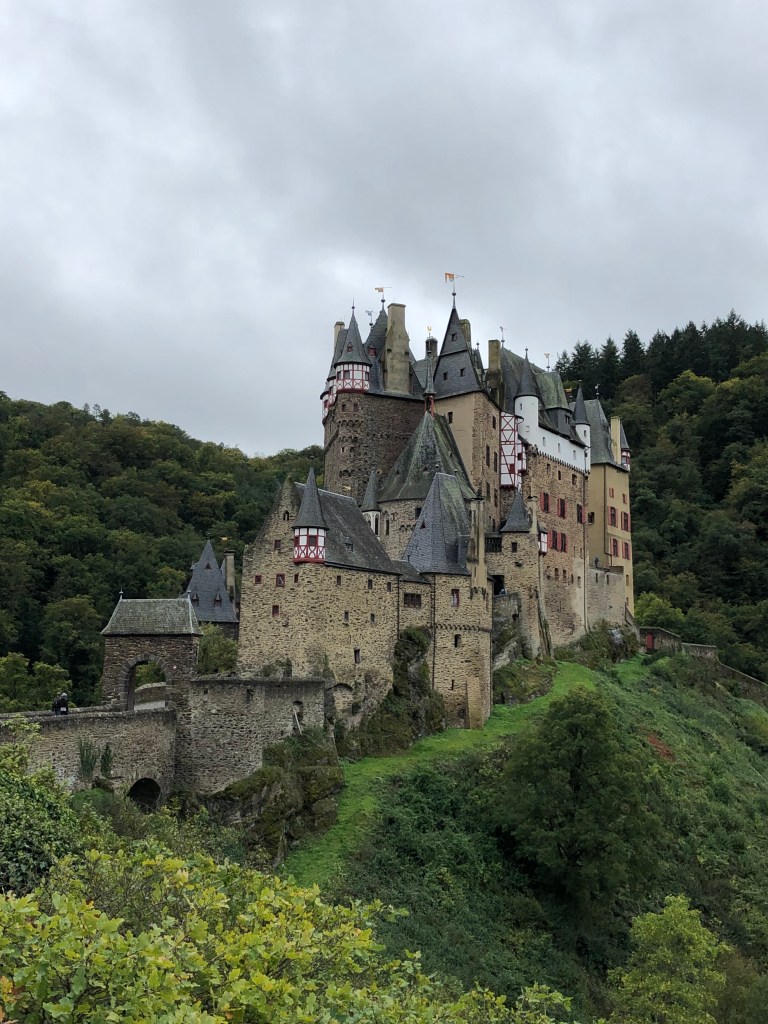
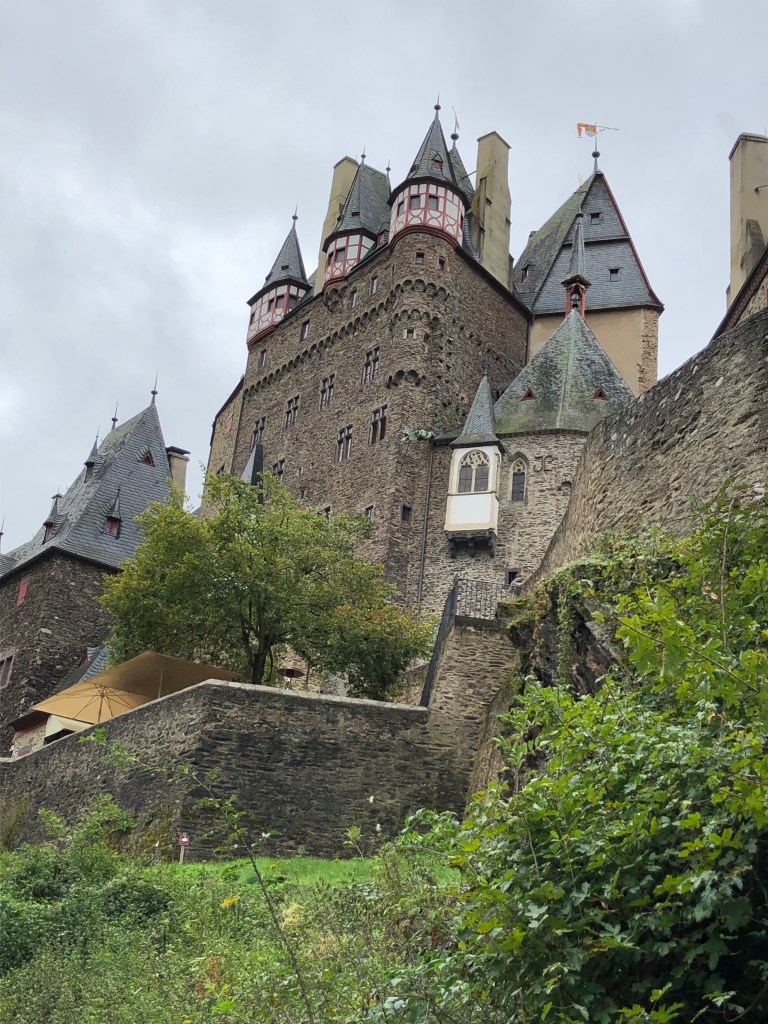
The short walk in the woods ended by turning a corner to the castle’s majestic approach. I’m pretty sure this was the first time in my life I saw something authentic that appeared straight out of a fairytale. Built on a small hill rising over the Elzbach River, with a backdrop of trees on the adjacent larger hillsides, the 12th century castle would be the perfect setting for a happily ever after.
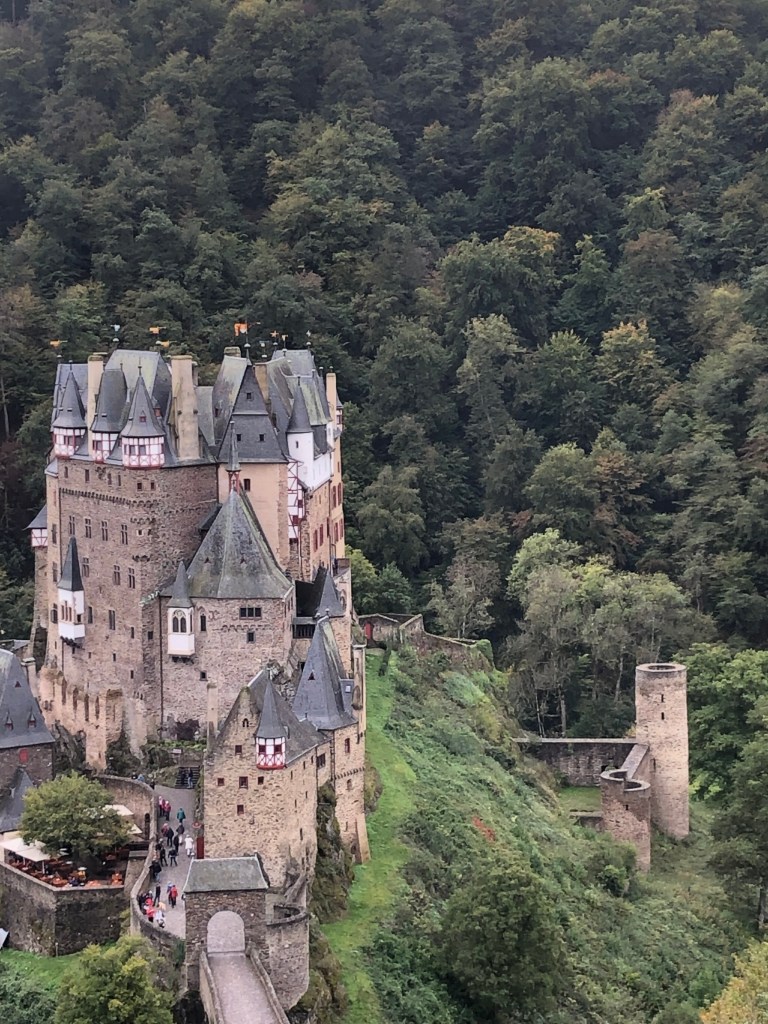
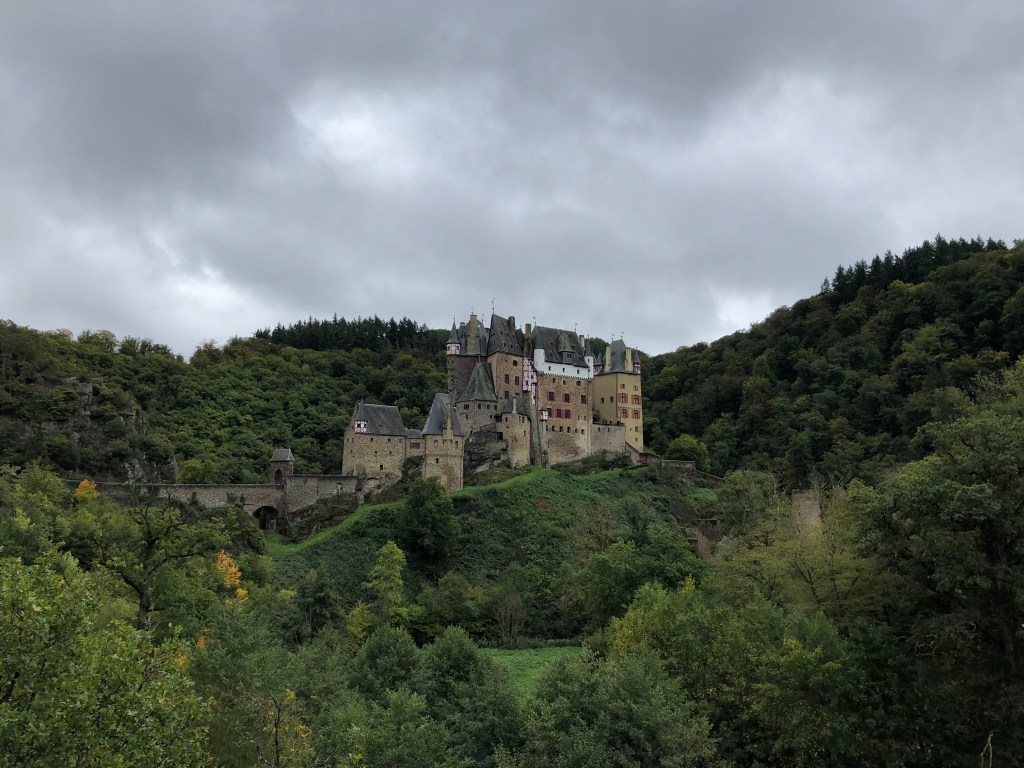
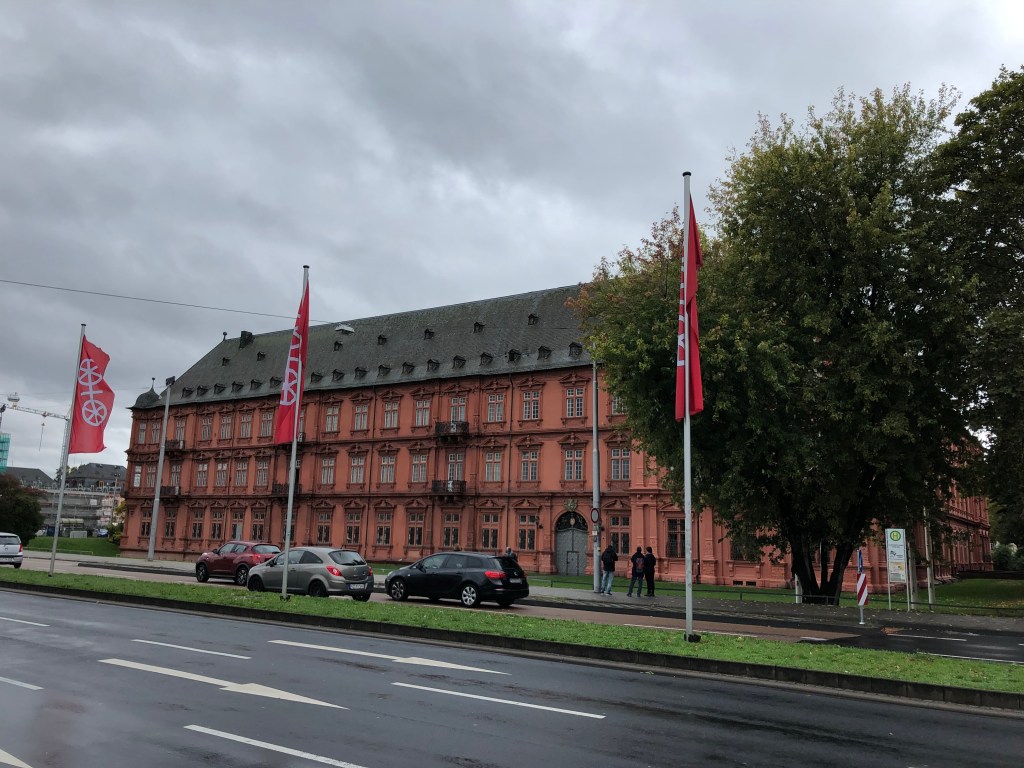
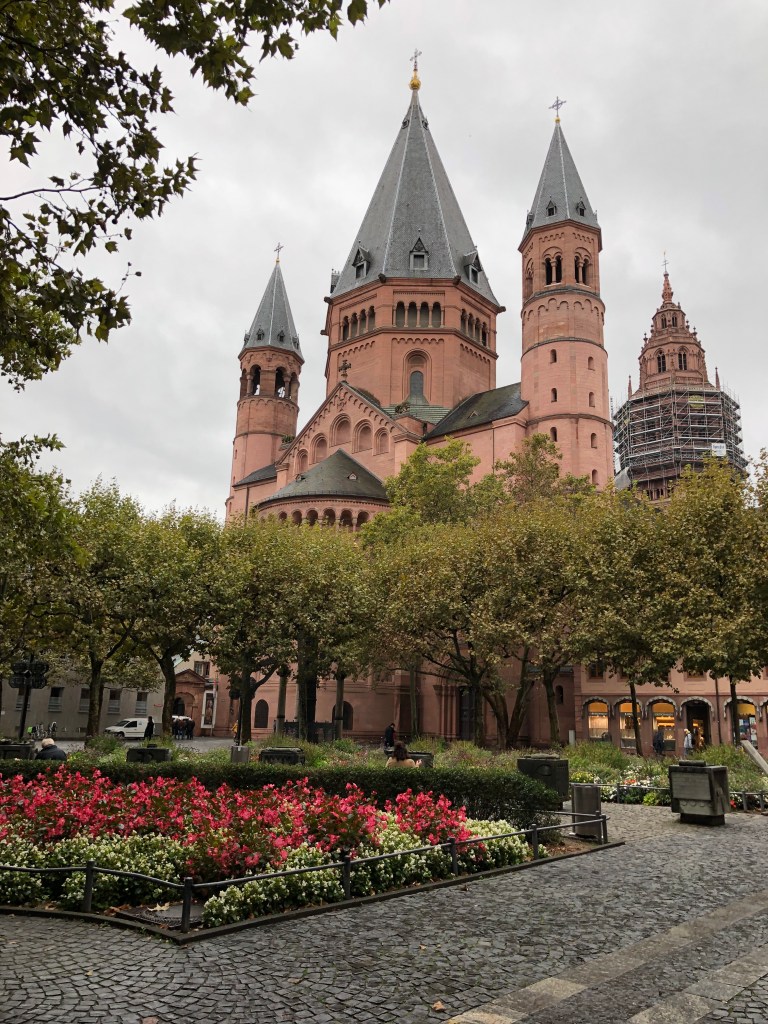
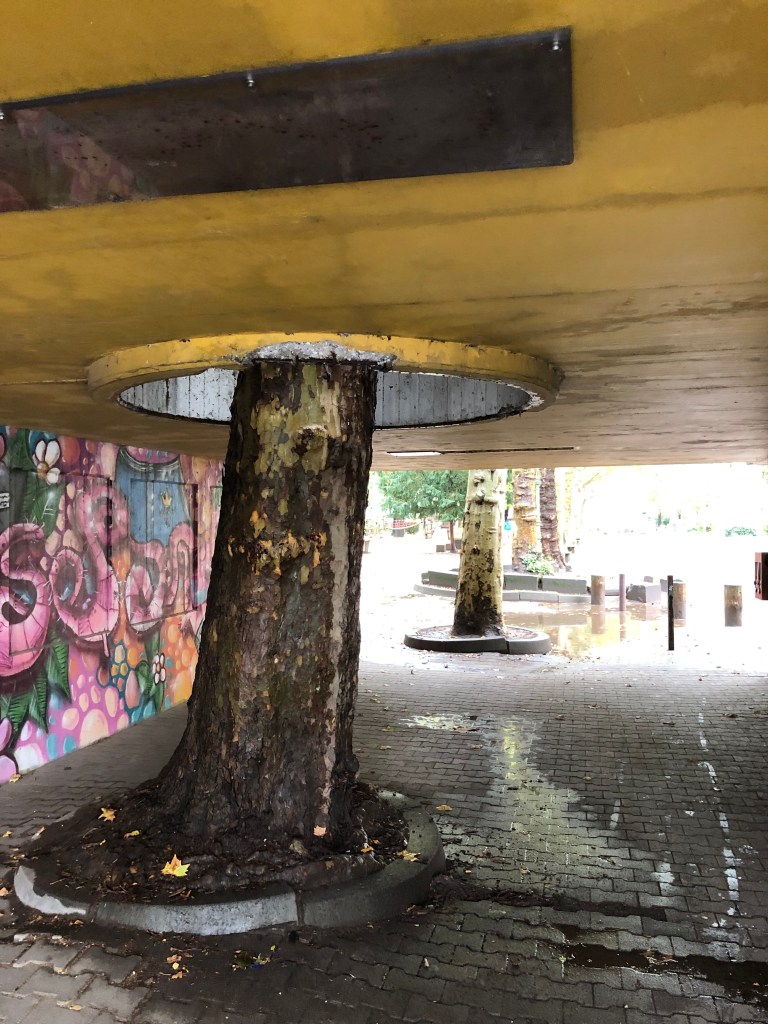
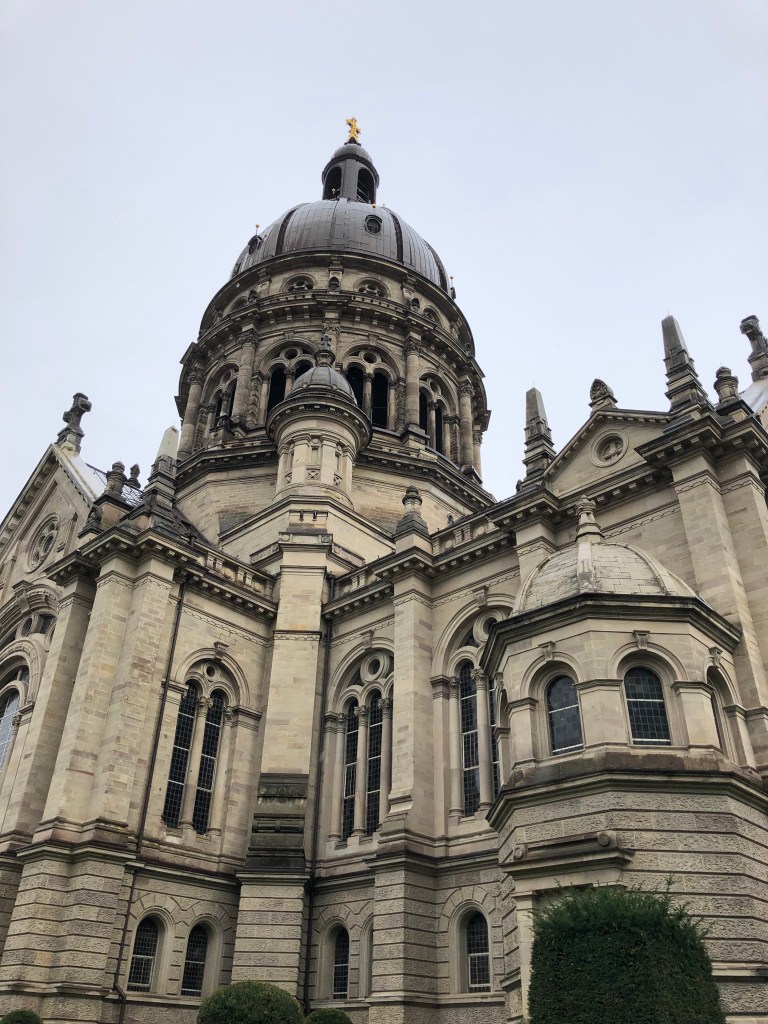
After touring the grounds and headed back on the road for my next stop: Mainz. Mainz is a small city on the bank of the bank of the Rhine. The buildings are nearly all post-war. I checked into my AirBnB and walked along the river to get to a top attraction in town, the Gutenberg Museum. Mainz’s claim to fame is the place where Johannes Gutenberg invented the printing press in the 1400s. The museum was decent for being dedicated to basically one invention. I gained a lot of respect for the printing press, learning just how much went into both inventing and and operating it. Some photos from the afternoon:
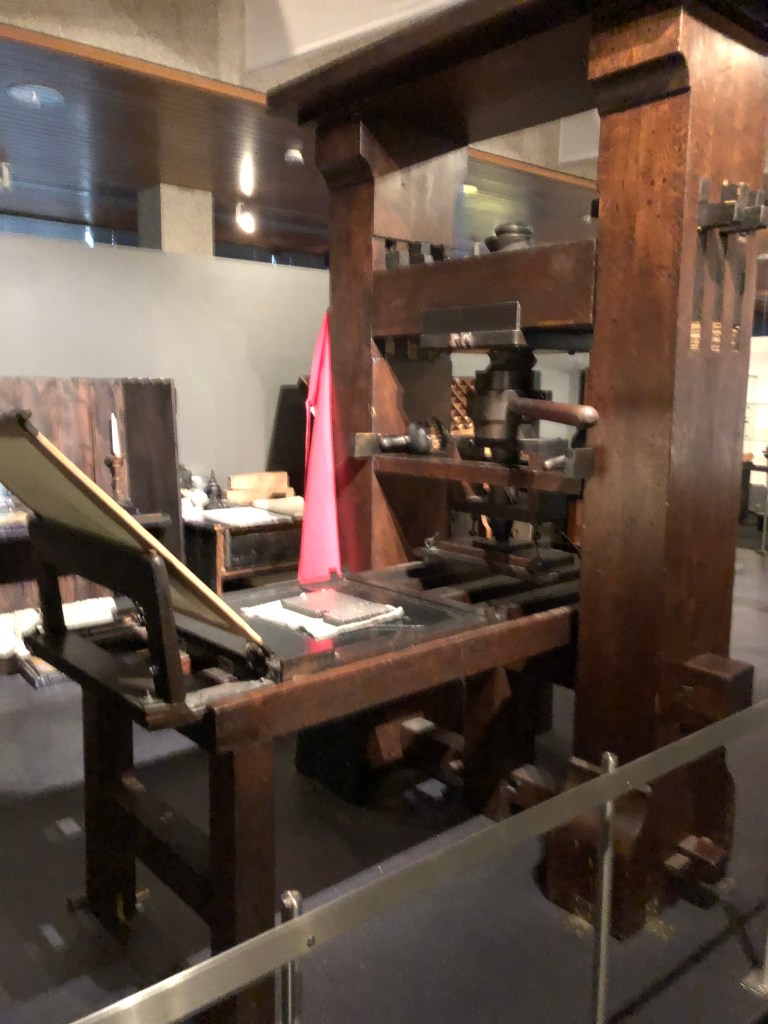
A replica press. Who knew photos aren’t allowed in a museum featuring 600+ year old prints? 
I wound up in Mainz specifically because I had chosen to spend Yom Kippur in the synagogue there. The 1912-built synagogue was one of many casualties of World War Two, replaced by a very modern new one in 2010. The design is extremely unique, with a green exterior the shone blue and brown and black in varying light, and a cacophonic geometry that’s evocative of the Hebrew word kedusha. Inside, the sanctuary is a huge volume covered in gold, accented by black veneered wooden seats and a black granite floor. Dimensional Hebrew lettering adorns all the walls. During the service, the cantor (singing member of the clergy) needed no microphone due the acoustics which amplified his voice to an impressive level. The service was all in Hebrew, but announcements were made in German and Russian. Most of the modern Mainz Jewish community is made up of Russian immigrants.
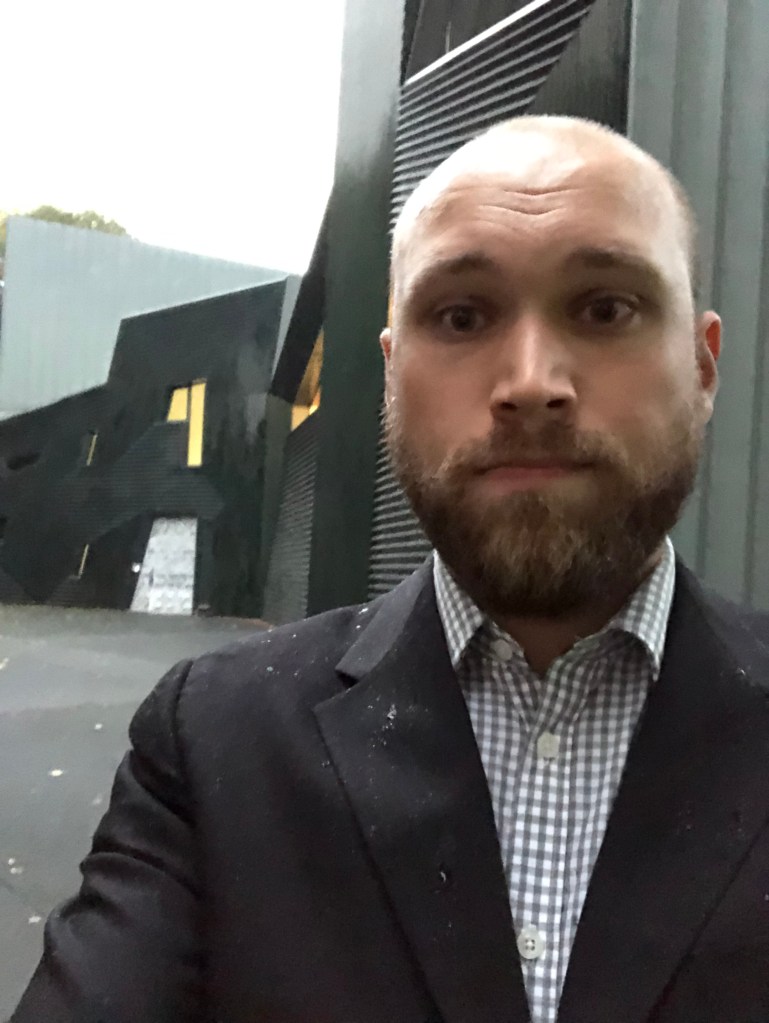
Ready to enter Tuesday night 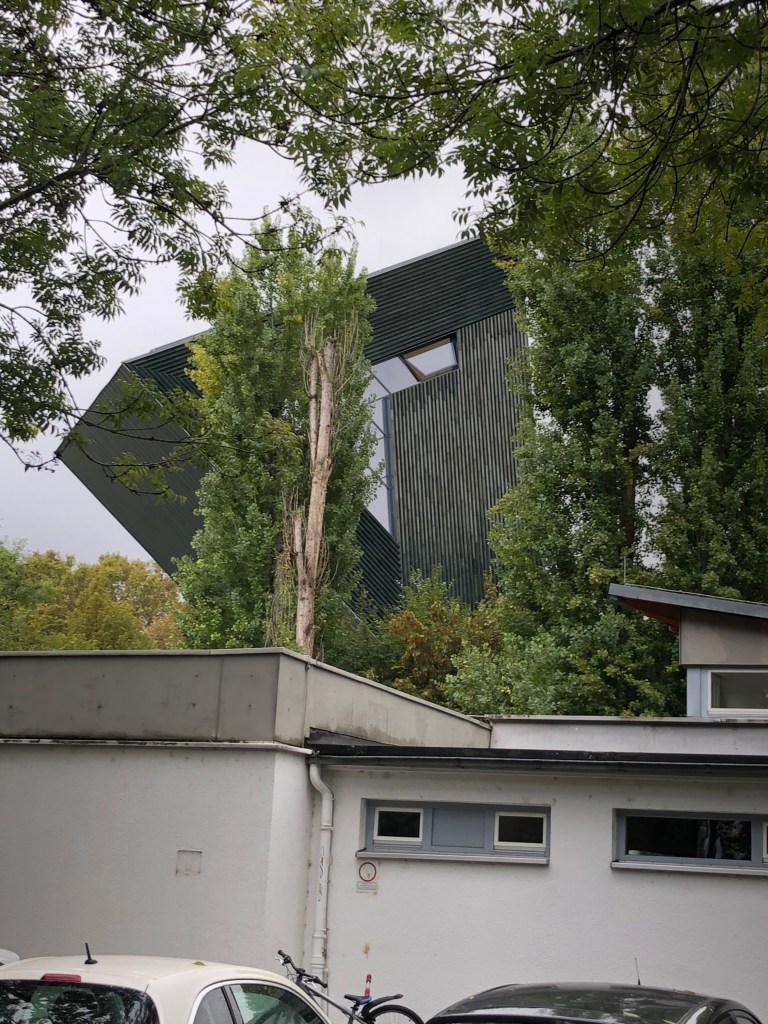
The top of the sanctuary, as seen from a neighboring street
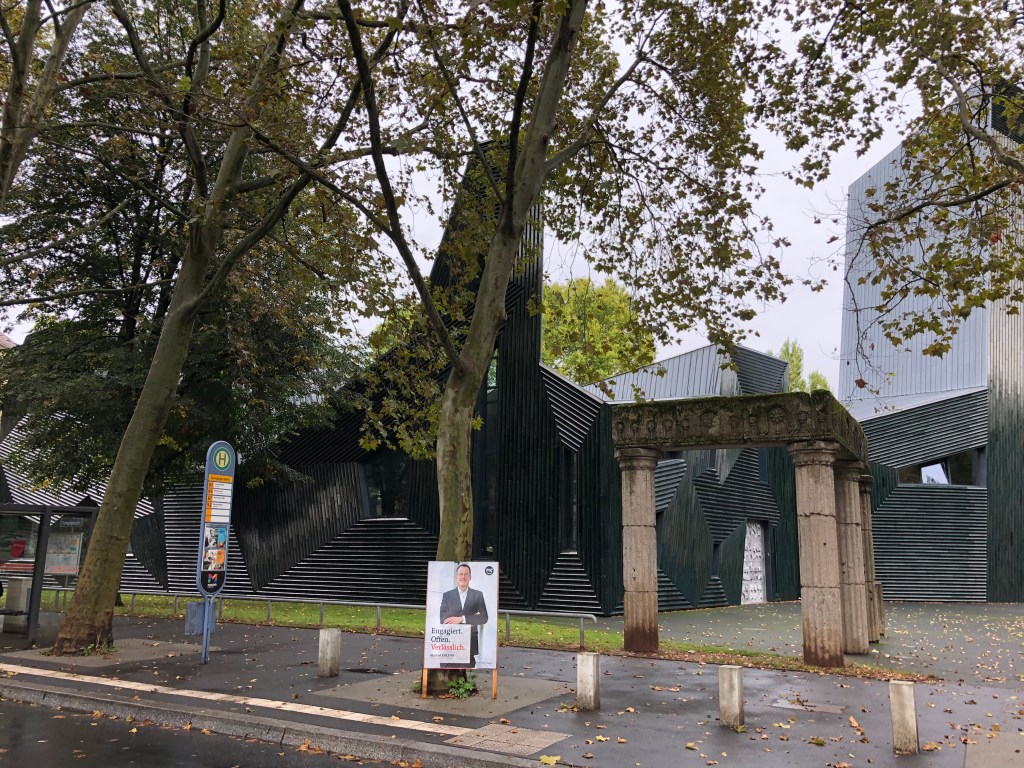
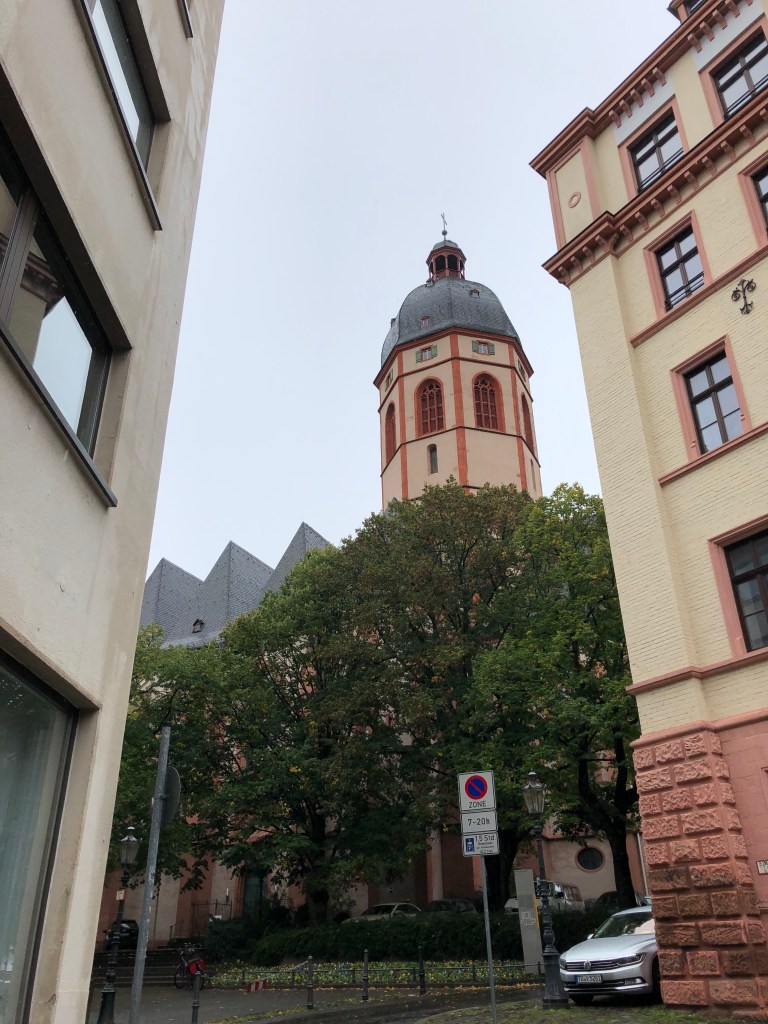
During the break between the morning and evening services on Wednesday I visited two more sights in Mainz. St. Stephan’s Church, which is the only church to have stained glass windows by Marc Chagall:
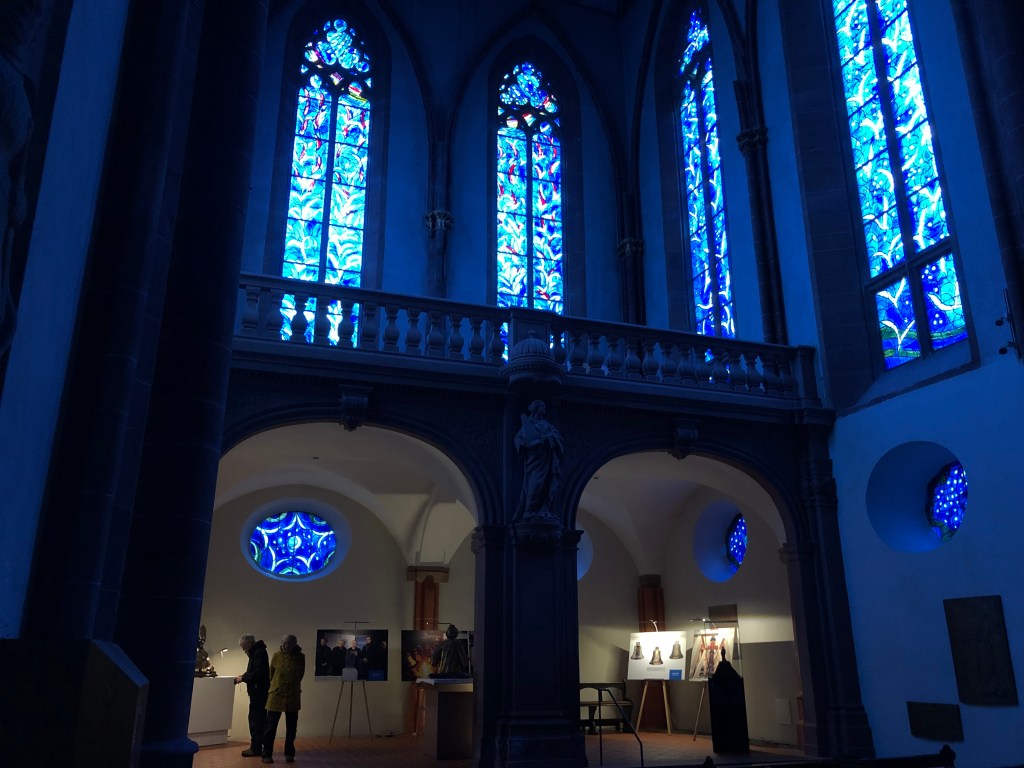
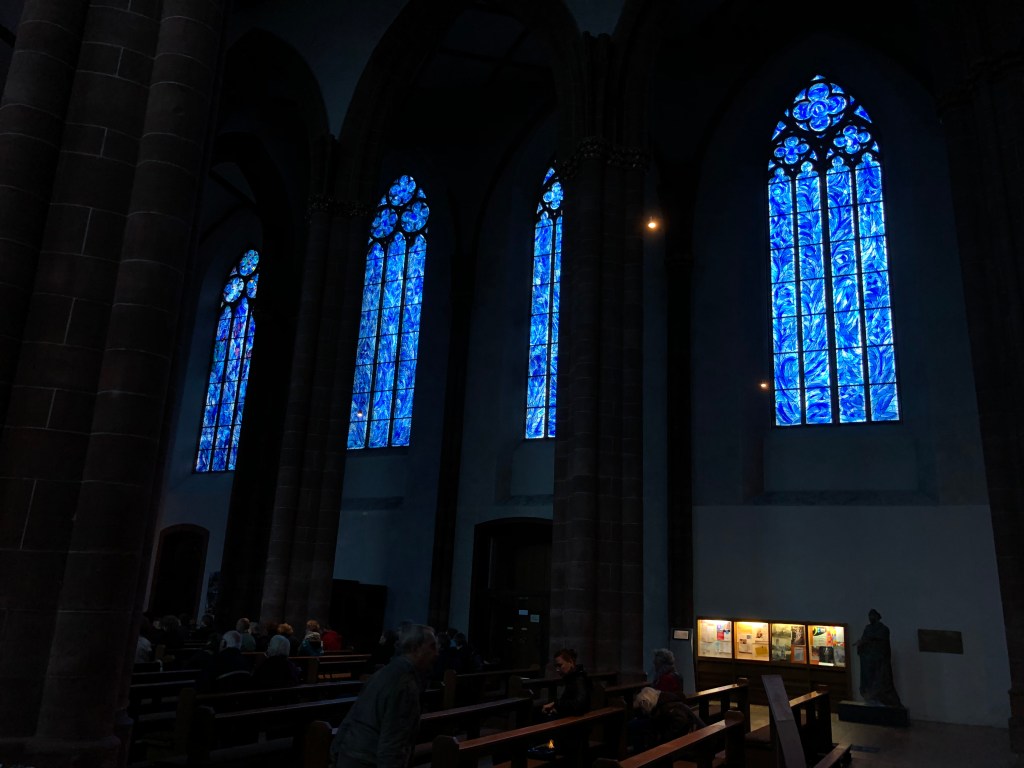
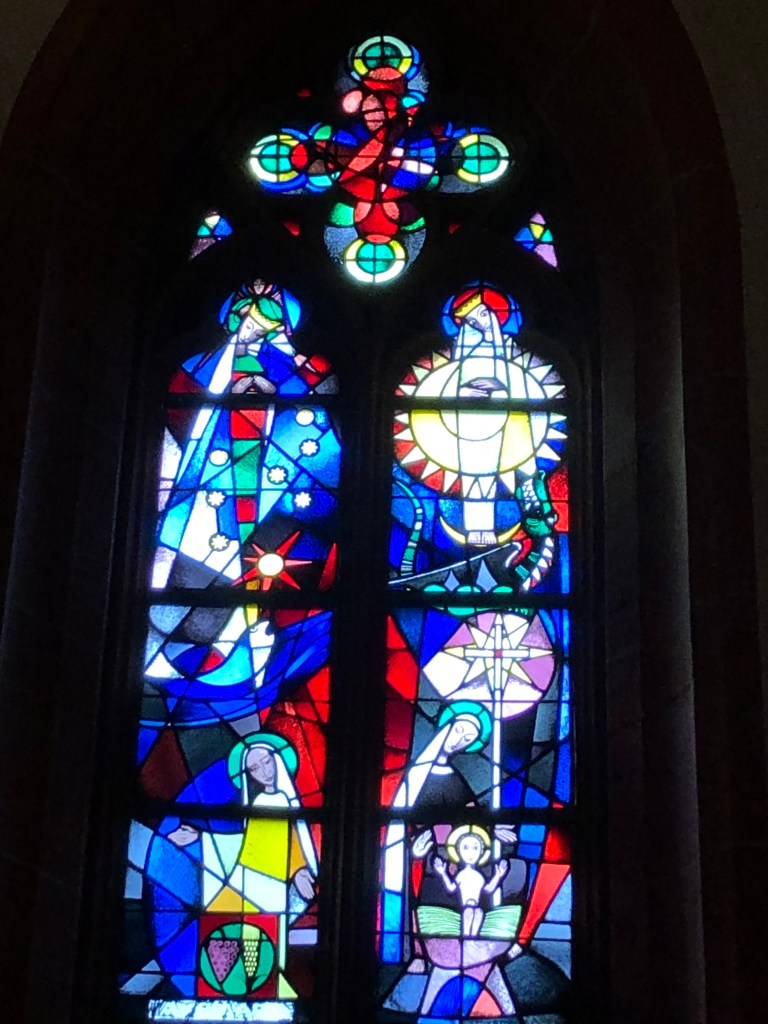
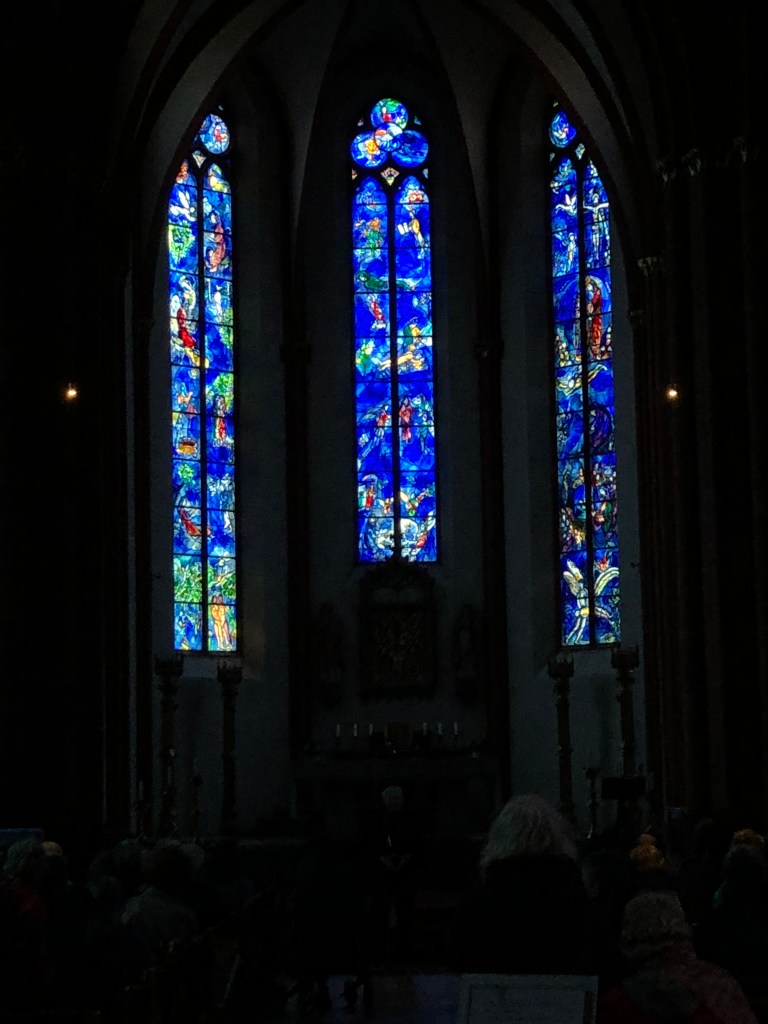
And then the Kunsthalle, a modern art museum gallery. The gallery featured the work of one artist only, which didn’t impress me. But the slanted elevator was very cool, and worth the price of admission alone.
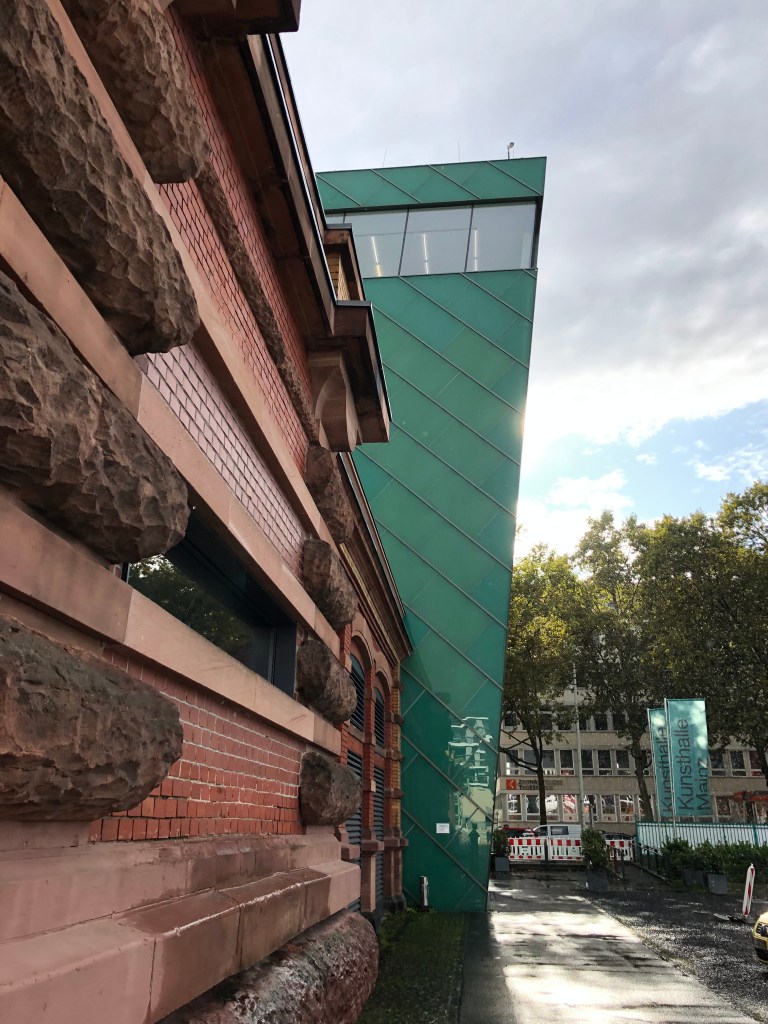
The outside of the Kunsthalle 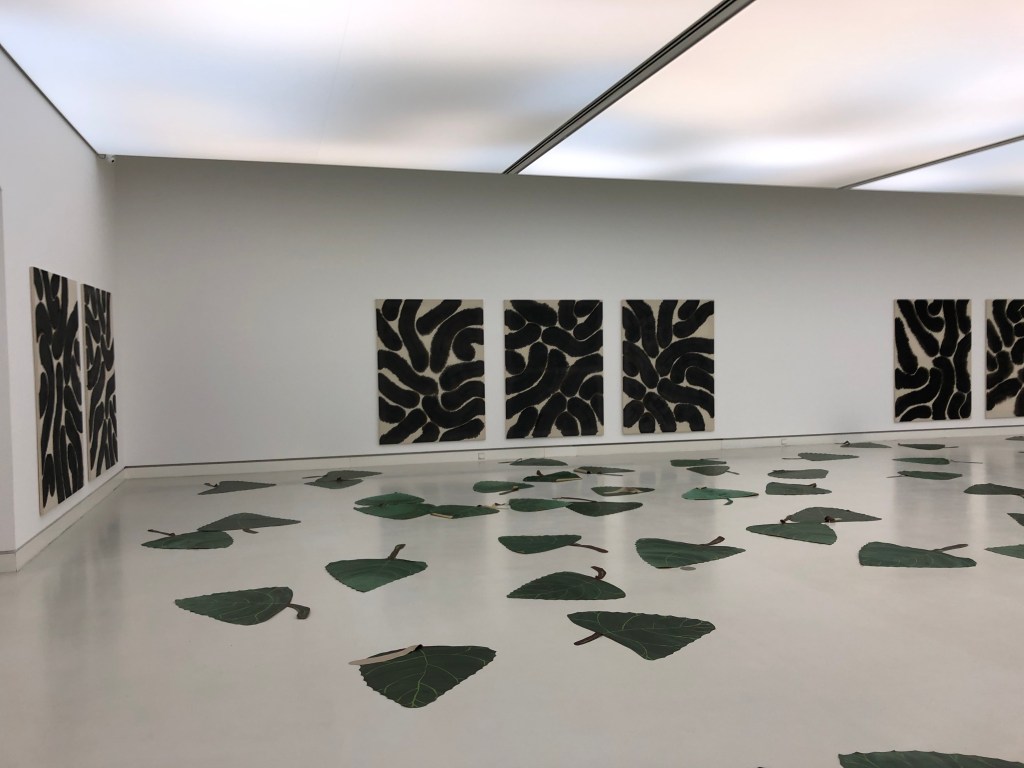
nice space, meh art 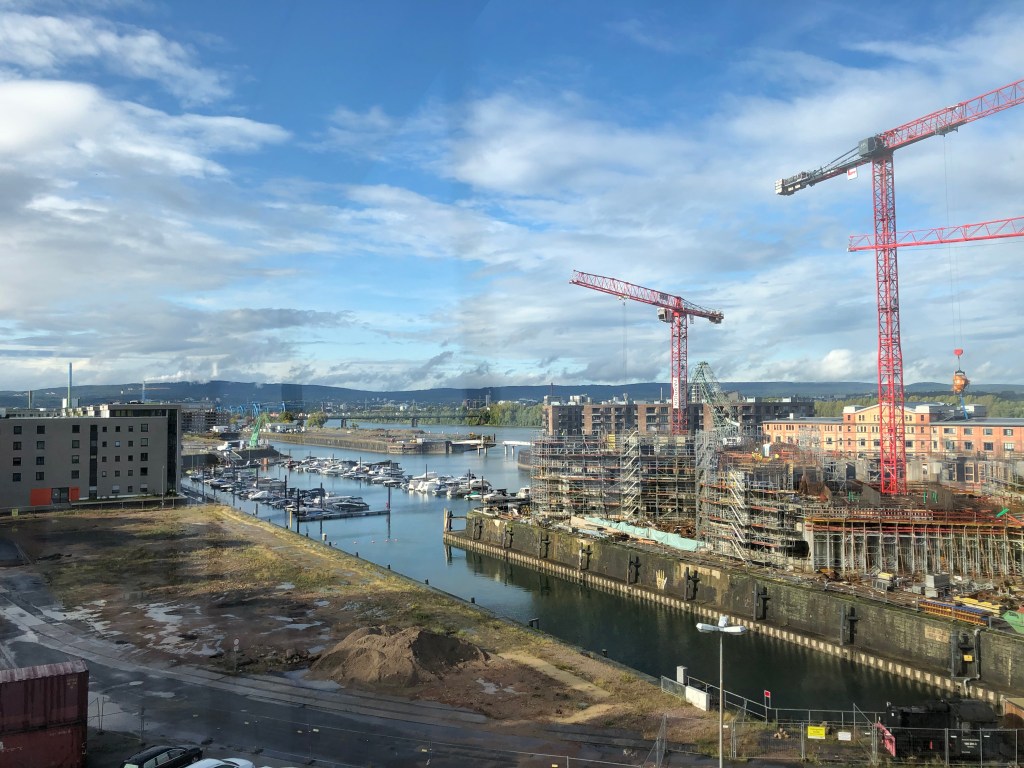
Better than the art was the view of the river port (and lively construction) 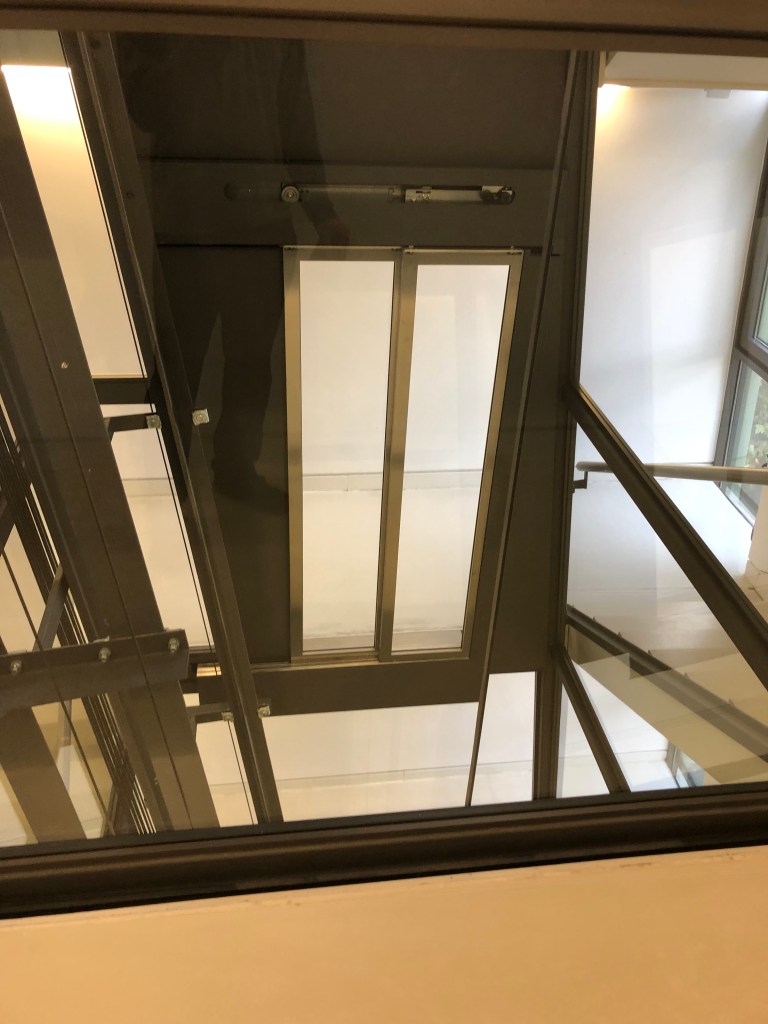
It was tough to capture it in a photo, but was very neat and unique
Now that it’s over I can say I had a good and non-hangry holiday experience, having fasted without much difficulty. I have no doubt that the plight of my hunger was made much easier by my recent visit to Dachau. Fasting for 26 hours is doable when you know when you’re getting your next meal. I also thought about the poverty and hunger I expect to see in the coming weeks, and reflected on how truly lucky I (and we) are.
Through my experiences here, my family’s history, and my observing Yom Kippur, I’ve found myself with a number of somewhat conflicting feelings about Germany. I’ve enjoyed visiting it and experiencing the culture. A part of me feels that my being here is somehow reclaiming culture owed to me that was stolen via my family’s emigration to survive the Holocaust. Another part of me knows that antisemitism existed here for centuries, and if I was born a German Jew, now or in some other era, might never have felt one with German culture. Regardless, I know my perspective is richer, albeit perhaps more complicated, for having spent this time here. And now that my Mainz visit is done it’s onto Cologne to wrap up my tour of Germany.
Lastly, my song of the [holi]day:

 Widdershinning Weiss
Gmar Tov! Sounds like a very reflective few days. Stuttgart is the best!! Very cool Mercedes-Benz museum.
On Wed, Oct 9, 2019 at 3:45 PM Widdershinning Weiss wrote:
> Andrew posted: ” On Monday morning I picked up my dinky 4-door Opel Corsa > and headed north to the Munich suburb of Dachau. Yes, to visit the > Concentration Camp. I spent a couple of hours walking through the grounds > and exhibitions. It was a pretty heavy experience, which” >
LikeLike
Hi Andrew,
Glad the trip is going well. I’m enjoying following your travels and hearing your impressions. Glad the fast was easy and look Forward to hearing more about your journey in the days and weeks ahead.
Xo
Ellen
LikeLike