
Specifically, Widdershinning Wroclaw and Krakow. But if you want to pronounce it like the locals, and are an English reader, this would be something like Vitterschinning Vroswav und Crackoof. That’s because in the cryptoquote cipher known as trying to read Polish, w’s are v’s, c’s are s’s, and L’s are w’s. So where are Vroswav and Crackoof exactly?
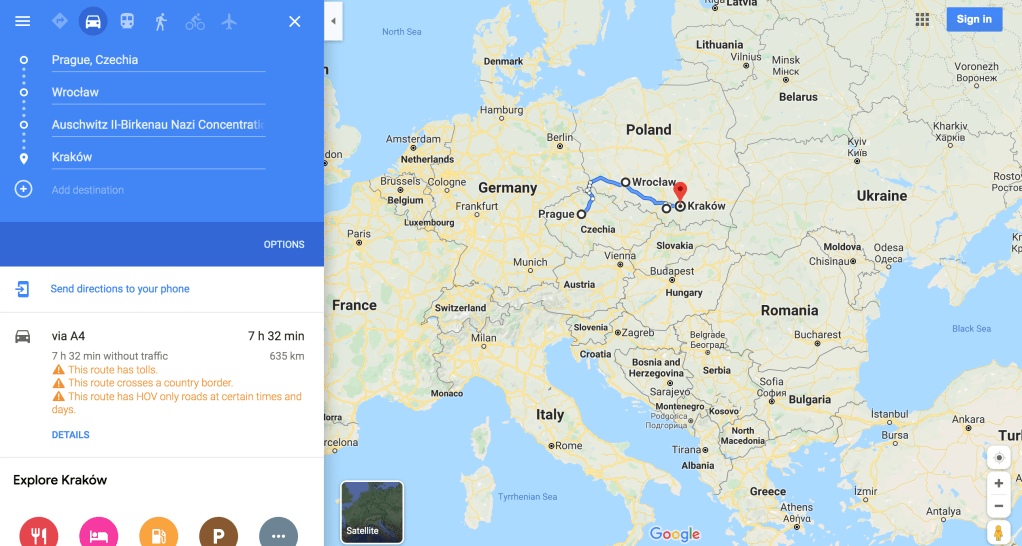
Poland is the last country I’m visiting in Europe. I began my touring this continent just over a month ago in Germany, in part retracing my maternal ancestry. I’ll now end this chapter of the journey in the land of my father’s fathers. We know far less about this side of the family’s time in Europe. I’m mot visiting any houses that a grandparent grew up in, nor seeking the graves of my kin. Sadly, much of this history was lost when my pre-teen great grandfather Sam (for whom I’m named, with my middle name Scott and Hebrew name Shlomo) was a stowaway on a boat, and my grandmother’s family came over in steerage, all before World War 1. If you asked my grandmother’s mother where she was from, she’d struggle to answer, as it changed throughout her lifetime. Sometimes it was Austria, others Poland. Because this Polish side of the family emigrated one generation earlier than my German side, I only have knowledge about their lives in true motherland of American Jews: Brooklyn.
Without specific sites tied to my lineage, I picked this itinerary based on geography, word of mouth, and some research. I began in Wroclaw, a city I hadn’t heard of before planning this trip. When telling Europeans I would be traveling here, some hadn’t heard of it, and I wonder if it’s because I pronounced it “raw-claw” before learning the correct name. Wroclaw’s a little off the beaten path for tourists, which was a nice respite from the Romes and Venices and Pragues (and my subsequent stop, Krakow). After my Prague hostel debacle I made sure to have my housing reserved before I arrived. In doing this, I read that multiple hostels had older men as long term guests, and the vibe was more of a Turkish bathhouse than backpacker hangout. No thanks. Poland is a relatively cheap country, with hotels even cheaper in Wroclaw where tourism isn’t yet burgeoning. I booked a fairly nice hotel for under $40/night. Cheaper than some of the single rooms I had booked in hostels! I arrived via bus to a newer part of the city, a short walk to Hotel Sofia.
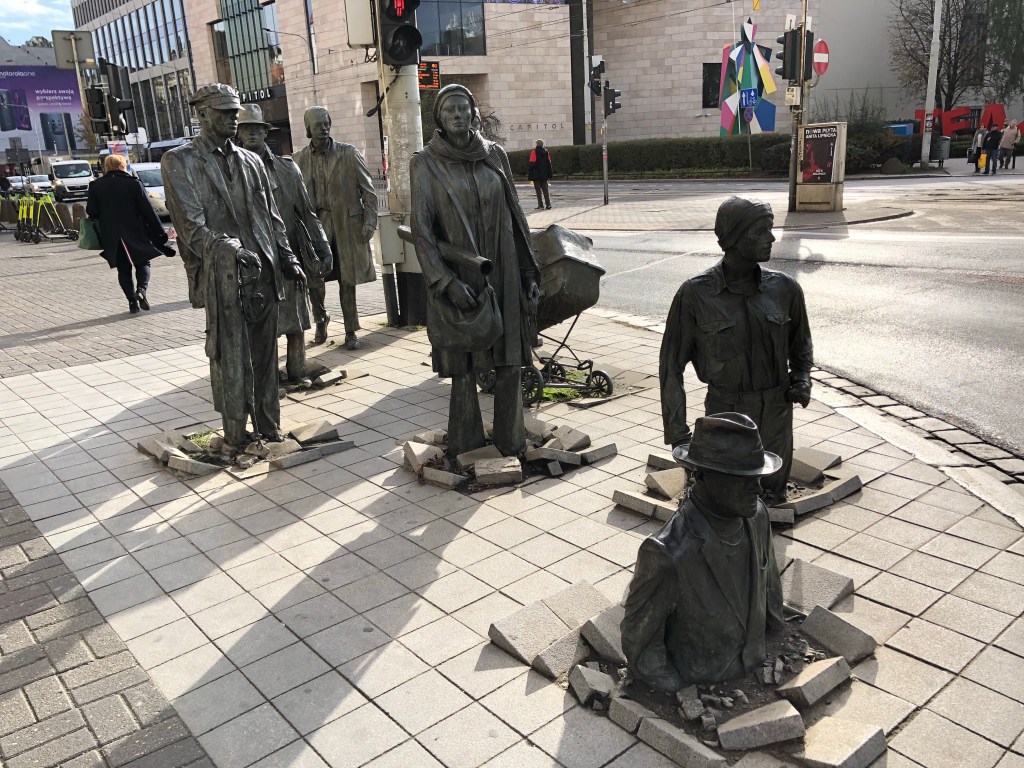
These statues straddled an intersection near my hotel 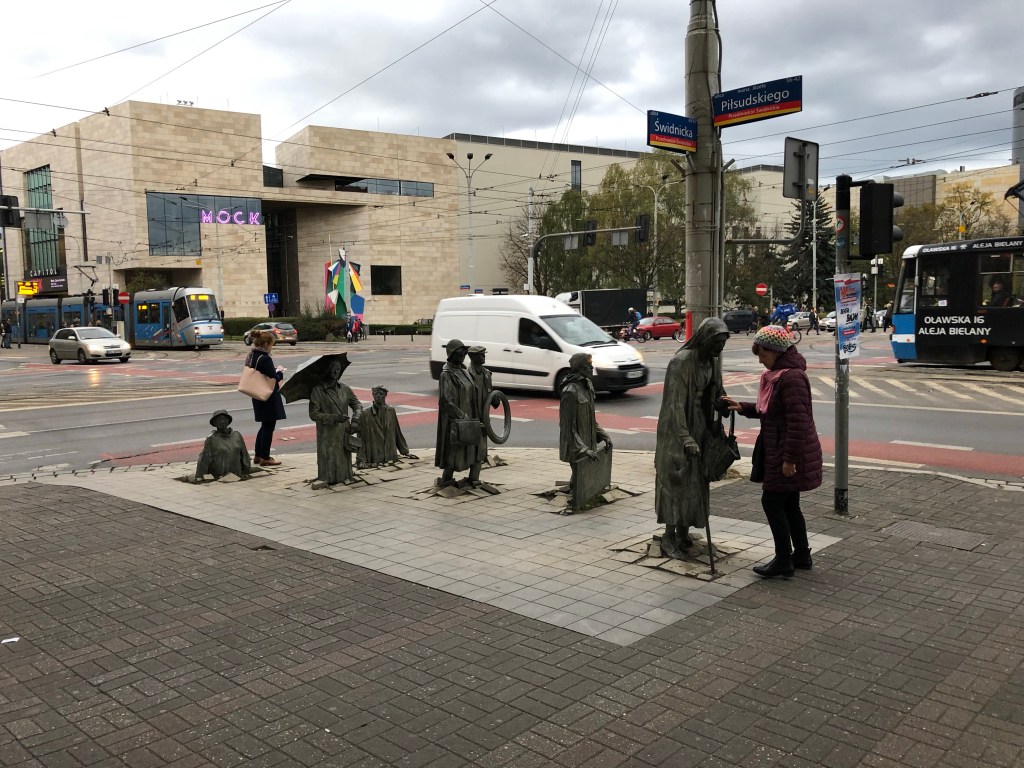
What is this woman doing?
After getting situated in my hotel room I set out to do the most Polish thing I could think of – eat pierogis. These dumplings are not only a cultural staple, but something of a nostalgia act for me. One of my go-to dishes in college was to fry up pierogis and caramelized onions, typically with a splash of balsamic. Quick, easy, tasty, and with questionable nutritional value. This was my first of four pierogi meals in five days. I also began to take in more of the city. Wroclaw has some beautiful historic structures, but I was told (or maybe read?) that many more were destroyed, largely by the Russians, during World War 2. The prewar buildings were beautiful and would’ve fit right in with the colors and ornate sculptural details of Prague. Some of the older postwar buildings, now up to 70 years old, also had aesthetic merit. Even so, the place read as Polish to me.
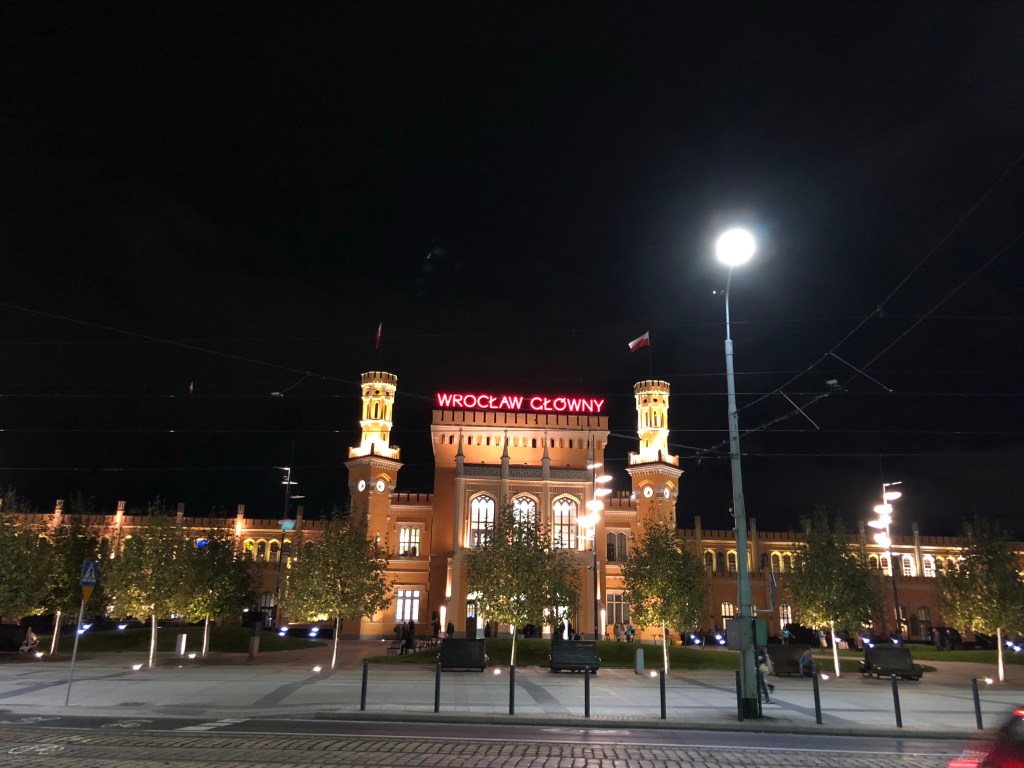
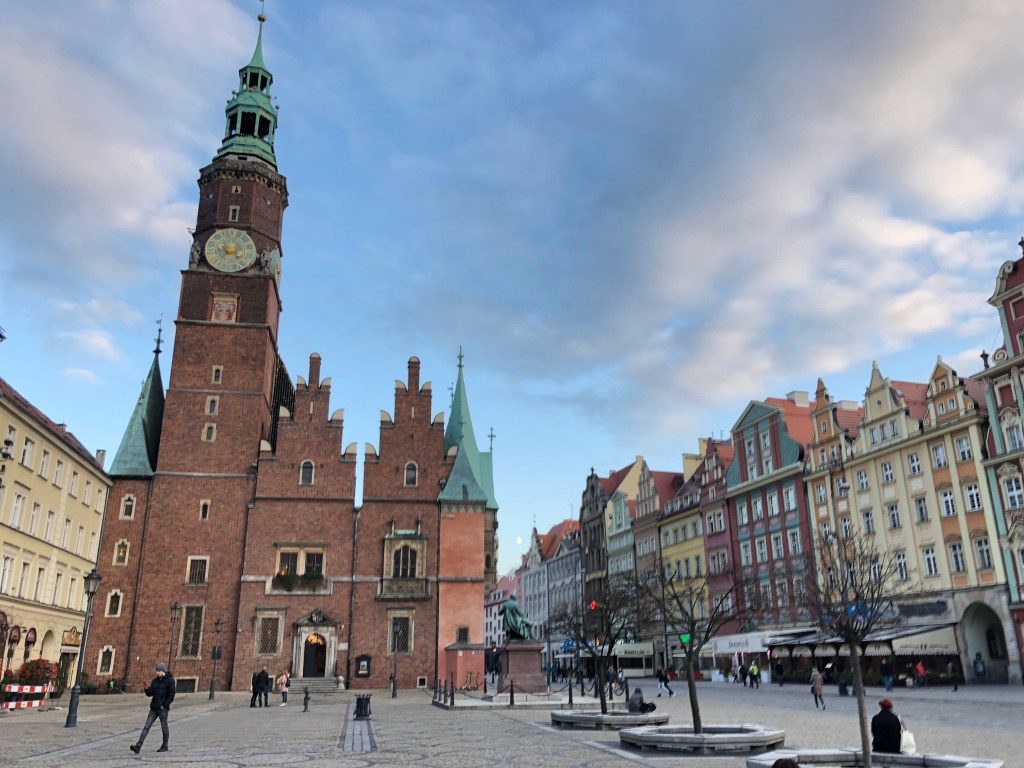
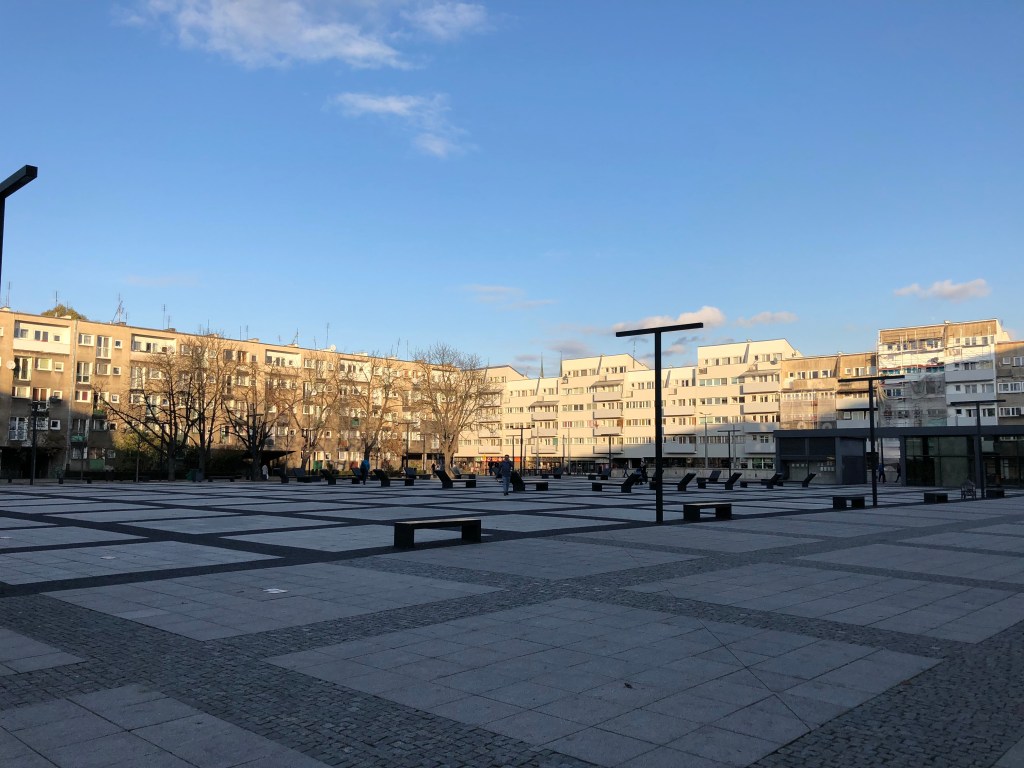
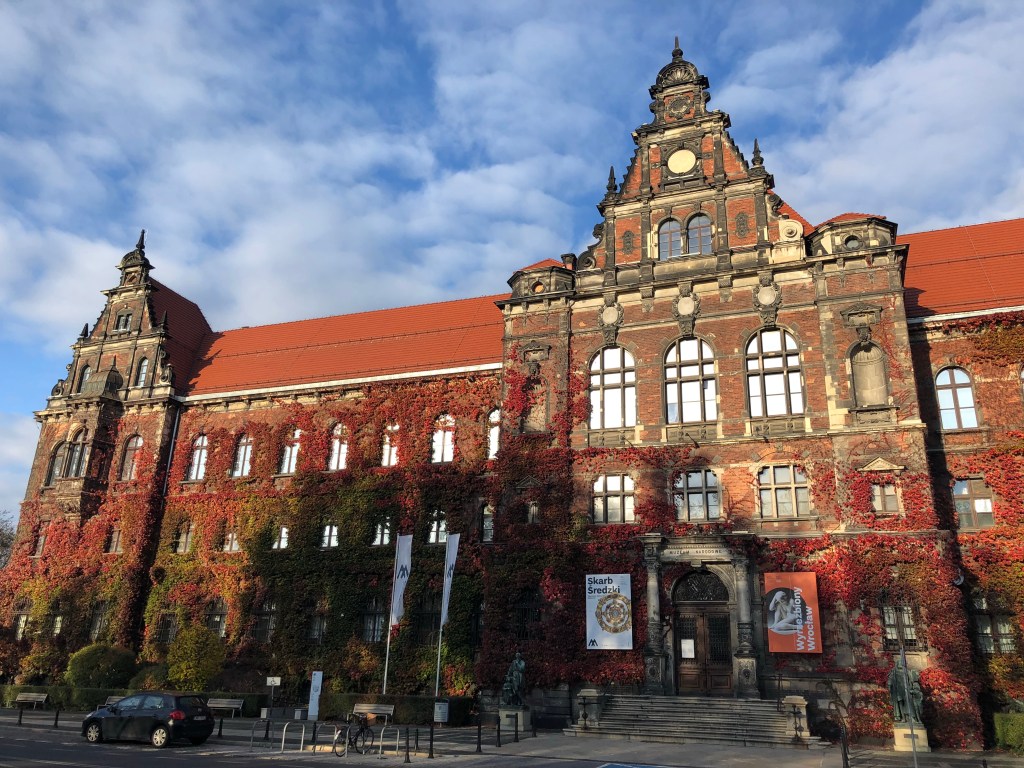
I was also struck by the colors. I didn’t notice all of them my first evening out, but over the next day-and-a-half appreciated this in addition to the historic structures and their details. While nothing can rival Burano, some vistas in Wroclaw kept pace with it’s better known European counterpart cities.
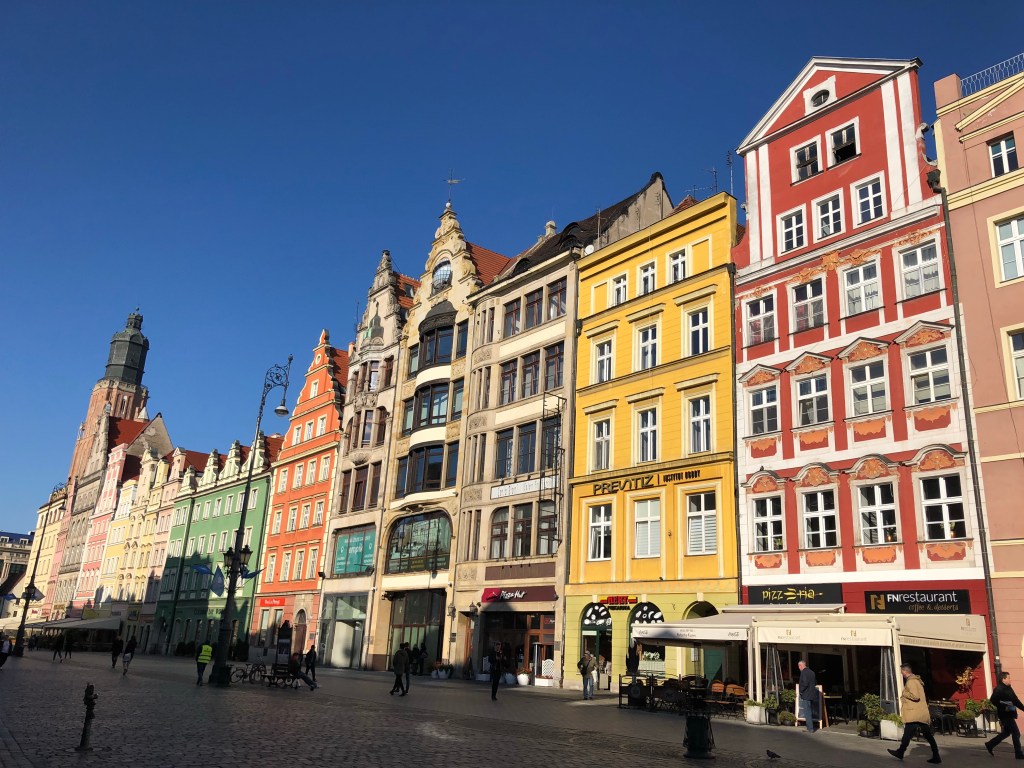
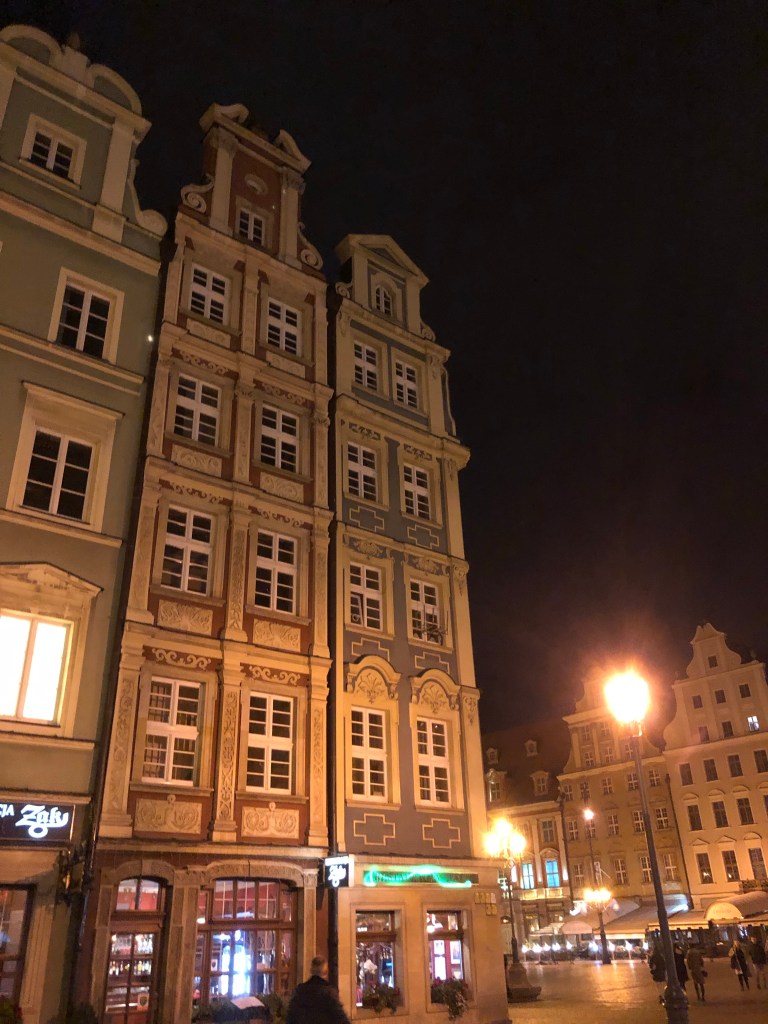
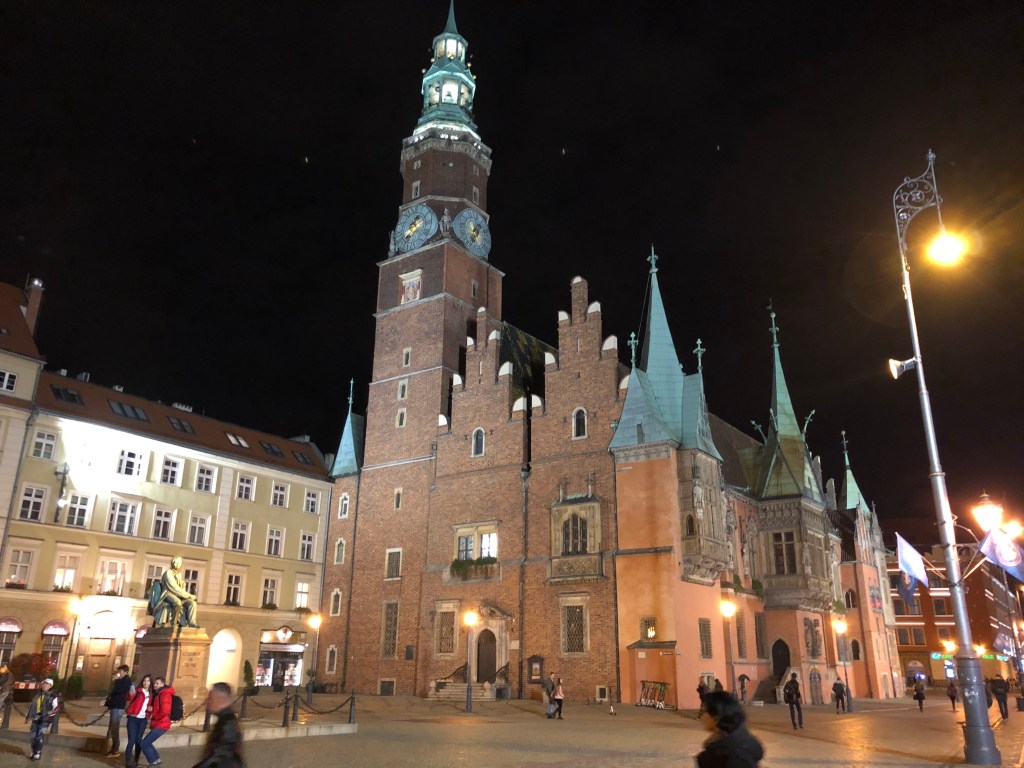
I spent a decent amount of time in the old city square. This was somewhat unique in that the interior of the square was not a wide open plaza like your picturesque European city, but instead had an square block of buildings inside. So in a square shape was a quite wide pedestrian promenade enclosing more buildings with restaurants, shops, and pleasant facades. I like this far better than the too-large spaces, i.e. Venice’s Piazza San Marco.
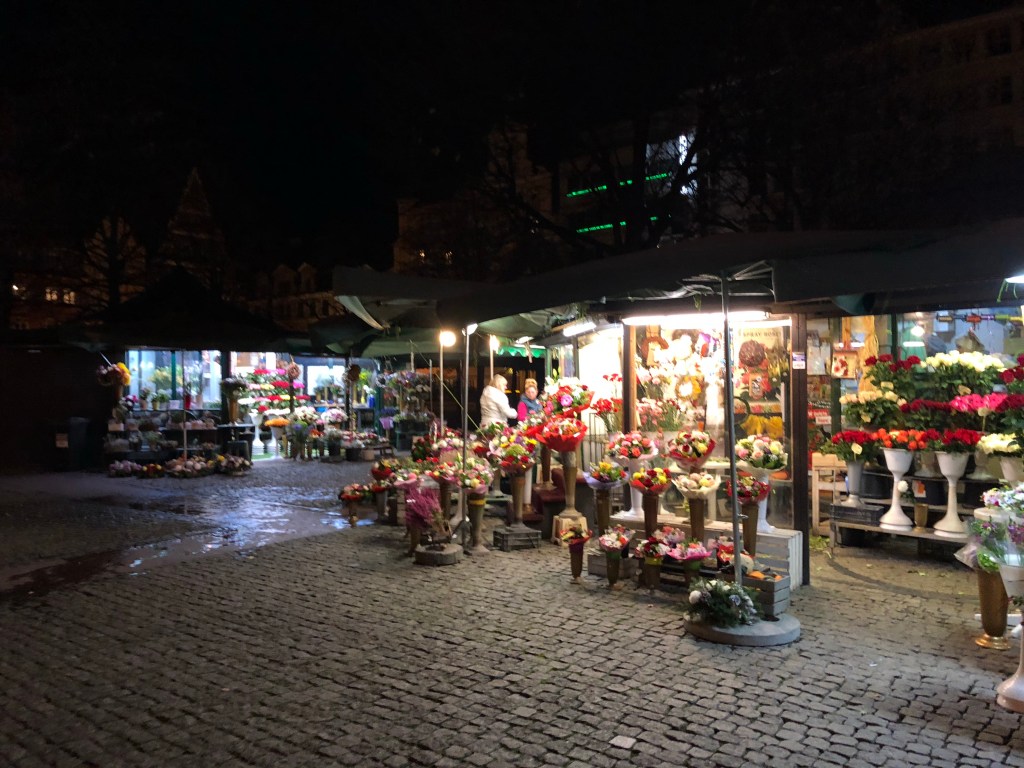
The town square was also home to a 24-hour flower market. Seems unnecessary, but maybe it’s saved some husbands from a latenight relegation to sleeping on the couch.
In addition to the square corridor of a plaza, one of the most significant defining characteristics of Wroclaw was created by the Oder river, which had multiple forks in and around the city resulting in a number of islands of varying sizes, until the river rejoined itself to the city’s east. Much of this ‘moat’ was bordered by green space, and some of the smaller islands were predominantly green. Wroclaw did well to incorporate grass and trees. It’s also a flat place, which made for good strolling. My calves especially appreciated this after Prague, Salzburg, and much of Italy. One last thing that struck me was the amount of new construction, seemingly everywhere. I got the impression that Wroclaw won’t remain hidden from tourists over the next couple of decades.
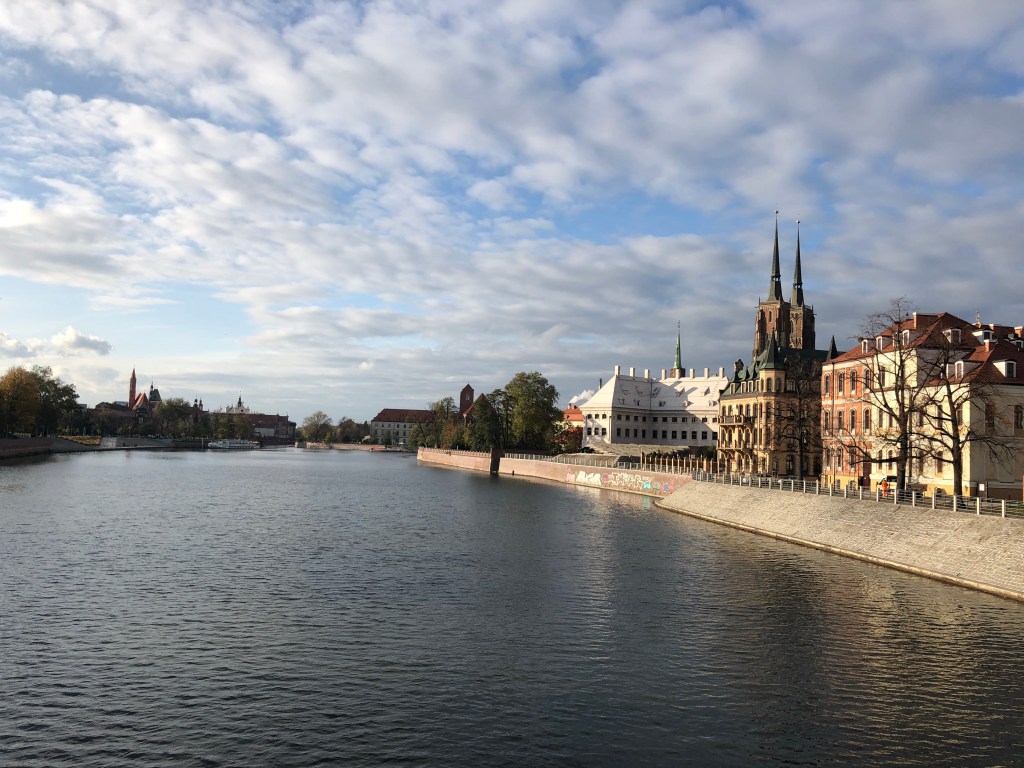
Water everywhere 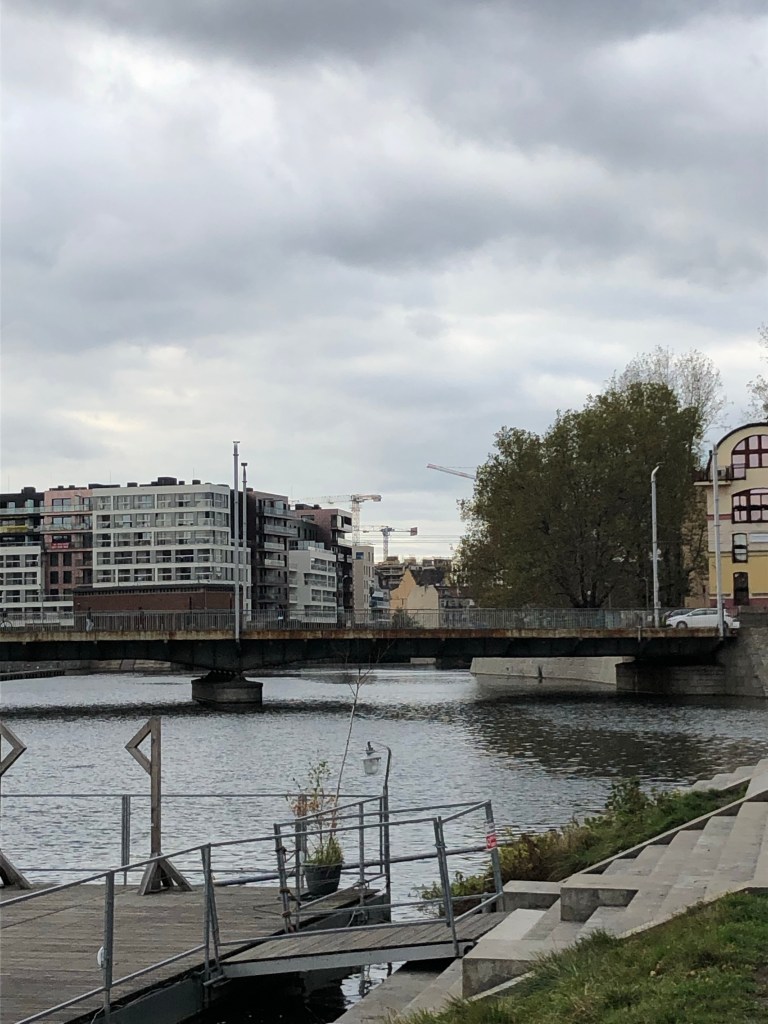
Water near and construction far 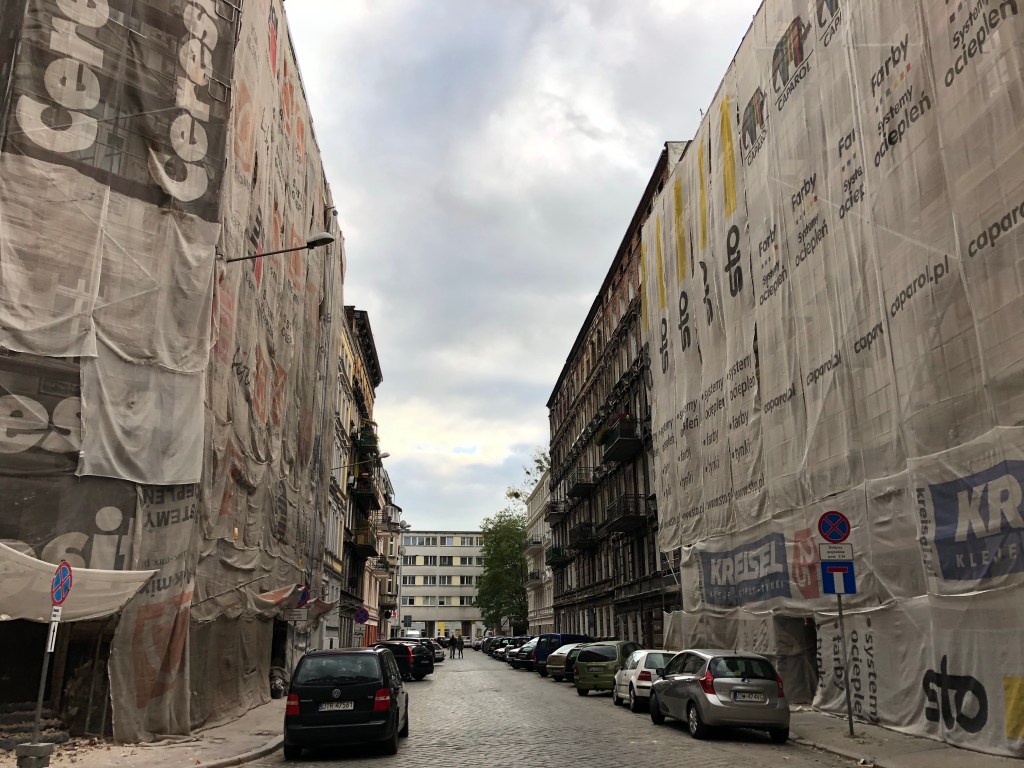
Gut renovating when not outright building new
My first stop Wednesday morning (my only full day in Wroclaw) was the laundromat. Form there I headed to the local synagogue. I happened to be in town during a two week program called “the Days of Mutual Respect” or something along those lines. I assume as a result of this, the synagogue had an extensive exhibit chronicling Jewish history of Lower Silesia (this region of Poland) over the last millennium. Antisemitism and restrictive laws were wound throughout this history, obviously peaking (but not ending) during the Holocaust.
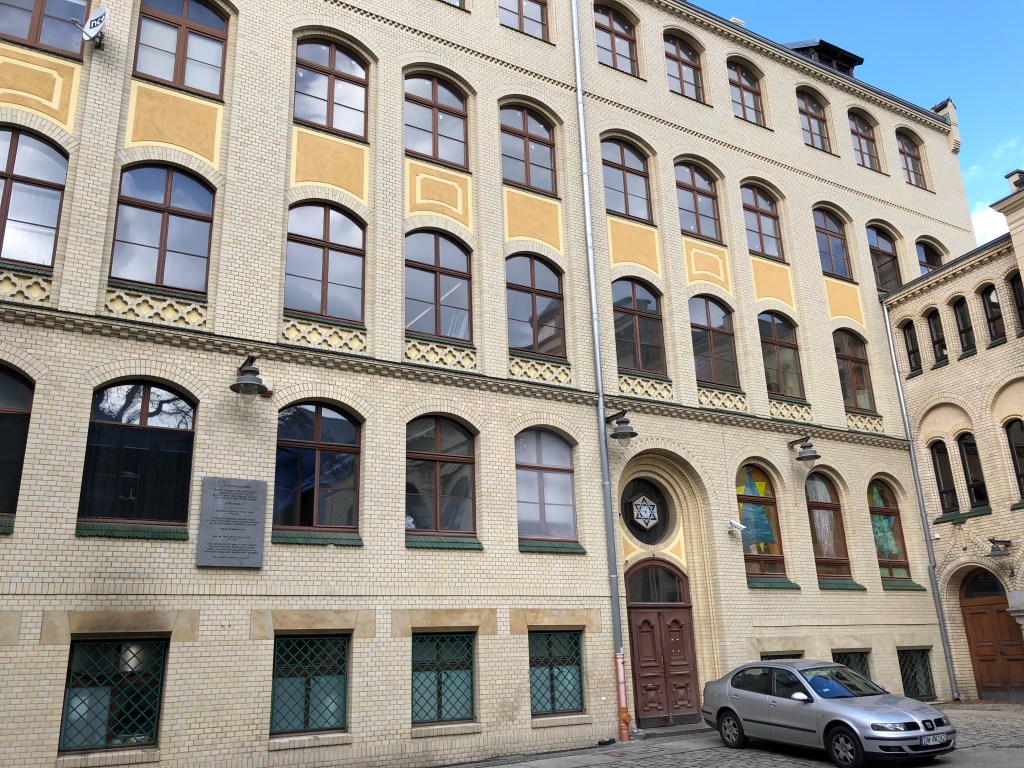
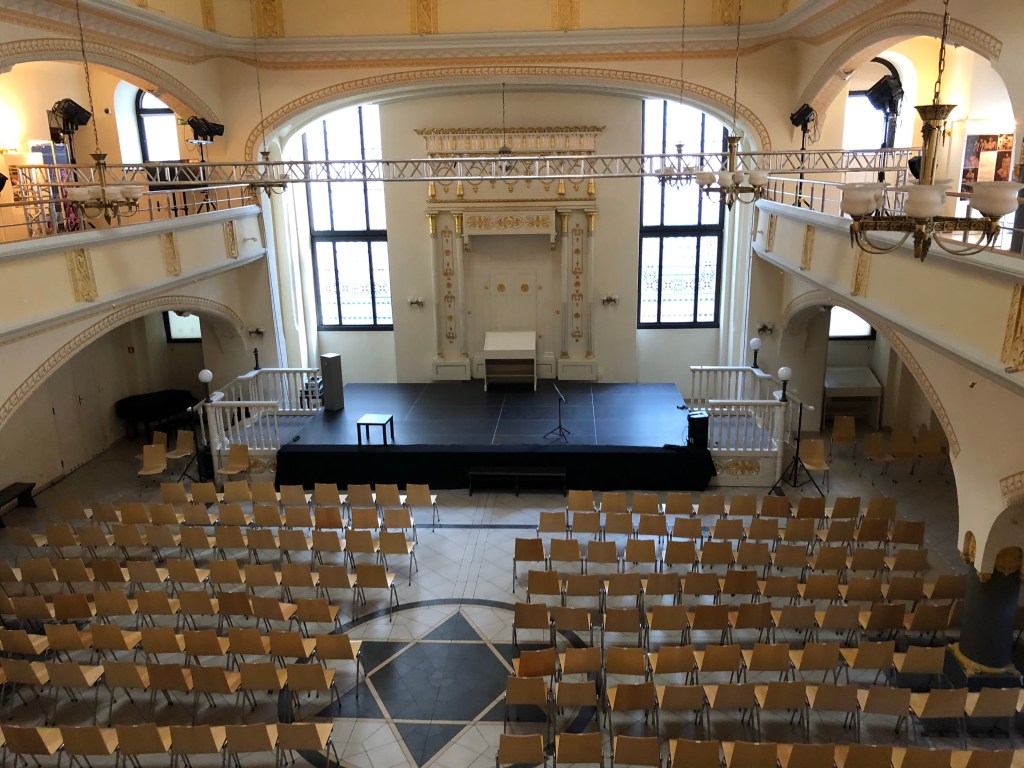
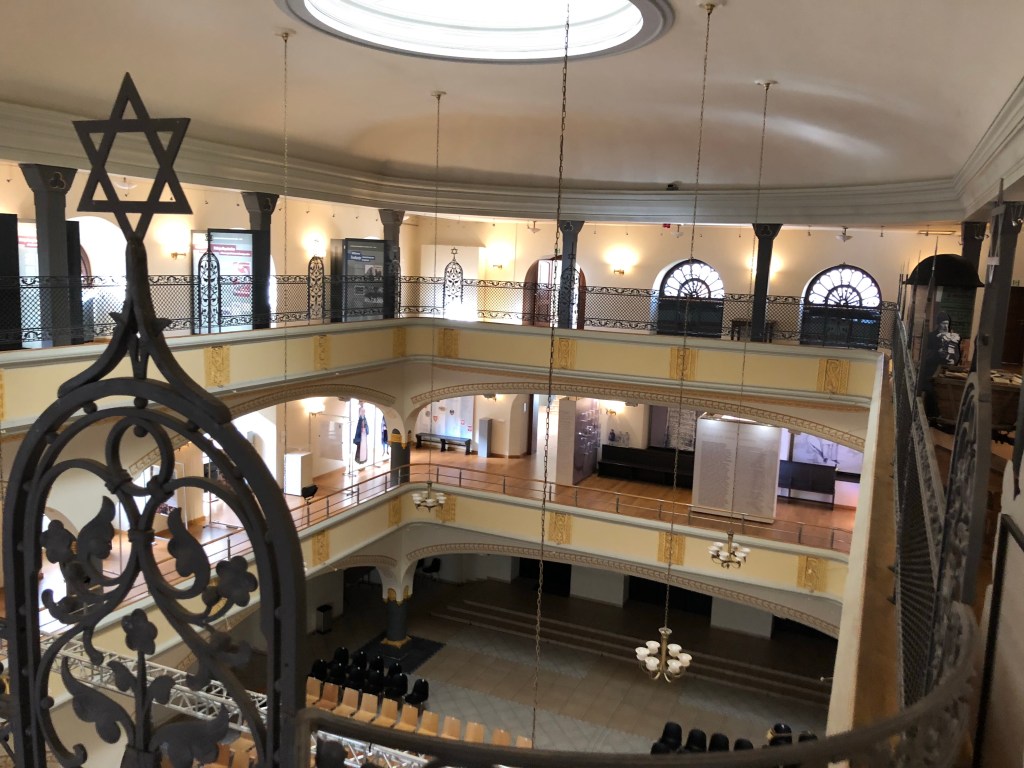
From the synagogue I headed to lunch. More pierogis. Last night’s were baked and didn’t quite hit the spot. Lunch’s were boiled and were better. I checked out a little more of Wroclaw.
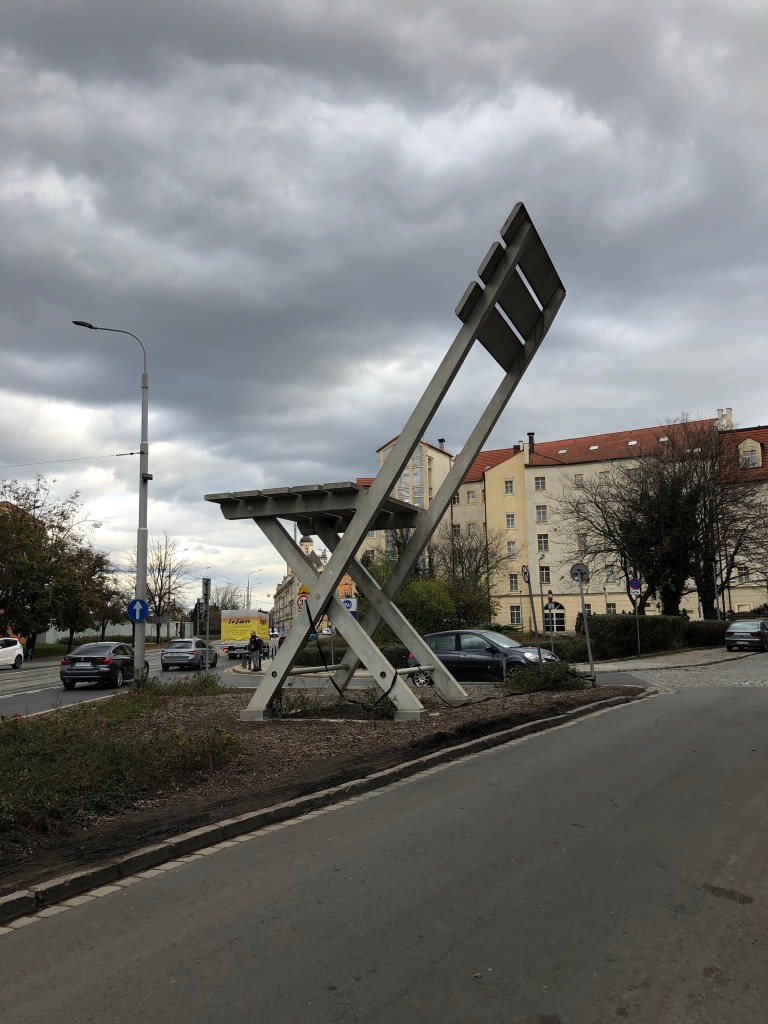
Nice place to sit 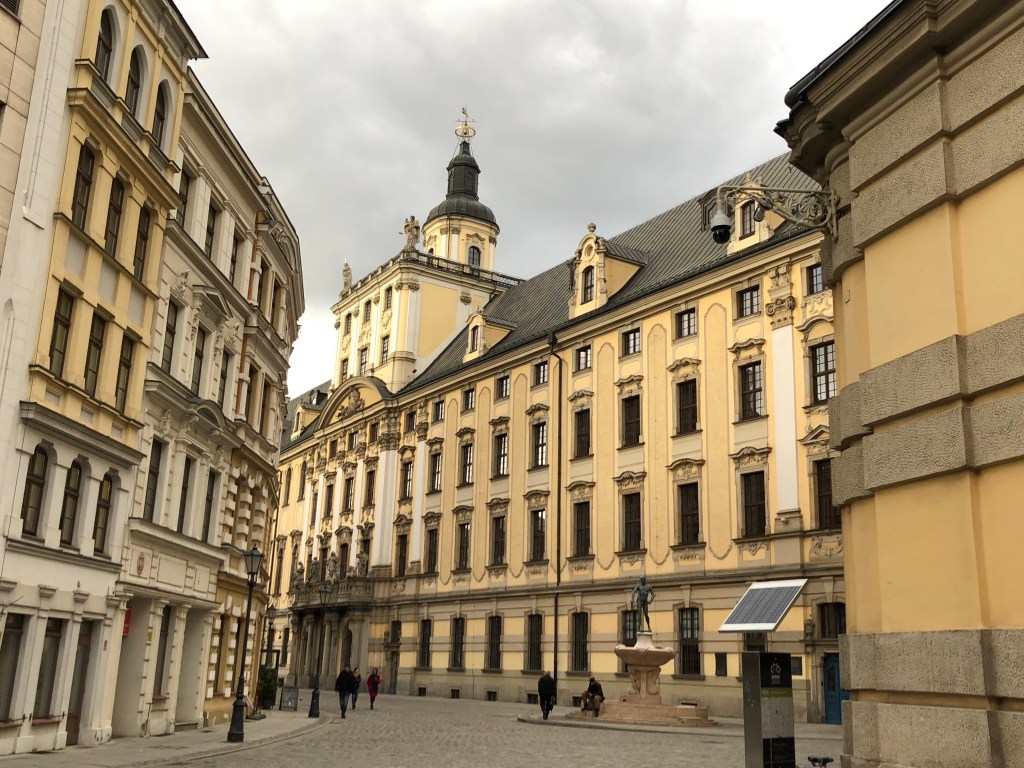
Fancy university 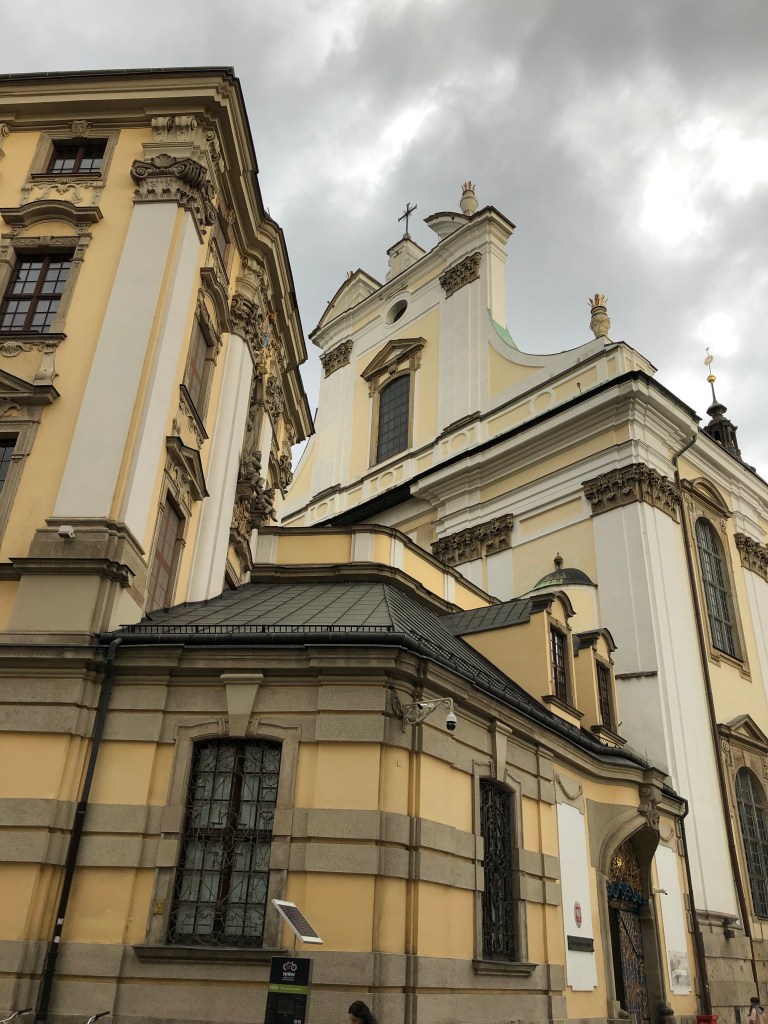
The university was monochromatic 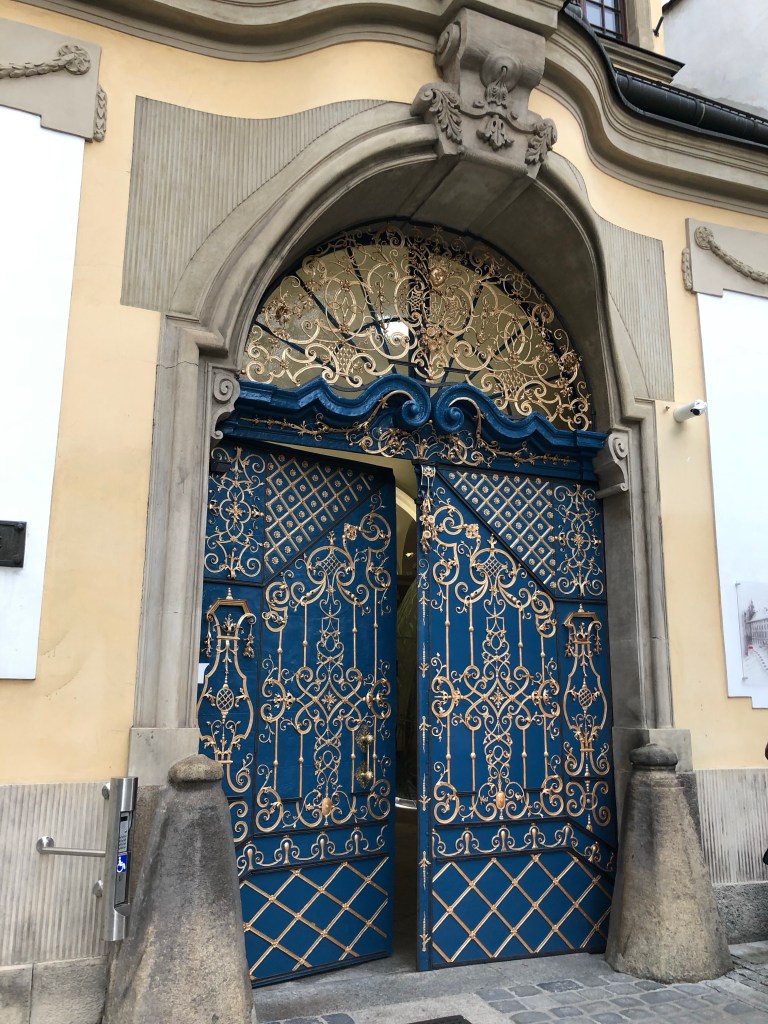
I’d like to emulate this front door if I ever own a house
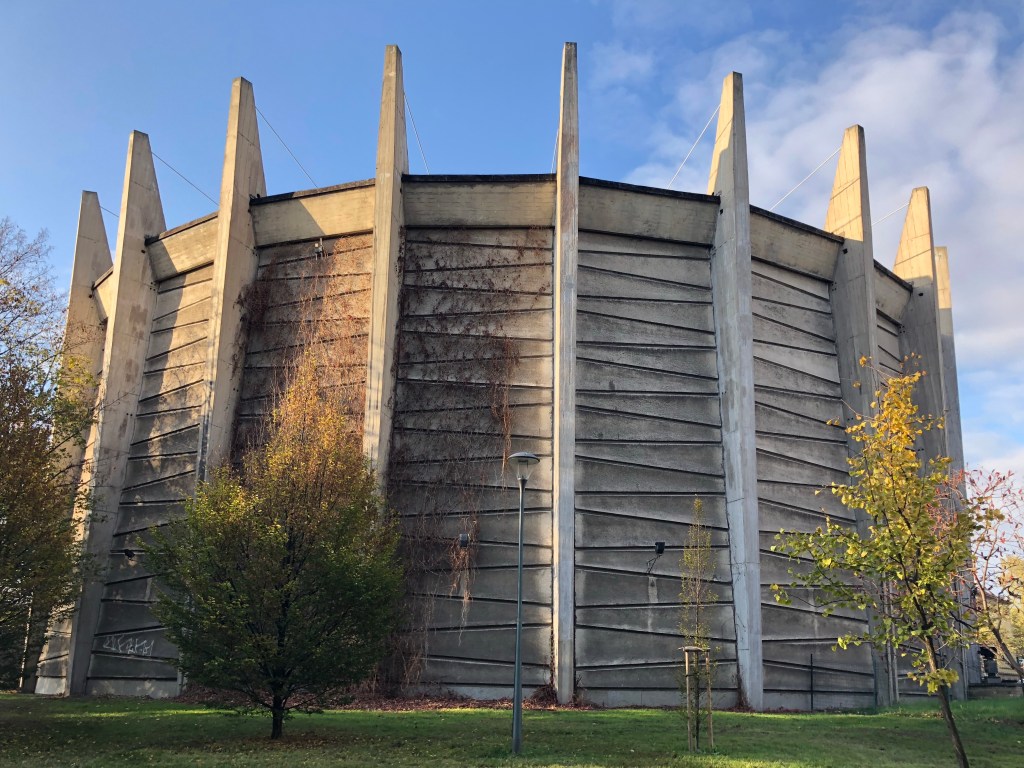
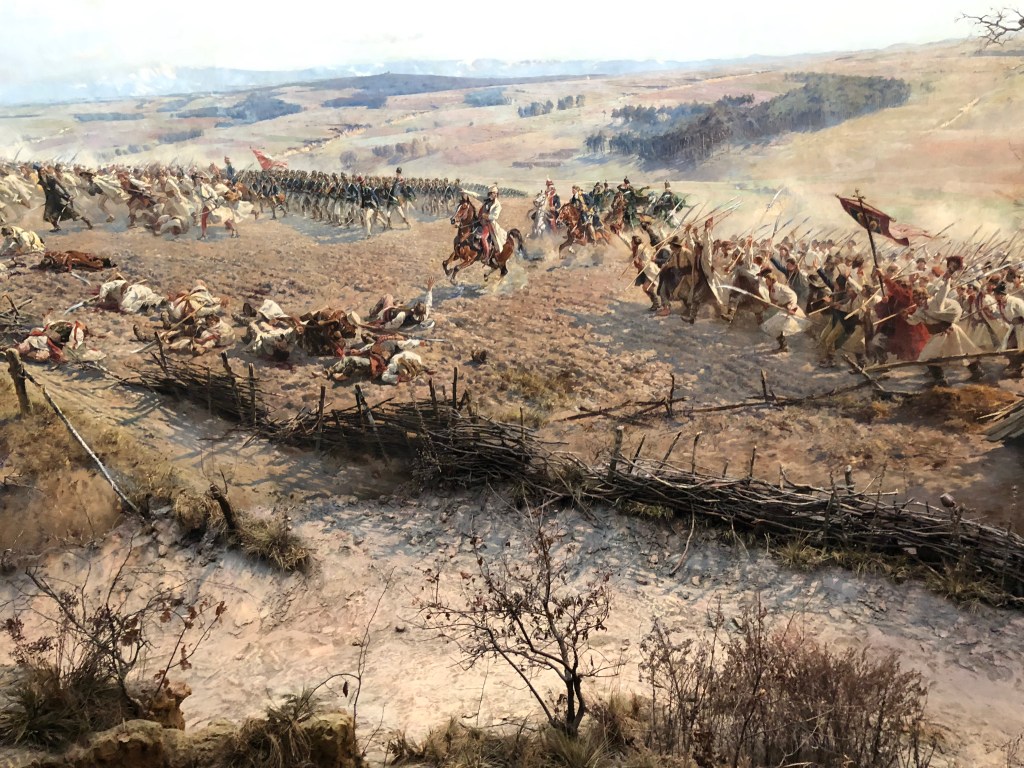
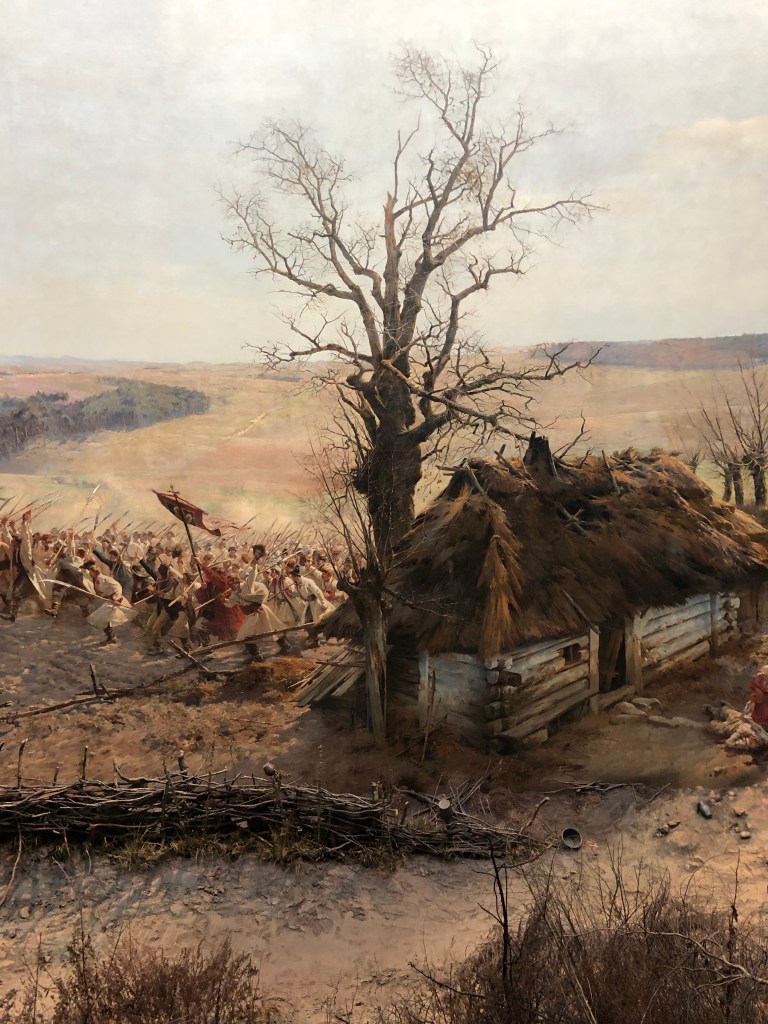
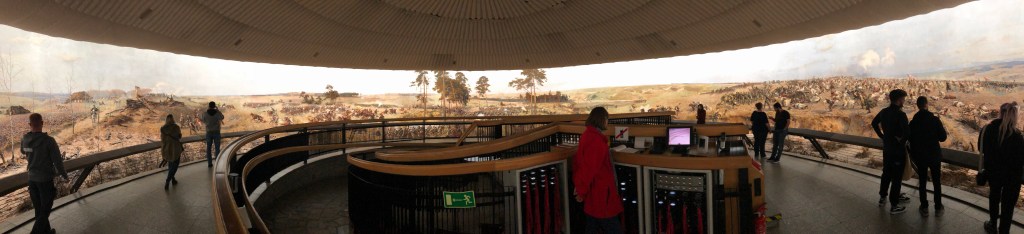
Then I went to one of the few sites catering to tourists, the panorama of the Battle of Raclawice. This painting is 15 meters tall by 120 meters long, and took a team nine months to complete in the 1890s. The battle was from Poland’s 1794 fight for independence from Russia. They won the battle but lost the war. Bostonians might recognize the name of the Polish leader, Tadeusz Kosciuszko.
Throughout history Wroclaw has traded hands between nations and dynasties, and the people most recently struggled with a communist regime in the 20th century. During this time, they began making playful public art, which included gnomes. Today there are 300+ bronze gnomes throughout Wroclaw, each roughly a foot tall. I lost count of how many I saw but would guess that it was 20-something. Here are a few of my favorites.
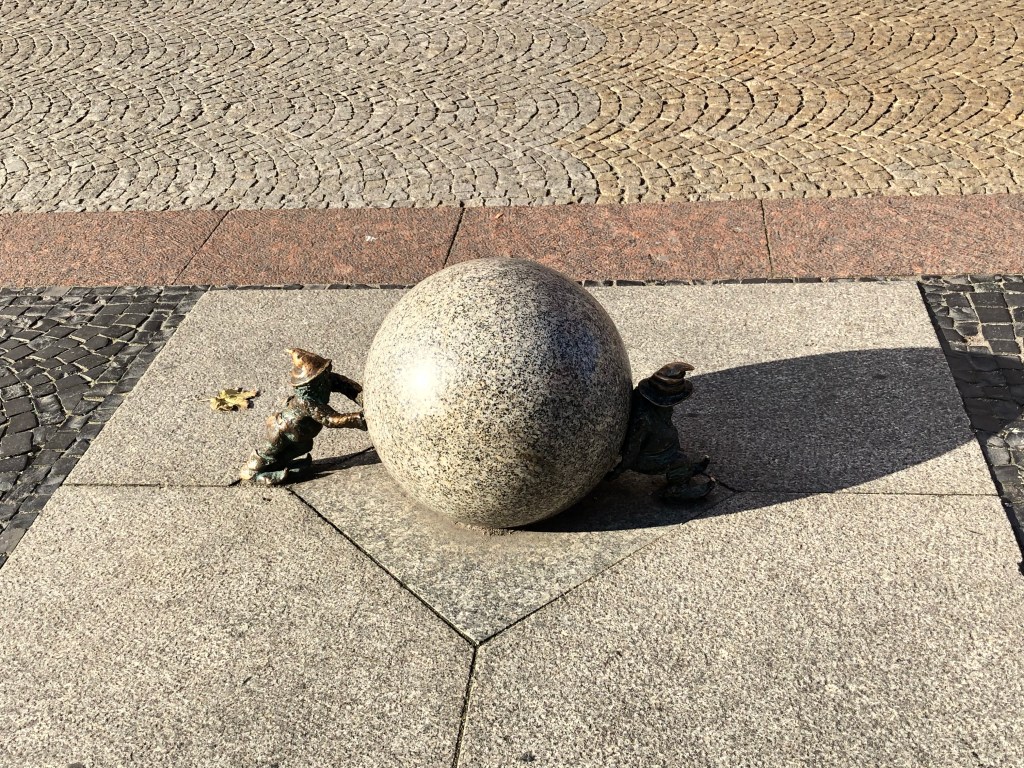
Just two gnomes and a ball 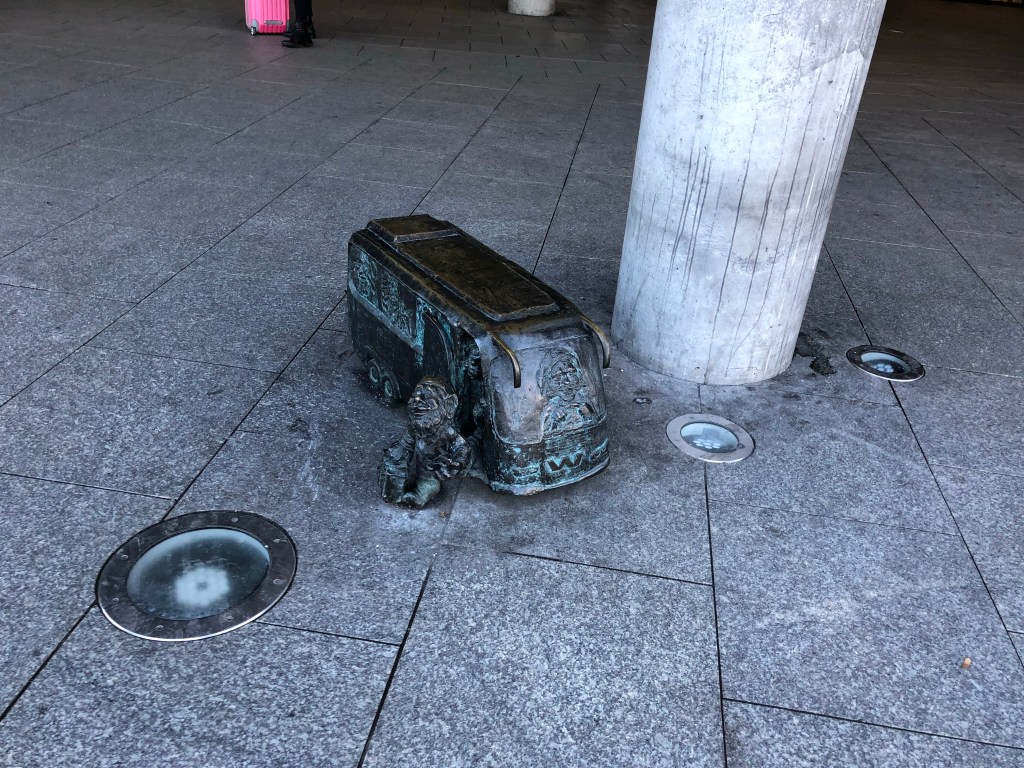
Outside the bus station 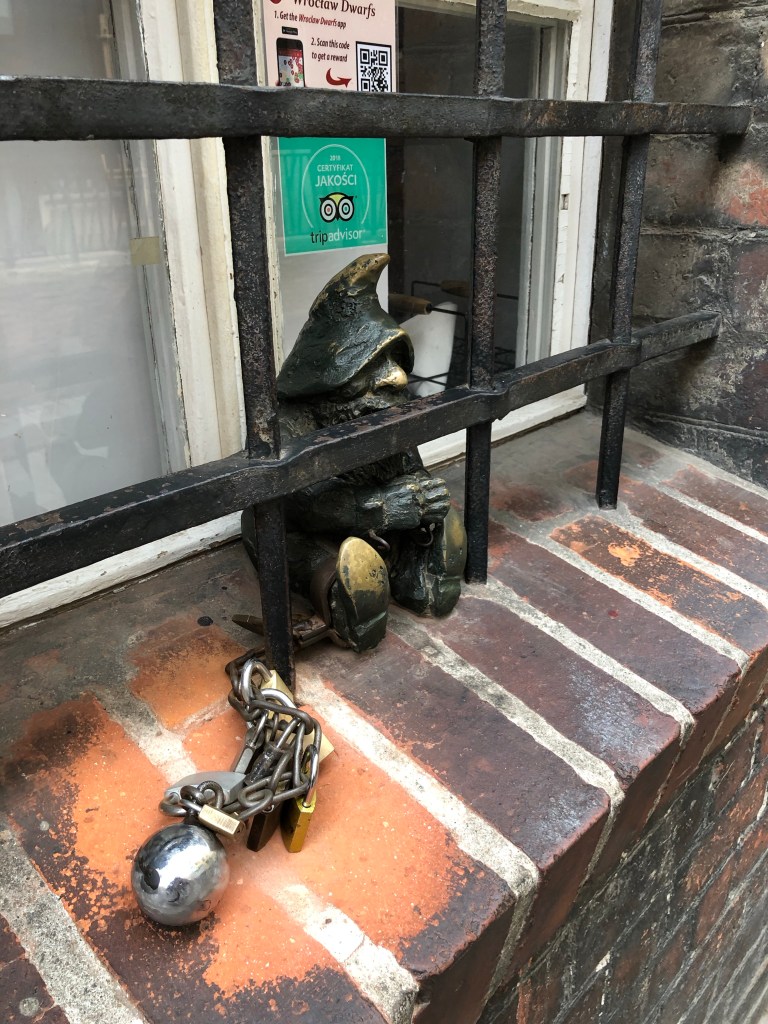
He’s been a bad gnome 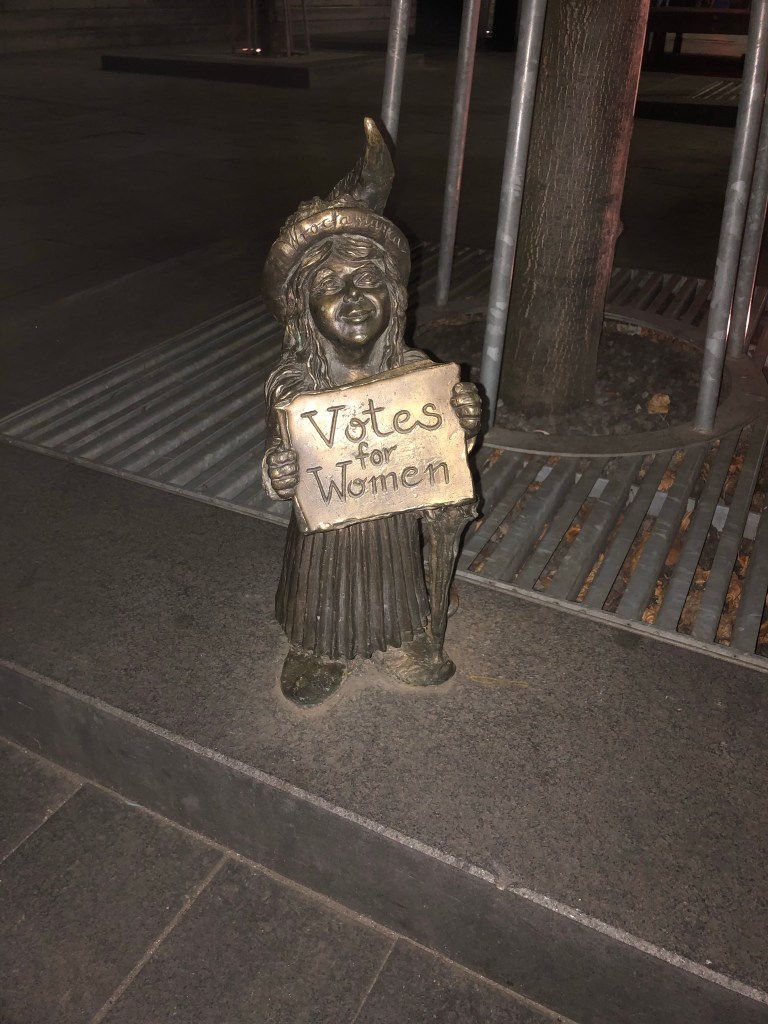
A gnome for suffrage 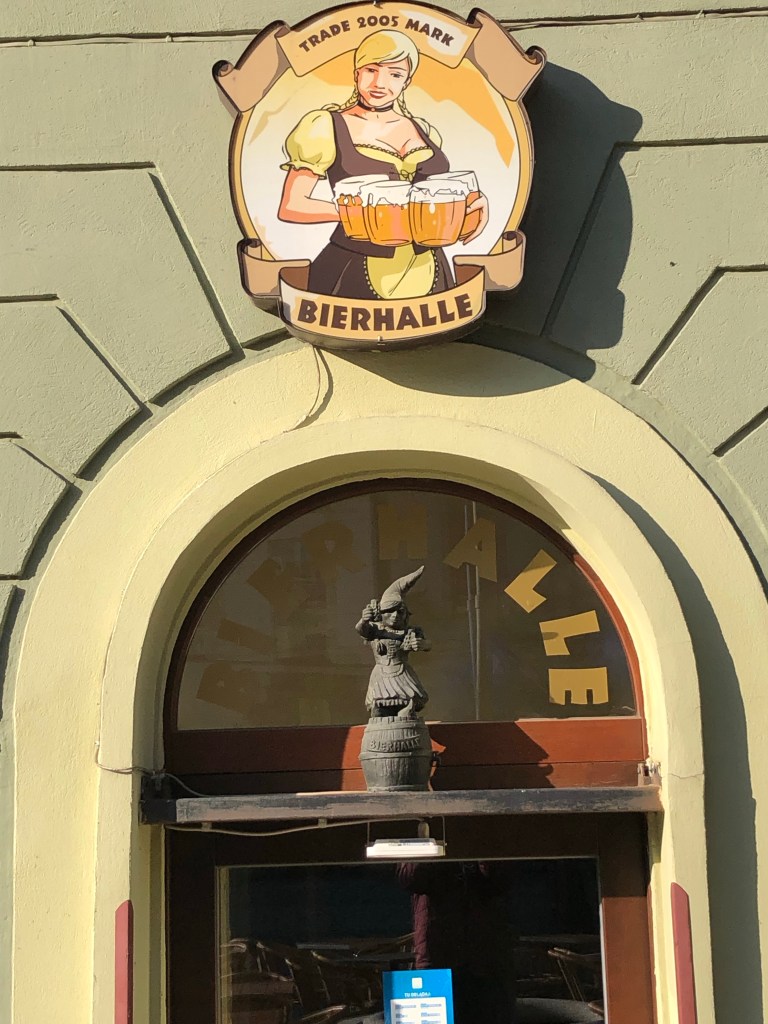
Gnomes come in the beer wench variety 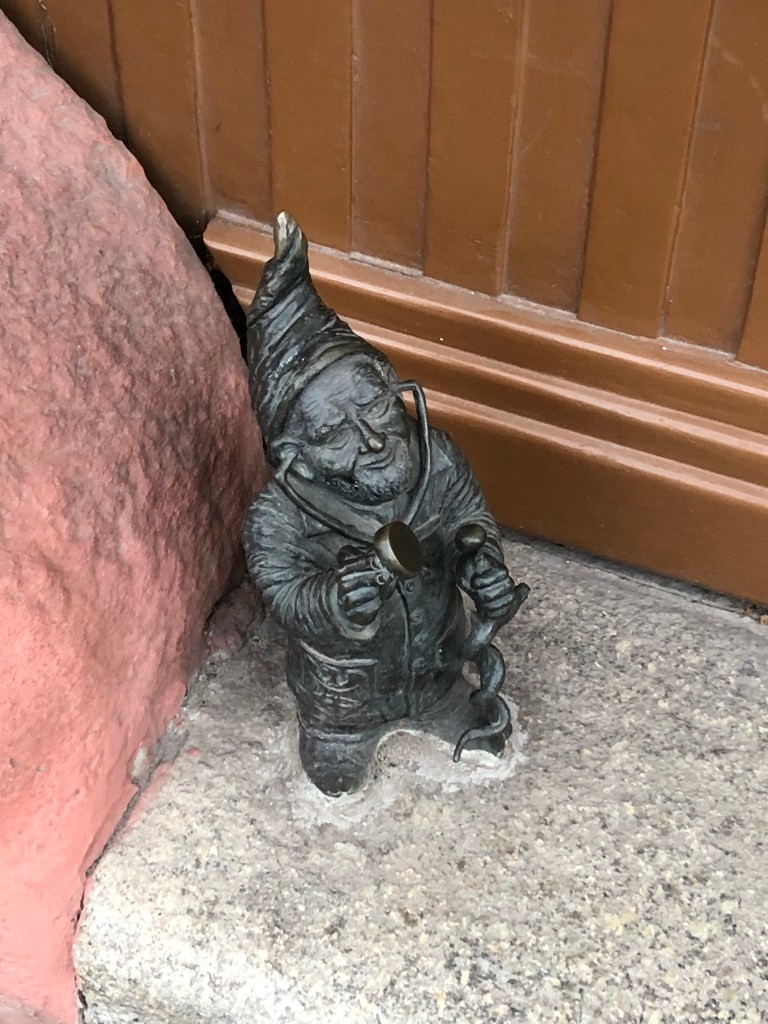
And of course there’s a doctor gnome out there
Wroclaw is referred to by some as mini-Krakow, and I can see why. Once I spent some time in Krakow my mental imagery of the two began to meld. But before I delve into Krakow, I had one other point of interest in Poland, and I knew this one would stink.
On Friday the 8th I visited Auschwitz, the largest Nazi Concentration Camp, and now an extensive memorial. I I was stoutly mentally prepared to have my insides ripped apart through this visit. It was a lot of things; depressing, despairing, nauseating, infuriating, horrifying, and harrowing. Seeing my name and those of friends and family on pieces of haphazardly piled luggage really pulled at my heartstrings. Meanwhile I can’t put into words what I felt walking through a gas chamber and crematorium. And throughout it all, I continually felt grateful for being born in the time and place that I was – gratefulness which was also wrapped up with a sense of guilt.
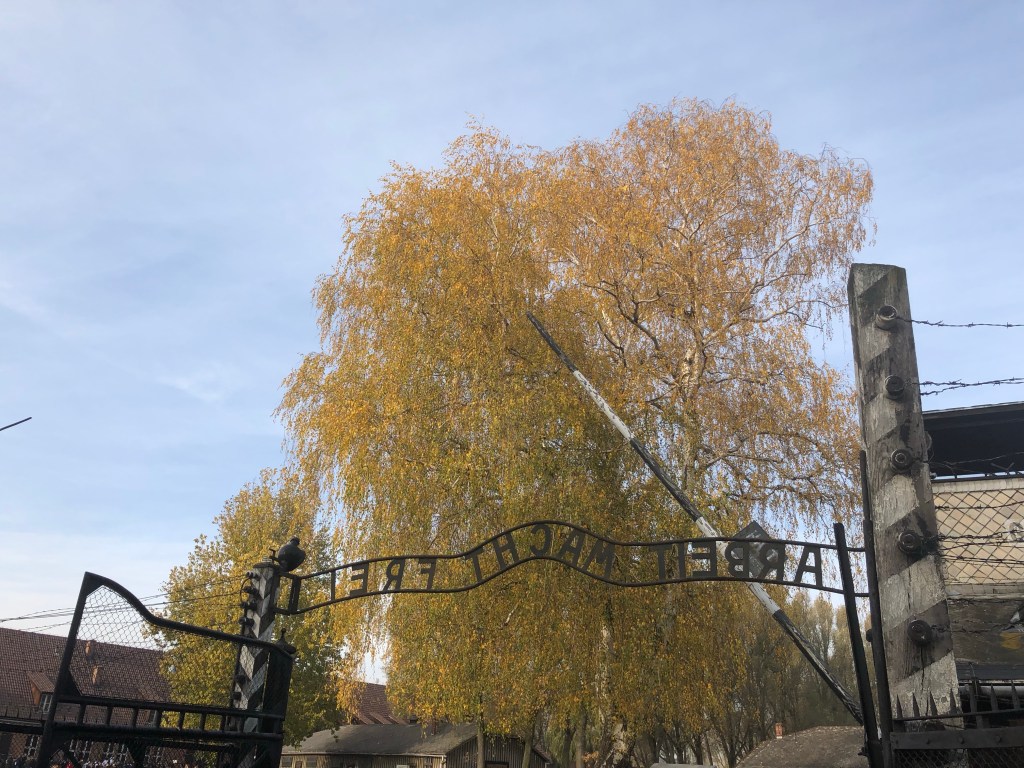
This journey was meant to be one of exploration, growth, and reflection. But I also wanted to enjoy it, not just experience it. So after visiting Auschwitz, I put the broken pieces of my psyche back together, and was able to enjoy my last stop in Europe through some of what Krakow has to offer.
Krakow has much to offer. Castles, parks, mounds, shopping, museums, nightlife, architecture, universities, cuisine, and so on. I didn’t see much sun while I was here, but the morning fog made for a good eerie setting to wander through the city and by the river.
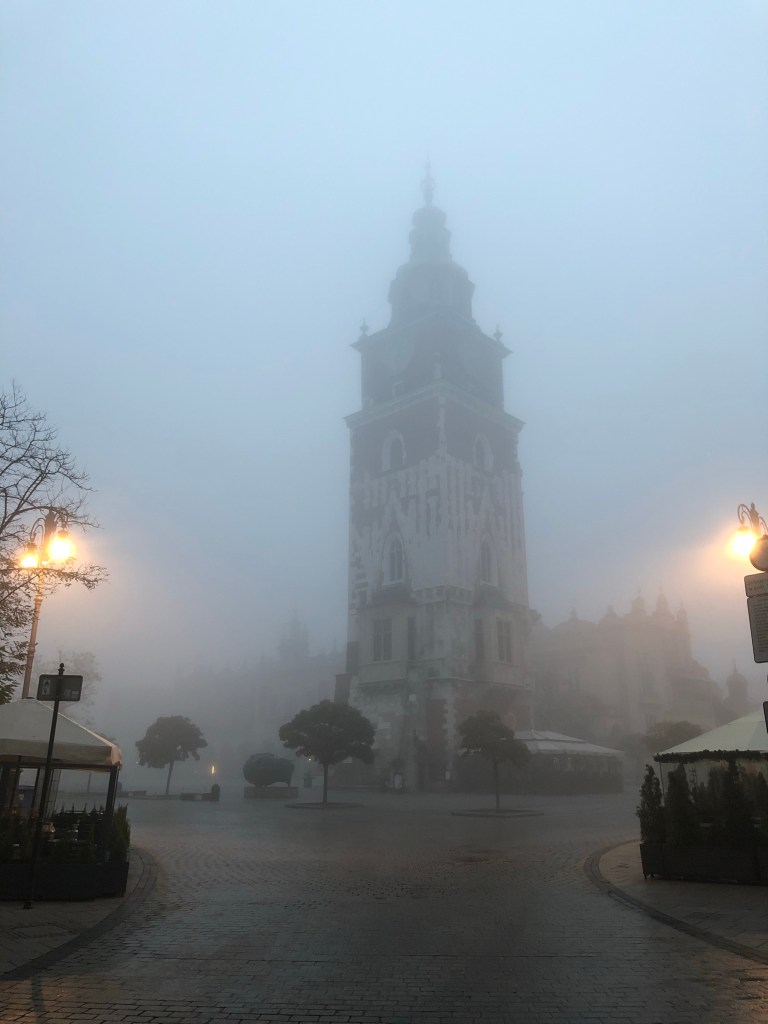
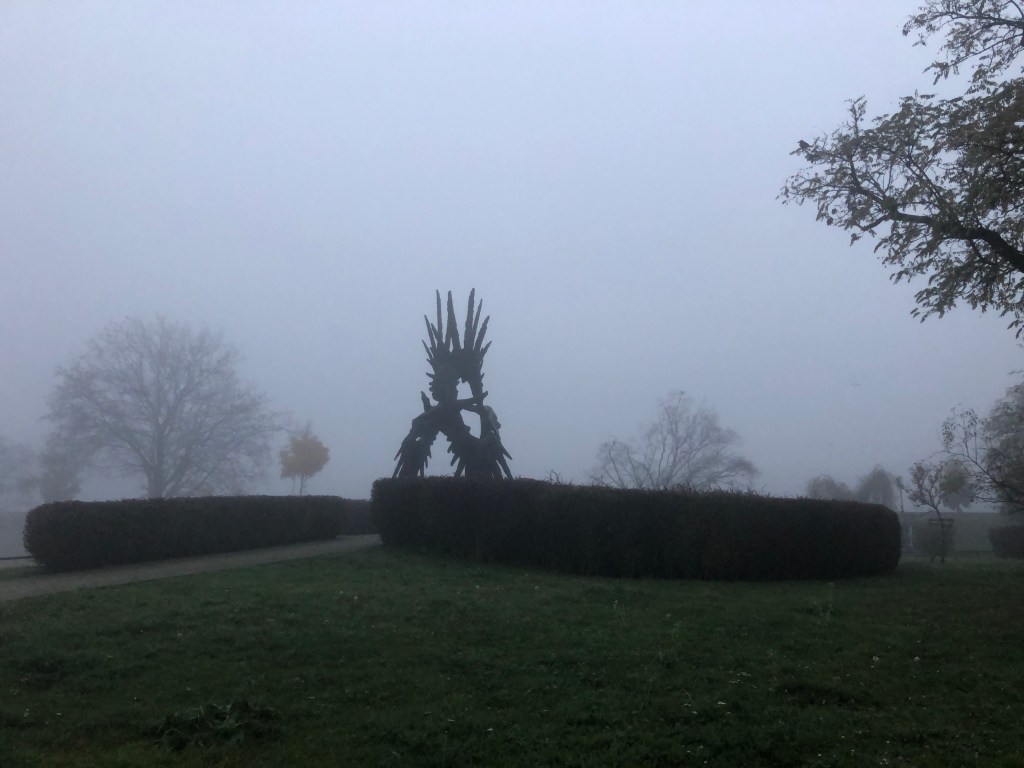
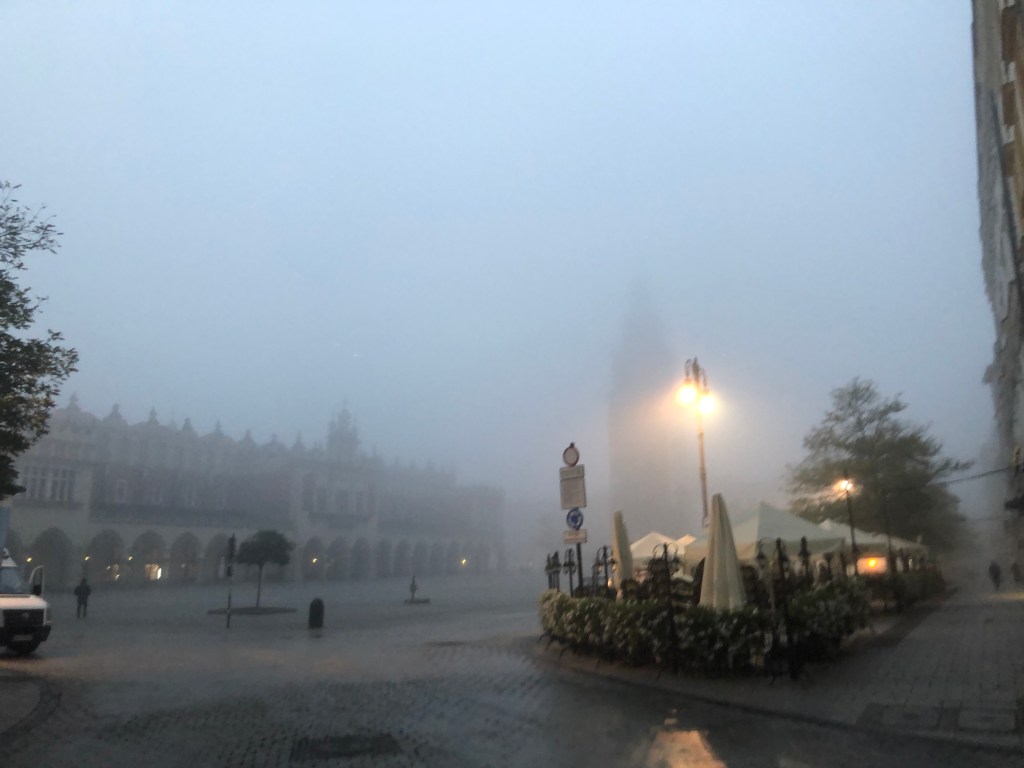
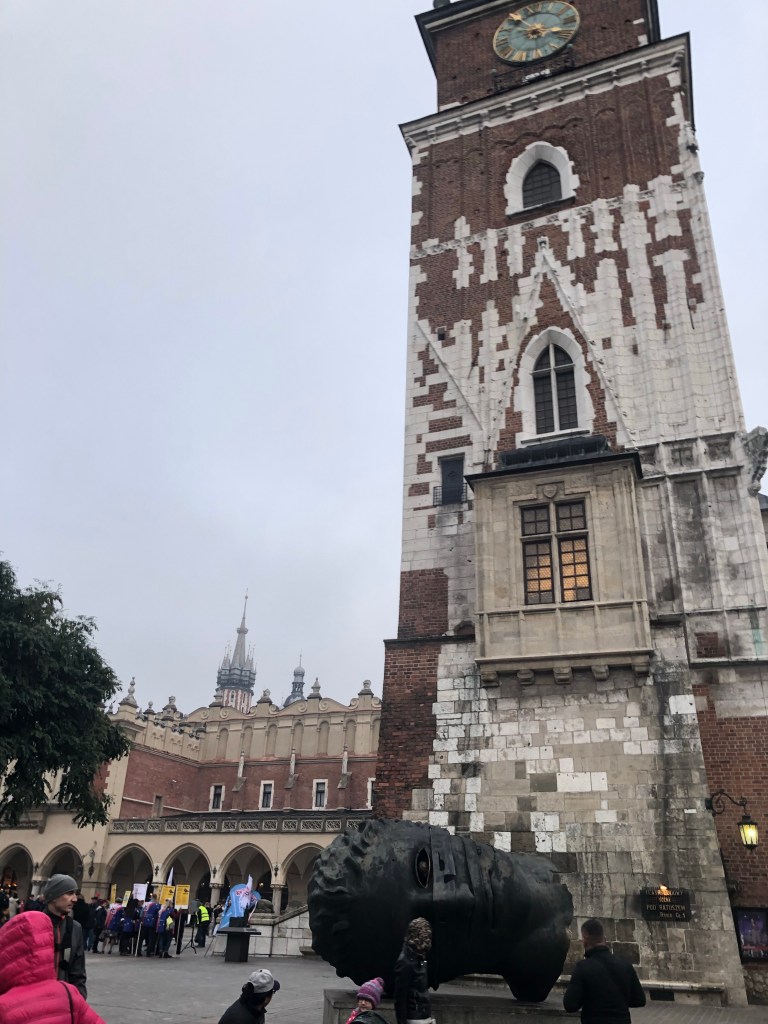
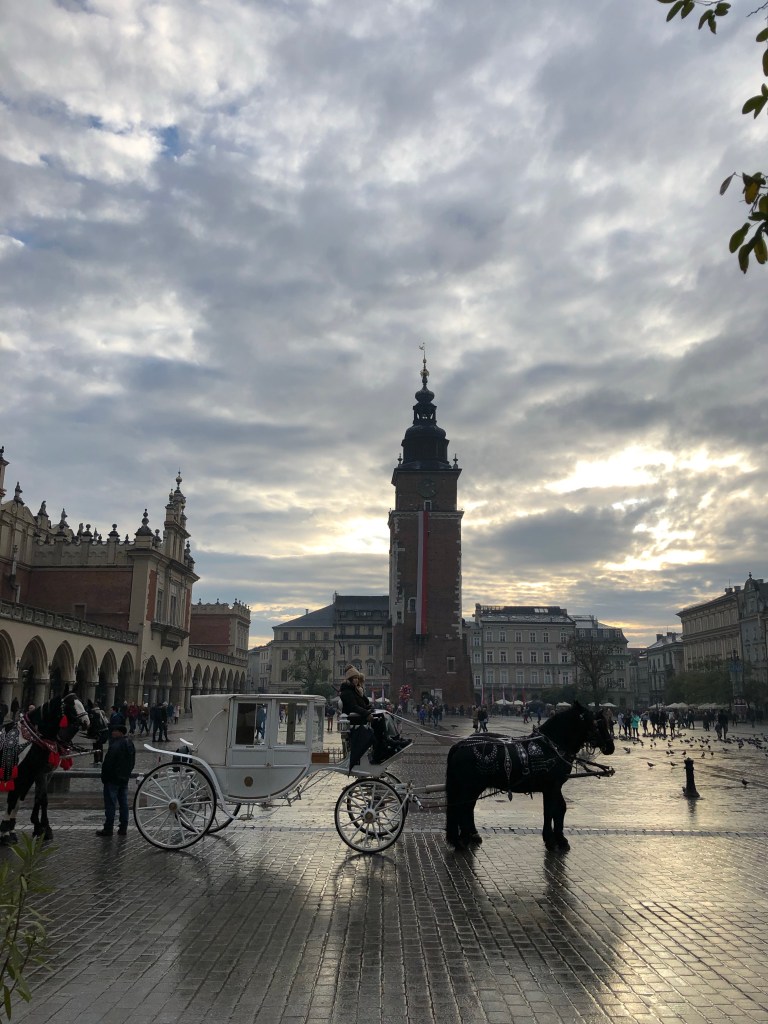
City square 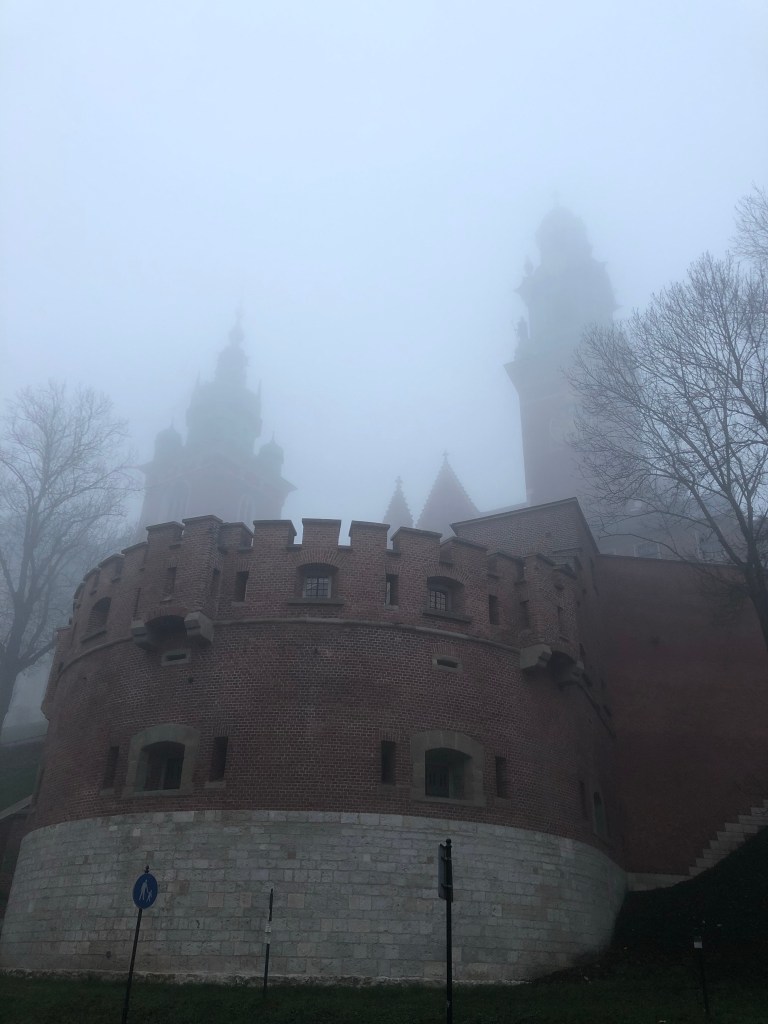
Krakow Castle
My first of three nights in Krakow, I lingered mostly around the main square (very similar to Wroclaw’s), where was overwhelmed by invitations to cabaret shows. As I walked through Krakow’s square the following nights I was repeatedly hounded by both young men and women promoting cabarets. From this I drew two conclusions; as a young guy I must be their prime demographic, and that they must work on commission. There were far too many to be on payroll, whether they were promoting one club or many. I found it easier to ignore them when they didn’t speak English. Many started in Polish, some switched to English when I was non-responsive. It was fun responding with a “nein” to see if they pivoted to German.
I spent parts of 4 days here, but only one full day that I spent entirely in the city. My biggest activity this day was a walking tour of the Jewish Quarter. Krakow had a checkered history with it’s Jewish people. What’s now the Jewish Quarter was once the island of Kazimierz (named for the Polish King, a.k.a. Casimir the Great in the 14th century). Now a contiguous to the old part of the city, the neighborhood has lots of restaurants, bars, young people, with Jewish history interspersed. Before World War 2 there were about 68,000 Jews in Krakow. 65,000 perished in the Holocaust. Now there are about 700.
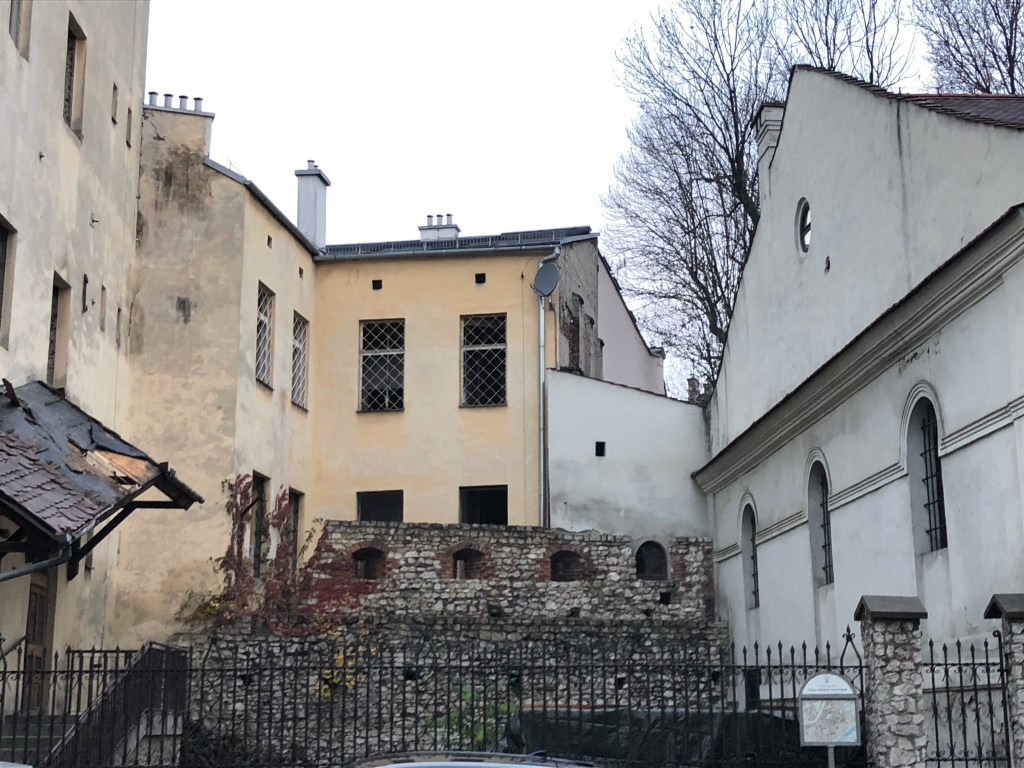
Original wall fortifying the Jewish Quarter within Kazimierz (once a city within a city) 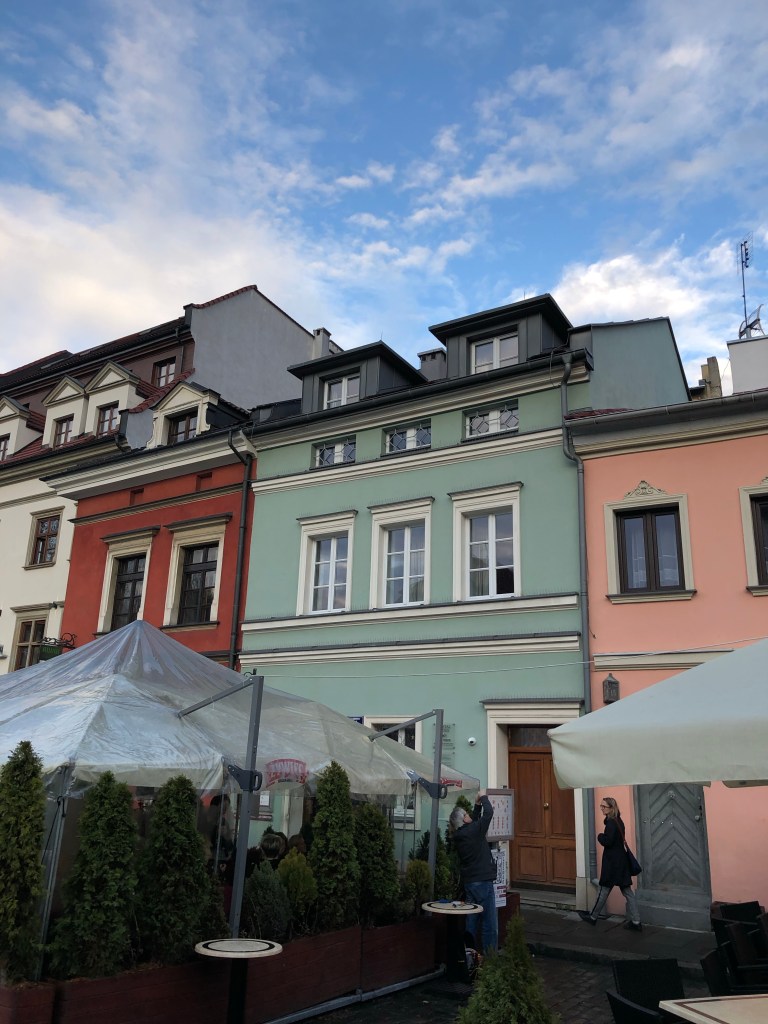
Helena Rubenstein’s house 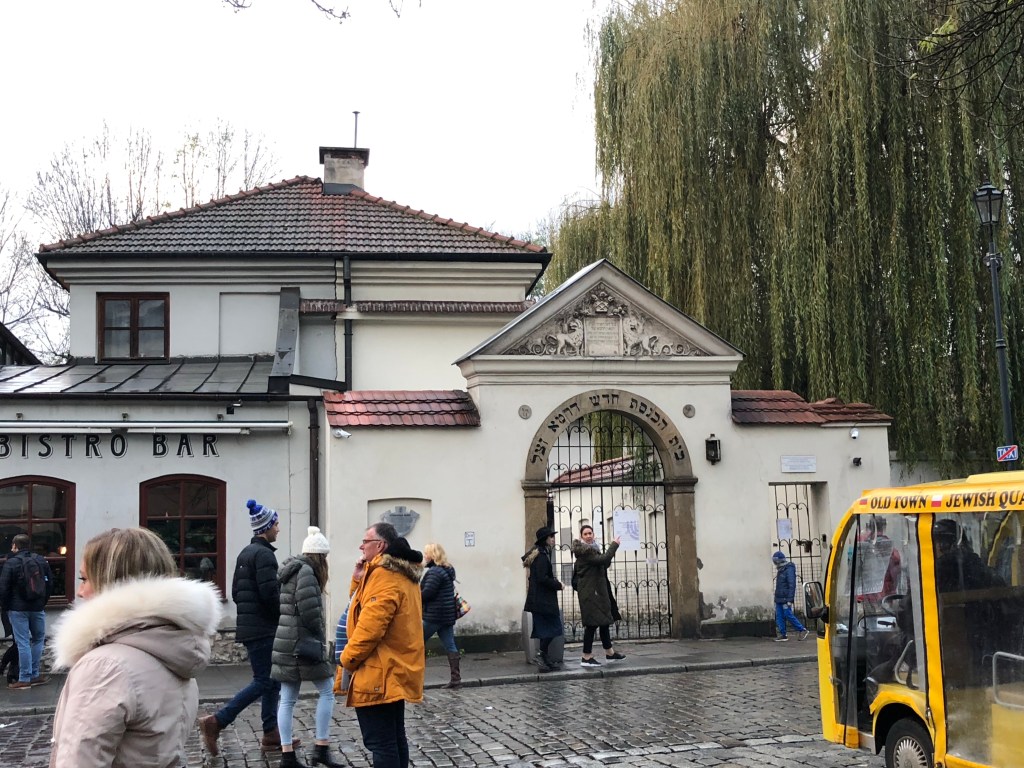
The only active synagogue remaining 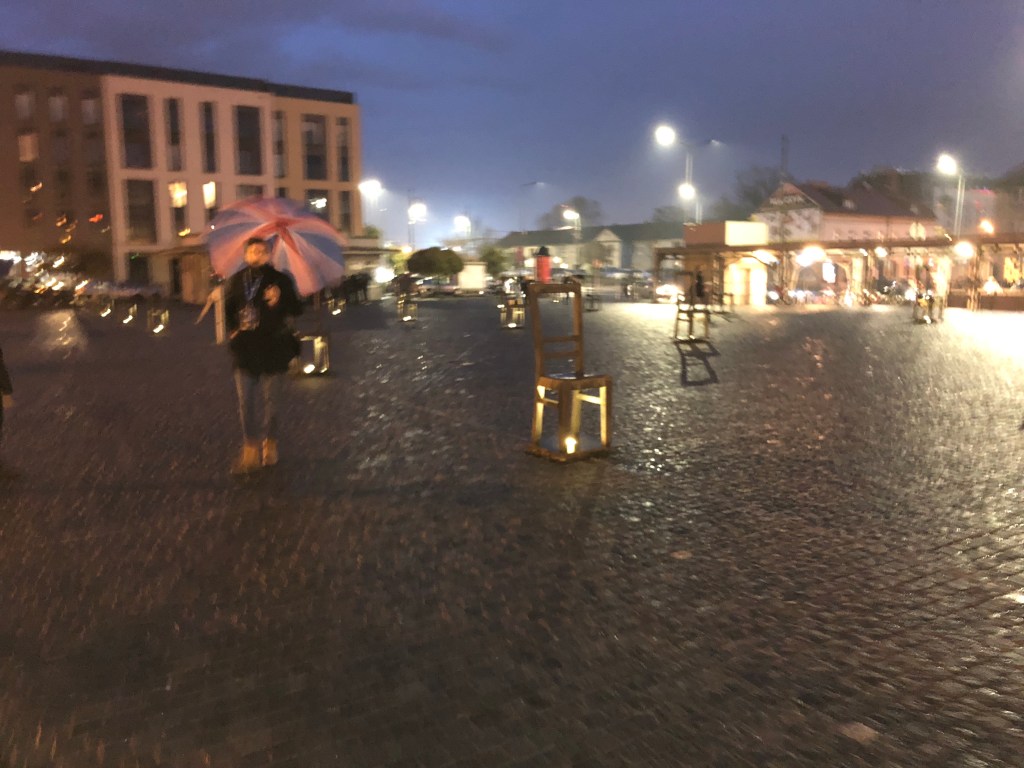
65 chairs in a plaza in the Jewish Ghetto, each representing 1,000 victims of the Holocaust 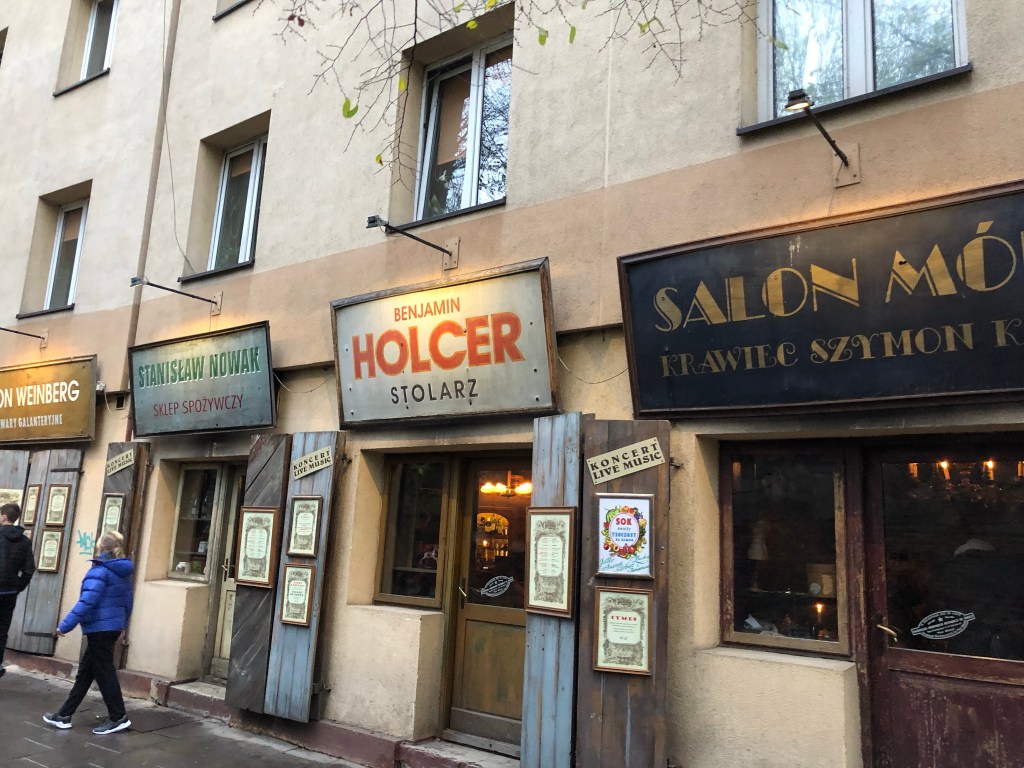
Original prewar signs 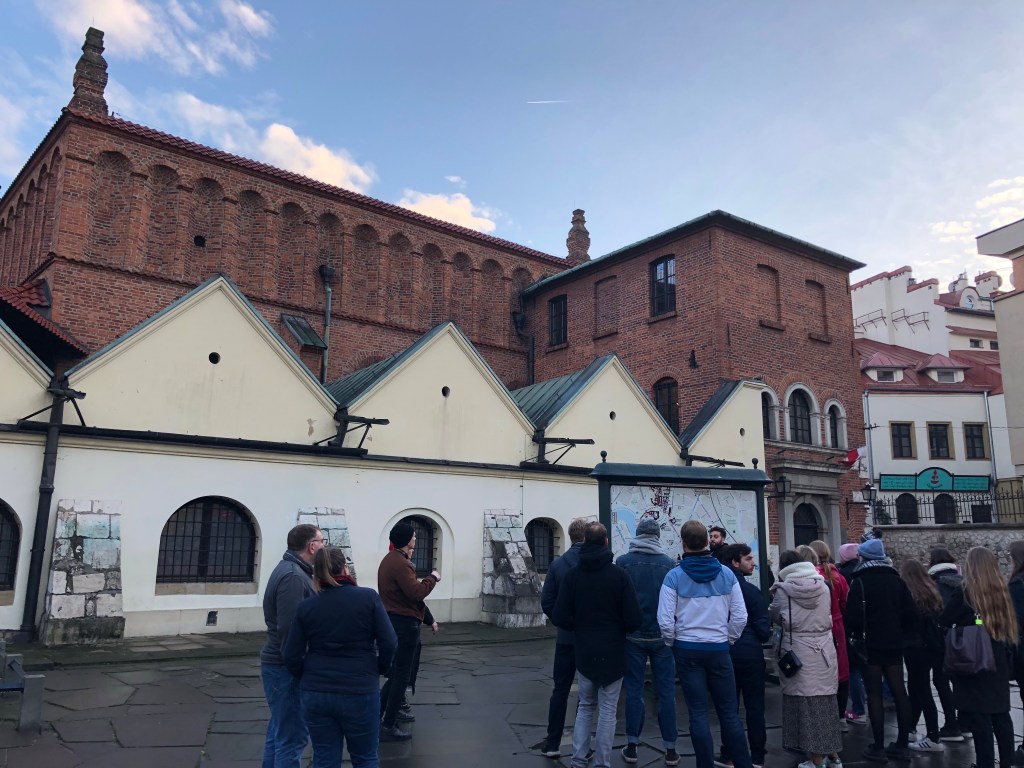
The original synagogue (brick is main building, white is where women prayed)
I wanted to get a small taste of the Krakow nightlife, but wasn’t ready to go all in on the club scene as a solo English speaker. I didn’t try too hard to recruit drinking buddies from my hostel, so I joined a Friday night pub crawl which was mostly foreigners. The two most memorable people here were the first two I met, Jay, a UMass Boston alum and American soldier stationed in Italy, and Leo, a Brazilian working in Milan. Saturday I took it a little easier, and after dinner, got some flavored vodka, scoped out another university, and checked out the Dolnych Mlynow neighborhood, a trendy bar scene.
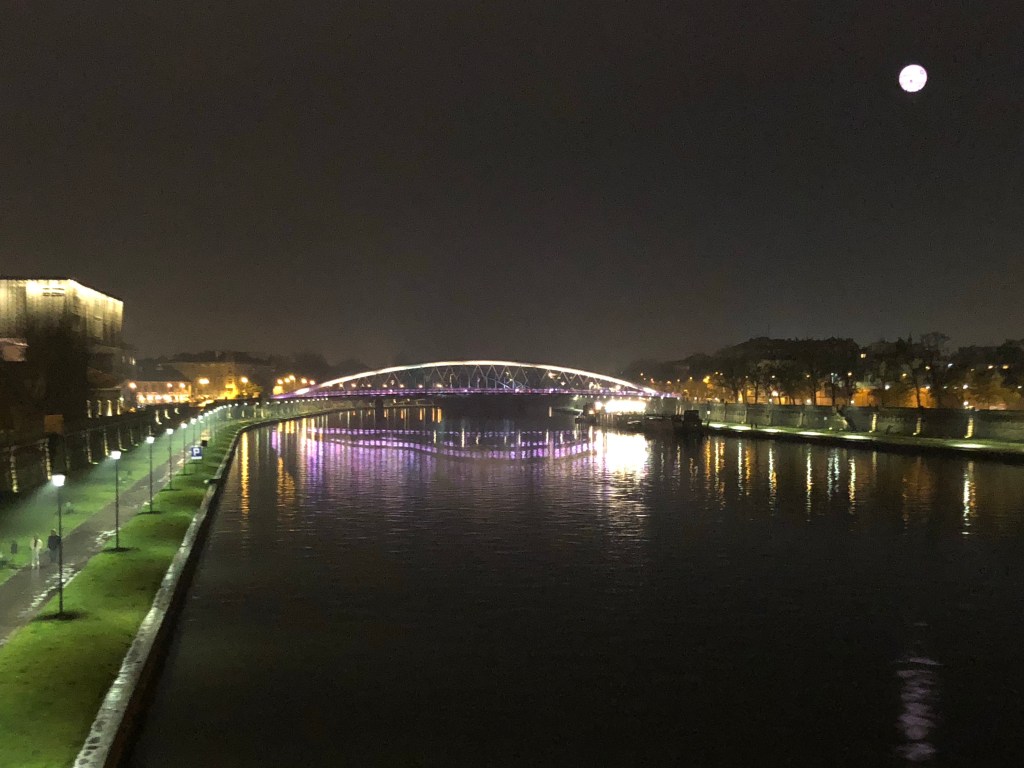
Some scenes from Krakow at night 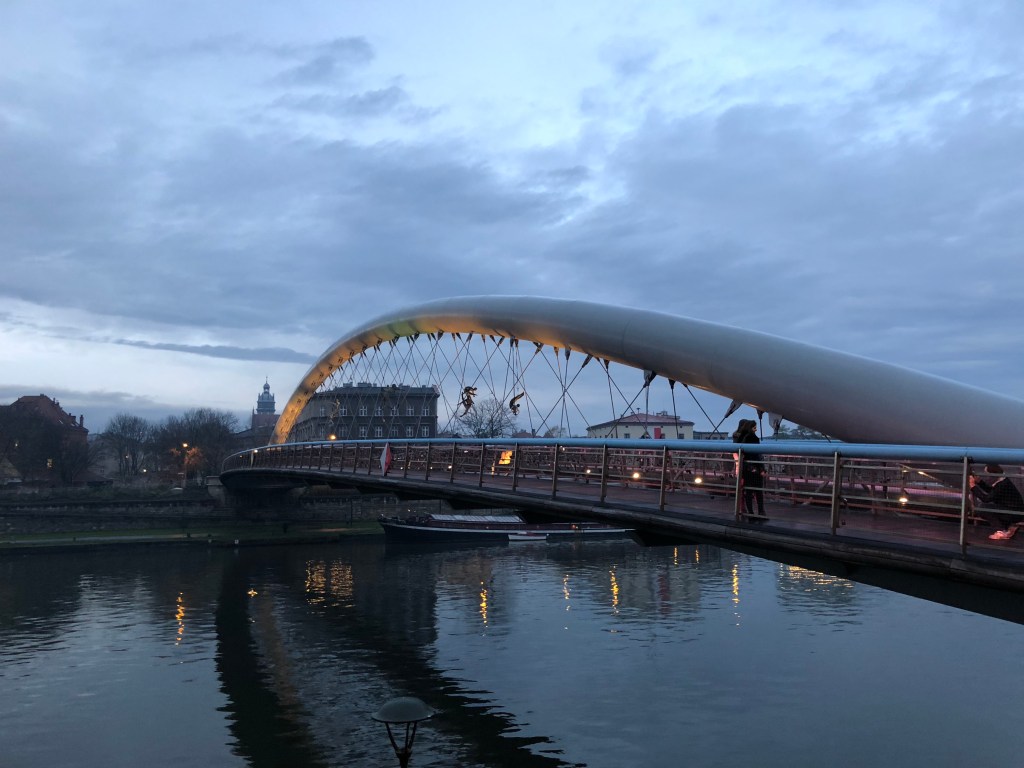
This bridge was neat 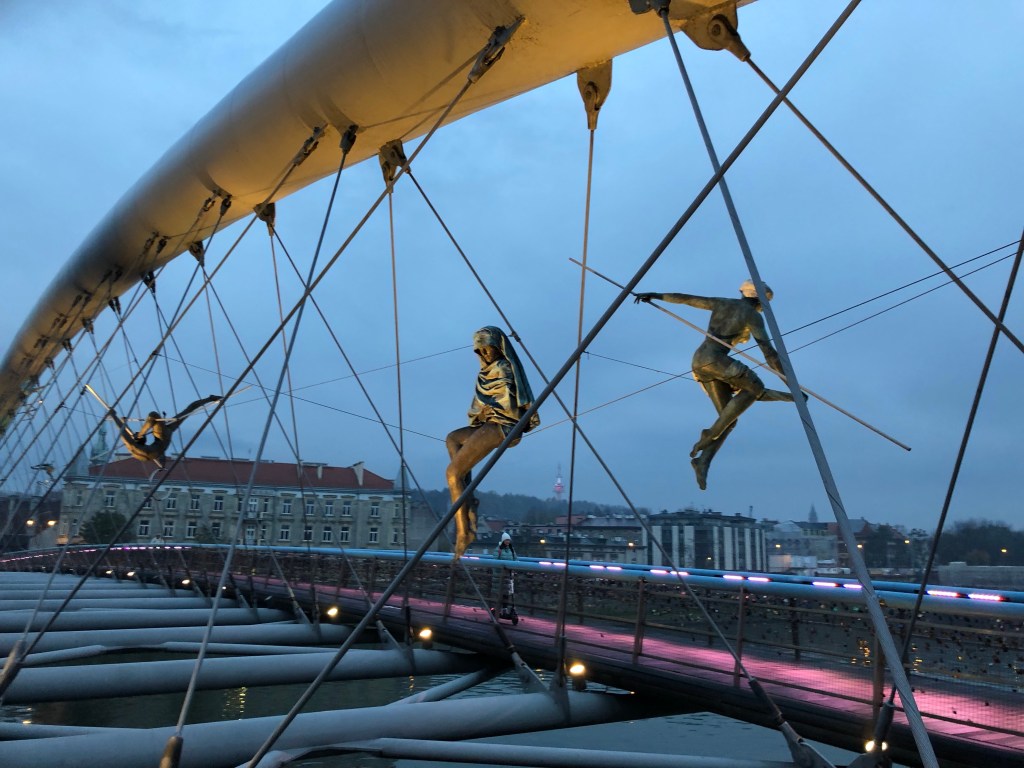
with acrobatic sculptures on wires that wiggled 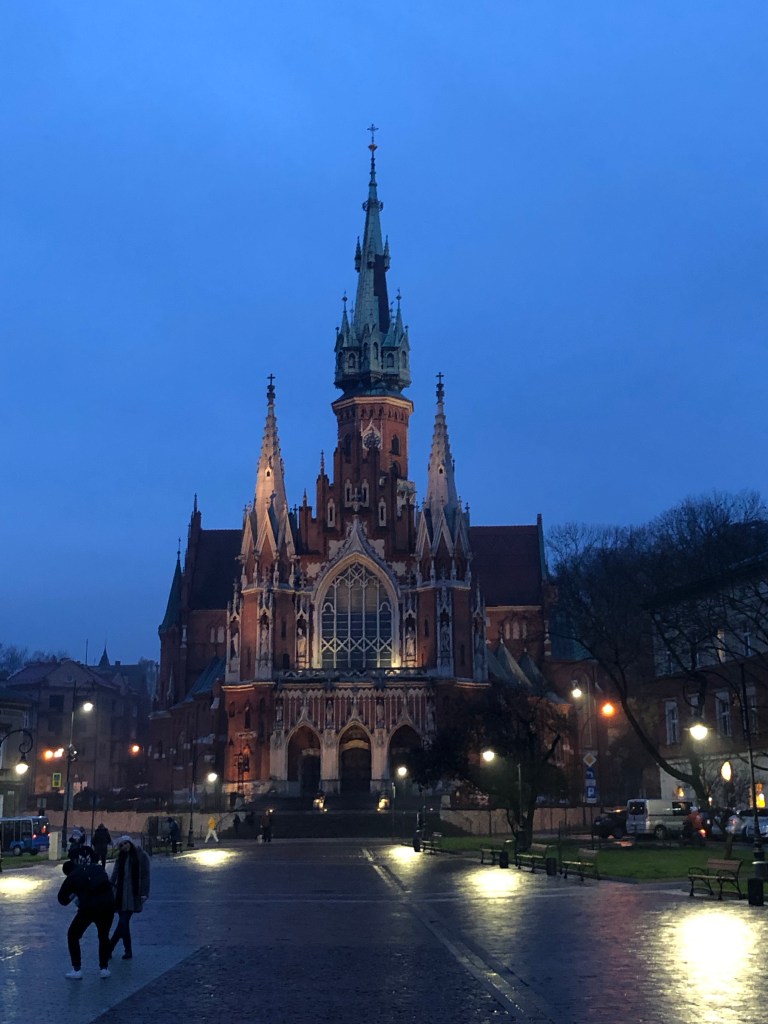
St. Josef’s maybe?
I enjoyed Krakow, and felt that regardless of how far from the center of the city I walked, I continued to find new cathedrals and plazas and pleasant parts of the city with interesting architecture. I also checked out two universities. If you’re wondering why I like to visit these, it’s threefold. First is my professional curiosity – I’ve spent a lot of time working at and designing these things, so I like to see what’s out there. But there’s more. I still have wifi access, which is good on most university campuses including international ones through what’s called eduroam. And lastly, their buildings are usually unlocked, no one questions you for being in them, and they usually have clean bathrooms. A free clean bathroom is a luxury, especially in Europe.
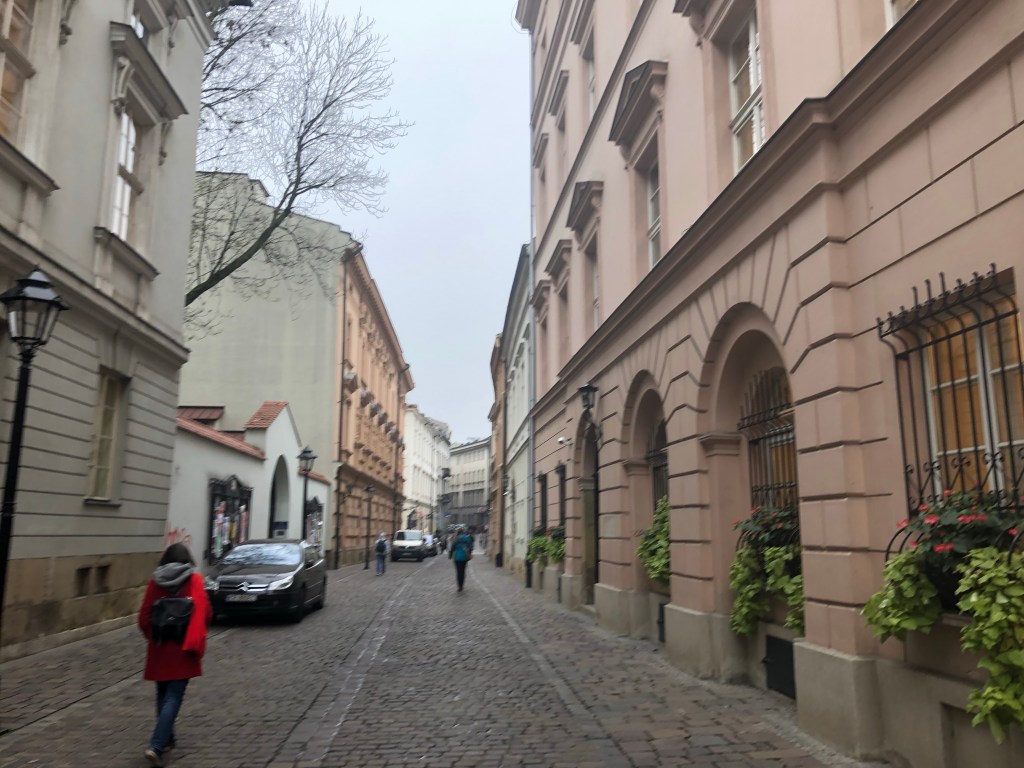
I saw one university by day 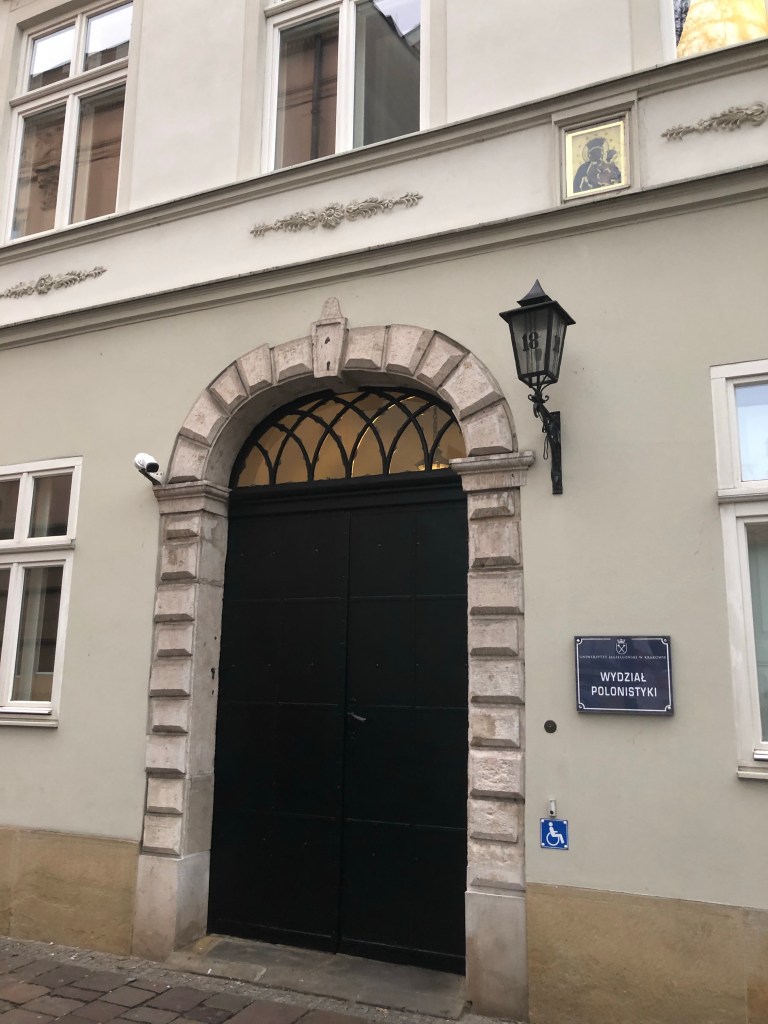
It was old, but in somewhat nondescript local looking buildings 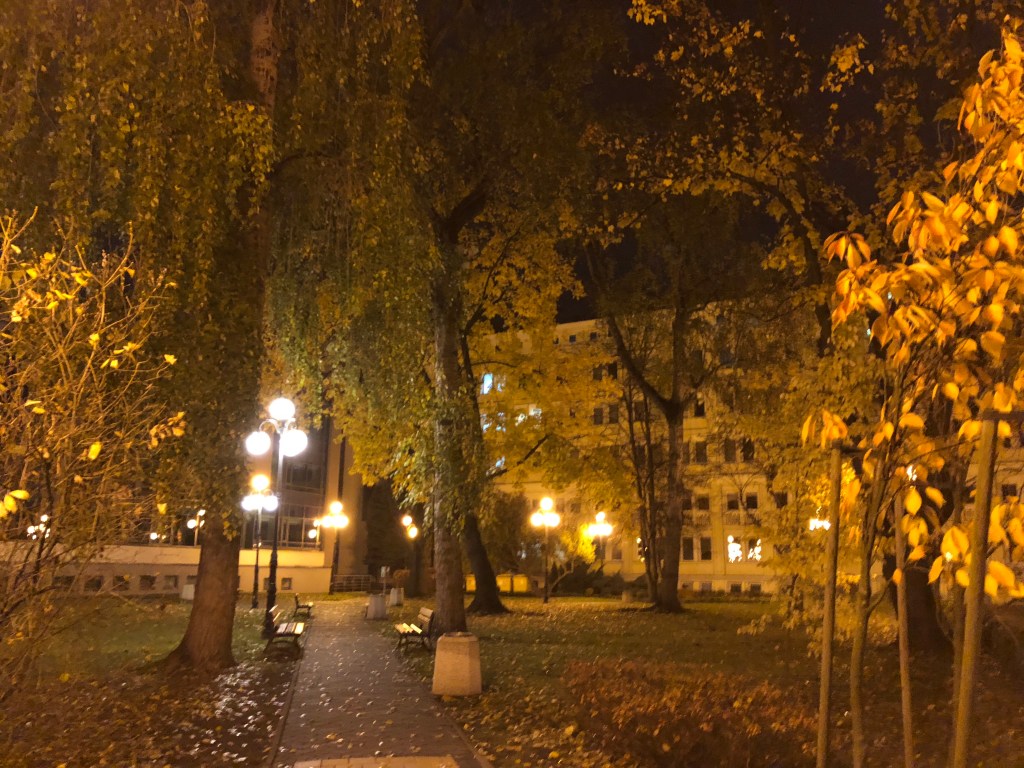
And another university by night, more modern, less photogenic, but with good green space
I could’ve easily spent another couple of days here. But on Sunday I flew out. As I made this post I realize I didn’t take too many photos in Krakow, but here are a few final ones that sum it up.
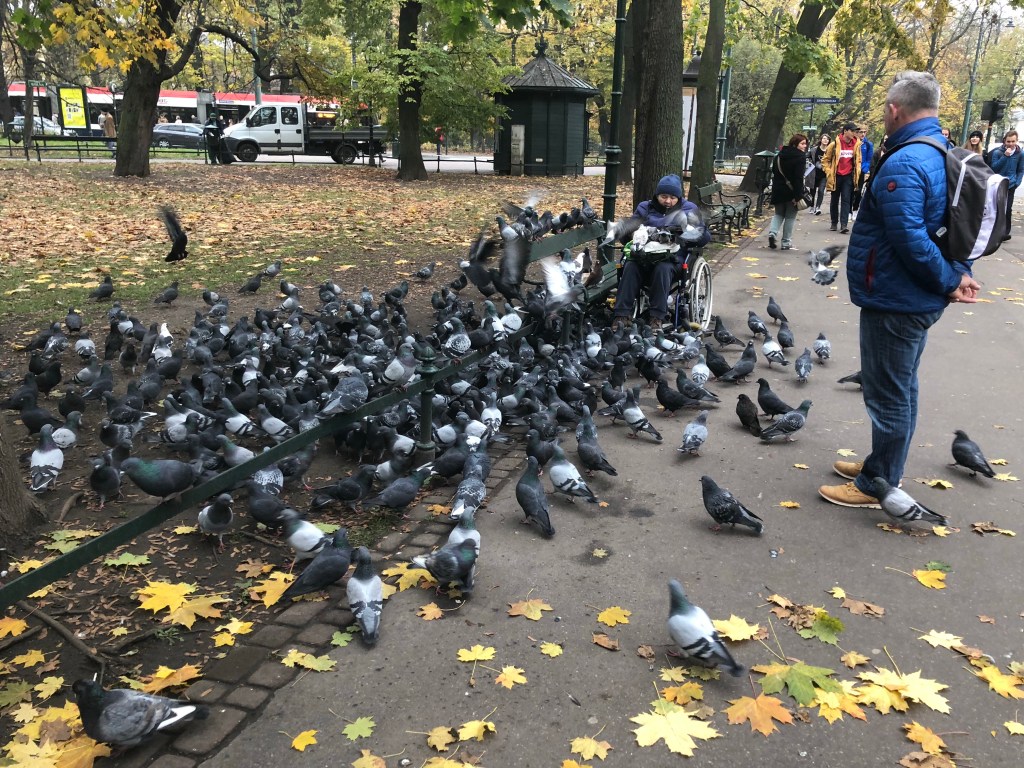
So many pigeons here 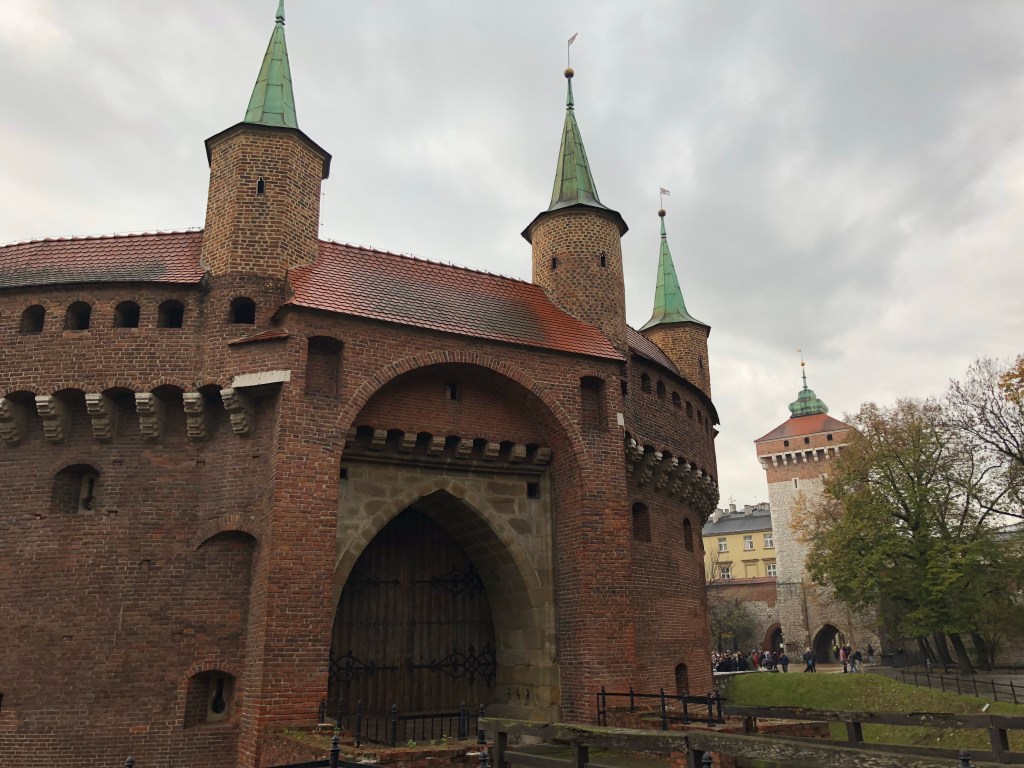
Old city wall gate 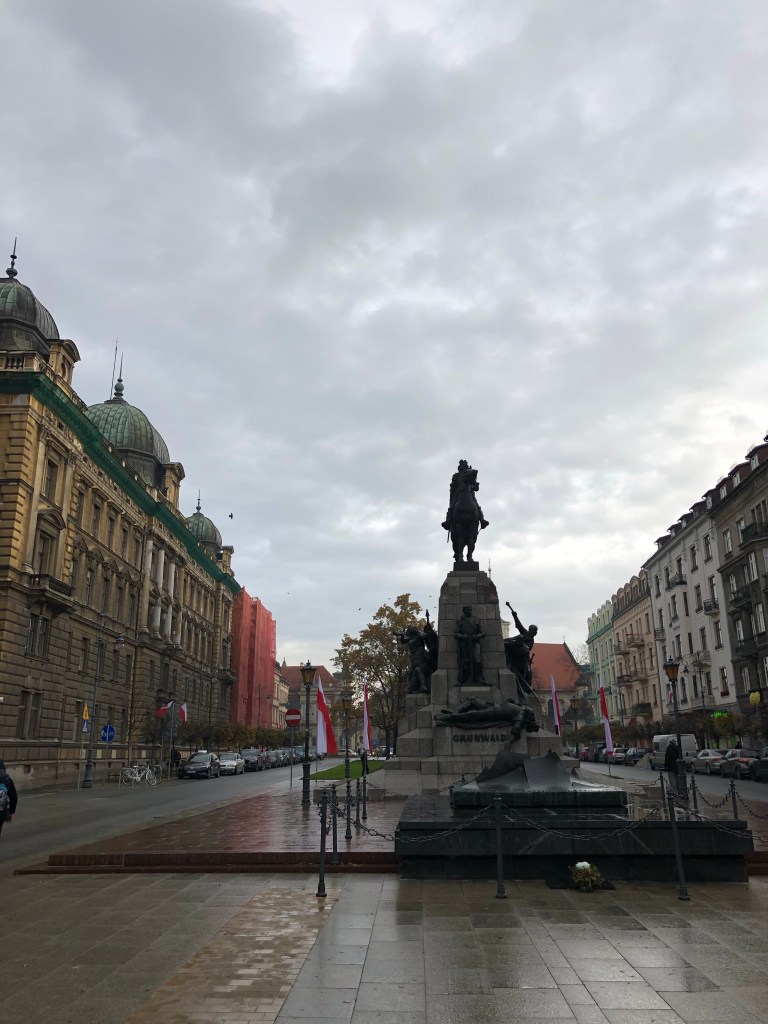
random plaza 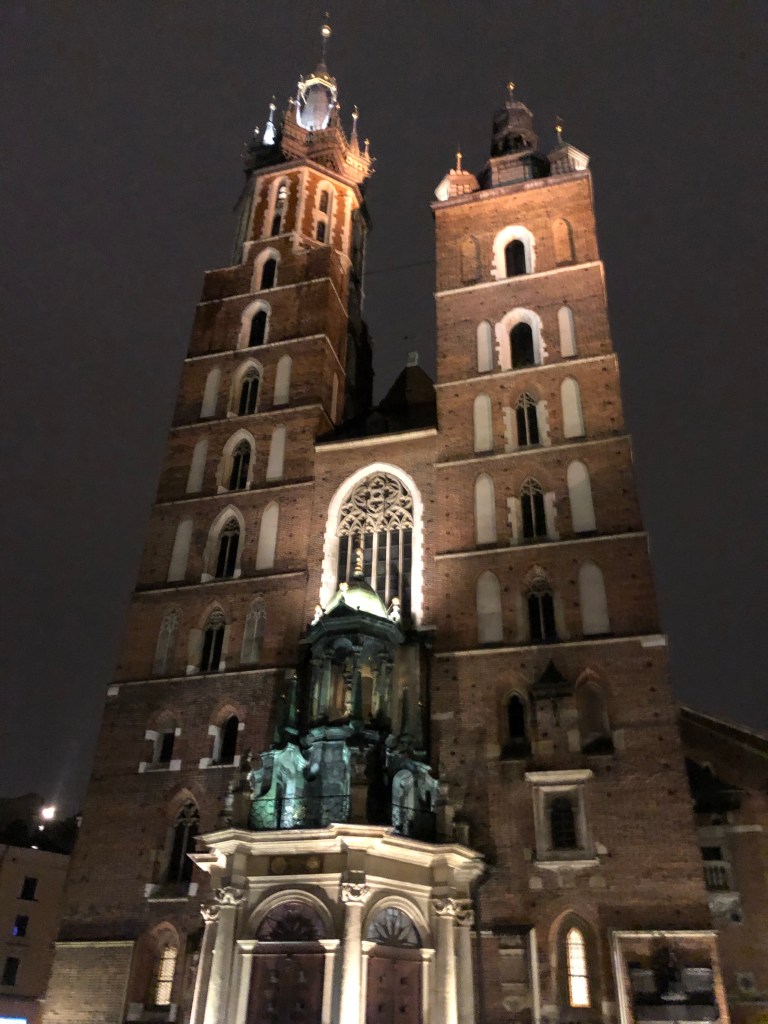
Random church 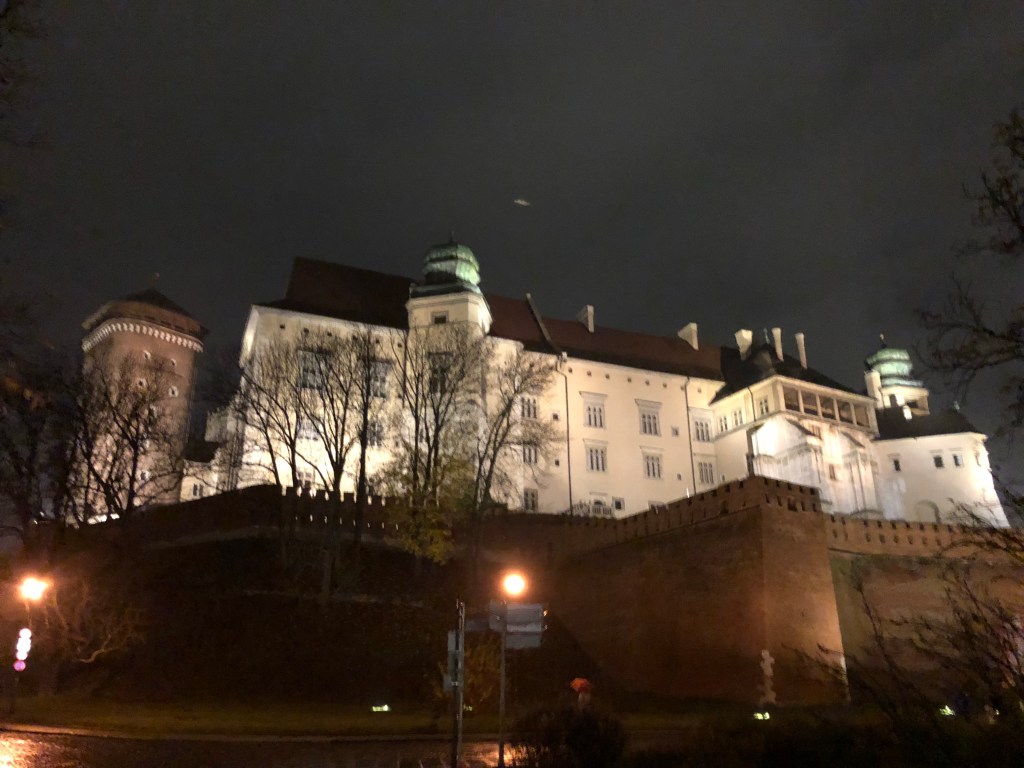
Part of the castle 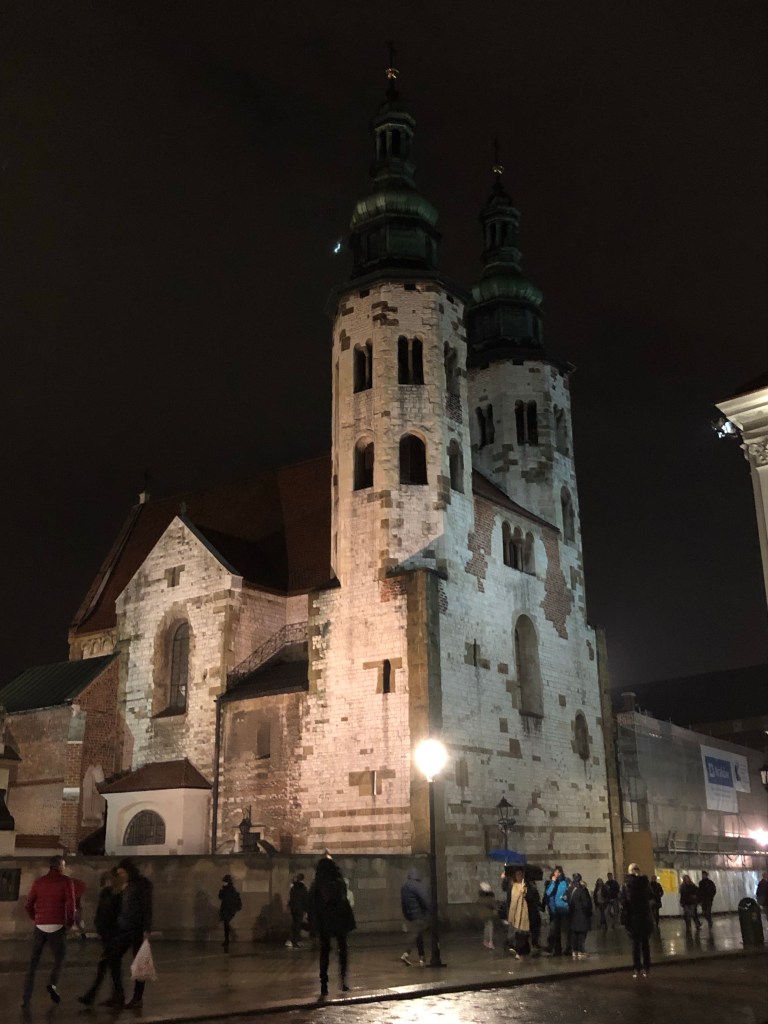
Random church
One thing that struck me about Polish people is how nearly all seem to project as angry or sad. Walking down the street, in shops, at hotel reception, working or dining in restaurants, etc. There’s limited hand motioning or facial expressions as people converse. In this they are the polar opposite of Italians. And for these seemingly mad or sad people, I’ve selected this song to conclude my post:


Almost missed not going there….but now I feel as if I have.
>
LikeLike
Thanks for this…and I sent you an email about the flowers. Like Americans can find coffee on any corner, I think Poles just like having flowers and buy them on a daily basis…hence, they are available 24 hours and can be found everywhere. Pozegnanie!
LikeLike